The Primal Shift Podcast Por Michael Kummer arte de portada

The Primal Shift

The Primal Shift

De: Michael Kummer
Escúchala gratis

Primal Shift is about helping you achieve optimal health by bridging the gap between ancestral living and the demands of modern society. We'll talk about every aspect of a healthy life, including sleep, nutrition, exercise, stress management, environmental toxins, hormesis, belonging and tribalism, and reconnecting with nature. Get ready to unlock the transformative power of nature as the ultimate biohack, revolutionize your health and reconnect you with your primal self. Each episode is short and concise, providing you with actionable tips and tricks you can use to start living a more primal lifestyle today.© 2023 Desarrollo Personal Higiene y Vida Saludable Éxito Personal
Episodios
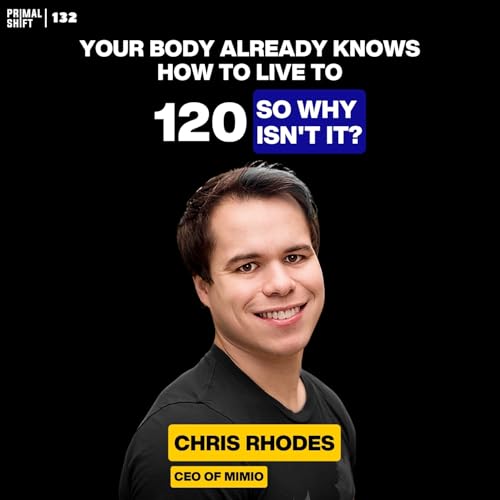
  • 132: I Tested a Fasting Supplement for a Year — Here's What It Did to My Biological Age | Chris Rhodes, CEO of Mimio Health
    Mar 25 2026
    Your body already knows how to live to 120 in perfect health. It's just not doing it. That realization is what sent Dr. Chris Rhodes down the fasting research path during his PhD in nutritional biochemistry at UC Davis. His argument? Most people doing 16:8 intermittent fasting aren't getting nearly the benefits they think they are. The body doesn't flip into fasting mode until glycogen stores are depleted, which typically takes 20 to 24 hours. Autophagy, stem cell regeneration, and the real anti-inflammatory benefits don't peak until around 72 hours. In this episode, Dr. Rhodes, creator of Mimio – the world's first fasting mimetic supplement – explains what his team discovered when they tracked metabolites during 36-hour fasts in healthy subjects, as well as how they isolated four synergistic molecules that recreate fasting benefits at the cellular level. We also dig into something personal. Almost a year ago, I started supplementing with Mimio and tracked my biological age using TrueAge epigenetic testing before, during, and after. The result? My pace of aging slowed to 0.85 – meaning that for every calendar year, I'm only aging about 10 months biologically. Rhodes walks me through what the epigenetic markers actually mean, why some of my results seem contradictory on the surface, and why the phenotype matters more than the genotype when it comes to practical health decisions. We also get into why fasting can disrupt hormonal cycles through caloric restriction signaling, why elite athletes rarely have exceptional longevity despite peak fitness, and why combining actual fasting with Mimio may produce better results than either one alone. Try Mimio and get 20% off your first purchase with code MICHAELKUMMER: https://mimiohealth.sjv.io/qWzkOg About Chris Rhodes: Dr. Chris Rhodes, PhD, spent 8 years researching fasting at UC Davis before discovering that specific molecules produced during a fast can reduce inflammation, fight oxidative stress, and support metabolic health. That research led him to create Mimio, the world's first fasting mimetic supplement, backed by three clinical studies and designed to deliver measurable longevity benefits without changing your diet or lifestyle. Dr. Chris Rhodes on TikTok: https://www.tiktok.com/@thatnutritiondr Website: https://mimiohealth.com/ Learn more: 73: NAD Supplements That Actually Work: https://www.primalshiftpodcast.com/73-nad-supplements-that-actually-work/ 62: Biological Age Test Review: Epigenetics Explained Simply | Hannah Went: https://www.primalshiftpodcast.com/62-biological-age-test-review-epigenetics-explained-simply-hannah-went/ 63: HbA1c Levels Explained: Why They May Be High Without High Blood Sugar: https://www.primalshiftpodcast.com/63-hba1c-levels-explained-why-they-may-be-high-without-high-blood-sugar/ Thank you to this episode's sponsor, Apollo Neuro! Apollo is a wearable that uses gentle sound wave vibrations to signal safety to your nervous system, helping you feel calmer, more focused, and less reactive throughout the day. Check out my full Apollo review: https://michaelkummer.com/health/apollo-neuro-review/ Get $60 off with my discount code PRIMALSHIFT: https://michaelkummer.com/go/apolloneuro In this episode: 00:00 Fasting mimetic breakthrough 02:25 Experiment setup TrueAge 04:13 Why fasting extends life 06:14 How long to fast 09:11 Fasting risks and hormones 13:59 Longevity versus performance 18:02 Mimio [How it works] 20:39 Clinical results and trials 24:17 TrueAge report walkthrough 32:57 Immune markers vs feeling healthy 36:45 Can you change epigenetics 39:45 Pace of aging results 45:04 Hormetic stress and inflammation 50:11 Food and postprandial inflammation 57:05 Wrap up Find me on social media for more health and wellness content: Website: https://michaelkummer.com/ YouTube: https://www.youtube.com/@MichaelKummer Instagram: https://www.instagram.com/primalshiftpodcast/ Pinterest: https://www.pinterest.com/michaelkummer/ Twitter/X: https://twitter.com/mkummer82 Facebook: https://www.facebook.com/realmichaelkummer/ [Medical Disclaimer] The information shared on this video is for educational purposes only, is not a substitute for the advice of medical doctors or registered dietitians (which I am not) and should not be used to prevent, diagnose, or treat any condition. Consult with a physician before starting a fitness regimen, adding supplements to your diet, or making other changes that may affect your medications, treatment plan, or overall health. [Affiliate Disclaimer] I earn affiliate commissions from some of the brands and products I review on this channel. While that doesn't change my editorial integrity, it helps make this channel happen. If you'd like to support me, please use my affiliate links or discount code. #Mimio #Longevity
    Más Menos
    59 m
  • 131: The Best and Worst Plants to Eat on an Animal-Based Diet (And How to Prepare Them)
    Mar 18 2026
    Most people who start an animal-based diet assume the goal is to eliminate every plant from the plate. I get it: when you've spent years being told kale is a superfood and you finally learn it's loaded with oxalates and goitrogens, the pendulum swings hard. It did for me. But the blanket "plants are bad" framing leaves a lot on the table. Plants aren't health foods. They don't want to be eaten, and they evolved with chemical defenses to discourage exactly that. Our dietary foundation at the Kummer household remains meat, organs, eggs, dairy and bone broth, and most of our calories come from animal sources. The question is whether certain plants, chosen carefully and prepared properly, can earn a supporting role. In this episode, I lay out a practical four-tier framework for thinking about plants on an animal-based diet: which ones you can eat freely, which work in moderation, which to approach with caution, and which to leave behind entirely. Ripe, low-seed fruits like berries, avocados, olives and coconut sit at the top of the list. They have minimal toxin load, and in the case of sweet fruit, the plant actually wants you to eat it. Peeled and deseeded vegetables like squash and zucchini come next, since removing the skin and seeds removes most of the antinutrient burden. Tubers can work well when peeled, cooked, and ideally fermented — we do ours in a 2.5% saline solution for a few days, which lowers both the glycemic index and the antinutrient count. On the other end, kale, spinach and chard are some of the worst offenders. Their oxalate levels are high, and unlike most other antinutrients, oxalates can't be reduced through any known preparation method. Grains are similarly problematic, though properly fermented sourdough — made at home over several days — can degrade a significant portion of the gluten and phytates. Where a plant lands in those tiers depends on its antinutrient concentration, whether preparation can neutralize the worst offenders, your individual gut and metabolic health, and how much you're eating and how often. I can have sourdough once a week without noticing anything negative. But if I eat it every day, I definitely notice. Peppers I tolerate surprisingly well. Raw dairy — which most animal-based influencers swear by — I can't do at all. My skin breaks out, I get bloated, and my body odor changes. Cut out dairy and I don't need deodorant. The question isn't whether to eat plants or not — it's which ones, how much, and how prepared. Plants play a supporting role, and you tier your choices by toxin load, preparation, and how your own body responds. Learn More: My Animal-Based Food List (Free Download): https://michaelkummer.com/food-list/ MEAT vs. PLANTS (What's Better for Your Health?): https://www.youtube.com/watch?v=GqKzO_PkD-k&utm Plants vs. Meat: Why I Stopped Eating Veggies: https://michaelkummer.com/plants-vs-meat 99: Plants vs Animals: Why Meat Beats Plants for Nutrition: https://www.primalshiftpodcast.com/99-plants-vs-animals-why-meat-beats-plants-for-nutrition 49: From Almonds to Spinach: Dr. Schindler on Avoiding Common Dietary Traps: https://www.primalshiftpodcast.com/49-from-almonds-to-spinach-dr-schindler-on-avoiding-common-dietary-traps/ Thank you to this episode's sponsor, Peluva! Peluva makes minimalist shoes to support optimal foot, back and joint health. I started wearing Peluvas several months ago, and I haven't worn regular shoes since. I encourage you to consider trading your sneakers or training shoes for a pair of Peluvas, and then watch the health of your feet and lower back improve while reducing your risk of injury. To learn more about why I love Peluva barefoot shoes, check out my in-depth review: https://michaelkummer.com/health/peluva-review/ And use code MICHAEL to get 10% off your first pair: https://michaelkummer.com/go/peluva In this episode: 00:00 Intro 01:53 Why plants fight back 04:54 Four-tier plant spectrum 09:04 Best picks: Sweet fruits 12:34 Peeled veggies and sides 13:33 Tubers, rice, and mushrooms 16:24 Leafy greens to avoid 18:40 Nightshades and tolerance 20:33 Grains, legumes, and nuts 24:37 Prep methods that help 29:09 Personal testing protocol 31:34 Wrap-up: framework recap Find me on social media for more health and wellness content: Website: https://michaelkummer.com/ YouTube: https://www.youtube.com/@MichaelKummer Instagram: https://www.instagram.com/primalshiftpodcast/ Pinterest: https://www.pinterest.com/michaelkummer/ Twitter/X: https://twitter.com/mkummer82 Facebook: https://www.facebook.com/realmichaelkummer/ [Medical Disclaimer] The information shared on this video is for educational purposes only, is not a substitute for the advice of medical doctors or registered dietitians (which I am not) and should not be used to prevent, diagnose, or treat any condition. Consult with a physician before starting a fitness regimen, adding supplements to your diet, or making other changes that may affect ...
    Más Menos
    33 m
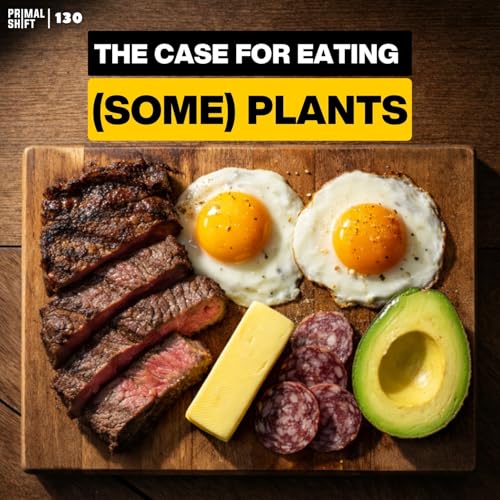
  • 130: What Role Should Plants Play In An Animal-Based Lifestyle?
    Mar 11 2026
    All plants are toxic to varying degrees. I haven't changed my mind on that. But recently our oldest daughter came up with a business idea: – making salves from plantain leaves infused in beeswax and olive oil for their antibacterial properties — and it got me thinking about the role plants actually play in our household despite the fact that we're very much an animal-based, meat-centric family. The truth is, we do eat plants. We always have. The foundation hasn't changed — meat, organs, eggs, dairy and bone broth make up the vast majority of our calories, and comparing the nutrient content of beef liver to kale isn't a close fight. But adhering to an animal-based dietary framework doesn't mean plants are the enemy in every context. The oldest use case is medicinal. Aspirin comes from willow bark, metformin from the French lilac, morphine from poppies. I'm not eating willow bark for lunch, but if I have a headache, it makes perfect sense. Turmeric targets inflammatory pathways, ginger helps with nausea, and oregano oil has been one of our go-to remedies for respiratory and gut infections for years. These aren't calories or micronutrients — we get those from animals. But for targeted medicinal use, plants have earned their place. Then there's flavor and the cultural connection that comes with food. Rosemary on a lamb roast, fresh basil on sourdough pizza, the smell of garlic roasting in a pan — those things make food better. Food is family connection, tradition, and cultural identity. My wife is Costa Rican, I'm from Europe, and we grew up with certain meals that bring the family together. Some of those include plant-based ingredients, and the value of sharing that meal can override the marginal downsides. The real nuance is preparation. Fermenting, sprouting, soaking, peeling cooking — these methods can meaningfully reduce anti-nutrients like lectins and phytic acid. We peel, slice, and ferment sweet potatoes in a saline solution for three days, which lowers the glycemic index and breaks down a lot of the problematic compounds. We soak rice overnight and cook it in fresh water. None of this turns plants into superfoods, but it makes them significantly more compatible with a species-appropriate diet – especially if you're sourcing organic or growing them yourself. The practical framework is straightforward: 80 to 90% quality animal foods, 10 to 20% well-chosen, well-prepared plants. If you're already eating nose to tail and building around nutrient density, you've won the big battle. The plant question is just fine-tuning. Learn More: My Animal-Based Food List (Free Download): https://michaelkummer.com/food-list/ MEAT vs. PLANTS (What's Better for Your Health?): https://www.youtube.com/watch?v=GqKzO_PkD-k&utm Plants vs. Meat: Why I Stopped Eating Veggies: https://michaelkummer.com/plants-vs-meat 99: Plants vs Animals: Why Meat Beats Plants for Nutrition: https://www.primalshiftpodcast.com/99-plants-vs-animals-why-meat-beats-plants-for-nutrition 49: From Almonds to Spinach: Dr. Schindler on Avoiding Common Dietary Traps: https://www.primalshiftpodcast.com/49-from-almonds-to-spinach-dr-schindler-on-avoiding-common-dietary-traps/ Thank you to this episode's sponsor, Apollo Neuro! Apollo is a wearable that delivers gentle vibrations to calm your nervous system and help your body stay in a restful state through the night. I've been wearing it for years and still notice a measurable difference — higher HRV and a lower resting heart rate on nights I use it. That's not placebo. That's my nervous system responding differently. If your sleep issues feel stress-related — and honestly, most of them are — Apollo is worth trying. To learn more, visit apolloneuro.com/michaelkummer and use code PRIMALSHIFT for $60 off. In this episode: 00:00 Intro 02:47 Animal-Based foundation 03:35 Plants as medicine 06:54 Flavor and food culture 10:34 Fermentation and prep 15:04 Plant tiers and avoids 16:42 Final thoughts Find me on social media for more health and wellness content: Website: https://michaelkummer.com/ YouTube: https://www.youtube.com/@MichaelKummer Instagram: https://www.instagram.com/primalshiftpodcast/ Pinterest: https://www.pinterest.com/michaelkummer/ Twitter/X: https://twitter.com/mkummer82 Facebook: https://www.facebook.com/realmichaelkummer/ [Medical Disclaimer] The information shared on this video is for educational purposes only, is not a substitute for the advice of medical doctors or registered dietitians (which I am not) and should not be used to prevent, diagnose, or treat any condition. Consult with a physician before starting a fitness regimen, adding supplements to your diet, or making other changes that may affect your medications, treatment plan, or overall health. [Affiliate Disclaimer] I earn affiliate commissions from some of the brands and products I review on this channel. While that doesn't change my editorial integrity, it helps make this channel...
    Más Menos
    18 m
Todavía no hay opiniones