Episodios

  • Inside Animal Research Labs: The Hidden Human and Animal Costs with Madeline Krasno | Ep12
    Feb 4 2026

    What if the "necessary" animal research we rely on is breaking the people who conduct it?

    In this episode of Puppies, Pandemics, and Public Health, host Dr. Johnny Lieberman speaks with Madeline Krasno, Executive Director of Justify and a former primate lab caretaker at UW Madison. Drawing from her two years caring for over 500 monkeys, preparing minimal "enrichment," administering meds, and witnessing daily stress and injuries. Madeline exposes the moral injury and compassion fatigue that plague lab workers. She shares how her experiences led to free speech lawsuits against UW Madison and the NIH, sparking national conversations on transparency. The discussion dives into systemic issues: stressed animals yielding unreliable data (with ~100% failure rates in human translation), lack of enforcement for violations, and the urgent need to shift toward animal-free technologies. Madeline also explains Justify's mission to support lab workers through confidential spaces, resources, and community-building to heal and advocate for change. This episode challenges assumptions about animal experimentation's validity and ethics, highlighting its links to human health, worker well-being, and public policy.

    Top 3 Takeaways

    • Lab Workers Face Profound Psychological Harm: Caretakers in animal research endure moral injury and compassion fatigue from witnessing suffering, with little support, highlighting that humans, too, pay a heavy price in this system.
    • Animal Suffering in Labs Undermines Scientific Validity: Monkeys and other animals live in tiny cages under constant stress, leading to unreliable data; nearly 100% of experiments fail to translate to humans, questioning the necessity of such research.
    • Enforcement and Transparency Are Severely Lacking: Violations like injuries or poor conditions often go unpunished with just "slaps on the wrist," while whistleblowers face retaliation—calling for better oversight and a shift to ethical, non-animal methods.

    About the Guest – Madeline Krasno

    Madeline Krasno is a former primate lab worker turned advocate for compassion and transparency in science. Her successful free speech lawsuits against UW Madison and the NIH, featured in the Washington Post, sparked national dialogue about the hidden human and animal costs of experimentation.

    Today, she is Executive Director and co-founder of Justify, a nonprofit creating space for current and former animal research professionals to process their experiences, reclaim their voices, and help build a more ethical, human-relevant future in science. Madeline holds a master's degree in Humane Education from Valparaiso University and a dual bachelor's degree in Zoology and Child Development from the University of Wisconsin-Madison. Her background spans animal care, wildlife rehabilitation, curriculum development, public speaking, outreach, and community building.

    🔗 Read more about Madeline Krasno:

    • Website: https://whenwejustify.org
    • LinkedIn: https://www.linkedin.com/in/madelinekrasno
    • Instagram: @justify.global

    About the Show

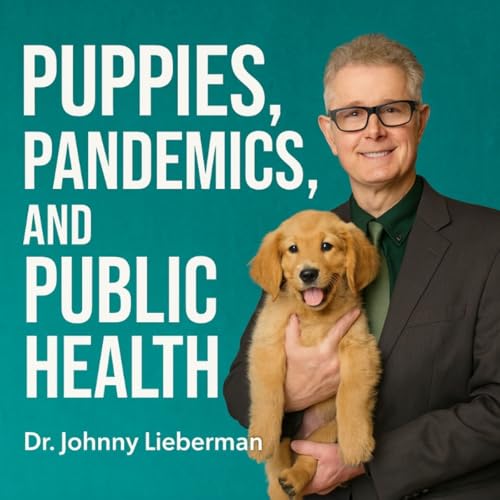
    Puppies, Pandemics, and Public Health explores the intersection of animal welfare, public policy, and human health. Hosted by Dr. Johnny Lieberman, each episode invites changemakers, legal experts, and health advocates to shed light on what really impacts our communities—and what we can do about it.

    About the Host:

    Dr. Johnny Lieberman is a physician, public health advocate, and lifelong animal lover with a passion for connecting the dots between animal welfare, human behavior, and the systems that shape our lives. With a background in both medicine and public health policy, Johnny brings a unique lens to conversations about how our treatment of animals impacts human health, the environment, and social justice.

    In Puppies, Pandemics, and Public Health, Johnny brings warmth, curiosity, and a dash of wit to tough conversations that matter. From exposing the realities of factory farming to uncovering the links between zoonotic diseases and our food systems, his goal is to empower listeners to be informed, compassionate, and engaged citizens—while still keeping it real (and sometimes bringing in puppies).

    Whether he's discussing legislative loopholes or snuggling his rescue dog between recordings, Dr. Lieberman believes that creating a healthier world starts with how we treat its most vulnerable beings.


    Hosted by Simplecast, an AdsWizz company. See pcm.adswizz.com for information about our collection and use of personal data for advertising.

    Más Menos
    42 m
  • The Truth About Puppy Mills Pet Stores Don’t Want You to Know | Ep11
    Jan 21 2026

    If you've ever considered buying a puppy from a pet store or online, this episode will change your perspective forever.

    Dr. Johnny Lieberman sits down with seasoned undercover investigator Pete Paxton to uncover the grim realities of puppy mills, the massive breeding operations that supply pet stores with dogs raised in filth, neglect, and suffering. Pete shares firsthand accounts from over two decades of investigations, including wire cages piled with feces, dogs driven "cage crazy," and breeders who prioritize profit over welfare. The conversation exposes how pet stores mislead consumers with glossy ads and false claims of "reputable breeders," while USDA inspections often fail to enforce even basic standards due to inherent conflicts of interest.

    Beyond the shock, Dr. Lieberman and Pete discuss the broader implications: the health risks to puppies (and buyers), the environmental ties to climate disasters increasing shelter overcrowding, and why adoption from shelters or fosters saves lives and provides better-matched, healthier pets. This episode empowers listeners to make compassionate choices, reject the "adopt don't shop" myths, and support real solutions like volunteering and fostering, without judgment, but with eye-opening facts.

    Top 3 Takeaways

    • Adopt, Don't Shop: When seeking a new dog, prioritize adoption from shelters or foster-based rescues over pet stores or online sellers. This saves lives from overcrowded shelters, avoids supporting puppy mills' cruelty, and often provides healthier, better-socialized pets with known personalities. Research local options, visit, and match based on your lifestyle for a fulfilling bond.
    • Focus on Personality Over Breed: Ignore breed stereotypes when choosing a dog; emphasize personality traits that fit your family, like energy level or compatibility with kids/pets. Shelters assess and train dogs for better matches, reducing behavioral issues. Volunteer at rescues to observe firsthand, ensuring a happier, more suitable companion without fueling profit-driven breeding.
    • Volunteer or Foster to Help: Combat puppy mill cruelty by volunteering at shelters: walk dogs, assist with training, or foster temporarily to free space and prepare pets for adoption. This directly saves lives amid rising disasters displacing animals. Start small, contact local groups like Humane Society, and contribute time over money for ethical impact.

    About the Guest:

    Pete Paxton is the Director of Investigations at SEED (Strategies for Ethical and Environmental Development), where he leads animal cruelty investigations focused on factory farms and pollution. With over two decades of experience since 2001, Pete has gone undercover at puppy mills, pet stores, slaughterhouses, and commercial fishing operations. His work has been featured in HBO documentaries like Dealing Dogs and Death on a Factory Farm, as well as National Geographic's Animal Undercover. He is co-author of the book Rescue Dogs, which outlines solutions to animal exploitation.

    Websites: ethicalstrategies.org, humaneworld.org, and capweb.org.

    About the Show

    Puppies, Pandemics, and Public Health explores the intersection of animal welfare, public policy, and human health. Hosted by Dr. Johnny Lieberman, each episode invites changemakers, legal experts, and health advocates to shed light on what really impacts our communities—and what we can do about it.

    About the Host

    Dr. Johnny Lieberman is a physician, public health advocate, and lifelong animal lover with a passion for connecting the dots between animal welfare, human behavior, and the systems that shape our lives. With a background in both medicine and public health policy, Johnny brings a unique lens to conversations about how our treatment of animals impacts human health, the environment, and social justice.

    In Puppies, Pandemics, and Public Health, Johnny brings warmth, curiosity, and a dash of wit to tough conversations that matter. From exposing the realities of factory farming to uncovering the links between zoonotic diseases and our food systems, his goal is to empower listeners to be informed, compassionate, and engaged citizens—while still keeping it real (and sometimes bringing in puppies).

    Whether he's discussing legislative loopholes or snuggling his rescue dog between recordings, Dr. Lieberman believes that creating a healthier world starts with how we treat its most vulnerable beings.


    Hosted by Simplecast, an AdsWizz company. See pcm.adswizz.com for information about our collection and use of personal data for advertising.
    Más Menos
    25 m
  • Eyewitness to Cruelty Inside Factory Farms and Fish Hatcheries | Ep10
    Jan 7 2026

    If you’ve ever trusted a label at the grocery store—cage-free, humane, organic—this episode will challenge everything you think you know.

    Dr. Johnny Lieberman welcomes undercover investigator Erin Wing, who spent years working inside factory farms to document what the animal agriculture industry works aggressively to conceal. What Erin describes is not isolated abuse, but standard operating procedure: chickens packed by the tens of thousands into dark sheds filled with toxic ammonia fumes, dairy cows repeatedly impregnated, separated from their calves, beaten when their bodies give out, and salmon raised in overcrowded tanks swimming in their own waste while disease spreads unchecked.

    This conversation moves beyond shock value. It confronts the deeper systems at play—how animals are reduced to units of production, how consumer labels are engineered to soothe guilt rather than reflect reality, and how emotional distance allows cruelty to become normalized.

    Dr. Lieberman and Erin explore the moral cost of convenience, the public health implications of industrial farming, and the difficult but necessary role of undercover investigations in exposing truth. The episode doesn’t demand perfection—but it does insist on honesty, awareness, and informed choice.

    Key Themes & Takeaways
    • What undercover investigations reveal when no one thinks they’re being watched
    • Why “humane,” “cage-free,” and “natural” labels often hide more than they reveal
    • The physical and emotional suffering built into industrial chicken, dairy, and fish farming
    • How dairy cows and their calves are systematically separated—and why it matters
    • The hidden public health risks of animals raised in filth and overcrowding
    • Why consumer ignorance is not accidental—but engineered
    • What informed choice really looks like when the truth is uncomfortable
    About the Guest

    Erin Wing is an undercover investigator and animal advocate with Animal Outlook. Erin has spent years working inside chicken farms, dairy operations, and salmon hatcheries to document conditions the animal agriculture industry works aggressively to keep hidden. Their investigations have helped expose systemic cruelty, inform legal advocacy, and empower consumers with truth.

    To learn more about Erin’s work and ongoing investigations, visit animaloutlook.org.

    About the Show

    Puppies, Pandemics, and Public Health explores the intersection of animal welfare, public policy, and human health. Hosted by Dr. Johnny Lieberman, each episode invites changemakers, legal experts, and health advocates to shed light on what really impacts our communities—and what we can do about it.

    About the Host

    Dr. Johnny Lieberman is a physician, public health advocate, and lifelong animal lover with a passion for connecting the dots between animal welfare, human behavior, and the systems that shape our lives. With a background in both medicine and public health policy, Johnny brings a unique lens to conversations about how our treatment of animals impacts human health, the environment, and social justice.

    In Puppies, Pandemics, and Public Health, Johnny brings warmth, curiosity, and a dash of wit to tough conversations that matter. From exposing the realities of factory farming to uncovering the links between zoonotic diseases and our food systems, his goal is to empower listeners to be informed, compassionate, and engaged citizens—while still keeping it real (and sometimes bringing in puppies).

    Whether he's discussing legislative loopholes or snuggling his rescue dog between recordings, Dr. Lieberman believes that creating a healthier world starts with how we treat its most vulnerable beings.


    Hosted by Simplecast, an AdsWizz company. See pcm.adswizz.com for information about our collection and use of personal data for advertising.

    Más Menos
    57 m
  • Chickens Are Individuals: Inside the Hidden Costs of Industrial Egg Production | Ep9
    Dec 29 2025

    What if the biggest problem with the egg industry isn’t just how chickens are housed—but how we’ve learned not to see them at all?

    Dr. Johnny Lieberman welcomes Joyce Tischler, Professor of Law and co-founder of the Animal Legal Defense Fund, to unpack the realities of modern industrial egg production. Drawing from decades of legal work—and a recent personal experience rescuing chickens from a closing egg facility—Joyce explains how breeding, confinement, and misleading consumer labels obscure the profound suffering embedded in “cheap” animal products.

    The conversation reframes chickens not as interchangeable units of production, but as individuals with personalities, social structures, and emotional responses—beings whose bodies have been genetically pushed beyond their limits to maximize output. Together, they challenge common assumptions about “organic,” “cage-free,” and “free-range” labels, exposing how little those terms actually improve animal welfare.

    This episode invites listeners to question long-held narratives, confront cognitive dissonance around food choices, and consider small, realistic ways to reduce harm—whether by rethinking egg consumption, seeking local sources, or simply seeing farm animals more clearly for who they are.

    Key Themes & Takeaways
    • Chickens are individuals with distinct personalities and behaviors
    • How selective breeding harms animals long before slaughter
    • Why “organic” and “cage-free” labels often mislead consumers
    • The physical toll of extreme egg production on hens
    • How factory farming depends on emotional and physical distancing
    • The role of cognitive dissonance in food choices
    • Why true humane egg production is rare—and hard to verify
    • Practical ways consumers can reduce harm without perfection
    About the Guest

    Joyce Tischler is a Professor of Law and co-founder of the Animal Legal Defense Fund. Her work focuses on animal law, industrial agriculture, and the legal systems that govern how animals are bred, raised, and commodified. Joyce has spent decades challenging factory farming practices and is currently co-authoring a first-of-its-kind casebook on industrial animal agriculture law.

    About the Show

    Puppies, Pandemics, and Public Health explores the intersection of animal welfare, public policy, and human health. Hosted by Dr. Johnny Lieberman, each episode invites changemakers, legal experts, and health advocates to shed light on what really impacts our communities—and what we can do about it.

    About the Host

    Dr. Johnny Lieberman is a physician, public health advocate, and lifelong animal lover with a passion for connecting the dots between animal welfare, human behavior, and the systems that shape our lives. With a background in both medicine and public health policy, Johnny brings a unique lens to conversations about how our treatment of animals impacts human health, the environment, and social justice.

    In Puppies, Pandemics, and Public Health, Johnny brings warmth, curiosity, and a dash of wit to tough conversations that matter. From exposing the realities of factory farming to uncovering the links between zoonotic diseases and our food systems, his goal is to empower listeners to be informed, compassionate, and engaged citizens—while still keeping it real (and sometimes bringing in puppies).

    Whether he's discussing legislative loopholes or snuggling his rescue dog between recordings, Dr. Lieberman believes that creating a healthier world starts with how we treat its most vulnerable beings.


    Hosted by Simplecast, an AdsWizz company. See pcm.adswizz.com for information about our collection and use of personal data for advertising.

    Más Menos
    46 m
  • Cultivated Meat, Consumer Choice, and the Politics of Food with Hira Jaleel | Ep8
    Dec 14 2025

    What happens when innovation collides with politics, fear, and entrenched industry power?

    Dr. Johnny Lieberman welcomes Hira Jaleel—legal scholar and food systems researcher—to explore the rapidly evolving world of cultivated meat (also known as cell-cultured meat). Far from hype or sci‑fi fantasy, cultivated meat is positioned as one potential tool—not a silver bullet—for addressing the harms of industrial animal agriculture, including animal suffering, environmental pollution, and public health risks.

    The conversation walks listeners through how cultivated meat is produced, why it eliminates many systemic risks of conventional meat production, and why eight U.S. states have moved to ban its sale altogether. Hira explains the regulatory framework, the massive subsidy imbalance favoring conventional meat, and the constitutional challenges now unfolding in courts.

    Throughout the episode, Dr. Lieberman reframes the debate: not as “natural vs. unnatural,” but as a question of transparency, consumer sovereignty, and whether the public is being protected—or shielded from choice.

    Key Themes & Takeaways
    • Why the U.S. food system is structurally broken—and what role industrial animal agriculture plays
    • What cultivated meat actually is (and common misconceptions)
    • The public health implications of conventional meat: zoonotic disease, antibiotics, and contamination
    • The true scale of subsidies propping up factory farming
    • Why state bans on cultivated meat may be unconstitutional
    • Consumer choice vs. agricultural protectionism
    • Why neutral, rigorous regulation matters more than political fear\
    About the Guest – Hira Jaleel

    Hira Jaleel is a legal scholar whose work focuses on food systems, animal law, and constitutional issues at the intersection of public policy and innovation. Her research examines how emerging food technologies—like cultivated meat—are regulated, challenged, and sometimes blocked by state and federal law. Hira brings a rigorous, non‑ideological lens to debates about consumer choice, competition, and the future of food.

    About the Show

    Puppies, Pandemics, and Public Health explores the intersection of animal welfare, public policy, and human health. Hosted by Dr. Johnny Lieberman, each episode invites changemakers, legal experts, and health advocates to shed light on what really impacts our communities—and what we can do about it.

    About the Host

    Dr. Johnny Lieberman is a physician, public health advocate, and lifelong animal lover with a passion for connecting the dots between animal welfare, human behavior, and the systems that shape our lives. With a background in both medicine and public health policy, Johnny brings a unique lens to conversations about how our treatment of animals impacts human health, the environment, and social justice.

    In Puppies, Pandemics, and Public Health, Johnny brings warmth, curiosity, and a dash of wit to tough conversations that matter. From exposing the realities of factory farming to uncovering the links between zoonotic diseases and our food systems, his goal is to empower listeners to be informed, compassionate, and engaged citizens—while still keeping it real (and sometimes bringing in puppies).

    Whether he's discussing legislative loopholes or snuggling his rescue dog between recordings, Dr. Lieberman believes that creating a healthier world starts with how we treat its most vulnerable beings.


    Hosted by Simplecast, an AdsWizz company. See pcm.adswizz.com for information about our collection and use of personal data for advertising.

    Más Menos
    45 m
  • Rethinking Farmed Animal Welfare — Laws, Loopholes & What the Public Doesn’t Know | Ep7
    Nov 26 2025

    What protections do farmed animals actually have in the United States?

    As attorney and Farm Sanctuary General Counsel Cynthia Von Schlichten explains — far less than the public believes.

    In this eye-opening episode, Dr. Johnny Lieberman uncovers how federal laws governing farmed animals are filled with exclusions, loopholes, and industry-written exceptions that leave billions of chickens, pigs, cows, and turkeys without meaningful protection at any stage of their lives.

    Cynthia breaks down:

    • Why 95%+ of animals slaughtered for food (birds) are excluded from the U.S. humane slaughter law
    • How the 28-Hour Law — the only federal transport protection — is rarely enforced and excludes entire species
    • Why mass-execution methods like Ventilation Shutdown Plus are not only legal, but paid for by taxpayers
    • How industry standards allow painful procedures like tail docking, beak removal, castration, and forced molting without anesthesia
    • Why government inspectors are being replaced with plant employees — and what that means for animals and food safety

    This episode challenges the assumptions most people carry about animal agriculture and offers practical steps listeners can take to reduce harm — from supporting local farms to advocating for stronger laws.

    Top 3 Takeaways1. Most Farmed Animals Aren’t Protected by Federal Law

    Chickens — who make up 95% of all animals slaughtered for food — are excluded from the Humane Methods of Slaughter Act.

    2. Transport “Protections” Are Barely Enforced

    The 28-Hour Law sounds humane, but in practice, animals routinely travel long distances without food, water, or rest.

    3. Taxpayers Fund Mass-Kill Events

    Ventilation Shutdown Plus — which kills animals through heat and suffocation — is legal, widely used, and heavily subsidized by government payments.

    About the Guest – Cynthia Von Schlichten, LLM

    Cynthia Von Schlichten is the Senior Manager of Legal Affairs for Farm Sanctuary, where she leads legal strategy on rescues, cruelty cases, and policy reform. A practicing attorney for over a decade, Cynthia has worked across the animal rights spectrum, including roles at the American Anti-Vivisection Society and Compassion in World Farming. She is an active member of the ABA’s Animal Law Committee and has drafted municipal legislation to protect animals.

    For over 20 years, Cynthia has been a vegan and fierce advocate for animal rights, with a mission to give animals a voice in our legal system.

    🔗 Read more about Cynthia

    About the Show

    Puppies, Pandemics, and Public Health explores the intersection of animal welfare, public policy, and human health. Hosted by Dr. Johnny Lieberman, each episode invites changemakers, legal experts, and health advocates to shed light on what really impacts our communities—and what we can do about it.

    About the Host

    Dr. Johnny Lieberman is a physician, public health advocate, and lifelong animal lover with a passion for connecting the dots between animal welfare, human behavior, and the systems that shape our lives. With a background in both medicine and public health policy, Johnny brings a unique lens to conversations about how our treatment of animals impacts human health, the environment, and social justice.

    In Puppies, Pandemics, and Public Health, Johnny brings warmth, curiosity, and a dash of wit to tough conversations that matter. From exposing the realities of factory farming to uncovering the links between zoonotic diseases and our food systems, his goal is to empower listeners to be informed, compassionate, and engaged citizens—while still keeping it real (and sometimes bringing in puppies).

    Whether he's discussing legislative loopholes or snuggling his rescue dog between recordings, Dr. Lieberman believes that creating a healthier world starts with how we treat its most vulnerable beings.


    Hosted by Simplecast, an AdsWizz company. See pcm.adswizz.com for information about our collection and use of personal data for advertising.

    Más Menos
    41 m
  • Rethinking Animal Testing — Innovation, Futility, and Hope with Dr. Zaher Nahle | Ep6
    Nov 12 2025

    What if the research model we’ve trusted for nearly a century is holding back medical progress?

    In this powerful conversation, Dr. Johnny Lieberman speaks with Dr. Zaher Nahle, former lab scientist turned policy innovator, about how outdated animal testing continues to waste billions in taxpayer dollars, delay life-saving treatments, and perpetuate unnecessary suffering.

    Dr. Nahle shares his personal journey from leading animal-based studies to realizing their futility—highlighting the shocking 95% clinical failure rate for drugs that pass animal trials. Together, they unpack why this system persists, the political and financial barriers to change, and how non-animal testing methods (NAMs) are transforming drug development.

    From AI modeling and organ-on-a-chip technology to the FDA Modernization Act 2.0, this episode reveals a hopeful path forward—and calls on every listener to speak up for smarter, more humane science.

    Top 3 Takeaways
    1. Animal Testing Fails 95% of the Time
      Despite decades of use, animal models rarely predict human outcomes. This inefficiency wastes time, money, and lives.
    2. Non-Animal Methods Are the Future
      The FDA now allows the use of NAMs—New Approach Methodologies—including AI modeling and organ-on-a-chip systems that mimic real human biology.
    3. Public Engagement Drives Change
      Progress depends on advocacy. Contact your lawmakers and support organizations like the Center for Humane Economy to demand funding for modern, human-relevant research.
    About the Guest – Dr. Zaher Nahle

    Dr. Zaher Nahle is a biomedical scientist and policy expert with a PhD in Physiology and Biophysics from Stony Brook University and Cold Spring Harbor Laboratory. A former lab leader at Weill Cornell and Vanderbilt, Dr. Nahle now serves as Senior Scientific Advisor to the Center for Humane Economy and Animal Wellness Action, championing innovation and ethics in science. His work has helped drive legislation like the FDA Modernization Act 2.0, advancing alternatives to animal testing.

    🔗 Learn more: Center for Humane Economy

    About the Show

    Puppies, Pandemics, and Public Health explores the intersection of animal welfare, public policy, and human health. Hosted by Dr. Johnny Lieberman, each episode invites changemakers, legal experts, and health advocates to shed light on what really impacts our communities—and what we can do about it.

    About the Host

    Dr. Johnny Lieberman is a physician, public health advocate, and lifelong animal lover with a passion for connecting the dots between animal welfare, human behavior, and the systems that shape our lives. With a background in both medicine and public health policy, Johnny brings a unique lens to conversations about how our treatment of animals impacts human health, the environment, and social justice.

    In Puppies, Pandemics, and Public Health, Johnny brings warmth, curiosity, and a dash of wit to tough conversations that matter. From exposing the realities of factory farming to uncovering the links between zoonotic diseases and our food systems, his goal is to empower listeners to be informed, compassionate, and engaged citizens—while still keeping it real (and sometimes bringing in puppies).

    Whether he's discussing legislative loopholes or snuggling his rescue dog between recordings, Dr. Lieberman believes that creating a healthier world starts with how we treat its most vulnerable beings.


    Hosted by Simplecast, an AdsWizz company. See pcm.adswizz.com for information about our collection and use of personal data for advertising.

    Más Menos
    32 m
  • Daria Bednarczyk Returns: The Legal Loopholes Letting Factory Farms Pollute | Ep5
    Oct 29 2025

    In this follow-up conversation, Dr. Johnny Lieberman welcomes Daria Bednarczyk, JD, for a deeper dive into agricultural exceptionalism—the legal concept that allows industrial farms to bypass environmental regulations that every other industry must follow.

    Daria unpacks how Concentrated Animal Feeding Operations (CAFOs) continue to contaminate air and water, release dangerous levels of methane and ammonia, and escape oversight under the Clean Water Act and Clean Air Act. Together, they reveal the public-health consequences—from blue baby syndrome and asthma to cancer risks—and discuss what can be done to close these loopholes.

    Whether you caught her first episode or are joining for the first time, you’ll leave this conversation understanding why our food system’s hidden policies affect everyone—and how everyday choices can drive change.

    Top 3 Takeaways:

    1. Agricultural Exceptionalism, Explained (Again)
      Large-scale animal operations enjoy special legal exemptions that let them self-regulate pollution—undermining decades of environmental progress.
    2. When Loopholes Become Health Hazards
      Daria connects the dots between lax regulation, nitrate-contaminated drinking water, and respiratory illness in communities near CAFOs.
    3. Action Starts Local
      You can make a difference: learn where CAFOs operate near you, contact local officials about enforcement, and support small farms practicing sustainable agriculture.

    About the Guest – Daria Bednarczyk
    Daria Bednarczyk is a graduate of Vermont Law and Graduate School (VLGS), holding a Juris Doctor with a concentration in Animal Law, plus a B.S. in Marine Science, an MBA, and a Master of Environmental Law and Policy (MELP). Her interdisciplinary background fuels her advocacy for stronger environmental protection and animal welfare.

    About the Show

    Puppies, Pandemics, and Public Health explores the intersection of animal welfare, public policy, and human health. Hosted by Dr. Johnny Lieberman, each episode invites changemakers, legal experts, and health advocates to shed light on what really impacts our communities—and what we can do about it.

    About the Host

    Dr. Johnny Lieberman is a physician, public health advocate, and lifelong animal lover with a passion for connecting the dots between animal welfare, human behavior, and the systems that shape our lives. With a background in both medicine and public health policy, Johnny brings a unique lens to conversations about how our treatment of animals impacts human health, the environment, and social justice.

    In Puppies, Pandemics, and Public Health, Johnny brings warmth, curiosity, and a dash of wit to tough conversations that matter. From exposing the realities of factory farming to uncovering the links between zoonotic diseases and our food systems, his goal is to empower listeners to be informed, compassionate, and engaged citizens—while still keeping it real (and sometimes bringing in puppies).

    Whether he's discussing legislative loopholes or snuggling his rescue dog between recordings, Dr. Lieberman believes that creating a healthier world starts with how we treat its most vulnerable beings.


    Hosted by Simplecast, an AdsWizz company. See pcm.adswizz.com for information about our collection and use of personal data for advertising.

    Más Menos
    33 m