Episodios

  • Trauma, Triggers & The Holidays w Dr. Amy Watson
    Dec 3 2025

    Send us a text

    You ARE:
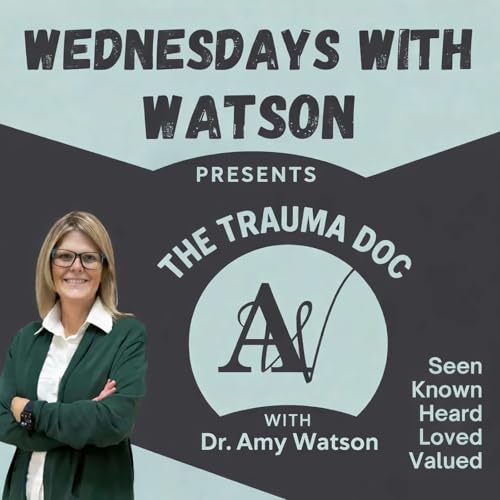
    SEEN KNOWN HEARD LOVED VALUED

    Más Menos
    31 m
  • Understanding Borderline Personality: Trauma, Brain Science, And A Path Forward
    Nov 19 2025

    Send us a text

    What if that sudden emotional storm isn’t manipulation but a nervous system crying out for safety? We dive into borderline personality disorder with open eyes and open hands, mapping the path from trauma to dysregulation and from stigma to skills. Drawing on clinical experience and brain science, we explain why BPD often feels like living with emotional third-degree burns: an amygdala that fires at shadows, a prefrontal cortex that goes offline when stress peaks, and an insula that amplifies empathy and pain. It’s a tough mix—high emotion, high sensitivity, low regulation—but it’s not a life sentence.

    We get practical about what actually helps. Hear how dialectical behavior therapy teaches distress tolerance, emotion regulation, interpersonal effectiveness, and mindfulness in a way that builds the “wise mind,” the space where logic meets compassion. We talk about EMDR for trauma memory processing, attachment-based therapy for early wounds, and where medication fits for co-occurring anxiety or depression. We also get real about the work: progress is possible and common with consistent treatment, yet it takes time, repetition, and support. Along the way, we highlight the overlooked strengths many with BPD carry—fierce loyalty, deep intuition, and profound empathy—and how those traits become assets when paired with regulation skills.

    If you love someone with BPD, your role matters. Consistency counters abandonment fear, kind boundaries protect both sides, and small wins deserve big celebrations. We share clear, usable strategies so relationships feel less like a battlefield and more like a safe place to grow. For those living with BPD, you are more than a diagnosis, and your brain can learn new patterns. Hope isn’t abstract; it looks like sessions, skills, steady people, and a growing sense of self that isn’t defined by the past.

    Press play, bring your questions, and stay for the tools. If the conversation helps, share it with a friend, subscribe for more trauma-informed episodes, and leave a review to help others find their way to hope.

    You ARE:
    SEEN KNOWN HEARD LOVED VALUED

    Más Menos
    26 m
  • When Anxiety Meets the Red Pen: Finding Worth Beyond Performance and Delays
    Oct 15 2025

    Send us a text

    You ARE:
    SEEN KNOWN HEARD LOVED VALUED

    Más Menos
    20 m
  • Wrestling with God: Faith in the Midst of Suffering
    Sep 10 2025

    Send us a text

    You ARE:
    SEEN KNOWN HEARD LOVED VALUED

    Más Menos
    22 m
  • The Hidden Link Between Trauma and Obsessive Compulsive Disorder
    Aug 13 2025

    Send us a text

    You ARE:
    SEEN KNOWN HEARD LOVED VALUED

    Más Menos
    22 m
  • What Happens After Survival? Exploring Post-Traumatic Growth
    Jul 23 2025

    Send us a text

    The journey through trauma is not simply about survival – it can become a pathway to profound personal transformation. In this deeply moving episode, Amy Watson reveals her own path from childhood abuse and a suicide attempt to becoming a trauma therapist and doctoral candidate, introducing listeners to the scientifically validated concept of post-traumatic growth.

    While trauma itself is never a gift, the struggle with trauma can catalyze remarkable changes in those who face it directly rather than avoid it. This isn't wishful thinking or toxic positivity – it's a psychological phenomenon documented in hundreds of research studies. Amy walks us through the five domains where this growth commonly emerges: discovering unexpected personal strength, deepening meaningful relationships, finding new life possibilities, gaining profound appreciation for everyday joys, and developing deeper spiritual understanding.

    What makes this conversation particularly powerful is Amy's transparency about her own experience – how the trauma that nearly destroyed her became the foundation for her life's purpose and deepest connections. She shares the pivotal moment when a friend told her she was "worth fighting for," highlighting how safe relationships become crucial anchors in the healing journey. Particularly striking is her honesty that post-traumatic growth can coexist with ongoing symptoms; healing isn't linear, and growth doesn't erase pain.

    For anyone weathering the aftermath of trauma, this episode offers genuine hope without minimizing suffering. Amy provides practical insights for nurturing growth through storytelling, social support, reflective thinking, and faith, while cautioning against rushing the process or using the concept to dismiss others' pain. Her message resonates with compassionate authority: you are not broken, healing is possible, and there is something meaningful waiting on the other side of survival. If you're struggling to believe transformation is possible after trauma, this conversation might just change your perspective.

    You ARE:
    SEEN KNOWN HEARD LOVED VALUED

    Más Menos
    31 m
  • When the World Feels Unsafe: How to Protect Your Peace While Living with PTSD
    Jul 2 2025

    Send us a text

    The world often feels fundamentally unsafe for those of us living with PTSD, even before we turn on the news. When global events like military conflicts, mass shootings, and political turmoil dominate headlines, our already sensitive nervous systems go into overdrive, confirming what trauma has already taught us – that danger lurks everywhere.

    Yet finding peace isn't about pretending the world is safe when it isn't. Rather, it's about creating micro-sanctuaries where your nervous system can reset amid chaos. This episode offers practical tools for navigating global uncertainty while protecting your mental health. We explore vagus nerve regulation techniques like the 4-4-4 breathing method (four seconds inhale, four seconds hold, four seconds exhale) and gentle self-massage along the vagal pathway. The 5-4-3-2-1 grounding exercise engages your senses and activates the logical part of your brain, pulling you away from emotional flooding during anxiety spikes.

    Connection proves essential despite our tendency to isolate when triggered. Having trusted people who understand your specific needs without judgment provides crucial safety. Rather than consuming news directly, consider having these trusted individuals filter important information for you. Alternatives like faith-based news summaries can provide necessary awareness without the cortisol-inducing presentation of mainstream media. Remember, we weren't designed to bear the emotional weight of global suffering – only to care well for our immediate circles of influence.

    Throughout your healing journey, hold tight to this truth: you aren't broken – you're healing. You aren't weak – you're surviving. The path to peace comes through small, intentional choices: one boundary, one breath, one moment of presence at a time. As Psalm 91 reminds us, even when thousands fall around us, we can find refuge. You are seen, known, heard, loved, and deeply valued, both by the God of the universe and by those who understand the unique challenges of living with trauma in an uncertain world.

    You ARE:
    SEEN KNOWN HEARD LOVED VALUED

    Más Menos
    28 m
  • Bipolar Disorder 101: Beyond the Stigma
    Jun 4 2025

    Send us a text

    The fog lifts momentarily, only to descend again. The lightning that fuels creativity brings thunder in its wake. This is the reality for millions living with bipolar disorder – not just mood swings, but profound shifts that can transform daily functioning into heroic acts of survival.

    Bipolar disorder remains one of the most misunderstood mental health conditions, carrying heavy stigma despite affecting countless lives. Through Jonah's powerful story, we witness the journey from despair to diagnosis, from isolation to community, from suffering to managing. His experience mirrors what many face: the electric highs of mania with its decreased need for sleep and grandiose thinking, followed by crushing depressive episodes that can last weeks.

    We carefully distinguish between bipolar I with its full manic episodes requiring hospitalization, and bipolar II with its less severe hypomanic states. The cycling between these poles creates a uniquely challenging experience that impacts relationships, work, and self-perception. What many don't realize is how frequently childhood trauma correlates with bipolar disorder development, as adverse experiences literally reshape developing brains and stress response systems.

    Treatment offers real hope – medication like mood stabilizers remains the cornerstone, while therapy provides essential coping strategies. Yet perhaps the greatest challenge lies in medication compliance, as feeling better often leads to abandoning treatment. For loved ones supporting someone with bipolar disorder, understanding this pattern becomes crucial, as does recognizing that people with this condition often have limited insight into their symptoms.

    Recovery doesn't mean cured – it means stable, self-aware, and equipped with tools to navigate life's challenges. Some of the most creative, resilient people manage this condition daily, finding strength through their struggles. Whether you're personally affected or supporting someone on this journey, remember this truth: bipolar disorder is part of someone's story, not their entire identity.

    Reach out for help if these conversations resonate with you. Through proper diagnosis, consistent treatment, and compassionate community, there is light even in the darkest storms. You are not your diagnosis. You are seen, you are known, you are heard, you are loved, and you are valuable beyond measure.

    You ARE:
    SEEN KNOWN HEARD LOVED VALUED

    Más Menos
    33 m