Diabesity Decodified - Is Food the root cause of Type 2 Diabetes Mellitus pandemic? Podcast Por Pandiyan Natarajan arte de portada

Diabesity Decodified - Is Food the root cause of Type 2 Diabetes Mellitus pandemic?

Diabesity Decodified - Is Food the root cause of Type 2 Diabetes Mellitus pandemic?

De: Pandiyan Natarajan
Escúchala gratis

This is is not medical advice. This is food for thought. Please discuss with your doctor before making any change in your food and lifestyle.

The escalating global incidence of Type 2 Diabetes Mellitus (T2DM) over the past five decades directly correlates with the parallel rise in overweight and obesity, forming an intertwined epidemic termed "diabesity." This podcast argues that the primary driver of this crisis is the pervasive consumption of "inappropriate food," particularly refined carbohydrates and ultra-processed foods, which disrupt metabolic homeostasis and promote weight gain. We propose that "appropriate food"—defined as whole, fresh, local, plant-based, minimally processed, or unprocessed foods, consumed in appropriate amounts and at appropriate times, and complemented by age-specific exercise—constitutes the fundamental and most effective intervention for T2DM prevention, management, and even remission. This lifestyle-centric approach, supported by emerging insights into the gut microbiome and personalized monitoring via continuous glucose monitors, often renders long-term pharmacotherapy unnecessary and potentially harmful. We critically examine the conventional reliance on chronic drug therapy, highlighting its significant side effects and questionable long-term morbidity/mortality benefits, advocating instead for its judicious use primarily in acute medical emergencies. This podcast calls for a paradigm shift in T2DM management, prioritizing sustainable, food-based lifestyle interventions over a drug-centric model.

Disclaimer: This is an opinion podcast for educational purposes only and does not constitute medical advice.

Listeners should consult their healthcare providers before making any decisions about diagnosis or treatment.

Enfermedades Físicas Higiene y Vida Saludable
Episodios
  • Is the Male Fertility Crisis Real - or Just a Number’s Game
    Oct 30 2025

    Is the Male Fertility Crisis Real — or Just a Numbers Game?

    You have read headlines warning of a crisis in male fertility, with reports of sperm counts halving over last few decades. But does this mean men are actually less fertile today, or are we simply getting lost in a “numbers game?”

    Sperm Counts: What Do They Really Tell Us?

    The main way to check male fertility is by semen analysis — a test that counts & measures sperm. Strangely experts have been arguing for 100+ years about how useful these counts really are. Even now, sperm counts are quoted to support the idea of a global fertility decline. But the truth is more complicated.

    Why the Numbers Keep Changing

    What counts as a “normal” sperm count? That depends on which expert — & which year — you ask. Over decades, World Health Organization (WHO) has changed its definition of normal sperm counts repeatedly. One example: in the 1940s, a healthy count was 60 million sperm per milliliter. By 2010, “normal” was only 15 million! Every time these numbers drop, many men suddenly shift from abnormal to normal without any biological change.

    Can We Trust the Test?

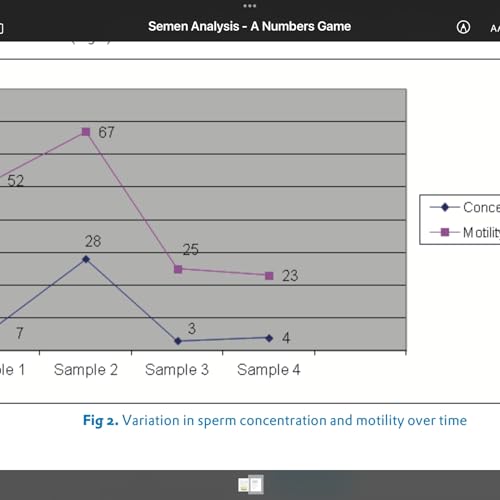
    Semen analysis is far from perfect. It is not just about one test — results can swing wildly from day to day, like stock market. Some men have counts that vary by more than 300% over time. Even experts looking at the same sample often disagree due to the test’s complexity and subjectivity.

    For instance, sperm described as “immotile” (not moving) may simply be “resting.” In one study, 20% started moving again after just a few minutes. Likewise, sperm shape assessment can vary a lot between different lab workers, making results hard to interpret.

    Are Men Really Becoming Less Fertile?

    Research does show that sperm concentrations have dropped in some places, with some studies reporting a 50% decrease since the 1970s. But here is the surprising finding: despite the decline in numbers, actual pregnancy rates have not changed much. Many men with low sperm count still become fathers, and plenty with high counts struggle.

    Experts say that sperm count alone cannot predict your chance of having children. Fertility is a team effort — it depends on both partners, not just the numbers from a man’s test result.

    What’s Really Going On?

    So why do sperm counts seem to be falling? Possible reasons include:

    • Changes in lifestyle, like poor diet, obesity, smoking, and stress.
    • More exposure to environmental toxins, such as pesticides and heavy metals.
    • Differences in how, where, and by whom tests are performed.

    But there is no unmistakable evidence these changes are causing an actual fertility crisis. The truth is that semen analysis is not as reliable or meaningful as other medical tests. There is no universal “good” or “bad” number to guarantee or rule out pregnancy. That is why experts urge caution about dramatic headlines.

    So, What Should You Do?

    If you are concerned about fertility, remember:

    • One semen analysis is not the whole story. Results can change.
    • Lifestyle matters — healthy habits help.
    • Fertility is about both partners, not just one person’s lab results.

    Doctors recommend using modern testing, focusing on overall health, &, when needed, working with specialists who look at the big picture, not just one number.

    The real story is not about fertility crisis — it is about measurement uncertainty. Instead of worrying about arbitrary numbers, experts now call for better research & more context, including population-based studies & tests tailored to diverse backgrounds. Male fertility is more complex than a single laboratory result, & it deserves a broader, more thoughtful look.

    Más Menos
    3 m
  • Daylight Saving Time — A Futile Exercise Against Nature and Logic
    Oct 23 2025

    Daylight Saving Time — A Futile Exercise Against Nature and Logic

    “Time and tide wait for no one,” goes the old saying. Yet, human beings have repeatedly tried to defy both — and in the process, have made time itself a victim of our misplaced ingenuity.

    Press enter or click to view image in full size

    A Century-Old Relic

    Daylight Saving Time was introduced over a century ago, first in Europe and then in the United States, as a wartime measure to save fuel and optimize daylight hours. During the First World War, it was believed that adjusting clocks could conserve coal used for lighting and heating. Though the war ended, this practice stubbornly survived — spreading across continents and calendars, long after its original purpose had faded into history. Even today, countries across Europe and North America continue to “spring forward” and “fall back,” changing the clock twice a year — a ritual with no rational, scientific, cultural, religious or economic justification in the modern era. The irony is profound: in an age that values precision, data, and evidence, we continue to alter time itself without a shred of scientific support.

    Neither Science nor Sense

    Numerous studies have examined the supposed benefits of DST — reduced energy use, improved productivity, and better public safety. The results are, at best, inconclusive, and often outright negative. Modern electricity consumption patterns differ vastly from those in 1916; energy saved on lighting is often lost to heating or air-conditioning. More concerning are the health effects. Disruptions to the body’s circadian rhythm — our natural biological clock — are well documented. Sleep researchers have associated DST transitions with increased risks of heart attacks, depression, workplace injuries, and road accidents. In truth, what we gain in one hour of light, we lose in well-being and mental balance.

    A Global Patchwork of Confusion

    There is not even global uniformity in this exercise. Some countries observe it; others do not. Even within countries, regions differ — a logistical nightmare for business, travel, broadcasting, and global communication. In an era of digital synchronization and atomic precision, forcing millions to adjust their clocks twice a year borders on absurdity.

    A Futile Habit That Refuses to Die

    I have been intrigued by this practice for over forty years, ever since I first encountered it in England. Over the decades, I have discussed it with innumerable individuals — scientists, citizens, and administrators alike. Not one has provided a convincing explanation as to why this practice began and why it continues. In my quest for clarity, I even wrote to the past Presidents of the United States, and to the Prime Ministers of the United Kingdom, Canada, New Zealand, and Australia — seeking a rationale. I also wrote to Science and The New York Times, hoping that someone, somewhere, might illuminate the reasoning. None did. Perhaps that silence speaks louder than any justification.

    A Call for Common Sense

    Daylight Saving Time is not merely outdated; it is a relic of wartime anxiety that has outlived its purpose. It offers no measurable benefit — only confusion, inconvenience, and subtle harm to public health. In a world that prides itself on evidence-based policy and scientific progress, it is astonishing that such a non-productive, disruptive, and irrational practice endures. Surely, in nations that have produced countless Nobel laureates, we can find the wisdom to let nature — and time — take their own course. I hope that this year marks the end of this antiquated ritual. Let us stop turning the clock back and forth in the name of tradition and instead move forward — with one standard time throughout the year. After all, time belongs to nature, not to human legislation.

    Más Menos
    5 m
  • How Old Is Too Old to Have a Baby? A Fertility Specialist’s Perspective
    Oct 17 2025

    For centuries, the timeline of motherhood was largely dictated by nature. Today, it’s a landscape of conflicting pressures.

    The human body has not changed with changing socio-cultural milieu. A woman’s fertility, peaks in her twenties, faces a significant decline by her mid-30s. This is an unyielding biological fact. Yet, simultaneously, the age of marriage & childbearing has progressively increased due to education, career ambitions, & economic shifts.

    This creates a painful paradox: women are building their lives in ways society encourages, only to find their biological capacity diminished when they are ready for motherhood. The result, is an “epidemic of infertility,” where age is a primary factor.

    The “Older Mother”: Two Profiles, One Deep Desire

    The term “older mother” often conjures a single image, but in clinical practice, we see two distinct, powerful narratives:

    1. The Woman Chasing a Basic Biological Instinct: These are women in their late 30s & 40s who, aware of their “diminishing fertility,” still seek to fulfill a “highly cherished desire.” They face not just medical challenges but also huge “peer pressure on women to achieve motherhood, sometimes, almost at any cost.” 2. The Post-Menopausal Woman: Altruism or Last Chance: This group includes women using donor eggs or acting as surrogates. To condemn them, we argue, is cruel. “Grandmothers do not reproduce for fun… they do it to help others or to attend to their basic biological need.” ,

    The Unassailable Right to Reproduce

    The 1994 International Conference on Population and Development in Cairo stated: “To be able to reproduce & raise a family is one of the fundamental rights of every individual.”

    This is not just a medical issue; it is an ethical one. Should the criteria for motherhood be age alone, or physical fitness, or a combination? Is it just to deny a fit & healthy 50-year-old woman the chance to be a mother, when an unfit 30-year-old faces no such barriers?

    The argument that an older mother may not live to see her child into adulthood is, as we called it, a “specious argument.” Even a decade of a mother’s love is a profound gift. “Many women who were denied motherhood for medical reasons are now going through successful pregnancies and deliveries… The advancement in medical management has offered motherhood for these women.” Why should a healthy old women be excluded from this progress?

    Where Do We Draw the Line? The Problem with Legislation

    The urge to legislate an age limit is understandable but ultimately flawed. As we stated, “To legislate on these issues would be futile,” often leading to a public backlash and drives desperate couples to “falsify their age to seek treatment elsewhere.”

    The responsibility, therefore, cannot rest with the community or a rigid law. It must be a shared decision between the individual, their family, and their doctor. “The ultimate responsibility should be that of the individual centre/doctors and the patient.”

    A Final Thought: Recalibrating Our Priorities

    Most poignant insight is a societal one: “There is a confusion & conflict between education, career & childbearing.” We must recognize that for many women, “the first & most important career… is childbearing; education & career are secondary… but childbearing must be done at the right time for optimal results.”

    Yet, for those for whom the “right time” comes later in life, our role is not to judge but to support. The question is not “How old is too old?” but “Is this individual, with her unique circumstances, physical health, & profound desire, prepared for the journey of motherhood?”

    Denying her that chance based on a number alone is to ignore the very purpose she holds dear: that “we all live to reproduce; reproduce & continue to live through our children.”

    Más Menos
    4 m
Todavía no hay opiniones