

Is the Male Fertility Crisis Real - or Just a Number’s Game

-
Narrado por:
-
De:
Is the Male Fertility Crisis Real — or Just a Numbers Game?
You have read headlines warning of a crisis in male fertility, with reports of sperm counts halving over last few decades. But does this mean men are actually less fertile today, or are we simply getting lost in a “numbers game?”
Sperm Counts: What Do They Really Tell Us?
The main way to check male fertility is by semen analysis — a test that counts & measures sperm. Strangely experts have been arguing for 100+ years about how useful these counts really are. Even now, sperm counts are quoted to support the idea of a global fertility decline. But the truth is more complicated.
Why the Numbers Keep Changing
What counts as a “normal” sperm count? That depends on which expert — & which year — you ask. Over decades, World Health Organization (WHO) has changed its definition of normal sperm counts repeatedly. One example: in the 1940s, a healthy count was 60 million sperm per milliliter. By 2010, “normal” was only 15 million! Every time these numbers drop, many men suddenly shift from abnormal to normal without any biological change.
Can We Trust the Test?
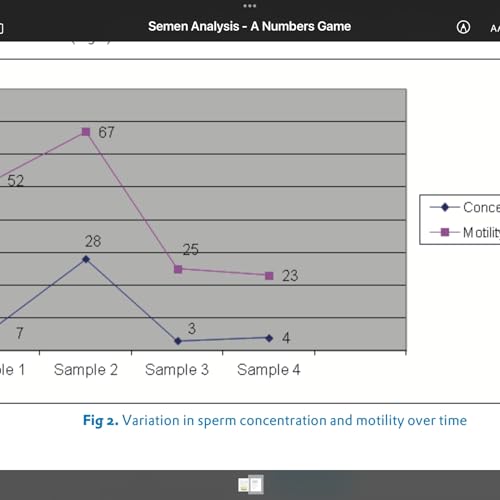
Semen analysis is far from perfect. It is not just about one test — results can swing wildly from day to day, like stock market. Some men have counts that vary by more than 300% over time. Even experts looking at the same sample often disagree due to the test’s complexity and subjectivity.
For instance, sperm described as “immotile” (not moving) may simply be “resting.” In one study, 20% started moving again after just a few minutes. Likewise, sperm shape assessment can vary a lot between different lab workers, making results hard to interpret.
Are Men Really Becoming Less Fertile?
Research does show that sperm concentrations have dropped in some places, with some studies reporting a 50% decrease since the 1970s. But here is the surprising finding: despite the decline in numbers, actual pregnancy rates have not changed much. Many men with low sperm count still become fathers, and plenty with high counts struggle.
Experts say that sperm count alone cannot predict your chance of having children. Fertility is a team effort — it depends on both partners, not just the numbers from a man’s test result.
What’s Really Going On?
So why do sperm counts seem to be falling? Possible reasons include:
- Changes in lifestyle, like poor diet, obesity, smoking, and stress.
- More exposure to environmental toxins, such as pesticides and heavy metals.
- Differences in how, where, and by whom tests are performed.
But there is no unmistakable evidence these changes are causing an actual fertility crisis. The truth is that semen analysis is not as reliable or meaningful as other medical tests. There is no universal “good” or “bad” number to guarantee or rule out pregnancy. That is why experts urge caution about dramatic headlines.
So, What Should You Do?
If you are concerned about fertility, remember:
- One semen analysis is not the whole story. Results can change.
- Lifestyle matters — healthy habits help.
- Fertility is about both partners, not just one person’s lab results.
Doctors recommend using modern testing, focusing on overall health, &, when needed, working with specialists who look at the big picture, not just one number.
The real story is not about fertility crisis — it is about measurement uncertainty. Instead of worrying about arbitrary numbers, experts now call for better research & more context, including population-based studies & tests tailored to diverse backgrounds. Male fertility is more complex than a single laboratory result, & it deserves a broader, more thoughtful look.