


Love piecing together clues before the detective does? Crave that moment when everything clicks into place? You'll find classic mysteries, clever puzzles, and stories where the fun is in solving the crime right alongside the characters.
You'll love this if you enjoy piecing together clues, red herrings, and alibis before the detective reveals whodunit.
Best enjoyed when you're ready to play armchair sleuth and test your deductive skills against the investigator.
Great pick if you also like locked room mysteries, cozy village crimes, or classic detective fiction.
Popular titles worth solving
This collection spans golden age classics to contemporary puzzles, from country house poisonings to modern murder investigations. You'll find cozy village mysteries alongside darker historical cases, all built around the same satisfying challenge: can you crack the case before the final reveal?


What makes a whodunit
A whodunit is a mystery where you get all the information you need to figure out who committed the crime. The detective (or amateur sleuth) interviews suspects, uncovers clues, and eventually reveals the culprit in a final explanation that ties everything together. The challenge is fair: you're playing the same game the investigator is, with the same evidence. This is different from a thriller, where the tension comes from danger and chases, or a procedural, where the focus is on police work and forensics. Here, it's about logic, observation, and outsmarting the writer.
You'll find a few main styles. Cozy mysteries happen in small towns or closed settings like country houses, usually with an amateur detective and no graphic violence. Police procedurals follow professional investigators through the nuts and bolts of an investigation. Locked room mysteries trap the crime in an impossible situation, like a murder in a sealed space with no way in or out. Hardboiled detective stories feature cynical private eyes in gritty urban settings, where the puzzle matters but so does the atmosphere. Each style plays the same basic game, just with different rules about tone and setting.
Four mysteries to start with
These four titles offer clear puzzles, memorable detectives, and satisfying solutions that reward careful attention to clues.


Title | Author | Series | Duration | Rating |
|---|---|---|---|---|
– | 6h 1m | 4.6/5 | ||
6h 41m | 4.4/5 | |||
– | 6h 59m | 4.4/5 | ||
8h 9m | 4.2/5 |
And Then There Were None by Agatha Christie strands ten strangers on an isolated island where they're accused of past crimes and begin dying one by one. The setup is straightforward, the tension builds steadily, and Christie plays fair with readers who want to solve the mystery alongside her characters.
The Hound of the Baskervilles by Arthur Conan Doyle sends Sherlock Holmes to the English moors to investigate a family curse involving a spectral hound. The case balances gothic atmosphere with logical deduction, making it an ideal introduction to Holmes without requiring knowledge of earlier stories.
The Westing Game by Ellen Raskin gathers sixteen heirs in a mansion to solve the puzzle of eccentric millionaire Sam Westing's death and claim his fortune. The book treats readers as active participants, laying out clues in plain sight while keeping the solution genuinely surprising until the final reveal.
The No. 1 Ladies' Detective Agency by Alexander McCall Smith introduces Precious Ramotswe, who opens Botswana's only female-owned detective agency and tackles cases with wisdom and warmth. This first book in the series combines gentle mysteries with richly drawn characters, offering a welcoming entry into detective fiction.
Golden age puzzle boxes
If you crave the puzzle-box elegance of the golden age, where every clue is fair and the solution hinges on pure logic, these classics deliver the genre at its finest.


Title | Author | Series | Duration | Rating |
|---|---|---|---|---|
6h 54m | 4.7/5 | |||
Raymond Chandler | 6h 33m | 4.4/5 | ||
13h 2m | 4.2/5 | |||
5h 17m | 4.5/5 |
The Murder of Roger Ackroyd by Agatha Christie remains one of the most ingenious mysteries ever written. A wealthy man is found dead in his study, and Hercule Poirot must sift through a village full of suspects. Christie plays fair with every clue, yet the final reveal redefined what a whodunit could do.
The Big Sleep by Raymond Chandler introduces private detective Philip Marlowe, who navigates blackmail, murder, and corruption in 1930s Los Angeles. The first book in the Marlowe series blends hard-boiled grit with a layered mystery. Chandler's prose is sharp, and the puzzle unfolds through atmosphere as much as deduction.
The Greek Coffin Mystery by Ellery Queen is a locked-room puzzle that epitomizes fair-play detection. When a blind art dealer dies and his will vanishes, Ellery Queen the detective and his father must untangle a web of false solutions. Every clue is laid bare for readers to solve alongside the sleuth.
A Study in Scarlet by Arthur Conan Doyle is the first Sherlock Holmes novel, introducing the world's most famous detective and his method of logical deduction. A body is discovered in an empty house with no apparent cause of death. Holmes deciphers the mystery through observation, forensic detail, and relentless reasoning.
When the storyteller lies
The best whodunits make you question whether the voice guiding you through the mystery is the one you should trust at all.


Title | Author | Series | Duration | Rating |
|---|---|---|---|---|
6h 54m | 4.7/5 | |||
– | 19h 57m | 4.4/5 | ||
– | 8h 33m | 4.5/5 | ||
– | 16h 39m | 4.1/5 |
The Murder of Roger Ackroyd by Agatha Christie follows Hercule Poirot as he investigates a wealthy man's death in a quiet English village. The story unfolds through the eyes of Dr. Sheppard, the local physician who assists Poirot. Christie plays with your assumptions about who can be trusted, and when the solution arrives, it redefines everything you thought you understood.
Gone Girl by Gillian Flynn begins when Amy Dunne vanishes on her fifth wedding anniversary, and her husband Nick becomes the prime suspect. The story alternates between Nick's present-day account and Amy's diary entries, each offering conflicting versions of their marriage. As the layers peel back, you realize how thoroughly you've been manipulated by what you've heard.
The Silent Patient by Alex Michaelides centers on Alicia Berenson, a painter who shoots her husband and then stops speaking entirely. Psychotherapist Theo Faber becomes obsessed with uncovering why she went silent. The story builds through Theo's perspective as he tries to reach Alicia, and the final revelation transforms everything you believed about his motives.
The 7½ Deaths of Evelyn Hardcastle by Stuart Turton traps Aiden Bishop in a time loop at a manor house where he must solve Evelyn Hardcastle's murder. Each day he wakes in a different guest's body, seeing the events through new eyes and biases. The shifting perspectives fracture your sense of truth until the ending locks all the pieces into place.
Mysteries from around the world
Whether you crave the familiar comforts of an Anglo-American detective or a mystery rooted in a completely different culture, these whodunits deliver ingenious puzzles from around the globe.


Title | Author | Series | Duration | Rating |
|---|---|---|---|---|
Keigo Higashino | 9h 2m | 4.2/5 | ||
Sujata Massey | 14h 34m | 4.2/5 | ||
5h 10m | 4.3/5 | |||
7h 59m | 4.6/5 |
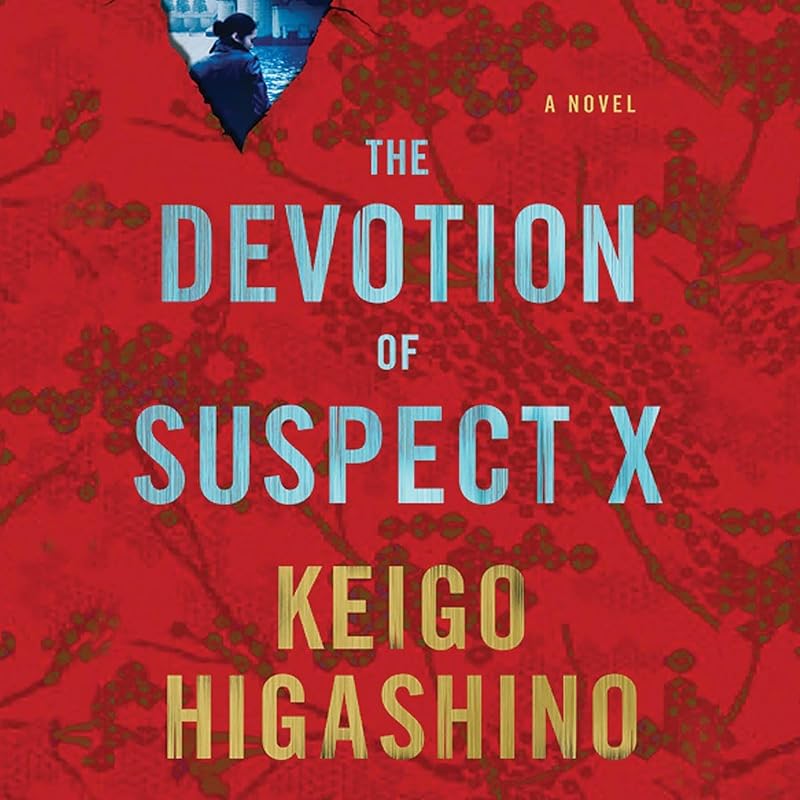
The Devotion of Suspect X by Keigo Higashino follows a Tokyo detective investigating a murder where the prime suspect has an airtight alibi. Her reclusive neighbor, a brilliant mathematician, may hold the key. Set in contemporary Japan, the novel explores loyalty and sacrifice while challenging readers to unravel a meticulously constructed puzzle.
The Widows of Malabar Hill by Sujata Massey introduces Perveen Mistry, Bombay's only female lawyer in the 1920s, who investigates suspicious changes to a wealthy man's will. The first in a series, it weaves legal intrigue with social constraints facing women in colonial India, offering a window into a world where gender and tradition complicate every step of the investigation.
The Honjin Murders by Seishi Yokomizo presents a locked-room mystery in a rural Japanese village in 1937, where a bride and groom are slain on their wedding night. Detective Kosuke Kindaichi must navigate family secrets and village hierarchies to solve the impossible crime, blending traditional Japanese atmosphere with classic puzzle construction.
Death on the Nile by Agatha Christie sends Hercule Poirot on a luxury steamer down the Nile when a wealthy heiress is murdered. The Egyptian setting provides exotic glamour while Poirot methodically interviews passengers, each with motive and opportunity. Christie's masterful plotting keeps suspects and readers guessing until the final revelation.
How the puzzle evolved
Whodunit mysteries have evolved from the 1920s to today, shaping how we think about crime and detection.

A Century of Fair Play
The whodunit emerged in the 1920s as a puzzle for readers to solve alongside the detective. Agatha Christie perfected the form with innovations like the unreliable narrator in The Murder of Roger Ackroyd and the isolated setting in And Then There Were None. Dorothy L. Sayers, Ellery Queen, and John Dickson Carr established the genre's golden age conventions: a closed circle of suspects, a brilliant detective, and clues presented fairly to the audience. The emphasis was on intellectual challenge, not violence or psychology.
By the 1960s, writers like P.D. James and Ruth Rendell began deepening the formula. They kept the puzzle structure but added psychological complexity and social realism. The detective became more human, the motives more nuanced. Colin Dexter's Inspector Morse novels in the 1970s brought literary ambition to the genre, proving that whodunits could explore character and theme without sacrificing the satisfaction of a clever solution.
The 21st century has seen the whodunit thrive by blending tradition with fresh voices. Louise Penny's Inspector Gamache series brought emotional depth to the cozy mystery, while Tana French reimagined the detective novel with literary prose and unreliable perspectives. Anthony Horowitz revived the golden age puzzle with postmodern twists in Magpie Murders, and Richard Osman's The Thursday Murder Club proved the genre could be both playful and bestselling. The core appeal remains unchanged: a mystery that invites you to think, guess, and ultimately be surprised.
Defining authors
These 16 authors defined the whodunit tradition, creating detectives and puzzles that became templates for the genre.
Period | Author |
|---|---|
1920s–1970s | |
1920s–1950s | |
1920s–1970s | |
1930s–1970s | |
1930s–1980s | |
1930s–1970s | |
1960s–2000s | |
1960s–2010s | |
1970s–1990s | |
1980s–2010s | |
1980s–present | |
2000s–present | |
2000s–present | |
2000s–present | |
2010s–present | |
2020s–present |
Landmark books
These 18 books introduced innovations in structure, clues, and misdirection that influenced countless mysteries to come.
Year | Title | Author | Series | Duration | Rating |
|---|---|---|---|---|---|
1926 | 6h 54m | 4.7/5 | |||
1929 | 10h 57m | 3.9/5 | |||
1930 | 8h 11m | 4.6/5 | |||
1933 | Lord Peter Wimsey | 2h 19m | 4.4/5 | ||
1934 | 5h 18m | 4.4/5 | |||
1934 | 8h 49m | 4.4/5 | |||
1935 | 10h 11m | 4.1/5 | |||
1939 | – | 6h 1m | 4.6/5 | ||
1962 | P.D. James | 9h 2m | 4.2/5 | ||
1975 | 7h 42m | 4.3/5 | |||
1981 | 9h 32m | 4.3/5 | |||
1988 | 11h 2m | 4.4/5 | |||
2005 | 9h 34m | 4.4/5 | |||
2007 | 20h 24m | 4.1/5 | |||
2009 | 8h 35m | 4.2/5 | |||
2016 | 15h 48m | 4.4/5 | |||
2020 | 12h 26m | 4.4/5 |
Ready to start solving mysteries? New Audible customers get a free audiobook when they start a free 30-day trial. Pick a classic locked-room puzzle or a modern detective story, and see if you can crack the case before the final chapter.


