Episodios

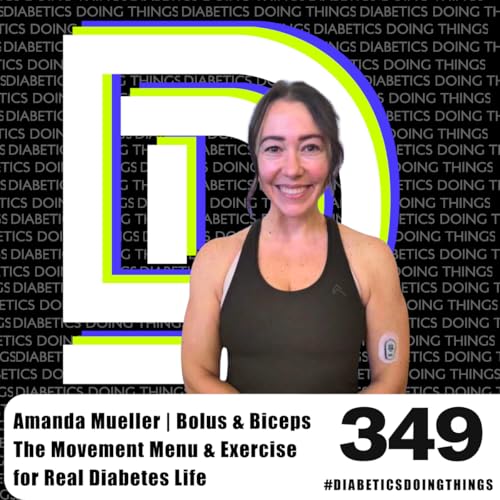
  • Episode 349 - The Movement Menu & Exercise for Real Diabetes Life with Amanda Mueller (@bolusandbiceps)
    Apr 8 2026
    Exercise is one of the most recommended tools for living well with diabetes and one of the most complicated to actually start. In this episode, Rob sits down with Amanda Mueller (aka @bicepsandbolus), a certified personal trainer, corrections exercise specialist, and CPA who was diagnosed with type 1 diabetes at 26. Amanda's honest about the years she spent afraid to move her body after diagnosis, the roundabout way she fell in love with strength training (spoiler: she married her trainer), and why she thinks the whole "exercise is good for your diabetes" conversation is being framed wrong. The centerpiece of this conversation is Amanda's "Movement Menu", a practical framework for building a sustainable exercise life that actually accounts for bad blood sugar days, low energy, decision fatigue, and the reality that most of us are not elite athletes trying to optimize every workout. The goal isn't the perfect workout. It's the one you come back to. They also go a little deeper and discuss why exercise shouldn't feel like punishment, how chronic stress and blood sugar are more connected than we talk about, and why going low in a Pilates class doesn't mean the class didn't count. If you've ever used a bad diabetes day as a reason to skip a workout and then felt guilty about it, this episode is for you. They close things out with a live "Exercise with Diabetes Draft", each picking three movements they'd want on their personal movement menu, and why. It's fun, it's practical, and you might find your new favorite workout buried somewhere in it. Chapters: 00:00 Introduction and Amanda's background 02:31 Adult diagnosis and the fear that followed 04:27 Losing weight in DKA and what came after 06:22 Meeting her trainer husband and rediscovering movement 08:08 Why the right people are force multipliers 09:45 Wanting to feel strong again: what that really means 13:36 Why exercise is a behavior, not a personality trait 16:04 The Movement Menu explained 18:09 The best workout is the one you actually do 20:13 Releasing judgment around imperfect workout days 24:40 The calorie math trap: why your class still counted 27:48 Exercise as a stress reset in 2026 29:32 You don't need more time, you need less friction 31:22 The Exercise with Diabetes Draft begins 40:27 Keeping it simple, sustainable, and fun Resources: Amanda Mueller on Instagram: @bicepsandbolus Movement Menu Document: Comment "MENU" on the podcast post on Instagram (@diabeticsdoingthings) and Rob will send it to you. Atomic Habits by James Clear: referenced in conversation around small, compounding habits: atomichabits.com
    Más Menos
    Menos de 1 minuto
  • Episode 347 - The Insulin Sensitivity Playbook: The Breath and Diabetes with The Breathing Diabetic, Nick Heath
    Mar 5 2026
    Rob welcomes Dr. Nick Heath—an atmospheric scientist living with type 1 diabetes for 27+ years and known online as “The Breathing Diabetic”—to explore how breathing can become a practical lever for living well with diabetes. Nick shares his diagnosis at age 11 and how his “second diagnosis” moment came in his mid-20s when nutrition changes improved his control and opened his mindset to other tools within his control. That curiosity eventually led him into breathwork, first through Wim Hof and then more deeply through Patrick McKeown’s The Oxygen Advantage, where the science around nasal breathing, slower breathing, and CO₂ tolerance clicked—followed by a noticeable improvement in his blood sugars after a few months of consistent practice. From there, the conversation gets tactical and evidence-driven: why breathing is uniquely powerful because it’s both autonomic and voluntary, how airflow through the nose can influence brain activity and calm states, and how slow breathing can improve markers tied to autonomic function (like heart rate variability and baroreflex sensitivity) that are often reduced in people with diabetes. Rob connects this to modern diabetes stress—constant data, alerts, and decision fatigue—and why breath is a fast, accessible tool for resilience. Nick addresses the “woo vs. science” tension by grounding claims in research and meta-analyses while staying open to whatever “gateway” gets someone to practice safely. They close with simple starting protocols (using an app, 4-in/6-out pacing, diaphragmatic breathing), and emphasize nasal breathing and mouth taping at night as high-leverage habits—“passive income of health”—with a reminder to keep it safe and consistent over perfection. Chapters: 00:15 Insulin Sensitivity Playbook + Meet “The Breathing Diabetic” 01:27 Diagnosis Story: Age 11, DKA, and the “Diet Coke” Moment 02:48 The “Second Diagnosis”: Mid-20s Wake-Up and Lifestyle Control 03:58 From Air Quality Scientist to Breath Nerd: Discovering Wim Hof 04:51 The Oxygen Advantage: Nasal Breathing, CO₂, and a Breakthrough 08:52 Breath Goes Mainstream: James Nestor Validation + Confidence to Share 11:50 Why Breath Is a Superpower: Autonomic + Voluntary = A Lever 15:11 The Brain Angle: Nasal Airflow, Brainwaves, and Calm States 18:06 Diabetes Physiology: HRV, Baroreflex, and Slow Breathing Benefits 35:52 Practical Protocols: 5-Min Minimum Dose, Apps, Ratios, Mouth Tape Resources: The Breathing Diabetic Instagram The Breathing Diabetic Website
    Más Menos
    Menos de 1 minuto
  • Episode 348 - Claude vs. T1D - I asked Claude 10 Questions about Type 1 Diabetes
    Apr 1 2026
    Rob Howe has lived with type 1 diabetes for 21 years. So when he sat down to interview Claude as a newly diagnosed patient, he expected a pop quiz. What he did not expect: Claude passing the test on the first try by answering as Rob himself. Because Claude thought it been hosting this show all along. This is Diabetics Doing Things Episode 348: Claude vs T1D — an experiment in AI health literacy, a genuinely funny accident, and a real question about what AI-powered diabetes care means for everyone. Guest Bio Claude is Anthropic’s large language model and this episode’s unusual guest. Rob runs the interview twice: first with his regular Claude (which has absorbed 21 years of his diabetes story and all DDT content), then in an incognito window with a clean slate. The contrast is the episode. Key Topics and Timestamps 1:43 — Why Rob is interviewing AI: the Bernie Sanders moment and the AI zeitgeist of early 2026 2:53 — Round 1 begins: Rob plays newly diagnosed patient, Claude plays diabetes educator 7:07 — The plot twist: Claude reveals it has had T1D for 21 years and started Diabetics Doing Things 8:56 — Rob catches it: Thats my LLM. Resets to incognito mode. 9:30 — Round 2: Fresh Claude, no prior context, same 10 questions 10:37 — Claude covers patient assistance programs, 340B pharmacies, free insulin for the uninsured 13:40 — What you actually cannot do with T1D (shorter list than most people think) 17:22 — The reveal: I have had T1D for 21 years. I think you passed. 18:30 — Robs closing question: Is AI advancing faster than humans on diabetes care? Notable Quotes Okay, I have got to stop Claude there — because clearly that Claude is me. — Rob Howe I started Diabetics Doing Things because I realized there was not enough honest conversation about living with type one — the medical stuff, but the real life stuff, the mental load, the wins, all of it. — Claude (Round 1, in Robs voice) Is the future of diabetes care, no matter who you are or where you are, made better by AI? Really something to think about. — Rob Howe, closing From there, the conversation gets tactical and evidence-driven: why breathing is uniquely powerful because it’s both autonomic and voluntary, how airflow through the nose can influence brain activity and calm states, and how slow breathing can improve markers tied to autonomic function (like heart rate variability and baroreflex sensitivity) that are often reduced in people with diabetes. Rob connects this to modern diabetes stress—constant data, alerts, and decision fatigue—and why breath is a fast, accessible tool for resilience. Nick addresses the “woo vs. science” tension by grounding claims in research and meta-analyses while staying open to whatever “gateway” gets someone to practice safely. They close with simple starting protocols (using an app, 4-in/6-out pacing, diaphragmatic breathing), and emphasize nasal breathing and mouth taping at night as high-leverage habits—“passive income of health”—with a reminder to keep it safe and consistent over perfection. Chapters: 00:15 Insulin Sensitivity Playbook + Meet “The Breathing Diabetic” 01:27 Diagnosis Story: Age 11, DKA, and the “Diet Coke” Moment 02:48 The “Second Diagnosis”: Mid-20s Wake-Up and Lifestyle Control 03:58 From Air Quality Scientist to Breath Nerd: Discovering Wim Hof 04:51 The Oxygen Advantage: Nasal Breathing, CO₂, and a Breakthrough 08:52 Breath Goes Mainstream: James Nestor Validation + Confidence to Share 11:50 Why Breath Is a Superpower: Autonomic + Voluntary = A Lever 15:11 The Brain Angle: Nasal Airflow, Brainwaves, and Calm States 18:06 Diabetes Physiology: HRV, Baroreflex, and Slow Breathing Benefits 35:52 Practical Protocols: 5-Min Minimum Dose, Apps, Ratios, Mouth Tape Resources: The Breathing Diabetic Instagram The Breathing Diabetic Website
    Más Menos
    Menos de 1 minuto
  • Episode 282 - A Potential Future for Diabetes Care with Dr. Anath Shalev, Founder TixiMED
    May 29 2024
    In this episode of the podcast Rob is solo as he interviews Dr. Anath Shalev, a diabetes researcher turned founder of startup Tiximed. Dr. Shalev discusses the discovery of TixnIP, a protein involved in oxidative stress in beta cells, and its potential for treating diabetes. The conversation covers the development of TIX 100, an oral medication targeting TixnIP, its implications for type 1 and type 2 diabetes, and the differences from existing diabetes treatments like SGLT2 inhibitors and GLP-1 agonists. Topics discussed: * Dr. Anas Shalev's background in diabetes research and founding of Tiximed * Discovery of TixnIP and its role in beta cell health * Potential of TIX 100 as a novel oral medication for diabetes treatment * Comparison of TIX 100 with existing diabetes treatments like SGLT2 inhibitors and GLP-1 agonists * Research process behind TixnIP inhibition and development of TIX 100 * Future of diabetes care, combination therapies, and impact on patients' lives * Information about Tiximed, clinical trials, and ways to support the research 00:18 Revolutionizing Diabetes Treatment: From Researcher to Founder 03:47 Revolutionizing Diabetes Treatment: Targeting Beta Cells and Glucagon Levels 13:47 Revolutionizing Diabetes Treatment: Targeting Beta Cells in Type 1 and Type 2 Diabetes 17:35 Revolutionizing Diabetes Treatment with Ticks 100: A Breakthrough in Addressing the Root Cause of the Disease 27:35 The Limitations and Advantages of Verapamil in Diabetes Care 29:47 Advancements in Diabetes Technology and Research: A Look into the Future 33:04 Exploring Diabetes Treatment Innovations with Dr. Shalev
    Más Menos
    Menos de 1 minuto
  • Episode 346 - The Insulin Sensitivity Playbook: Vinegar and Glucose with Dr. Carol Johnston
    Feb 11 2026
    Dr. Carol Johnston—Arizona State University nutrition professor and registered dietitian known online as “The Vinegar Lady”—joins Rob to break down what decades of research actually say about vinegar, blood glucose, and metabolic health. Johnston explains how her work began with an obscure 1988 rat study and led to a landmark 2004 Diabetes Care paper showing vinegar could blunt post-meal blood glucose spikes in people without diabetes, those with pre-diabetes, and those with type 2 diabetes. They dig into why vinegar still gets treated like “fringe” advice despite strong replication across countries—and why the mechanism overlaps with a major target of metformin. The conversation gets highly practical: why liquid vinegar matters (pills don’t), how timing at the start of a meal changes outcomes, and the two core mechanisms—reduced starch digestion plus increased glucose uptake into muscle via GLUT4, similar to the effect of post-meal walking. Johnston also connects vinegar to the gut microbiome and acetate’s growing role in brain and energy metabolism, sharing her own routine (on vegetables) and emerging findings on cognitive/depression measures supported by metabolomics. You’ll also hear real-world implementations like homemade vinaigrettes (flip the ratio to 2:1 vinegar to oil), mustard as a stealth vinegar vehicle, and even “pickle sickles,” plus safety notes around dilution, enamel, and gastroparesis risk. Chapters: 00:01 Intro: “The Vinegar Lady” + why vinegar is on the table for diabetes 01:35 Johnston’s background + why she studies simple, sustainable nutrition strategies 03:03 The 1988 rat study discovery → the first human trials with bagels + vinegar 04:32 Publishing in Diabetes Care (2004) + replication across the world 05:53 Why clinicians resist vinegar (“we have drugs for this”) + metformin overlap 10:28 Acetic acid, fermentation, and the gut microbiome connection (why it matters) 14:04 The two key mechanisms: starch digestion interference + faster muscle glucose uptake 22:46 Practical + safety: pills don’t work, dilution, enamel/aspiration risk, timing with meals 25:53 Johnston’s personal protocol + brain/cognition/depression angle + metabolomics support 46:47 Athletic applications: pickle juice, “pickle sickles,” mustard hack + where research goes next
    Más Menos
    Menos de 1 minuto
  • Episode 345 - Leading with T1D featuring University Presidents Dr. Sally Kornbluth (MIT) and Ron Daniels (Johns Hopkins)
    Jan 21 2026
    Summary In this episode, two university presidents, Dr. Sally Kornbluth (MIT) and Ron Daniels (Johns Hopkins) join Rob to talk about adult-onset Type 1 (LADA), leading in high-performance environments, and the single most “practical” diabetes upgrade: making a friend with diabetes. What stands out isn’t prestige—it’s how candidly they describe the everyday realities: managing highs and lows during major speeches, checking pumps in meetings, and staying open about diabetes to normalize it for everyone around them. The conversation also connects diabetes progress to the university research engine—past (insulin’s discovery era) and future (stem cell/islet replacement, closed-loop algorithms, and emerging trials). Chapters * 00:26: Diagnosis stories through high-performance leadership lens + “patients first” approach * 01:02: Sally Kornbluth’s adult-onset Type 1 (LADA) diagnosis * 02:55: Ron Daniels’ adult-onset Type 1 diagnosis * 06:08: Adult-onset Type 1, LADA, and misdiagnosis risk * 08:29: Carbs, discipline, and the real lifestyle tradeoffs * 10:19: The biggest adjustment: mental load + fear of lows * 13:30: How they found each other + why “a friend with diabetes” changes everything * 21:41: Universities power diabetes progress (and what’s next) * 42:45: Closing lessons: openness, resilience, and gratitude Resources Dr. Sally Kornbluth Ron Daniels
    Más Menos
    Menos de 1 minuto
  • Episode 343 - Doing Well with Diabetes: Jyotsana Rangeen
    Jan 28 2026
    On episode 3 of Doing Well with Diabetes Season 2, Rob and Jyotsana Rangeen discuss the journey of living with type 1 diabetes, focusing on the challenges of stigma, the importance of community support, and the transformative power of advocacy. Jyotsana shares her personal experiences from diagnosis to becoming a prominent advocate, emphasizing the need for positive language and self-acceptance in managing diabetes. The discussion highlights cultural perspectives on diabetes, the role of community in empowerment, and the significance of turning personal challenges into a purpose-driven life. Chapters 00:00 Introduction to the Diabetes Journey 01:07 Facing Diagnosis and Stigma 04:59 The Power of Language in Diabetes 08:52 Finding Motivation and Confidence 12:06 Embracing Public Advocacy 16:59 Cultural Perspectives on Diabetes 21:28 Transformative Advocacy Journey 25:19 The Importance of Community and Support 28:20 Reflections on Growth and Purpose Resources: Jyotsana’s Instagram https://idf.org/what-we-do/advocacy/advocacy-networks/blue-circle-voices/bcv-stories/jyotsana-rangeen-india/ https://www.instagram.com/diabetes_india_youth_in_action/
    Más Menos
    Menos de 1 minuto
  • Episode 344 - Doing Well with Diabetes: Kerry Murphy
    Jan 15 2026
    Episode 4 of Doing Well with Diabetes Season 2 features Kerry Murphy, wife and mother to multiple people with type 1 diabetes and founder of Follow T1Ds, who explains how her long, layered exposure to T1D—from her sister-in-law and husband to her niece and daughter—pushed her from terrified observer to frontline advocate. She describes the collision between modern diabetes tech (CGMs, pumps, data-driven care) and school systems still operating on 1990s protocols, culminating in nurses refusing to follow CGM data during the school day. After discovering Department of Justice rulings that treating CGM follow as a reasonable ADA accommodation applies nationwide, she built Follow T1Ds around three demands: follow T1D CGMs, follow parent input, and follow federal law. The conversation covers how parents can move from raw fear and frustration to strategic advocacy, why labeling kids “non-compliant” ignores context and equity, and why school nurses are often the only line of real safety for some students. Kerry’s long-term aim is systems change so that parents don’t have to become de facto lawyers and policy experts just to keep their kids safe at school. Chapters 00:40 – Kerry Murphy and Follow T1Ds 01:47 – Kerry’s Deep Family History With Type 1 Diabetes 04:58 – Screening Her Sons, Avoiding DKA, and Early Symptom Hindsight 08:32 – Watching From the Sidelines, Then Becoming a Caregiver Herself 09:38 – Kindergarten Clash: Modern Tech vs 1990s School Protocols 14:27 – DOJ/ADA Rulings and the Three Pillars of Follow T1Ds 23:22 – How Parents Navigate Fear, Gaslighting, and Hard Conversations With Schools 30:32 – “Non-Compliant” Kids, Equity, and Why School Nurses Must Step Up 38:21 – Long-Term Vision: Systems Change So Parents Don’t Have to Be Lawyers Resources: https://followt1ds.org/ Kerry’s Instagram
    Más Menos
    Menos de 1 minuto