

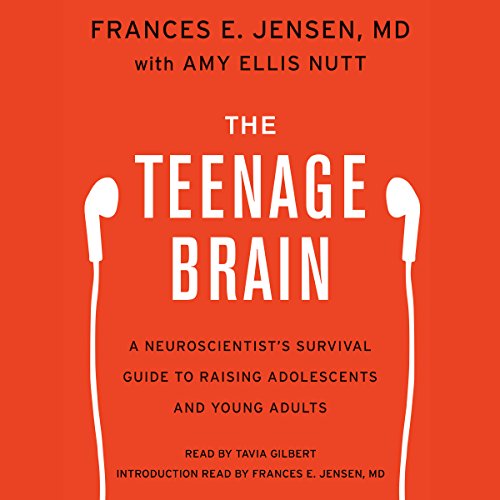
The Teenage Brain
A Neuroscientist's Survival Guide to Raising Adolescents and Young Adults
No se pudo agregar al carrito
Add to Cart failed.
Error al Agregar a Lista de Deseos.
Error al eliminar de la lista de deseos.
Error al añadir a tu biblioteca
Error al seguir el podcast
Error al dejar de seguir el podcast
Obtén 30 días de Standard gratis

The Teenage Brain
Compra ahora por $26.09
-
Narrado por:
-
Tavia Gilbert
-
Frances E. Jensen
A New York Times Bestseller
Renowned neurologist Dr. Frances E. Jensen offers a revolutionary look at the brains of teenagers, dispelling myths and offering practical advice for teens, parents and teachers.
Dr. Frances E. Jensen is chair of the department of neurology in the Perelman School of Medicine at the University of Pennsylvania. As a mother, teacher, researcher, clinician, and frequent lecturer to parents and teens, she is in a unique position to explain to readers the workings of the teen brain. In The Teenage Brain, Dr. Jensen brings to readers the astonishing findings that previously remained buried in academic journals.
The root myth scientists believed for years was that the adolescent brain was essentially an adult one, only with fewer miles on it. Over the last decade, however, the scientific community has learned that the teen years encompass vitally important stages of brain development. Samples of some of the most recent findings include:
- Teens are better learners than adults because their brain cells more readily "build" memories. But this heightened adaptability can be hijacked by addiction, and the adolescent brain can become addicted more strongly and for a longer duration than the adult brain.
- Studies show that girls' brains are a full two years more mature than boys' brains in the mid-teens, possibly explaining differences seen in the classroom and in social behavior.
- Adolescents may not be as resilient to the effects of drugs as we thought. Recent experimental and human studies show that the occasional use of marijuana, for instance, can cause lingering memory problems even days after smoking, and that long-term use of pot impacts later adulthood IQ.
- Multi-tasking causes divided attention and has been shown to reduce learning ability in the teenage brain. Multi-tasking also has some addictive qualities, which may result in habitual short attention in teenagers.
- Emotionally stressful situations may impact the adolescent more than it would affect the adult: stress can have permanent effects on mental health and can to lead to higher risk of developing neuropsychiatric disorders such as depression.
Dr. Jensen gathers what we’ve discovered about adolescent brain function, wiring, and capacity and explains the science in the contexts of everyday learning and multitasking, stress and memory, sleep, addiction, and decision-making. In this groundbreaking yet accessible book, these findings also yield practical suggestions that will help adults and teenagers negotiate the mysterious world of adolescent development.
Los oyentes también disfrutaron:


Las personas que vieron esto también vieron:




Definitely a win for a single mother of teens
Se ha producido un error. Vuelve a intentarlo dentro de unos minutos.
Very much enjoyed
Se ha producido un error. Vuelve a intentarlo dentro de unos minutos.
Great book
Se ha producido un error. Vuelve a intentarlo dentro de unos minutos.
All parents a must Read
Se ha producido un error. Vuelve a intentarlo dentro de unos minutos.
The second half of the book gets a little too deep into anecdotes about specific tragedies around specific topics. I wish the narrative stayed on evidence and trends instead of diving into tragedy voyeurism. It seemed like the author went from trying to inform to trying to scare.
Good Information About How Teens Act
Se ha producido un error. Vuelve a intentarlo dentro de unos minutos.