

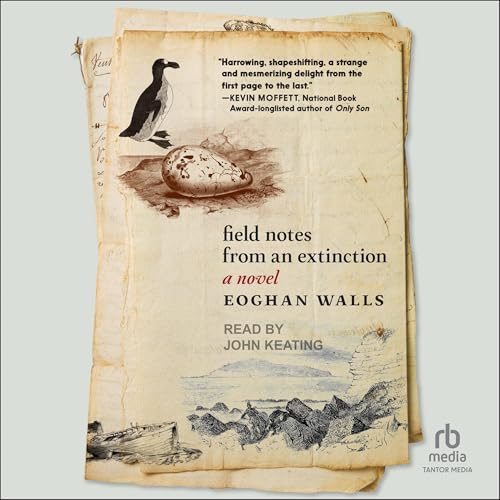
Field Notes from an Extinction
A Novel
No se pudo agregar al carrito
Add to Cart failed.
Error al Agregar a Lista de Deseos.
Error al eliminar de la lista de deseos.
Error al añadir a tu biblioteca
Error al seguir el podcast
Error al dejar de seguir el podcast
Obtén 30 días de Standard gratis

Field Notes from an Extinction
Compra ahora por $19.07
-
Narrado por:
-
John Keating
-
De:
-
Eoghan Walls
Told in the vernacular of the day, this novel-as-notebook features a nineteenth-century ornithologist on a remote Irish island—from the author of indie favorite The Gospel of Orla.
Field Notes from an Extinction follows the life and work of one Ignatius Green, a fictitious English scientist dispatched by the Royal Society to the remote island of Tor Mor off the northern Irish coast. Green is single-minded and self-righteous, brilliant and bumbling. He is determined to set the record straight on the mating rituals, feeding and care of hatchlings, and other minutiae he can gather about the Great Auk (pinguinus impennis).
Green's world is shattered when his monthly goods delivery arrives ravaged by the local Irish townsmen. His fury at their impertinence is matched only by his dismay at finding a small child amid the shipment—dirty, abandoned, mute, feral, and unmanageable. Worse, the locals are growing restless and hungry. And there is talk sweeping the land of a terrifying woman with unnatural power.
Green fights for his survival against brigands and hunger and the resolve of a fierce and angry child. And, perhaps, for a wider understanding of family amidst roiling societal unrest.
©2026 Eoghan Walls (P)2026 Tantor MediaLos oyentes también disfrutaron:









Las personas que vieron esto también vieron:









To nature lovers this book is bad
Se ha producido un error. Vuelve a intentarlo dentro de unos minutos.