Episodios

  • Ep 49: The Success Trap | When High Performance Turns Into Self-Destruction with Kent Bray
    Dec 3 2025
    Episode Summary

    Kent Bray was a director at Citibank, an Oxford Blue, and a professional rugby player who had achieved everything society told him would bring happiness. Instead, he found himself consuming 20 to 30 grams of cocaine weekly, spending £80,000 a year on his addiction, and nearly dying before entering rehab at 140 pounds. In this conversation, we explore the dangerous intersection of high achievement and internal collapse, why successful men struggle to ask for help, and the specific tools that created Kent's recovery. This is a raw, honest discussion about people pleasing, external validation, identity dissolution, and the actionable steps that lead from rock bottom to purpose.

    Guest Bio

    Kent Bray went from elite rugby fields to the London trading floors as a high performer before everything came to a sudden halt. Originally from Queensland, he earned a place at Oxford University and played rugby at the highest levels with Queensland, Oxford, and Harlequins before building a second career in finance as a Director and FX trader at Citibank London.

    At the height of outward success, addiction derailed his life. But beneath that, as many high performers recognize, were pressure, burnout, and the slow erosion of self that so often hides behind achievement. Hitting rock bottom forced a reckoning and a complete rebuild.

    Today, he is a counsellor and mentor who helps high performers navigate adversity, reclaim purpose, and build lives they are proud of. His work turns lived experience into practical guidance for those walking the hard road back.

    Links
    • Kent Bray's Website: kentbraycounseling.com

    • Connect with Kent on LinkedIn: @Kent Bray

    • Instagram: @kentbraycounseling

    Three Actionable Takeaways
    1. Pick up the phone and speak to someone with complete honesty. The biggest mistake Kent made was not asking for help earlier, and the first step toward liberation is breaking the isolation with one truthful conversation.

    2. Reach out to family and friends, even if they're the last people you want to tell. Kent was surprised to receive only love, support, and compassion rather than judgment when he finally opened up about his struggles.

    3. Commit fully to the process and give it your best shot. Don't be half-hearted about recovery or change, because if nothing changes, nothing changes, and doing the same thing while expecting different results is the definition of insanity.

    Key Insights from the Conversation
    • High achievement can become an addiction to external validation and adulation, creating a dangerous gap between your public profile and private reality

    • People pleasing often stems from wanting to repay parents' sacrifices, leading to pursuing careers and paths that don't align with your true desires

    • Professional athletes and high performers often struggle with identity dissolution when their career ends, losing not just their role but their entire social network, daily structure, and sense of purpose

    • The opposite of addiction is connection, and sustainable recovery requires building a support community where you can be seen without your achievements

    • Cocaine addiction becomes more accessible and likely when you have disposable income, energy, and have lost your central purpose or focus

    • Protecting your public profile at all costs creates secretiveness, deceit, and manipulation that accelerates the destructive cycle of addiction

    • The four-step framework for change is awareness (recognizing the problem), acceptance (admitting the truth), seeking a solution (finding help), and taking action (doing the work)

    • Real vulnerability and honesty with a therapist is different from trying to "win at therapy" by being the impressive client who has it all figured out intellectually

    • Recovery requires changing everything, not just stopping the substance, including avoiding triggering environments for the first year

    • Each year of recovery gets easier as you grow and practice spiritual principles like truthfulness, authenticity, compassion, and presence

    Más Menos
    1 h y 7 m
  • EP48 - Don't Optimize Your Holidays | Enjoy Them And Stay Healthy Without Restriction w/ Erika Hoffmaster
    Nov 26 2025
    Episode Summary In this conversation, Dr. Jeremy Bettle sits down with dietitian Erika Hoffmaster to tackle holiday nutrition anxiety head-on. Erika breaks down the math that changes everything: in a 30-day month with 90 eating opportunities, maybe 7 are actual holiday meals, leaving 83 chances to maintain your normal routine. They explore why a single Thanksgiving dinner won't derail your goals, the difference between weight gain and fat gain, and why restriction creates a slingshot effect that leads to overconsumption. The conversation covers full-tank and low-tank habits for maintaining momentum when routines disappear, why maintenance phases are a skill worth practicing, and how to navigate the emotional weight of the season. Erika and Jeremy discuss future-me planning, environmental design, and why being present and enjoying your pumpkin pie with family matters more than making a "healthy" version that nobody wants. This episode reframes the holidays from a period of nutritional stress to an opportunity for connection, flexibility, and practicing sustainable habits. Guest Bio Erika Hoffmaster is a registered dietitian with a passion for helping individuals achieve personalized, sustainable health goals. She specializes in women's health, including nutrition for menopause and perimenopause, and supports clients in optimizing metabolic health, body composition, and long-term vitality. Erika's holistic and practical approach empowers clients to build healthier relationships with food and their bodies. Links Instagram: @ErikaHoffmaster Website: erikahoffmaster.com Three Actionable Takeaways Be realistic about what the next couple of months look like and identify core supportive anchor habits you can maintain even when routines fall apart. These might be as simple as a five-minute walk outside in your pajamas or having frozen meals ready. The goal is to keep momentum and stay connected to your ultimate health goals while still allowing room to enjoy festive time with family. Avoid the all-or-nothing mentality by doing the math on your eating opportunities. Out of 90 meals in November, maybe 7 are actual holiday events. That leaves 83 opportunities to maintain your normal routine. Enjoy those holiday moments fully and intentionally, then simply return to your regular meals the rest of the time without guilt or restriction. Walk after meals, or do any kind of movement that gets you up and active. Whether it's a family walk around the neighborhood or dancing to three songs in the kitchen, movement after eating helps with glucose regulation and digestion while keeping you connected to healthy habits without being restrictive or missing out on family time. 10 Takeaways The weight you see on the scale after a big meal is primarily water weight, increased glycogen storage (carbs stored with water), and literal food mass in your digestive system, not immediate fat gain Food serves multiple purposes beyond fuel: it's connection, culture, and shared experiences. No one will remember the healthy pumpkin pie, but they will remember time spent together Restriction works like a slingshot. The more you pull back (physically or mentally), the harder you'll snap in the opposite direction, often leading to binge episodes or overconsumption Most diet plans are designed for "perfect days" with full energy, stocked fridges, and complete schedule control. Having full-tank and low-tank versions of your habits prepares you for reality Maintenance is a skill that must be practiced, not just a waypoint between diets. Learning to balance your energy budget is essential for sustaining any fat loss you achieve Mental restriction (eating something while thinking "I shouldn't have this" or "I'll have to burn this off") is just as damaging as physical restriction and prevents you from being present Future-me planning takes five minutes the night before to map out meals when you're not hungry, stressed, or decision-fatigued, making it easier to navigate challenging food environments Environmental design matters enormously. Immediately portioning leftovers into meal containers and freezing them prevents mindless grazing and maintains the special occasion nature of holiday foods Your body hates being in a calorie deficit. At maintenance, you're making your cells happy by giving them the energy they need, which often leads to better gym performance and energy levels "Leveling up" meals is more sustainable than pursuing perfection. Adding a vegetable, choosing water over alcohol, or including a protein source makes any meal better without requiring complete transformation
    Más Menos
    1 h y 3 m
  • EP 47 - The Missing Link In Longevity Training: Speed and Power with Mike Robertson
    Nov 19 2025
    Episode Summary In this conversation, Dr. Jeremy Bettle sits down with Mike Robertson, President of Robertson Training Systems and co-owner of IFAST, one of America's top gyms. Mike shares insights from his career coaching everyone from NBA players to octogenarians, focusing on the often-forgotten elements of speed and power in training programs. They explore why power is the first physical quality that declines with age, the critical difference between slow strength training and adding speed back into movements, and why tissues need careful preparation before jumping into plyometrics. The conversation covers movement phases, impact forces, progression timelines that are much longer than people expect, and real-world applications including an 80-year-old woman's nine-month journey from basic stability work to drop jumps that improved her bone density. Mike explains how his team successfully implements power training across all populations, from professional basketball players to an 87-year-old using a walker, and why maintaining explosive qualities is essential for fall prevention, bone health, brain function, and continuing the activities you love throughout life. Guest Bio Mike Robertson is one of the most highly sought-after coaches, consultants, speakers and writers in the fitness industry today. Known for his "no-nonsense" approach to coaching and program design, Mike has made a name for himself as a go-to resource for professional athletes from every major sport, but especially in the world of basketball. Mike is the President of Robertson Training Systems and the co-owner of Indianapolis Fitness and Sports Training (IFAST) in Indianapolis, Indiana. IFAST has been named one of the Top 10 Gyms in America by Men's Health magazine six times in total. Last but not least, Mike is a devoted husband to his wife Jessica, and father to his children Kendall and Kade, his dog Finn, and his cat Steve. Links Website: robertsontrainingsystems.com Instagram: @RobTrainSystems Three Actionable Takeaways Be honest about where you're starting from and be okay with it. The first step is getting a real baseline of your current capabilities without ego or judgment. If you know where you truly are and where you want to go, you can reverse engineer the right program to get there safely. Start with a smart foundational program that ramps up intensity gradually. If you haven't trained in years, don't test your max effort box jump or sprint time on day one. Build the foundation with slower strength work first, then progress through lower-intensity power activities like jump rope or medicine ball throws before advancing to higher-impact movements. If power training is important for your longevity and vitality, you need to train it forever. Don't let this be a two-week experiment. Find ways to incorporate power work into your program every week for months, years, and decades, because maintaining this quality is essential for doing the activities you love as you age. 10 Takeaways Power, defined as the ability to use strength quickly, is the first physical quality that declines with age, making it every bit as important to train than pure strength for longevity Before adding speed or explosive elements to training, tissues must be prepared through a foundation of slower strength work that builds connective tissues, tendons, ligaments, and joint surfaces The progression from foundational strength to explosive power typically takes much longer than people expect. Double whatever timeline you're thinking, especially if you haven't done elastic explosive activities in 10-20 years Movement phases can be simplified into three components: breaking/loading phase (storing energy, Eccentric), amortization/transfer phase (the zero point, isometric), and propulsive/release phase (expressing force, concentric) Impact forces scale dramatically with jump height and landing distance. Stepping off a 12-inch box creates completely different demands than a 36-inch box, requiring careful progression management Movement competency must be maintained across different speeds and loads. Looking good in a slow bodyweight squat doesn't guarantee safe mechanics when adding a barbell or performing explosive movements Power training doesn't need to look the same for everyone. An 87-year-old throwing a volleyball while seated in a walker and an NBA player doing depth jumps are both doing appropriate power training for their level Reducing gravity (lying down vs. standing) and adding external support (suspension trainers, racks) are two key strategies for regressing exercises to match individual capabilities Power training has neurological benefits for brain health and builds confidence in navigating a reactive world where bumps, trips, and unexpected forces are constant threats The gym isn't the end goal. People train to maintain their ability to do activities they love, whether that's hiking, gardening, playing pickup basketball, or ...
    Más Menos
    1 h
  • EP 46: Beyond the Annual Physical: Micronutrients, Gut Health & Performance With Dr. Nathan Jenkins
    Nov 12 2025
    Episode Summary In this conversation, Dr. Jeremy Bettle sits down with Dr. Nathan Jenkins, a former University of Georgia professor with nearly 100 published research papers who now serves as the labs analyst for RAPID Health Optimization. They explore why so many people are deficient in key micronutrients like magnesium and vitamin D, critical connections between gut health and systemic inflammation, and the difference between primary aging (inevitable cellular changes) and secondary aging (lifestyle-driven decline). Dr. Nathan explains why your standard blood work misses crucial markers, what symptoms might indicate gut dysbiosis, and why eating a variety of colorful vegetables is the most underrated intervention for health. This episode is essential for anyone looking to move from reactive sick care to proactive performance optimization. Guest Bio Dr. Nathan Jenkins is an exercise physiologist and performance coach with nearly two decades of experience in sports nutrition and human performance. A former associate professor at the University of Georgia, he's published nearly 100 research papers examining how the body adapts to exercise and nutrition at the cellular and molecular level. Since leaving academia, Nathan has worked with over 1,500 clients as a sports nutrition coach and now serves as the labs analyst for RAPID Health Optimization. In that role, he integrates deep expertise in physiology, lab interpretation, and coaching to design highly individualized supplementation and nutrition protocols. Links Instagram: @DrNathanJenkins Three Actionable Takeaways If you're not regularly exercising three to four days per week (ideally more) and pushing yourself to some level of discomfort during sessions, you're leaving significant benefits on the table. Your training should include a mix of strength and endurance work, and at times should look somewhat similar to how a real athlete trains to combat the effects of aging. Eat a bunch of different colored vegetables with different types of fiber, targeting 20 to 30 grams of fiber per day. This is the most important thing you can do for gut health, and it will have ripple effects throughout your entire system including inflammation, immune function, and even cognitive performance. Think of every hour of sleep before midnight as counting for two hours, and every hour after midnight as counting for one hour. This mental framework helps prioritize getting to bed earlier and can massively improve both objective and subjective measures of sleep quality, which impacts everything else in your life. 10 Takeaways Standard annual blood work typically includes only a complete blood count and metabolic panel (maybe 10-15 markers), missing critical micronutrient status, detailed hormone panels, and performance-related markers that comprehensive panels assess Seven to nine out of ten active, health-conscious people going through his assessments are deficient in magnesium, omega-3s, vitamin D, and multiple B vitamins despite doing most things right with their training and macronutrients RBC (red blood cell) magnesium is a better indicator of true magnesium status than serum magnesium because serum levels are tightly regulated by the kidneys and can appear normal even when cellular stores are depleted Magnesium is critical for over 500 enzymatic reactions in the body, affecting sleep quality, cognitive function, muscle fatigue, muscle pain, and strength output, making it one of the few "evergreen" supplements almost everyone should take Elevated homocysteine, an inflammatory marker tied to cardiovascular disease, almost always indicates a B vitamin deficiency and is commonly found even in otherwise healthy people Approximately 70% of the body's entire immune system resides in the gut, meaning localized gut inflammation can have significant "spillover" causing systemic inflammation affecting every organ system Dysbiosis (gut microbial imbalance) means too few beneficial commensal bacteria that produce short-chain fatty acids like butyrate, and too many opportunistic or pathogenic bacteria, creating an inflammatory environment Pay attention to bowel movements as a primary indicator of gut health. They should be regular (same time daily), normally formed (not loose diarrhea or hard constipation), and consistent. Accepting irregular GI function as "normal" is a mistake Brain fog, cognitive changes, difficulty recalling words, frequent illness, and persistent fatigue are all potential symptoms of gut dysbiosis and should prompt investigation even without obvious GI distress Primary aging refers to inevitable biological cellular changes over time, while secondary aging is lifestyle-driven decline that can be prevented through proper training, nutrition, sleep, and stress management
    Más Menos
    1 h y 4 m
  • Ep 45 - Weight Loss Is a Contact Sport | What We Get Wrong About Body Image with Dr. Gabrielle Fundaro
    Nov 5 2025
    Episode Summary In this deeply insightful conversation, Dr. Jeremy Bettle sits down with Dr. Gabrielle Fundaro, an exercise scientist and coach who specializes in weight-neutral approaches to health and body image. Dr. Fundaro shares her personal journey from chronic dieting and physique competition to recovering from disordered eating while coaching others through similar struggles. They explore why weight loss is like a contact sport with inherent risks, the difference between body image and appearance, and what it means to pursue health without making the scale the centerpiece. This conversation tackles informed consent in coaching weight loss, the psychological factors that increase risk during weight loss attempts, and why liking how you look doesn't necessarily mean you have positive body image. It's an essential episode for coaches, health professionals, and anyone struggling with the relationship between their body, food, and fitness. Guest Bio Dr. Gabrielle Fundaro is a nutrition scientist, wellness coach, and mentor who helps individuals and health professionals build sustainable, values-aligned wellbeing free from diet culture. As the founder of Trust & Nourish, she teaches an evidence-based approach to eating and behavior change that centers self-trust, satisfaction, and long-term wellbeing. She also mentors coaches in ethical, client-centered practice through CEU-approved education on responsible weight loss coaching, weight neutral approaches, and navigating body goals with nuance and care. With a background as an Exercise Science professor and years of experience translating research into practical guidance, she's known for bringing clarity, compassion, and meaningful perspective to complex conversations about health. Links Instagram: @trust_and_nourish Website: trustandnourish.com/start Upcoming Webinar (mid-November): Coaching Weight Loss Responsibly Three Actionable Takeaways Remember that liking the way you look does not mean you have a positive body image. Fortunately, you can focus on training a positive body image, which is about having a flexible perspective toward your appearance and being respectful and trustful of yourself regardless of how you look. An appearance-based weight loss goal isn't necessarily harmful, unethical, or wrong, but it is riskier than other goals. You need to be aware of the risks and realities and get honest with yourself about what you're hoping weight loss will bring you, because nothing is guaranteed except for a smaller body. Establishing a healthy relationship with yourself is a long process, but it's foundational for building a healthy relationship with fitness and food. This relationship needs to come from a place of appreciation and self-care rather than dissatisfaction and striving for unrealistic perfection. 10 Takeaways Weight-neutral approaches decentralize weight loss as the primary outcome and instead focus on modifiable health-promoting behaviors, measuring improvements in blood pressure, strength, psychological markers, and relationship with food rather than the scale Intentional weight loss carries inherent psychological risks that increase based on historical factors like chronic dieting, personality traits like perfectionism, and external pressures from family or coaches The goal people state outwardly often isn't their real goal. Someone saying they want to get healthier may really mean they want to lose weight but know that's not as socially acceptable to say anymore Body image refers to the thoughts and feelings you have about your body internally, while appearance is your external physical form that others can see Positive body image isn't about liking your appearance but about having flexibility toward it and not being preoccupied with controlling how you look When someone expresses beliefs that weight loss will dramatically improve their life quality, relationships, or happiness, that's a sign they've internalized weight stigma and hold unrealistic expectations Tracking macros can create a restrict-binge cycle where people eat perfectly during tracking periods but then overeat significantly during untracked times The psychology of why someone came to you as a coach is inseparable from the work. If you're not addressing emotions and thoughts about body and weight in an informed way, you may be causing harm Even coaches and health professionals with extensive knowledge struggle with behavior change when life circumstances change, proving it's never just about information Taking weeks off from the gym due to life demands doesn't mean you've lost everything. Flexibility and self-compassion across different life seasons is key to long-term consistency
    Más Menos
    1 h y 18 m
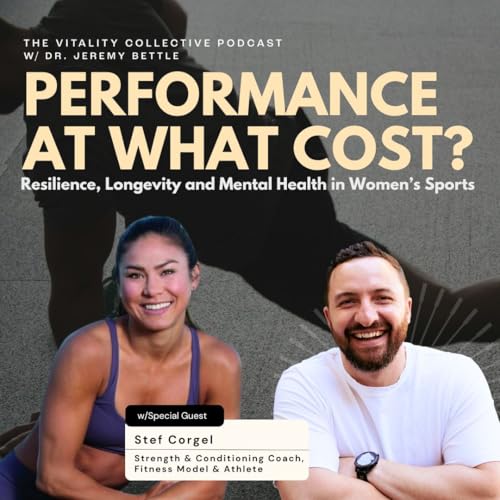
  • Ep 44 - Performance at What Cost? Resilience, Longevity and Mental Health in Women's Sports with Stefanie Corgel
    Oct 29 2025
    Episode Summary

    In this deeply personal conversation, Dr. Jeremy Bettle sits down with Strength and Conditioning Coach, athlete and fitness model Stef Corgel to discuss the hidden struggles many female athletes face. Stef opens up about her decade-long battle with eating disorders, including anorexia athletica, and how the pressure to perform combined with societal expectations around body image created a destructive cycle. They explore the transition from college sports to professional fitness modeling, the importance of seeking help early, and how athletic identity can both hurt and heal. This conversation also covers fertility preservation, injury prevention, deconditioning, and why fueling like an athlete matters more than looking like one. It's an essential episode for female athletes, coaches, and anyone navigating the complex relationship between performance and body image.

    Guest Bio

    Stef Corgel is a Los Angeles–based Strength and Conditioning Coach, athlete, and fitness model driven by a passion for movement, mindset, and community. A former NCAA basketball player with a degree in Exercise Physiology, she went on to play professionally in La Spezia, Italy before building a multifaceted career in fitness and wellness. Today, Stef is an in-studio and virtual fitness instructor, Los Angeles County Ocean Lifeguard, and digital content creator for leading wellness brands. Blending science, sport, and storytelling, she empowers others to move with confidence and embrace life's challenges. When she's not training or creating, you'll find her chasing World Major Marathons—or enjoying a sunset glass of wine in Manhattan Beach with her fiancé, Pat, and their pup, Miso.

    Links
    • Centr App
    • Instagram: @stefcorgel

    • Vuori
    Three Actionable Takeaways
    1. If you're stuck in a cycle of low self-worth or struggling with disordered eating patterns, start by confiding in someone you trust. Healing isn't linear and it affects everyone around you, so having people support and cheer you through the process is essential for maintaining good health on the other side.

    2. Stay skeptical of what you see on social media, especially content pushing specific supplements or body transformations. None of it tells the full story, so do your own research and consult qualified professionals before making changes based on what influencers promote.

    3. If you're a woman in sport, understand that your worth as a teammate, leader, and strong woman will propel you far beyond athletics. The resilience and confidence you build through sport creates a foundation that will help you succeed and make an impact in whatever you choose to do next.

    10 Takeaways
    • The transition from being the best on your high school team to a D1 program is an ego death that teaches resilience early, which becomes invaluable in business and relationships later in life

    • Anorexia athletica is over-exercising without adequate calorie intake and is often glorified as dedication or hard work, making it difficult to recognize as disordered behavior

    • Working hard doesn't always guarantee the reward you expect, and that reality can trigger destructive coping mechanisms if you don't have proper support systems in place

    • Female athletes need open communication with coaching staffs about mental health struggles, though this wasn't always the norm and still requires courage to initiate

    • While the basics are similar, proper nutrition for performance is fundamentally different from general population nutrition. Learning this distinction is critical for athletic success and mental health

    • The fitness modeling industry paradoxically helped Stef recognize her eating disorder by showing her other women struggling silently, which motivated her to break the cycle

    • Fertility preservation and egg freezing revealed how eating disorders can affect reproductive health, even when you think you've maintained performance through heavy training

    • Taking extended breaks from training causes deconditioning in all tissues and systems, making ego-driven returns to previous performance levels a primary cause of injuries

    • Even experts in exercise science and coaching struggle with injury rehab in their own training, highlighting how difficult it is to balance ambition with smart progression

    • Dexa scans for bone density should start in your 30s, not wait until insurance covers them at 65 when you've already experienced decades of potential bone loss

    Más Menos
    1 h y 15 m
  • EP 43 – How to Succeed in College Athletics | Advice for Parents and Athletes with Angelo Gingerelli
    Oct 22 2025
    1. Episode Summary

    In this episode, Dr. Jeremy Bettle talks with longtime Seton Hall strength coach and educator Angelo Gingerelli about how to succeed in the demanding world of college athletics. Drawing on nearly two decades of experience, Angelo shares practical guidance for both athletes and parents—from choosing the right program and managing expectations to building the work capacity needed to thrive. The conversation offers a grounded look at what really drives success in college sports and how families can prepare for the journey ahead.

    2. Guest Bio

    Angelo Gingerelli spent 20 years as a strength and conditioning coach at Seton Hall University before moving into academia as a professor at Kean University. He's the author of The Next Four Years, a guide for families navigating the modern college recruiting landscape, and Finish Strong: Resistance Training for Endurance Athletes. Angelo has worked with thousands of athletes across 12 collegiate sports and now helps parents and players understand how to prepare for college athletics in today's changing environment, including NIL, the transfer portal, and the growing professionalization of youth sports.

    3. Links
    • The Next Four Years and Finish Strong by Angelo Gingerelli

    • Instagram: @mr5thround

    • LinkedIn: Angelo Gingerelli

    • Email: angelo.gingerelli@gmail.com

    Three Actionable Takeaways
    • Go into college thinking long term: Choose a school and program that align with where you want to be at 30, 40, and 50 years old, not just what feels exciting at 18. It's about setting up your future, not just your next season.
    • Do your research: Look beyond the sales pitch of recruiting trips. Ask the hard questions about academics, training expectations, and long-term opportunities so you know exactly what you're signing up for.
    • Increase your work capacity: College is a step up from high school in every way. Prepare your body and mind now so you can handle the demands and stay strong through the season.

    Ten Takeaways
    • Most families enter college athletics as first-time consumers; understanding the system is essential.

    • Work capacity—physical, mental, and emotional—is the biggest difference between high school and college athletes.

    • Athletes face new academic pressures and must manage larger playbooks, heavier travel, and tighter schedules.

    • The NIL era and transfer portal have completely reshaped the recruiting landscape in just five years.

    • Parents should focus on long-term development and realistic fit rather than chasing elite labels or short-term prestige.

    • Research schools carefully: understand academic restrictions, required summer commitments, and how majors align with athletic schedules.

    • Communicate early with strength and conditioning staff to understand expectations and prepare for conditioning tests.

    • Build time-management skills before college; schedule academics, training, meals, and rest strategically.

    • Create an identity beyond sport—develop relationships, interests, and career skills outside the team environment.

    • Treat your college years as preparation for life after athletics, not just a playing career.

    Más Menos
    1 h y 6 m
  • EP 42 – Stop Chasing Celebrity Physiques: Real Training for Busy People w/ Dr. Mike T. Nelson
    Oct 15 2025
    Episode Summary

    In this episode, Dr. Jeremy Bettle sits down with exercise physiologist Dr. Mike T. Nelson to cut through the noise of fitness tribalism and social media pseudoscience. Together, they unpack why chasing celebrity physiques misses the point, why training stimulus matters more than perfect nutrition, and how to approach progressive overload without getting caught up in dogma. Mike and Jeremy share insights from working with everyone from professional athletes to busy executives, explaining how to balance ambitious goals with real-world constraints. The conversation also tackles unrealistic body standards in media, the importance of finding leverage points for behavior change, and why the best program is always the one you'll actually do.

    Guest Bio

    Dr. Mike T. Nelson is an exercise physiologist and educator specializing in metabolic flexibility, heart rate variability, and performance optimization. He works with clients ranging from professional athletes to busy executives, helping them navigate the complexities of training, nutrition, and recovery. Mike teaches through his Flex Diet Certification program and shares daily insights through his newsletter and podcast.

    Links
    • Mike's Newsletter

    • Instagram

    • Podcast: Flex Diet Podcast

    • Certification: Flex Diet Certification

    Three Actionable Takeaways
    1. Find a qualified expert to guide you rather than trying to figure everything out yourself. Yes, true experts are expensive, but they're far cheaper in the long term than wasting time with someone who doesn't know what they're doing or spinning your wheels alone.

    2. Accept that there is no silver bullet solution to your fitness goals. You're going to have to do the work, train consistently, and address multiple factors simultaneously, no matter what supplements or shortcuts are being sold to you.

    3. Get clear on your true priorities and goals, not what you think you should want based on social media. By definition, prioritizing something means other things will take longer or receive less attention, and that's completely okay.

    10 Takeaways
    • Training stimulus is the foundation that everything else supports. Perfect training with okay nutrition will outperform perfect nutrition with okay training every single time.

    • Heavy lifting doesn't mean one specific rep range. Using rep ranges like 3-5, 5-8, or even 12-15 can all build strength and muscle when you progressively overload within that range.

    • Heart rate variability provides a useful window into your overall stress levels, though it won't tell you the specific type of stressor affecting you.

    • Coaching leverage comes from multiplying physiologic response by the client's ability to actually change. Start with high-impact interventions that clients will actually comply with.

    • Context determines everything in training. What works for a 25-year-old professional athlete won't work for a 55-year-old CEO with different constraints and priorities.

    • The images of celebrities and actors in peak physique condition are incredibly transient, often maintained for just hours during a photo shoot, not sustainable states of health.

    • Pro athletes are just humans with their own preferences and compliance issues. Even at the highest level, behavior change and systems design matter more than perfect knowledge.

    • Eccentric loading and the ability to decelerate your body is one of the most underrated and universally important training adaptations for injury prevention.

    • Environmental design is critical for behavior change. If you have to think about or remember to do something consistently, you've already lost half the battle.

    • The best program is always the one you'll actually execute. A perfect program never done is worth nothing compared to a good program done consistently.

    Más Menos
    1 h y 12 m