Episodios

  • Brand Building: The conversation covers beauty standards, entrepreneurship, their journey from a one-page blog to media entrepreneurs.
    Mar 10 2026
    Listen and subscribe to Money Making Conversations on iHeartRadio, Apple Podcasts, Spotify, www.moneymakingconversations.com/subscribe/ or wherever you listen to podcasts. New Money Making Conversations episodes drop daily. I want to alert you, so you don’t miss out on expert analysis and insider perspectives from my guests who provide tips that can help you uplift the community, improve your financial planning, motivation, or advice on how to be a successful entrepreneur. Keep winning! Two-time Emmy and Three-time NAACP Image Award-winning, television Executive Producer Rushion McDonald interviewed Latrisha McIntosh and LaTasha Taylor. Founders of BSM Media Group and the award‑winning BSM Magazine. The conversation covers beauty standards, entrepreneurship, their journey from a one-page blog during the recession to becoming media entrepreneurs, the highs and lows of their career, their spiritual grounding, their historic interview with Oprah Winfrey, and their mission to create dignified, uplifting media. Purpose of the Interview The interview serves to: ⭐ Highlight the twins’ entrepreneurial journey How they built BSM Magazine and BSM Media Group from scratch during the 2008 recession. ⭐ Discuss their philosophy on beauty, representation, and purpose They emphasize inner beauty, authenticity, and rejecting societal pressure—values that shape their platform and interviews. ⭐ Inspire entrepreneurs Through transparency about lows (being undervalued) and highs (interviewing Oprah), they demonstrate resilience, faith, and consistency. ⭐ Showcase their impact Including discovering rising talent early (e.g., Tabitha Brown), providing media opportunities, and evolving into producers, writers, and content creators. Key Takeaways 1. The Origin of BSM Magazine Started as a one‑page business blog during the 2008 recession to serve rising entrepreneurs.They credit the magazine’s creation as “something that God gave us.” Their natural creativity as twins carried over from childhood. 2. Inner Beauty and Authenticity They define beauty as inner strength, confidence, and embracing the way God created you.Social media culture magnifies appearance, but they insist “outer beauty must align with inner beauty.” 3. Sustaining Success Their differentiation comes from focusing on: Quality contentSpotlighting overlooked talentDoing things mainstream outlets often ignore They interviewed Tabitha Brown before she became widely known and gave actress Essence Atkins her first magazine cover. 4. Challenges and Low Points Being undervalued and overlooked in the media industry.Being judged by numbers or pushed to the back of the line.Yet, they emphasize:“That ‘no’ comes back around … bigger and better.” 5. High Points Their divine‑timed interview with Oprah in April 2018: They put Oprah on a vision board in January.LaTasha tweeted her daily for six months.Oprah unexpectedly turned around on the red carpet and approached them for an interview.This became a milestone moment in their career. 6. Operating a Media Company as Twins They learned to respect each other’s strengths: LaTasha: writing, articles, layoutsLatrisha: creative direction and balance Their partnership is spiritually rooted and purpose-driven. 7. Expanding Beyond a Magazine The magazine now lives under BSM Media Group, which produces: Celebrity contentCorporate and government mediaThe Twins a Media Show They evolved into scriptwriters, producers, and consultants. 8. Longevity Comes From Quality They prioritize: Clean, dignified mediaPositive storytellingProduction standards They tell entrepreneurs not to focus on numbers—focus on quality, and longevity will follow. Notable Quotes On Beauty “Inner beauty has such a powerful way of allowing us to be our true selves.”“Embrace your eyes, your nose, your hips—all the way God made you.”“Imagine if everybody operated in their own lane. That signifies beauty at its highest level.” On Entrepreneurship “We realized we were in the business of seeing people—because we were the underdogs.”“Don’t worry about your numbers. Quality will always stand.”“Sometimes your visions are crazy, and they don’t make sense to people—but believe anyway.” On Overcoming Doubt “A low point is being undervalued—but God has a sense of humor. That ‘no’ comes back around.”“We’ve heard it all. You need layers of skin to accept when someone thinks you're not good enough.” On Their Oprah Moment “She turned around, walked past everyone, and came straight to us.”“Nobody but God—and a little effort from Tasha!” On Partnership “God made us twins for a reason. I couldn’t do this journey without her.”“Working in business taught me more about my sister than growing up together ever did.” #SHMS #STRAW #BESTSupport the show: https://www.steveharveyfm.com/See omnystudio.com/listener for privacy information.
    Más Menos
    28 m
  • Financial Tips: Discusses the appeal and additional costs of tiny homes: foundation, utilities, permits, and construction.
    Mar 10 2026

    Listen and subscribe to Money Making Conversations on iHeartRadio, Apple Podcasts, Spotify, www.moneymakingconversations.com/subscribe/ or wherever you listen to podcasts. New Money Making Conversations episodes drop daily. I want to alert you, so you don’t miss out on expert analysis and insider perspectives from my guests who provide tips that can help you uplift the community, improve your financial planning, motivation, or advice on how to be a successful entrepreneur. Keep winning!

    Two-time Emmy and Three-time NAACP Image Award-winning, television Executive Producer Rushion McDonald interviewed Paul Dashevsky.

    Serial entrepreneur and founder of Maxwell, a platform focused on Accessory Dwelling Units (ADUs), also known as tiny homes:

    🎯 Purpose of the Interview

    To educate listeners on the growing trend of Accessory Dwelling Units (ADUs), their practical uses, legal considerations, and how platforms like Maxwell help homeowners navigate the process of building or buying tiny homes—especially in light of new options like Amazon’s prefab homes.

    🗝️ Key Takeaways

    1. What Are ADUs?

      • Formerly known as tiny homes or granny flats, ADUs are small, secondary housing units built on residential properties.
      • They range from 150 to 1200 square feet and serve various purposes: rentals, studios, housing for aging parents, or personal retreats.
    2. Growing Popularity

      • Driven by housing shortages and affordability issues, especially in states like California.
      • Governments are easing restrictions to allow more ADUs to be built, including San Diego’s initiative to allow unlimited ADUs if they’re affordable.
    3. Use Cases

      • Rental income
      • Housing for retirees or aging parents
      • Studios (music, yoga), guest houses, or nanny quarters
    4. Amazon’s Entry

      • Amazon now sells prefab two-story tiny homes under \$50,000.
      • While appealing, buyers must understand the additional costs and logistics: foundation, utilities, permits, and construction.
    5. Legal & Practical Considerations

      • ADUs must be permitted and built to code to be safe and legally rentable.
      • Homeowners should consult their city’s building department before starting.
      • A certificate of occupancy is required for someone to legally live in the unit.
    6. Maxwell Platform

      • Offers resources, videos, and guidance for anyone interested in building or buying ADUs.
      • Helps users find reliable contractors and understand the full scope of building an ADU.
    7. Impact on Property Value

      • ADUs generally increase property value by adding rentable living space.
      • They are a viable wealth-building strategy through real estate investment.
    8. Social Impact

      • ADUs could be a solution to homelessness by providing affordable housing options.
      • Cities like San Diego are already exploring this potential.

    💬 Notable Quotes

    • “You’re not building a Lego kit here.” — Paul Dashevsky on the complexity of constructing ADUs
    • “There’s no success without sacrifice.” — Rushion McDonald, echoing the theme of entrepreneurship
    • “Go down to your building department at your city and ask them what guidelines they have.” — Paul’s advice on starting an ADU project
    • “If you invest in real estate… that’s a great way to build wealth.” — Paul on the financial benefits of ADUs
    • “I wish America would look at the possibilities of seeing what ADUs can do for the homeless community.” — Rushion McDonald on the social potential of tiny homes

    #SHMS #STRAW #BEST

    Support the show: https://www.steveharveyfm.com/

    See omnystudio.com/listener for privacy information.

    Más Menos
    23 m
  • Brand Building: He gives insights on relationship-building, authenticity, and visibility—reinforcing that in the digital era, it’s not just “who you know,” but who knows you.
    Mar 9 2026
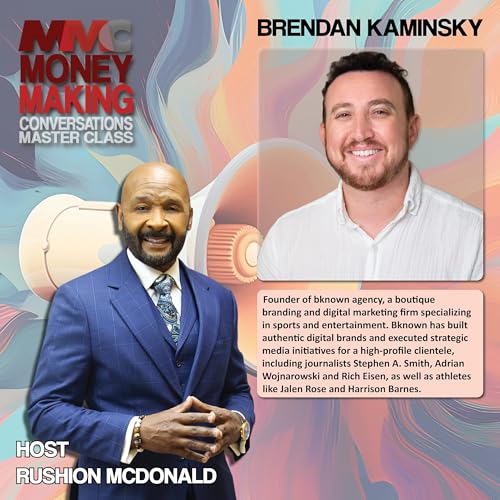
    Listen and subscribe to Money Making Conversations on iHeartRadio, Apple Podcasts, Spotify, www.moneymakingconversations.com/subscribe/ or wherever you listen to podcasts. New Money Making Conversations episodes drop daily. I want to alert you, so you don’t miss out on expert analysis and insider perspectives from my guests who provide tips that can help you uplift the community, improve your financial planning, motivation, or advice on how to be a successful entrepreneur. Keep winning! Two-time Emmy and three-time NAACP Image Award-winning television Executive Producer Rushion McDonald interviewed Brendan Kaminsky. Founder of B Known Agency, a boutique branding and digital marketing firm specializing in sports and entertainment. Kaminsky shares his journey from consulting, to working at ESPN, to eventually launching his own agency. He discusses helping major personalities like Stephen A. Smith, Jalen Rose, Harrison Barnes, and Rich Eisen develop strong social media identities and storytelling strategies. Brendan explains why he left ESPN after six and a half years—despite the security, prestige, and Disney benefits—to pursue entrepreneurship. He describes how brand building has shifted from traditional media to a landscape where relatability, vertical video, audience engagement, and consistent content matter more than follower counts. He also talks about the pressure of managing public-facing work in real time, the importance of being accessible to high‑profile clients, the rising role of AI in content creation, and how social platforms have become core to modern marketing strategies. Additionally, Brendan shares specific examples of working with Jalen Rose on mixing sports commentary with community-focused storytelling and describes how Rich Eisen’s annual “Run Rich Run” 40‑yard dash evolved into a signature charitable brand moment. The interview closes with insights on relationship-building, authenticity, and visibility—reinforcing that in the digital era, it’s not just “who you know,” but who knows you. PURPOSE OF THE INTERVIEW 1. To highlight Brendan Kaminsky’s entrepreneurial journey McDonald explores how Kaminsky transitioned from a major corporation (ESPN) to founding a successful agency. 2. To educate listeners on the evolving world of branding and digital media Kaminsky explains how branding now depends on relatability, vertical video, and engagement over follower count. 3. To provide actionable guidance for entrepreneurs and creators The interview teaches how consistency, accessibility, and storytelling help build a recognizable digital brand. 4. To show how athletes and media personalities use content to expand influence Brendan walks through real client strategies—from Jalen Rose’s community work to Rich Eisen’s fundraising dash. 5. To explore the role of AI in modern marketing Kaminsky discusses how AI assists with analytics, research, and identifying viral content moments. KEY TAKEAWAYS 1. Relatability drives modern branding People connect with authenticity, not polished promotion. Talk to your audience, not at them. 2. Engagement matters more than follower count Algorithms reward content that resonates, regardless of how many people follow you. A creator with 10,000 followers can hit a million views. 3. Social media requires presence and accessibility High-profile clients expect responsiveness; being available is key to agency success. 4. Vertical video is the new standard Optimizing content for mobile consumption is essential—TV graphics no longer dictate how content is built. 5. AI is an asset, not a threat Kaminsky uses AI for virality scoring, caption suggestions, research, and identifying strong clips from long-form content. 6. Data tells the story Success can be clearly measured through views, engagement, and growth—unlike billboards or traditional media. 7. Use “hot topics” to highlight deeper work For clients like Jalen Rose, trending sports conversations help drive attention to community-focused initiatives like his leadership academy. 8. Brand moments can start from something small Rich Eisen’s 40-yard dash evolved into a signature charity event and content anchor. 9. Entrepreneurship requires trusting your gut He left ESPN without telling anyone beforehand to avoid discouragement—because he felt the pull to build his own vision. 10. Visibility creates opportunity In the digital era, it’s not just who you know—it’s who knows you. NOTABLE QUOTES On entrepreneurship “I trusted my gut… I didn’t tell one person I was leaving ESPN because I didn’t want anyone to make me doubt myself.” On branding “People want to relate to you. They want to get to know you.” “Talk directly to your audience.” On social metrics “It’s become a lot more about engagement and views than total follower number.” On accessibility “You could be the best at your job, but if a client can’...
    Más Menos
    28 m
  • Motivation: From project failures to the death of his father, he shows how adversity can reshape purpose and leadership.
    Mar 9 2026
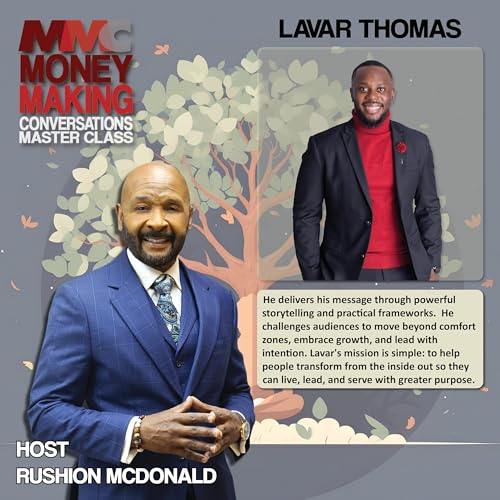
    Listen and subscribe to Money Making Conversations on iHeartRadio, Apple Podcasts, Spotify, www.moneymakingconversations.com/subscribe/ or wherever you listen to podcasts. New Money Making Conversations episodes drop daily. I want to alert you, so you don’t miss out on expert analysis and insider perspectives from my guests who provide tips that can help you uplift the community, improve your financial planning, motivation, or advice on how to be a successful entrepreneur. Keep winning! Two-time Emmy and Three-time NAACP Image Award-winning, television Executive Producer Rushion McDonald interviewed Lavar Thomas. Motivational speaker, author, Peace Corps alumnus, leadership coach, and founder of Empower for Greatness. Lavar’s mission is to help people transform “from the inside out” so they can live with greater intention and purpose. The conversation explores Lavar’s upbringing in Brownsville, Brooklyn; his life-changing Peace Corps service in Rwanda; his understanding of faith, purpose, failure, and leadership; and how he built international development programs such as Leaders of the Free World, which exposes young Black men to global travel and leadership experiences. He discusses how stepping outside his comfort zone—from traveling abroad for the first time to navigating Rwanda after only knowing it through “Hotel Rwanda”—opened his worldview, deepened his empathy, and developed his leadership style. Lavar explains how a major project failure in the Peace Corps forced him to redefine success beyond titles, money, or recognition. This experience ultimately inspired his book, The Other Side of Letting Go. He also shares how he balances a federal government job with building his speaking and training company. The interview concludes with a powerful discussion on purpose, reinvention, leadership, and the role travel plays in expanding one’s mindset—especially for communities that are historically underrepresented in global spaces. PURPOSE OF THE INTERVIEW 1. To highlight Lavar’s transformative journey from Brooklyn to global leadership. Rushion showcases how Lavar’s experiences shaped his philosophy and mission. 2. To educate listeners about purpose‑driven living and leadership Lavar explains why purpose—not money—is the “real currency,” and how aligning with purpose drives impact. 3. To inspire people to step beyond their comfort zones The interview emphasizes how discomfort and uncertainty can spark growth. 4. To reveal the value of international exposure for Black men Through Leaders of the Free World, Lavar advocates for global experiences that shift identity and opportunity. 5. To discuss resilience, reinvention, and personal development From project failures to the death of his father, Lavar shows how adversity can reshape purpose and leadership. KEY TAKEAWAYS 1. Faith requires action Lavar describes faith as taking steps without knowing the outcome—“believing in the future before it becomes reality.” 2. Growth happens outside the comfort zone Comfort zones feel safe, but they also create limits; stepping beyond them leads to self‑awareness and transformation. 3. The Peace Corps experience was life‑changing Rwanda taught him service, humility, language, cultural understanding, and the power of community trust. 4. Failure can be an important redirection When his library project collapsed, Lavar learned to detach from ego and redefine success through impact, not image. 5. Purpose is the real currency Operating in purpose helps you add value, understand your worth, and ultimately generate income more meaningfully. 6. Leadership includes being willing to pivot He shifted from a failed library project to impactful malnutrition programs, partnering with USAID to train families. 7. Personal setbacks can sharpen identity and mission His father’s death led him to pause graduate school, attend therapy, and rebuild himself—learning leadership through vulnerability. 8. Global exposure changes lives Leaders of the Free World gives young Black men access to international travel, allowing them to reimagine their potential. NOTABLE QUOTES On faith “Faith is taking steps without even knowing the outcome… believing in the future I see in my mind before I see it in reality.” On stepping outside comfort zones “Every time I step beyond that line, I grew… I realized new possibilities for myself.” On failure “Failure is life redirecting you.” (Recalling Oprah’s teaching). On purpose “Purpose is the real currency.” On redefining success “I had to learn how to redefine success for myself—not in the glamor of a project, but the impact I was having.” On reinvention after loss “I had to step away and rebuild LaVar… focusing on my family taught me so much about leadership.” On travel and identity “Something shifts in them when they return. They see their lives differently and their community differently.” #STRAW #BEST #SHMSSupport ...
    Más Menos
    28 m
  • Financial Tips: He discusses the difference between being rich and being wealthy and long-term financial growth.
    Mar 9 2026
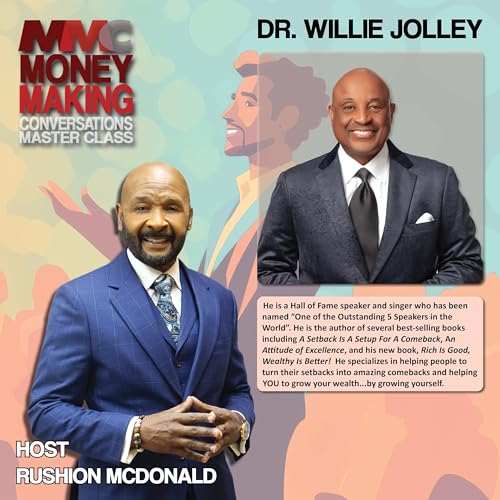
    Listen and subscribe to Money Making Conversations on iHeartRadio, Apple Podcasts, Spotify, www.moneymakingconversations.com/subscribe/ or wherever you listen to podcasts. New Money Making Conversations episodes drop daily. I want to alert you, so you don’t miss out on expert analysis and insider perspectives from my guests who provide tips that can help you uplift the community, improve your financial planning, motivation, or advice on how to be a successful entrepreneur. Keep winning! Two-time Emmy and Three-time NAACP Image Award-winning, television Executive Producer Rushion McDonald interviewed Dr. Willie Jolley. SUMMARY OF THE INTERVIEW In this energetic and motivational conversation, Hall of Fame speaker Dr. Willie Jolley joins Rushion McDonald on Money Making Conversations Masterclass to discuss his new book, “Rich Is Good, Wealthy Is Better.” The interview covers the difference between being rich and being wealthy, the mindsets required for long-term financial growth, and how individuals—no matter their background—can build generational wealth. Jolley also emphasizes discipline, humility, planning, multiple streams of income, overcoming setbacks, and the importance of insurance and protection of assets. PURPOSE OF THE INTERVIEW The interview aims to: 1. Introduce and promote Dr. Jolley’s new book “Rich Is Good, Wealthy Is Better” and the teachings within it. 2. Educate listeners on the distinction between rich and wealthy Jolley wants audiences to understand wealth in generational, not short-term, terms. 3. Motivate individuals to shift their financial mindset From “working money” to “mailbox money.” 4. Empower entrepreneurs and families To adopt discipline, drop pride, and create multigenerational financial systems. 5. Share Jolley’s personal setback‑to‑success story To reinforce that anyone can grow wealth with the right principles. KEY TAKEAWAYS 1. Rich vs. Wealthy Being rich = high income, often tied to active labor (e.g., athlete contracts).Being wealthy = passive income, ownership, generational sustainability.A rich football player earns millions; the team owner earns billions and doesn’t have to “run up and down the field.” 2. The Five Money Mindsets Jolley explains five financial mindsets: One‑day mindset – living day to day.30‑day mindset – fixed incomes/check-to-check living.One‑year mindset – annual thinking (raises, annual income).Decade mindset – typical for entertainers/athletes with multi‑year contracts.Generational mindset (Wealth Mindset) – building wealth to last multiple generations. Jolley’s goal: move people up just one level at a time. 3. Five Types of Wealth Jolley breaks wealth into five categories: Financial WealthHealth Wealth (“A sick person has one dream; a healthy person has a thousand.” – Les Brown)Relationship WealthReputational Wealth (Brand)Intellectual Capital Wealth (What you know and can charge for) 4. Discipline Is the Key Wealth requires: Living below your meansInvesting the differenceConsistencyAvoiding arrogance and ignorance 5. Pride Is an Enemy of Wealth Pride leads people to overspend to keep up appearances.Jolley argues that pride “kills wealth” and must be replaced with planning and humility. 6. The Three Legs of Wealth To build sustainable wealth, you need: IncomeInvestment (letting money work for you)Insurance (life, health, car, disability, long-term care) 7. Multiple Streams of Income Jolley urges everyone to build at least two streams of income from: StocksBondsReal estateCryptoCollectiblesJewelryArtContent creation 8. Overcoming Setbacks Jolley details his own journey from unemployed nightclub singer to globally recognized motivational speaker.He reinforces that a setback is a setup for a comeback—the core message of his earlier bestselling book. 9. It’s Never Too Late to Start He cites examples of: A secretary who retired with $8M by investing small amounts over timeInvested $12,000 at age 65 and grew it to $890,000 by age 72 NOTABLE QUOTES FROM THE INTERVIEW On Time & Opportunity “I have only just a minute… but it’s up to me to use it.” On Mindset “Wealth starts in your mind.” On Rich vs. Wealthy “Regular folks work for their money. Wealthy people make their money work for them.” On Pride “My pride was killing my wealth.” On Growth & Learning “If you’re willing to learn, no one can stop you.” [On Setbacks “A setback is a setup for your greater comeback.” On Starting Late “When is the best time to plant a tree? Eighty years ago. The second-best time? Today.” #SHMS #STRAW #BESTSupport the show: https://www.steveharveyfm.com/See omnystudio.com/listener for privacy information.
    Más Menos
    31 m
  • FULL SHOW: Cam Newton's Thoughts on Marriage, Strawberry Letter: He Won't Stay Out of My Stuff - 3.9.26
    Mar 9 2026

    The Steve Harvey Morning Show for Monday, March 9th, 2026: Steve Harvey's Morning Inspiration | Show Open | The Pastors | Ask The CLO | Trending Topics and Entertainment News | VP Kamela Harris Rebrands Socials | Sister Odell | Nephew Tommy's Prank - "Too Much Chicken" | Strawberry Letter - "He Won't Stay Out of My Stuff" Pt. 1-2 | Junior's Sports Talk | Social Media Advice | Chicago Polar Plunge | Would You Rather | Steve Harvey's Closing Remarks

    Support the show: https://www.steveharveyfm.com/

    See omnystudio.com/listener for privacy information.

    Más Menos
    1 h y 30 m