Resumen del Editor

Start your day with laughs, love, and real talk from Steve Harvey and his hilarious crew Shirley Strawberry, Carla Ferrell, Nephew Tommy, and Junior on the #1 morning radio show in America. Prank calls, life advice, celebrity guests, and nonstop energy. Follow, favorite, and subscribe now so you never miss a moment!

Steve Harvey brings his unmatched charisma and wisdom to mornings across the country, mixing comedy, culture, and connection like no one else. Whether you need a laugh, a lift, or a little perspective, The Steve Harvey Morning Show delivers it all.

Join millions who tune in every day, and make Steve and the crew part of your morning routine!

2026 iHeartMedia, Inc. © Any use of this intellectual property for text and data mining or computational analysis including as training material for artificial intelligence systems is strictly prohibited without express written consent from iHeartMedia
Episodios
  • Financial Tips: Discusses the appeal and additional costs of tiny homes: foundation, utilities, permits, and construction.
    Mar 10 2026

    Listen and subscribe to Money Making Conversations on iHeartRadio, Apple Podcasts, Spotify, www.moneymakingconversations.com/subscribe/ or wherever you listen to podcasts. New Money Making Conversations episodes drop daily. I want to alert you, so you don’t miss out on expert analysis and insider perspectives from my guests who provide tips that can help you uplift the community, improve your financial planning, motivation, or advice on how to be a successful entrepreneur. Keep winning!

    Two-time Emmy and Three-time NAACP Image Award-winning, television Executive Producer Rushion McDonald interviewed Paul Dashevsky.

    Serial entrepreneur and founder of Maxwell, a platform focused on Accessory Dwelling Units (ADUs), also known as tiny homes:

    🎯 Purpose of the Interview

    To educate listeners on the growing trend of Accessory Dwelling Units (ADUs), their practical uses, legal considerations, and how platforms like Maxwell help homeowners navigate the process of building or buying tiny homes—especially in light of new options like Amazon’s prefab homes.

    🗝️ Key Takeaways

    1. What Are ADUs?

      • Formerly known as tiny homes or granny flats, ADUs are small, secondary housing units built on residential properties.
      • They range from 150 to 1200 square feet and serve various purposes: rentals, studios, housing for aging parents, or personal retreats.
    2. Growing Popularity

      • Driven by housing shortages and affordability issues, especially in states like California.
      • Governments are easing restrictions to allow more ADUs to be built, including San Diego’s initiative to allow unlimited ADUs if they’re affordable.
    3. Use Cases

      • Rental income
      • Housing for retirees or aging parents
      • Studios (music, yoga), guest houses, or nanny quarters
    4. Amazon’s Entry

      • Amazon now sells prefab two-story tiny homes under \$50,000.
      • While appealing, buyers must understand the additional costs and logistics: foundation, utilities, permits, and construction.
    5. Legal & Practical Considerations

      • ADUs must be permitted and built to code to be safe and legally rentable.
      • Homeowners should consult their city’s building department before starting.
      • A certificate of occupancy is required for someone to legally live in the unit.
    6. Maxwell Platform

      • Offers resources, videos, and guidance for anyone interested in building or buying ADUs.
      • Helps users find reliable contractors and understand the full scope of building an ADU.
    7. Impact on Property Value

      • ADUs generally increase property value by adding rentable living space.
      • They are a viable wealth-building strategy through real estate investment.
    8. Social Impact

      • ADUs could be a solution to homelessness by providing affordable housing options.
      • Cities like San Diego are already exploring this potential.

    💬 Notable Quotes

    • “You’re not building a Lego kit here.” — Paul Dashevsky on the complexity of constructing ADUs
    • “There’s no success without sacrifice.” — Rushion McDonald, echoing the theme of entrepreneurship
    • “Go down to your building department at your city and ask them what guidelines they have.” — Paul’s advice on starting an ADU project
    • “If you invest in real estate… that’s a great way to build wealth.” — Paul on the financial benefits of ADUs
    • “I wish America would look at the possibilities of seeing what ADUs can do for the homeless community.” — Rushion McDonald on the social potential of tiny homes

    #SHMS #STRAW #BEST

    Support the show: https://www.steveharveyfm.com/

    See omnystudio.com/listener for privacy information.

    Más Menos
    23 m
  • Brand Building: He gives insights on relationship-building, authenticity, and visibility—reinforcing that in the digital era, it’s not just “who you know,” but who knows you.
    Mar 9 2026
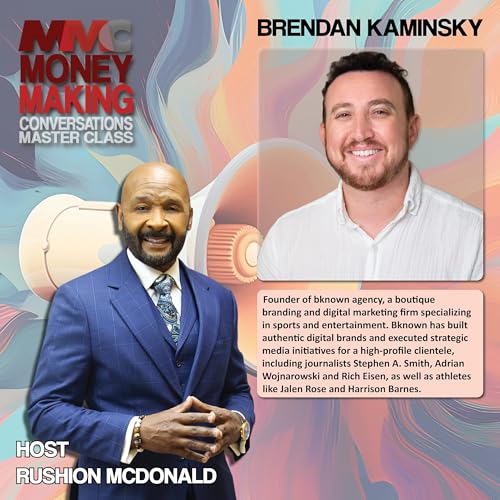
    Listen and subscribe to Money Making Conversations on iHeartRadio, Apple Podcasts, Spotify, www.moneymakingconversations.com/subscribe/ or wherever you listen to podcasts. New Money Making Conversations episodes drop daily. I want to alert you, so you don’t miss out on expert analysis and insider perspectives from my guests who provide tips that can help you uplift the community, improve your financial planning, motivation, or advice on how to be a successful entrepreneur. Keep winning! Two-time Emmy and three-time NAACP Image Award-winning television Executive Producer Rushion McDonald interviewed Brendan Kaminsky. Founder of B Known Agency, a boutique branding and digital marketing firm specializing in sports and entertainment. Kaminsky shares his journey from consulting, to working at ESPN, to eventually launching his own agency. He discusses helping major personalities like Stephen A. Smith, Jalen Rose, Harrison Barnes, and Rich Eisen develop strong social media identities and storytelling strategies. Brendan explains why he left ESPN after six and a half years—despite the security, prestige, and Disney benefits—to pursue entrepreneurship. He describes how brand building has shifted from traditional media to a landscape where relatability, vertical video, audience engagement, and consistent content matter more than follower counts. He also talks about the pressure of managing public-facing work in real time, the importance of being accessible to high‑profile clients, the rising role of AI in content creation, and how social platforms have become core to modern marketing strategies. Additionally, Brendan shares specific examples of working with Jalen Rose on mixing sports commentary with community-focused storytelling and describes how Rich Eisen’s annual “Run Rich Run” 40‑yard dash evolved into a signature charitable brand moment. The interview closes with insights on relationship-building, authenticity, and visibility—reinforcing that in the digital era, it’s not just “who you know,” but who knows you. PURPOSE OF THE INTERVIEW 1. To highlight Brendan Kaminsky’s entrepreneurial journey McDonald explores how Kaminsky transitioned from a major corporation (ESPN) to founding a successful agency. 2. To educate listeners on the evolving world of branding and digital media Kaminsky explains how branding now depends on relatability, vertical video, and engagement over follower count. 3. To provide actionable guidance for entrepreneurs and creators The interview teaches how consistency, accessibility, and storytelling help build a recognizable digital brand. 4. To show how athletes and media personalities use content to expand influence Brendan walks through real client strategies—from Jalen Rose’s community work to Rich Eisen’s fundraising dash. 5. To explore the role of AI in modern marketing Kaminsky discusses how AI assists with analytics, research, and identifying viral content moments. KEY TAKEAWAYS 1. Relatability drives modern branding People connect with authenticity, not polished promotion. Talk to your audience, not at them. 2. Engagement matters more than follower count Algorithms reward content that resonates, regardless of how many people follow you. A creator with 10,000 followers can hit a million views. 3. Social media requires presence and accessibility High-profile clients expect responsiveness; being available is key to agency success. 4. Vertical video is the new standard Optimizing content for mobile consumption is essential—TV graphics no longer dictate how content is built. 5. AI is an asset, not a threat Kaminsky uses AI for virality scoring, caption suggestions, research, and identifying strong clips from long-form content. 6. Data tells the story Success can be clearly measured through views, engagement, and growth—unlike billboards or traditional media. 7. Use “hot topics” to highlight deeper work For clients like Jalen Rose, trending sports conversations help drive attention to community-focused initiatives like his leadership academy. 8. Brand moments can start from something small Rich Eisen’s 40-yard dash evolved into a signature charity event and content anchor. 9. Entrepreneurship requires trusting your gut He left ESPN without telling anyone beforehand to avoid discouragement—because he felt the pull to build his own vision. 10. Visibility creates opportunity In the digital era, it’s not just who you know—it’s who knows you. NOTABLE QUOTES On entrepreneurship “I trusted my gut… I didn’t tell one person I was leaving ESPN because I didn’t want anyone to make me doubt myself.” On branding “People want to relate to you. They want to get to know you.” “Talk directly to your audience.” On social metrics “It’s become a lot more about engagement and views than total follower number.” On accessibility “You could be the best at your job, but if a client can’...
    Más Menos
    28 m
Todas las estrellas
Más relevante
So glad to get this episode on Amazon! This show was so good. I love this show.

love this show

Se ha producido un error. Vuelve a intentarlo dentro de unos minutos.