Episodios

  • How Simple Movement Lowers Stress, Lifts Mood, And Guards Against Burnout
    Mar 15 2026

    Feeling foggy, stressed, or on the edge of burnout? We unpack a simple, proven antidote: make movement your daily medicine. From the first minute, we connect the dots between body and brain, showing how even short bursts of activity can trigger dopamine and serotonin, sharpen focus, and steady emotions. No jargon, no guilt—just clear explanations of why movement nourishes mental health and how to weave it into a busy life without overhauling your schedule.

    We break down the mind–body connection and the chemistry behind better mood, memory, and resilience. Then we move into stress reduction, explaining how exercise lowers cortisol and builds a buffer against daily pressures. You’ll get practical, zero-fuss ideas you can slot into your day right now: stairs over lifts, stretch breaks, brisk walks, and playful options like dancing or cycling. We also tackle the real blockers—limited time, low energy, and shaky motivation—with realistic strategies: set specific, small goals, pair movement with existing routines, and make it social with a buddy or group. Along the way, we highlight why consistency beats intensity and how small actions compound into big health gains.

    To help you start, we set a one-week movement challenge focused on short, enjoyable sessions and mindful check-ins on mood, sleep, and stress. Local success stories and everyday wins show what’s possible when movement becomes a tool, not a task. By the end, you’ll have a simple plan to protect your mental health, reduce stress, and build resilience against burnout—one step, stretch, or song at a time.

    If this resonated, follow the show, share it with a friend who needs a gentle nudge, and leave a quick review to help more people find practical, science-backed mental health tools.

    Thank you for listening to The Long View with Dr Sunil Kumar.

    If this episode resonated, take a moment to follow the podcast, leave a review, or share it with someone who might benefit from a longer perspective.

    New episodes are released regularly.
    Until next time, take the long view.

    Más Menos
    4 m
  • How Smart Eating Protects You From Burnout
    Mar 8 2026

    What if the fastest way to feel clearer, calmer, and more focused is already on your plate? We dig into the real connection between what you eat and how you show up—at work, at home, and in the tough moments when stress peaks. No fads, no guilt, just practical nutrition that powers your day instead of draining it.

    We start by decoding energy spikes and crashes: why refined sugar and ultra-processed carbs give you a quick lift, then leave you foggy and irritable. From there, we call out the hidden habits that feed burnout—skipping meals, stress grazing, and late-night snacking—and explain how they sabotage sleep, mood, and concentration. Then we flip the script with foods that build resilience: complex carbohydrates for steady fuel, healthy fats rich in omega-3s for brain health, lean proteins for calm focus, and a rainbow of antioxidant-packed plants to fight inflammation and oxidative stress.

    You will also get busy-proof strategies you can use today. We map out a weekly meal prep that actually fits real life, share smart snacking ideas that keep you sharp between meetings, and make hydration effortless. Finally, we share the balanced plate method—a simple visual guide that takes the guesswork out of eating well—so you can build meals that deliver stable energy, better mood, and deeper sleep. Expect clear tips, honest motivation, and a reminder that every small choice compounds toward a more vibrant, burnout-resistant life.

    If this conversation helped you rethink your next meal, follow the show, share it with a friend who needs an energy reset, and leave a quick review to tell us what change you will try first.

    Thank you for listening to The Long View with Dr Sunil Kumar.

    If this episode resonated, take a moment to follow the podcast, leave a review, or share it with someone who might benefit from a longer perspective.

    New episodes are released regularly.
    Until next time, take the long view.

    Más Menos
    7 m
  • The Burnout Trap : Why High Achievers Struggle in Silence
    Mar 1 2026

    Ever felt like you’re sprinting on empty, hitting every deadline, showing up to every meeting while something inside is quietly shutting down? We open the door on burnout with a clear definition, a calm voice, and a practical path forward for people who hold themselves to high standards. Dr Sunil Kumar explains how chronic, unrelenting stress turns effort into exhaustion, why high achievers are prime targets, and what early clues reveal the slide before it becomes a crash.

    Across this conversation, we break down the four early warning signs: chronic fatigue, emotional detachment, reduced performance, and rising cynicism and translate them into everyday examples you can spot. You’ll hear the story of Amira, a respected doctor who seemed unshakeable until a quiet freeze on a ward round became her wake-up call. From there, we map the hidden costs of burnout across body and mind: high blood pressure, fragmented sleep, anxiety, depression, lost focus, and the slow drift from relationships that matter most. No shame, no scare tactics, just honest signals and what to do with them.

    If you’ve ever thought rest is lazy or believed you could push through one more busy season, this is a reset. We share simple self-checks, small stabilisers for sleep and energy, and language for asking for support at work and at home. The message is steady and hopeful: you’re not broken, you’re human, and with early recognition and a few consistent changes, you can reclaim energy, rebuild joy, and make your work sustainable again. If this resonates, follow the show, share it with a friend who carries a heavy load, and leave a review to help more people find their way back to healthy, lasting performance.

    Thank you for listening to The Long View with Dr Sunil Kumar.

    If this episode resonated, take a moment to follow the podcast, leave a review, or share it with someone who might benefit from a longer perspective.

    New episodes are released regularly.
    Until next time, take the long view.

    Más Menos
    5 m
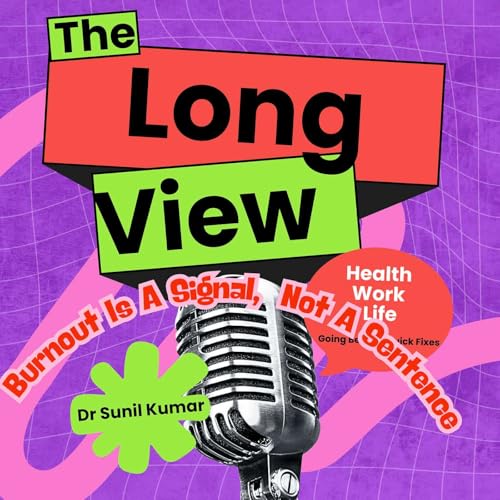
  • Burnout Is A Signal, Not A Sentence
    Feb 6 2026

    Burnout isn’t a personal failure to be fixed with more grit; it’s a signal from your environment that something is misaligned. Dr Sunil Kumar breaks down why the strongest people often break first, how systems quietly reward overextension, and what to do when self-care starts to feel like self-blame. We draw a clear line between stress, burnout, and moral injury, and explain why no amount of yoga can solve a values conflict or a chronic workload without recovery.

    We unpack the hidden vulnerabilities of high performers' conscientiousness, empathy, duty, and perfectionism reframed as high standards and show how those strengths turn risky in under-resourced, target-driven contexts. Instead of telling you to “cope better,” we walk through a practical shift from survival to sustainability: boundary repair, role clarity, permission to say no, and courageous conversations about workload and values. You’ll hear how lifestyle medicine still matters—sleep, movement, nutrition, stress regulation but only works when paired with system-aware choices that restore control and protect energy.

    The core takeaway is agency. Burnout is information, not a sentence; it points to what must change so you can stay well where you are. We share a simple decision lens—what is mine to carry, and what belongs to the system—along with prompts to redesign your work rhythms, redistribute responsibility, and move from reacting to observing. If you’ve ever thought, “others seem fine, what’s wrong with me,” this reframing will help you swap shame for clarity and turn pain into leadership.

    If the message lands, share the episode with someone who needs the reframe, subscribe for more grounded conversations on sustainable performance, and leave a review with one change you’ll make this week.

    Thank you for listening to The Long View with Dr Sunil Kumar.

    If this episode resonated, take a moment to follow the podcast, leave a review, or share it with someone who might benefit from a longer perspective.

    New episodes are released regularly.
    Until next time, take the long view.

    Más Menos
    8 m
  • Stress Is Not The Enemy
    Jan 16 2026

    Forget the myth that stress is the enemy. We dig into the physiology behind high performance and show why the real threat is chronic activation without recovery. Stress is a normal, adaptive response that helps us mobilise energy and focus when it matters. Burnout, by contrast, emerges when recovery is repeatedly postponed and the body never stands down. That distinction changes everything about how we work, lead, and care for ourselves.

    We unpack what the nervous system needs to thrive: oscillation between activation and restoration. When cortisol stays elevated, sleep becomes lighter, inflammation rises, and emotional regulation falters. You might still deliver on deadlines, but decision quality drops, creativity narrows, empathy erodes, and errors multiply. This isn’t a mindset flaw—it’s physiology. Modern workplaces that reward speed, availability, and constant responsiveness often push us into chronic activation, making recovery seem optional. We turn that logic on its head: recovery is the foundation of sustainable performance.

    From there, we redefine resilience as the capacity to move deliberately between stress and recovery. We translate that idea into practical steps rooted in lifestyle medicine: treat sleep as active recovery, use movement to regulate rather than punish, choose nutrition that stabilises energy, set boundaries that protect the nervous system, and build meaning and connection as biological buffers. We share simple prompts to design recovery into ordinary days, not just holidays: small, repeatable rhythms that you can actually keep.

    If you’re functioning but don’t feel like yourself, this conversation offers a clear, humane path forward. Subscribe for future episodes, share this with someone who needs a reset, and leave a review to tell us where you’ll build recovery into your day.

    Thank you for listening to The Long View with Dr Sunil Kumar.

    If this episode resonated, take a moment to follow the podcast, leave a review, or share it with someone who might benefit from a longer perspective.

    New episodes are released regularly.
    Until next time, take the long view.

    Más Menos
    6 m
  • Why Willpower Fails
    Jan 7 2026

    New Year hype meets real-life biology, and the sparks don’t last. We pull back the curtain on why motivation fades so quickly and show how to build habits that survive stress, poor sleep, and messy schedules. Instead of blaming yourself for slipping after a strong start, learn the neuroscience that explains why your brain defaults to comfort and immediate relief when the day runs hot.

    We unpack the habit loop trigger, action, reward—and explain why the habit you hate is often your brain’s best available solution to an unmet need. That insight changes everything: remove a habit without keeping the reward and the brain resists; redesign the reward and behaviour shifts with less friction. From there, we contrast goals with systems and demonstrate how environment, energy, and stress load quietly decide what actually happens on your hardest days. If the unhealthy option is easier, your brain will choose it. So we make the healthy path easy by default.

    You’ll hear practical, science-backed tools for 2026: identity before intensity; environment design that puts trainers in sight and phones out of bedrooms; starting smaller than feels sensible so consistency compounds; and regulating sleep, stress, movement, nutrition, and connection before chasing optimisation. We round it out with better questions—What system am I operating in? What is this habit trying to help me with? What one small change makes the right choice easier?—so you can build routines that last.

    Ready to trade white-knuckle willpower for a smarter system? Listen now, subscribe for the long view on behaviour change, and share this episode with someone who needs a gentler, more effective path. If it helped, leave a quick review and tell us the one small change you’ll make today.

    Thank you for listening to The Long View with Dr Sunil Kumar.

    If this episode resonated, take a moment to follow the podcast, leave a review, or share it with someone who might benefit from a longer perspective.

    New episodes are released regularly.
    Until next time, take the long view.

    Más Menos
    7 m
  • Begin With Direction, Not Resolutions
    Jan 1 2026

    New year, new you is a catchy slogan that rarely survives real life. We open the door to a calmer, sturdier approach: choose direction over resolutions and build systems that fit the week you actually live. Drawing on years of lifestyle medicine and coaching, we unpack why change so often collapses under stress, deadlines, illness, and family demands—and how small, well-chosen shifts compound when they align with your environment.

    We talk through the pillars of sustainable health: movement you can maintain, nutrition that nourishes, sleep you protect, stress you regulate, and relationships that buffer the load. Then we widen the lens to work. Burnout doesn’t stem from weak willpower; it stems from misaligned systems that push output and starve recovery while tying identity to performance. By asking how you want to feel about your work ten years from now, you start designing rhythms, boundaries, and recovery that support long-term creativity and excellence.

    You’ll leave with three fast prompts that create immediate clarity without pressure: identify one unsustainable “success,” pick one small shift that makes life easier to live, and picture five years of the status quo to test your trajectory. We also share what’s ahead for The Long View—solo reflections and grounded conversations on health, work, burnout, leadership, identity, and modern life—always focused on perspective over hype. If the annual sprint has left you tired and second-guessing, this is your invitation to a truer direction and patterns kind enough to repeat.

    If this resonates, follow the show, share it with someone who needs a gentler start, and leave a review with the one small shift you’re choosing today.

    Thank you for listening to The Long View with Dr Sunil Kumar.

    If this episode resonated, take a moment to follow the podcast, leave a review, or share it with someone who might benefit from a longer perspective.

    New episodes are released regularly.
    Until next time, take the long view.

    Más Menos
    7 m