Episodios

  • #138 - Prevalence of KIT D816V in anaphylaxis or systemic mast cell activation
    Dec 5 2025

    Clonal mast cell disease is often missed because symptoms vary from person to person, tryptase levels can be normal, and bone marrow biopsies are hard to get. For some people, unexplained or very severe anaphylaxis may be an early sign of a clonal mast cell disease.

    In this episode, we review “Prevalence of KIT D816V in anaphylaxis or systemic mast cell activation,” published in October 2025 in the Journal of Allergy and Clinical Immunology. This paper, known as the PROSPECTOR trial, is looking at how often the KIT D816V mutation can be found using a blood test in adults who have had anaphylaxis or systemic mast cell activation symptoms.

    We break down why KIT D816V matters, how it connects to systemic mastocytosis, why HaT needs to be considered, and how newer blood tests may help doctors catch clonal mast cell disease earlier.

    What we cover in our episode about KIT D816V and anaphylaxis:
    • Setting the stage: Understanding mast cell activation and anaphylaxis.
    • Why KIT D816V matters: How this mutation fits into clonal mast cell disease, what blood testing can reveal, and when doctors still turn to a bone marrow biopsy.
    • Making sense of tryptase and hereditary alpha-tryptasemia (HaT): Why baseline tryptase, the “20% + 2” rule, and HaT can make screening more complicated than it seems.
    • What the PROSPECTOR trial uncovered: How often KIT D816V appeared in people with anaphylaxis, and other results on tryptase and HaT.
    • How this helps patients: What these findings mean for anyone with unexplained or severe anaphylaxis, and how doctors combine KIT testing, tryptase, HaT, and symptoms to decide on next steps.

    Other podcast episodes about mast cell disease:

    • Ep. 127: Management of indolent mastocytosis - A clinical yardstick
    • Ep. 126: Management of mast cell activation syndrome - A clinical yardstick
    • Ep. 121: Avapritinib vs Placebo in Indolent Systemic Mastocytosis - PIONEER Trial
    • Ep. 118: The ISM Disconnect - Do Patients and Providers Agree on Symptom Control?
    • Ep. 70 How do stress and low histamine diets impact mast cell disease?
    • Ep. 63: Mast Cell Diseases & Systemic Mastocytosis: The Basic Science
    • Ep. 65: The Symptoms and Triggers of Mast Cell Disease

    ***********

    The Itch Review, hosted by Dr. Gupta, Kortney, and Dr. Blaiss, explores allergy and immunology studies, breaking down complex research in conversations accessible to clinicians, patients, and caregivers. Each episode provides key insights from journal articles and includes a one-page infographic in the show notes for easy reference.

    ***********

    Made in partnership with The Allergy & Asthma Network.

    Thanks to Blueprint Medicines for sponsoring today’s episode.

    This podcast is for informational purposes only and does not substitute professional medical advice. Always consult with your healthcare provider for any medical concerns.

    Más Menos
    44 m
  • #137 - Diagnosing Chronic Rhinosinusitis with Nasal Polyps (CRSwNP)
    Nov 20 2025

    Persistent congestion, pressure, or a reduced sense of smell often gets mistaken for allergies or a stubborn cold when it may be something more, like chronic rhinosinusitis with nasal polyps (CRSwNP). Getting the right diagnosis is the first step toward real relief.

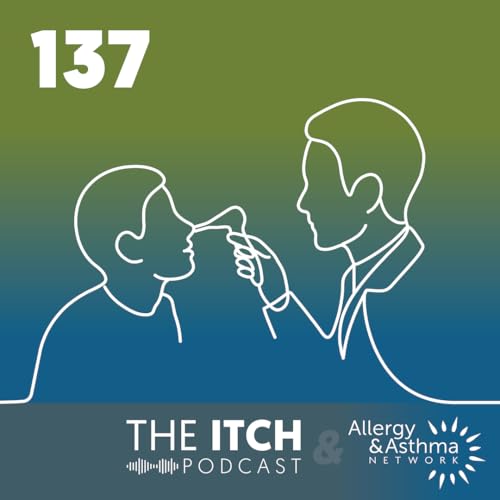
    Dr. Tonya Farmer, a board-certified ENT, joins Kortney and Dr. G to explain how chronic rhinosinusitis with nasal polyps (CRSwNP) is diagnosed. She walks us through the full evaluation: what symptoms matter, what a nasal endoscopy actually shows, when a CT scan is needed, and how type 2 inflammation fits into the picture.

    What we cover about diagnosing CRSwNP:
    • Key symptoms: Persistent congestion, drainage, facial pressure, and especially loss of smell are major red flags for CRSwNP.
    • Why duration matters: Chronic means 12 weeks or longer. If symptoms keep coming back or never truly improve, it’s time to look deeper.
    • The physical exam: ENTs use nasal endoscopy to see swelling, mucus, or polyps that aren’t visible from the outside.
    • When CT scans are needed: Imaging helps confirm sinus inflammation and shows the extent of polyp growth.
    • Additional testing: Allergy testing, IgE levels, eosinophils, and other immune markers help identify type 2 inflammation and guide next steps.
    • When to see a specialist: If antibiotics, steroids, or over-the-counter treatments aren’t helping, ask for a referral to an allergist or ENT. Early diagnosis can prevent worsening symptoms and reduce the need for surgery.

    Set the foundations: Ep. 133: What is Chronic Rhinosinusitis with Nasal Polyps (CRSwNP)?

    ___

    Made in partnership with The Allergy & Asthma Network.

    Thanks to Sanofi-Regeneron for sponsoring today’s episode.

    This podcast is for informational purposes only and does not substitute professional medical advice. Always consult with your healthcare provider for any medical concerns.

    Más Menos
    34 m
  • #136 - Food Allergy Treatments: What to Ask Your Doctor
    Nov 13 2025

    Avoidance has long been the standard for managing food allergies. But new options, such as oral immunotherapy (OIT) and biologic medications like Xolair (omalizumab), are changing the landscape. With more choices available, many patients and parents are wondering how to start the conversation with their allergist and what questions to ask.

    Kortney and Dr. Payel Gupta talk with Dr. Shahzad Mustafa, a board-certified allergist and immunologist, about how patients can navigate today’s food allergy treatments with confidence. Together, they explore what to consider before starting OIT or Xolair, how to set realistic expectations, and why strict avoidance is still the right choice for many families.

    What we cover about food allergy treatment options:
    • Food Allergy Avoidance: Why it remains an effective and valid approach for many, and how to make it work in daily life, including the nuances that make every case unique.
    • Oral Immunotherapy (OIT): What it involves, who it’s best suited for, and what families should know about time, cost, and safety.
    • Xolair (omalizumab): How this injection therapy works to reduce reactions from accidental exposures and what it doesn’t do.
    • Setting expectations: How to talk with your allergist about your goals, quality of life, and what “success” really looks like.

    More episodes about food allergies

    • Ep. 129: Omalizumab for Multiple Food Allergies – The OUtMATCH Trial
    • Ep. 98: Food Allergy Treatment and Management

    More resources about food allergies

    • Food Allergy Treatment & Management

    ___

    Made in partnership with The Allergy & Asthma Network.

    Thanks to Genentech for sponsoring today’s episode.

    This podcast is for informational purposes only and does not substitute professional medical advice. Always consult with your healthcare provider for any medical concerns.

    Más Menos
    37 m
  • #135 - Food Allergies in School: A School Nurse’s Perspective
    Nov 6 2025

    When it comes to keeping kids with food allergies safe at school, school nurses are often the quiet heroes behind the scenes. From managing allergy action plans and emergency responses to training teachers and organizing care for hundreds of students, their role is essential, but often misunderstood.

    Kortney and Dr. Payel Gupta sit down with Elizabeth Elliott, a school nurse and President of the Maryland Association of School Health Nurses. Liz shares what really happens inside the health room and how school nurses coordinate care for students with food allergies and asthma. Plus, why communication between families and school staff is key to keeping kids safe.

    After this episode, you’ll have a whole new appreciation for your school nurse and a better understanding of how to partner with them to make every school day safer for kids with allergies.

    What we cover about food allergy management at school:
    • The school nurse’s role: How nurses bridge communication between families, teachers, and doctors to keep children with food allergies safe and included during the school day.
    • Coordinating care: How school nurses use action plans and 504s to ensure everyone, from teachers to cafeteria staff, knows how to keep kids safe.
    • Training and emergency preparedness: How school nurses teach staff to recognize anaphylaxis, use epinephrine, and stay calm during an emergency.
    • Field trips, cafeterias, and bus safety: What goes into planning safe experiences beyond the classroom, and why “no-food on the bus” rules really matter.
    • Advocating for resources: How families can support their school nurses and advocate for better funding, staffing, and allergy awareness in schools.

    ___

    Made in partnership with The Allergy & Asthma Network.

    Thanks to Genentech for sponsoring today’s episode.

    This podcast is for informational purposes only and does not substitute professional medical advice. Always consult with your healthcare provider for any medical concerns.

    Más Menos
    38 m
  • #134 - How Dupilumab Reduces Mucus Burden in Asthma - VESTIGE Trial
    Oct 30 2025

    Mucus plugging is a challenge in asthma care. It’s thick, sticky mucus that blocks the airways and doesn’t respond to regular inhalers. Even when inflammation improves, these plugs can lower lung function, limit how well medicine works, and make asthma harder to control.

    In this episode, we break down the study: “Effect of Dupilumab on Mucus Burden in Patients with Moderate-to-Severe Asthma,” published October 28, 2025. The analysis looks at whether dupilumab (Dupixent), a biologic that blocks IL-4 and IL-13, can lower mucus burden and improve lung function, especially in people who start with a high “mucus plug score.”

    What we cover in our episode about dupilumab and mucus plugging
    • Why mucus plugging matters in asthma: Discover how thick, sticky mucus can block airways, make it harder to breathe, and why standard inhalers and steroids don’t clear these plugs.
    • How dupilumab may help: Learn how this biologic blocks IL-4 and IL-13, two key drivers of type 2 inflammation that increase mucus production and thickness.
    • Inside the VESTIGE study: Hear how researchers measured mucus burden using CT scans and “mucus plug scores” to see if dupilumab could reduce plugging in moderate-to-severe asthma.
    • What the results showed: Find out how dupilumab lowered mucus plug scores, reduced airway inflammation, and improved lung function (FEV₁), especially in people with high mucus burden.
    • What this means for patients: Learn why identifying and treating mucus plugging may help improve breathing, reduce flare-ups, and make asthma easier to manage day to day.

    📌INFOGRAPHIC to follow along

    RESOURCES:

    • What is asthma?

    • What is type 2 inflammation?

    • When Asthma Is More Than Just Asthma: Type 2 Inflammation

    • More about dupilumab (Dupixent)

    The Itch Review, hosted by Dr. Gupta, Kortney, and Dr. Blaiss, explores allergy and immunology studies, breaking down complex research in conversations accessible to clinicians, patients, and caregivers. Each episode provides key insights from journal articles and includes a one-page infographic in the show notes for easy reference.

    ___

    A special collaboration with the American Thoracic Society.

    This podcast was made in partnership with Allergy & Asthma Network.

    This podcast is for informational purposes only and does not substitute professional medical advice. Always consult with your healthcare provider for any medical concerns.

    Más Menos
    39 m
  • #133 - What is Chronic Rhinosinusitis with Nasal Polyps (CRSwNP)?
    Oct 23 2025

    Living with constant congestion, facial pressure, or a loss of smell can make daily life exhausting. For many people, these symptoms are more than just allergies or a lingering cold. They may be signs of chronic rhinosinusitis with nasal polyps (CRSwNP).

    Dr. Rohit Katial joins Kortney and Dr. G to unpack what CRSwNP really is, how it develops, and why type 2 inflammation plays such a key role. Together, they explain what’s happening inside the sinuses, what symptoms to look for, and when it’s time to see a specialist.

    What we cover about CRSwNP:
    • What CRSwNP means: Chronic rhinosinusitis with nasal polyps is long-term inflammation of the nose and sinuses that lasts 12 weeks or more.
    • What nasal polyps are: Soft, fluid-filled sacs (often “grape” or “pea” sized) that block airflow and lead to congestion and smell loss.
    • Why it happens: Type 2 inflammation drives CRSwNP. Immune messengers like IL-4, IL-5, and IL-13 cause swelling and fluid buildup in the nasal lining.
    • Who it affects: CRSwNP often overlaps with asthma, allergies, or aspirin sensitivity (AERD or Samter’s Triad), making symptoms worse.
    • When to seek help: If congestion, pressure, or loss of smell lasts more than 12 weeks, see an allergist or an ENT specialist. Early care can prevent sinus damage and improve breathing and quality of life.

    More episodes to support CRSwNP

    • Ep. 101: What is Type 2 Inflammation?
    • Ep. 102: Comorbidities of Type 2 Inflammation - Connecting the Dots Between Multiple Allergic Conditions
    • Ep. 109: Tezepelumab & Nasal Polyps - Inside the WAYPOINT Phase III Trial

    ___

    Made in partnership with The Allergy & Asthma Network.

    Thanks to AstraZeneca & Amgen for sponsoring today’s episode.

    This podcast is for informational purposes only and does not substitute professional medical advice. Always consult with your healthcare provider for any medical concerns.

    Más Menos
    24 m
  • #132 - Boundaries & Communication in Food Allergy Families
    Oct 17 2025

    Navigating food allergies is tough enough, but adding family dynamics to the mix can make things even more complicated. When loved ones don’t understand you or your child’s allergies or dismiss the rules meant to keep them safe, it can lead to conflict, hurt feelings, and stress for everyone involved.

    Kortney and Dr. Payel Gupta sit down with psychologist Dr. Amanda Whitehouse to talk about how families can find common ground when emotions run high. Together, they unpack what it means to stay regulated in difficult conversations, how to set healthy boundaries with family members, and why understanding different coping styles can help prevent conflict before it starts.

    What we cover about communication and boundary-setting for food allergy families:
    • Coping styles and conflict: Learn how different stress responses, such as “fight” versus “flight,” shape how partners, parents, and relatives react to food allergy challenges.
    • Staying calm and regulated: Understand how your body reacts to stress and how recognizing those signals can help you stay grounded during tough conversations.
    • Setting and holding boundaries: Get practical tips for explaining what feels safe, keeping communication clear, and responding calmly when others push back.
    • Working together as a team: Whether it’s with your partner, kids, or extended family, learn how to support each other and stay united when emotions rise.
    • Bridging family differences: Explore ways to include children and siblings in allergy safety, and approach older relatives with patience and compassion when views or communication styles differ.

    ___

    Made in partnership with The Allergy & Asthma Network.

    Thanks to Genentech for sponsoring today’s episode.

    This podcast is for informational purposes only and does not substitute professional medical advice. Always consult with your healthcare provider for any medical concerns.

    Más Menos
    42 m
  • #131 - What Is a BTK Inhibitor?
    Oct 9 2025

    For decades, allergists have focused on blocking what happens outside the mast cell: histamine, IgE, and interleukins. But now, there’s a new way to stop allergic inflammation before it even starts: by targeting what happens inside the cell with BTK Inhibitors.

    Dr. Payel Gupta and Kortney are joined by Dr. Matthew Giannetti to unpack what BTK actually does and why inhibiting it represents an exciting breakthrough in allergy and immunology. Together, they explore how BTK inhibitors work, why this inside-the-cell approach is different from anything before, and what it could mean for people living with chronic spontaneous urticaria (CSU).

    What the episode covers about BTK inhibitors:
    • BTK explained: Bruton’s tyrosine kinase is a pivotal “last step” before mast-cell degranulation.
    • How BTK inhibitors work: Blocking BTK can stop histamine release downstream of many outside triggers.
    • The science: Why BTK binding is irreversible for each molecule and how the body “re-makes” BTK over time.
    • Safety in brief: A look at petechiae (small pinpoint spots), what to monitor, and how shared decision-making guides treatment choices.
    • The future of BTK inhibitors: Exploring their potential role in other allergic conditions.

    ____

    Made in partnership with The Allergy & Asthma Network.

    Thanks to Novartis for sponsoring today’s episode.

    This podcast is for informational purposes only and does not substitute professional medical advice. Always consult with your healthcare provider for any medical concerns.

    Más Menos
    23 m