Episodios

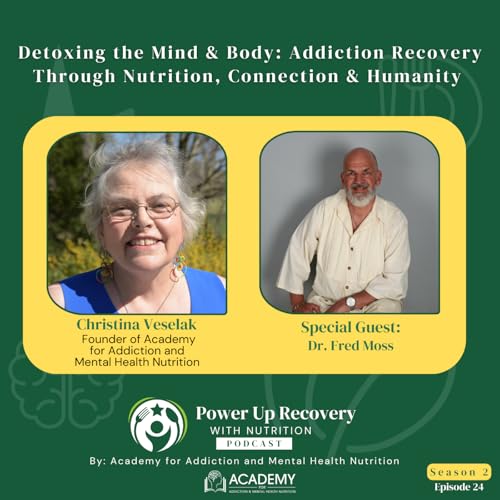
  • Detoxing the Mind & Body: Addiction Recovery Through Nutrition, Connection & Humanity with Dr. Fred Moss S02E24
    Jan 16 2026
    Why Nutrition, Connection, and Compassion Matter in Addiction Recovery In this episode of Power Up Recovery with Nutrition, host Christina Veselak speaks with Fred Moss, psychiatrist, mental health advocate, author, and founder of the Welcome to Humanity movement. Dr. Fred Moss brings a radically human perspective to addiction, mental health, and recovery. Rather than viewing emotional pain or addictive behaviors as signs that something is "wrong," he reframes them as part of the shared human condition. This conversation invites listeners to release shame, labels, and pathology, and instead explore healing through nutrition, detoxing from toxic inputs, authentic communication, and human connection. Together, Christina and Dr. Fred explore the concept of the three-legged stool of recovery—biochemistry and nutrition, connection with others, and meaning or spirituality—and how imbalance in any of these areas can contribute to suffering, addiction, and disconnection. Dr. Fred explains why the opposite of addiction is not sobriety, but connection, and why healing does not require diagnosis, medication, or permission. This episode highlights the critical role of nutrition in emotional wellness, while expanding the definition of detox to include not just food, but also relationships, media, environments, and internal narratives that shape how we experience ourselves and the world. Key Topics Covered in This Episode Addiction as a response to pain and disconnection, not moral failure Why emotional suffering does not mean something is wrong with you The three-legged stool of recovery: nutrition, connection, and meaning Detoxing the mind and body beyond food alone How ultra-processed foods and poor nourishment impact cravings The role of protein and whole foods in brain and emotional health Why labeling and pathologizing human pain increases isolation Healing through authentic communication and finding your true voice Why connection is the true antidote to addiction Meet Our Guest Dr. Fred Moss is a renowned mental health advocate, keynote speaker, and psychiatrist with a passion for helping people find their authentic selves. He is the founder of the Welcome to Humanity movement and the True Voice Mastermind, where his work centers on the power of communication, connection, creativity, and self-expression as primary forces for healing. Dr. Fred is the author of Creative 8: Healing Through Creativity and Self-Expression and Find Your True Voice!, and a longtime contributor to Psychology Today. His recent work includes the True Voice Course, which helps people rediscover their voice and share their message with the world, and Healing the Healer, a virtual course and mastermind designed to support transitioning healers. Through his work, Dr. Fred challenges conventional psychiatric models and invites a more humane, relational, and nutrition-aware approach to mental health and recovery. Quotes from This Episode "Communication, connection, being with others, creativity, self-expression, and listening are at the core of all healing—not just in mental health, but in all healing." – Dr. Fred Moss "There's a decision the user has to make… the agreement that something is wrong with them. It's in the agreement, not in the substance." – Dr. Fred Moss "The essence is, as things are, you and I are whole and complete right now." – Dr. Fred Moss "All you have is what you have—and you, as you are, are whole and perfect." – Dr. Fred Moss "Mental health is subject to the conversations we use to describe it." – Dr. Fred Moss To Connect with Dr. Fred Moss Website: https://drfred360.com Welcome to Humanity: https://welcometohumanity.net The Undoctored Reset: https://undoctoredreset.com Social Media: @drfredmoss Key Takeaway Addiction is not a failure or a defect—it is a response to disconnection, unmet needs, and biochemical imbalance. Healing begins with nourishment, human connection, and compassion. Discover More Unlock a world of resources at https://aminoacidtherapy.com/ where you'll find expert insights, transformative training, and actionable tools to support your recovery journey. Whether you're looking for professional courses like our Level 1 Core Training Learn more at https://feedtherecoveringbrain.com Support Our Mission Check out our nonprofit initiative, Eating Protein Saves Lives, at https://eatingproteinsaveslives.org/ Learn how we're improving lives and communities through better nutrition, the science of amino acid therapy, and our simple yet powerful message: Eat protein every 4 hours. Also, if you're just starting out or want a solid foundation, check out Eat: A Guide to Radiant Recovery Using Food and Amino Acids to Repair the Addicted Brain and Reduce Cravings by Christina Veselak. It's a clear, powerful intro to the core concepts. Grab your copy here: https://www.eatforrecovery.com/ Disclaimer: This podcast is for educational purposes only and is ...
    Más Menos
    42 m
  • The Missing Link in Addiction Recovery: Brain Chemistry and Nutrition with Dr. Arwen Podesta S02E23
    Jan 9 2026
    Why Feeding the Brain Is Essential for Lasting Recovery In this episode of Power Up Recovery with Nutrition, Christina Veselak, MS, LMFT, CN sits down with Dr. Arwen Podesta, a New Orleans–based psychiatrist board-certified in adult psychiatry, addiction medicine, forensic psychiatry, and integrative medicine. Dr. Podesta is the author of Hooked: A Concise Guide to the Underlying Mechanics of Addiction and Treatment and a nationally recognized speaker, educator, and consultant. She is a Distinguished Fellow of both the American Psychiatric Association and the American Society of Addiction Medicine and a former president of the Louisiana Psychiatric Medical Association. In this powerful conversation, Dr. Podesta explains why addiction recovery must address brain chemistry, nutrient depletion, and metabolic health—not just the removal of substances. She shares how food, amino acids, vitamins, minerals, and targeted nutritional support help rebuild neurotransmitters, stabilize mood, reduce cravings, and lower relapse risk. Together, Christina and Dr. Podesta explore the biological drivers of addiction, the role of genetics and methylation, the impact of blood sugar instability, and why feeding the brain is essential for sustainable recovery and mental health stability. Meet Our Guest New Orleans based psychiatrist, Arwen Podesta MD is boarded in adult Psychiatry, Addiction Medicine, Forensic Psychiatry, and Holistic & Integrative Medicine. She is the author of HOOKED: A Concise Guide to the Underlying Mechanics of Addiction and Treatment (available on Amazon; more at www.podestawellness.com). Dr. Podesta was recently honored as a Distinguished Fellow of both the American Psychiatric Association and the American Society of Addiction Medicine, and she is the immediate past President of the Louisiana Psychiatric Medical Association. A nationally recognized speaker, educator, and consultant, she champions integrative best practices for treating addiction and psychiatric conditions. Dr. Podesta also offers a comprehensive online Masterclass in Addiction—designed for professionals and the public alike To Connect: Website: www.DrArwen.com https://podestawellness.com/ Social Media: www.linkedin.com/in/arwen-podesta-md-8a396042 https://www.facebook.com/profile.php?id=61572730410015 https://www.instagram.com/doctor.arwen/ Key Topics Covered Why addiction recovery fails when brain nutrition is ignored The three drivers of addiction: biology, stress, and substances Nutrient depletion and weakened brain resilience in addiction Amino acids as building blocks for neurotransmitter repair The role of blood sugar instability in cravings and relapse MTHFR gene variants, methylation, and dopamine deficiency Why sugar becomes a substitute addiction in recovery Recovery capital and resilience at the cellular level Supplements as "purified food," not pharmaceuticals Zinc, magnesium, B vitamins, omega-3s, and mental health Supporting early recovery and reducing post-acute withdrawal Why food is a treatment modality, not an afterthought People & Experts Mentioned David Best, Ph.D. Researcher known for developing the concept of recovery capital, highlighting the resources required to sustain long-term recovery. Dr. John Umhau Psychiatrist and researcher recognized for work on nutrition, omega-3 fatty acids, vitamin D, and mental health. References & Concepts Discussed Nutritional psychiatry Addiction as a brain-based condition Recovery capital and resilience capital Amino acid therapy for neurotransmitter support Methylation and MTHFR gene variants Dopamine deficiency and reward-seeking behavior Reactive hypoglycemia and relapse risk Omega-3 fatty acids and brain health Zinc–copper balance and mood regulation Supplements as medical foods / purified nutrition Key Takeaway Addiction recovery is not a failure of willpower—it is often the result of a starved, depleted brain. When the brain is properly nourished, people gain the clarity, stability, and resilience needed to engage in therapy, avoid relapse, and sustain long-term recovery. Discover More Unlock a world of resources at https://aminoacidtherapy.com/ where you'll find expert insights, transformative training, and actionable tools to support your recovery journey. Whether you're looking for professional courses like our Level 1 Core Training Learn more at https://feedtherecoveringbrain.com Support Our Mission Check out our nonprofit initiative, Eating Protein Saves Lives, at https://eatingproteinsaveslives.org/ Learn how we're improving lives and communities through better nutrition, the science of amino acid therapy, and our simple yet powerful message: Eat protein every 4 hours. Also, if you're just starting out or want a solid foundation, check out Eat: A Guide to Radiant Recovery Using Food and Amino Acids to Repair the Addicted Brain and Reduce Cravings by Christina Veselak. It's a clear, powerful intro to the ...
    Más Menos
    1 h y 1 m
  • Modern Psychiatry and Addiction Recovery: Feeding the Brain with Umar Latif, MD S02E22
    Dec 28 2025
    A Root-Cause, Nutrition-Informed Approach to Mental Health and Recovery In this episode of Power Up Recovery with Nutrition, host Christina Veselak sits down with Umar Latif, MD, a triple board-certified psychiatrist in general psychiatry, geriatric psychiatry, and addiction medicine, to explore a modern, evidence-informed approach to mental health and addiction recovery. Dr. Latif shares how his work with veterans, first responders, and individuals with dual diagnoses led him beyond symptom-based psychiatry toward a whole-person, root-cause model that integrates neuroscience, nutrition, functional psychiatry, psychotherapy, and lifestyle medicine. Together, they discuss why feeding the brain with the nutrients it requires is foundational to recovery, resilience, and long-term prevention. This conversation highlights why addiction is not a moral failing but a brain-based condition influenced by biology, blood sugar, micronutrients, neurotransmitters, trauma, and environment—and how addressing these factors restores hope, agency, and lasting healing. Key Topics Discussed Modern psychiatry and addiction recovery Addiction as a brain-based condition Feeding the brain with nutrients for recovery Blood sugar instability and cravings Amino acids in early recovery and post-acute withdrawal Root-cause and functional psychiatry approaches Micronutrients and neurotransmitter balance Trauma, ADHD, and relapse risk Integrating nutrition, psychotherapy, and neuroscience Empowerment, hope, and long-term prevention Meet our Guest Umar Latif, MD is a Distinguished Fellow of the American Psychiatric Association and a Diplomate of the American Board of Psychiatry & Neurology with triple board certification in General Psychiatry, Geriatric Psychiatry, and Addiction Medicine. He was selected as a George W. Bush Institute Scholar as part of the 2021 Stand-To Veteran Leadership program in service of improving veteran outcomes. Dr. Latif currently serves as the Chief Medical Officer of Enterhealth as well as Medical Director of his private practice: The Noesis Clinic, an adult and geriatric outpatient private practice that specializes in early detection of Alzheimer's dementia and TMS (Transcranial Magnetic Stimulation). In addition, Dr. Latif teaches medical students as an Affiliate Clinical Associate Professor at the Texas A&M College of Medicine. To Connect:LinkedIn: https://www.linkedin.com/in/umarlatifmd/ Blog: https://blog.noesisclinic.com Website: https://www.enterhealth.com/ Website: https://noesisclinic.com References and People Mentioned Umar Latif, MD – Triple board-certified psychiatrist in general psychiatry, geriatric psychiatry, and addiction medicine; Chief Medical Officer at Enterhealth. Christina Veselak – Host of Power Up Recovery with Nutrition and educator in Academy for Addiction & Mental Health Nutrition James Greenblatt, MD – Psychiatrist and educator in functional and nutritional psychiatry whose work influenced Dr. Latif's training. Bill Wilson – Co-founder of Alcoholics Anonymous, who emphasized vitamin therapy, particularly niacin, in recovery. Enterhealth – Dual-diagnosis treatment center integrating psychiatry, nutrition, neuroscience, and addiction recovery. Key concepts referenced include nutritional psychiatry, amino acid therapy, reactive hypoglycemia in early recovery, root-cause and functional psychiatry, trauma-informed care, and prevention through nutrition and lifestyle medicine. Discover More Unlock a world of resources at https://aminoacidtherapy.com/ where you'll find expert insights, transformative training, and actionable tools to support your recovery journey. Whether you're looking for professional courses like our Level 1 Core Training Learn more at https://feedtherecoveringbrain.com Support Our Mission Check out our nonprofit initiative, Eating Protein Saves Lives, at https://eatingproteinsaveslives.org/ Learn how we're improving lives and communities through better nutrition, the science of amino acid therapy, and our simple yet powerful message: Eat protein every 4 hours. Also, if you're just starting out or want a solid foundation, check out Eat: A Guide to Radiant Recovery Using Food and Amino Acids to Repair the Addicted Brain and Reduce Cravings by Christina Veselak. It's a clear, powerful intro to the core concepts. Grab your copy here: https://www.eatforrecovery.com/ Disclaimer: This podcast is for educational purposes only and is not intended to diagnose, treat, cure, or prevent any disease. The information shared is meant to inform and empower listeners but should not replace professional medical advice. Always consult with a qualified healthcare provider for personalized care and treatment. Music by: Bensound License code: GFZAESIUP3ZUNGXM Like this episode? Subscribe, rate, and share it with a friend or colleague who needs this information. Let's make nutrition part of the conversation for lasting recovery.
    Más Menos
    55 m
  • Bipolar Disorder Explained: Genetics, Oxidative Stress, and Nutrition with Dr. William J. Walsh S02E21
    Dec 17 2025
    Dr. William J. Walsh on the Root Causes of Bipolar Disorder and Nutrient Based Strategies to Reduce Risk In this episode of Power Up Recovery with Nutrition, host Christina Veselak speaks with Dr. William J. Walsh, internationally recognized pioneer of nutrient based psychiatry and founder of the Walsh Research Institute. Dr. Walsh shares insights from decades of research and clinical experience, including findings from his recent work on bipolar disorder. He explains why bipolar disorder is best understood as a genetic ion channel disorder driven by accelerated oxidative DNA damage, and why symptoms often worsen with age without early and targeted intervention. This conversation explores the role of oxidative stress, particularly damage caused by superoxide free radicals, and how nutrient based and epigenetic approaches may help stabilize brain chemistry, slow disease progression, and reduce risk in genetically vulnerable individuals, including children of parents with bipolar disorder. Dr. Walsh also discusses how these same biochemical mechanisms intersect with addiction, neurotransmitter imbalance, and recovery, highlighting why nutrition must be part of the mental health conversation. Key Topics Covered in This Episode Bipolar disorder as a genetic ion channel disorder Oxidative stress and DNA damage in bipolar disorder Why bipolar symptoms often worsen over time Nutrient based psychiatry vs trial and error medication approaches The overlap between bipolar disorder and addiction Early identification and prevention in high risk families Why nutrition and epigenetics matter in recovery Meet our Guest Dr. William J. Walsh, PhD, FACN is an internationally recognized pioneer in nutrient based psychiatry and president of the non profit Walsh Research Institute. A former nuclear scientist at Argonne National Laboratory, his early work included groundbreaking research in lithium battery technology before he shifted his focus to mental health and human behavior. Over the past three decades, Dr. Walsh has developed biochemical and nutrient based treatment approaches for behavioral and mental health disorders including ADHD, autism, depression, bipolar disorder, schizophrenia, and Alzheimer's disease. He founded the Pfeiffer Treatment Center, which treated more than 30,000 patients, and helped build some of the world's largest biochemical databases in mental health. Dr. Walsh is the author of Nutrient Power: Heal Your Biochemistry and Heal Your Brain and has trained more than 1,200 clinicians worldwide in evidence based, non drug nutrient therapies. His research has been published in peer reviewed journals, presented at international conferences, and continues to influence modern approaches to mental health care. To Connect:Website: https://www.walshinstitute.org Facebook: https://www.facebook.com/walshresearchinstitute LinkedIn: https://www.linkedin.com/company/walsh-research-institute/ Youtube: @WalshResearchInstitute Dr. Walsh will be hosting a live webinar in January titled: Recent Advances in Bipolar Disorder Information for Families, Patients, and Caregivers This live webinar will cover recent advances in bipolar disorder science, with a focus on early intervention, oxidative stress, lifestyle and nutrition considerations, and prevention strategies for high risk individuals. Date: January 2026 (exact date and time to be announced)Format: Live webinar Register HERE For more details: https://www.walshinstitute.org/bipolardisorderwebinars Discover More Unlock a world of resources at https://aminoacidtherapy.com/ where you'll find expert insights, transformative training, and actionable tools to support your recovery journey. Whether you're looking for professional courses like our Level 1 Core Training Learn more at https://feedtherecoveringbrain.com Support Our Mission Check out our nonprofit initiative, Eating Protein Saves Lives, at https://eatingproteinsaveslives.org/ Learn how we're improving lives and communities through better nutrition, the science of amino acid therapy, and our simple yet powerful message: Eat protein every 4 hours. Also, if you're just starting out or want a solid foundation, check out Eat: A Guide to Radiant Recovery Using Food and Amino Acids to Repair the Addicted Brain and Reduce Cravings by Christina Veselak. It's a clear, powerful intro to the core concepts. Grab your copy here: https://www.eatforrecovery.com/ Disclaimer: This podcast is for educational purposes only and is not intended to diagnose, treat, cure, or prevent any disease. The information shared is meant to inform and empower listeners but should not replace professional medical advice. Always consult with a qualified healthcare provider for personalized care and treatment. Music by: Bensound License code: GFZAESIUP3ZUNGXM Like this episode? Subscribe, rate, and share it with a friend or colleague who needs this information. Let's make nutrition part of the conversation for lasting recovery.
    Más Menos
    1 h
  • Can Omega-3s Help You Recover? The Neuroscience of DHA and Sobriety with Dr. John C. Umhau S02E20
    Dec 10 2025
    In this episode of Power Up Recovery with Nutrition, Christina Veselak sits down with Dr. John C. Umhau, a physician, researcher, and former senior clinical investigator at the National Institute on Alcohol Abuse and Alcoholism. With decades of experience leading neuroscience research teams and developing nutritional and medical strategies for alcohol recovery, Dr. Umhau brings a wealth of groundbreaking information to this conversation. Together, Christina and Dr. Umhau dive deep into the critical role of omega-3 fatty acids—especially DHA and EPA—in brain health, addiction recovery, emotional regulation, and even societal wellbeing. Dr. Umhau explains how chronic alcohol use depletes the brain of DHA, why the brain's demand for omega-3 skyrockets during recovery, and how high-dose fish oil can help rebuild neural tissue, reduce inflammation, improve impulse control, and dramatically support healing. Key Topics Covered How chronic alcohol use depletes DHA and leads to structural brain changes PET scan research showing increased DHA uptake during early recovery Why high-dose omega-3s (EPA/DHA) may support mood stability, reduce cravings, and improve impulse control Links between reactive hypoglycemia, irritability, and violent behavior The effects of modern omega-6 heavy diets vs. traditional omega-3 rich diets How nutritional interventions can reduce domestic violence, improve emotional stability, and strengthen communities Discussion of medications like naltrexone, acamprosate, ondansetron, and baclofen for reducing alcohol cravings Practical recommendations for obtaining therapeutic levels of omega-3s through fish or supplementation Meet our Guest Dr. John C. Umhau is a physician and researcher whose career has been dedicated to helping people stay healthy through evidence-based medical and nutritional strategies. With decades of experience in addiction medicine, his private practice focuses on supporting individuals who struggle to control their alcohol use—offering science-driven, compassionate care that does not rely on willpower-based treatment methods. He provides highly confidential, off-the-grid telemedicine services designed to protect patient privacy while delivering effective, personalized care. Dr. Umhau previously spent twenty years as a Senior Clinical Investigator at the National Institute on Alcohol Abuse and Alcoholism (NIAAA), where he led neuroscience research teams, advanced early drug development, and contributed to the study of nutritional therapies for addiction. He also served as a medical officer at the FDA reviewing psychiatric medications and held clinical leadership roles across diverse healthcare systems. With extensive experience treating alcohol use disorder and a residency in Clinical Preventive Medicine from Johns Hopkins University, Dr. Umhau brings a unique blend of scientific expertise, clinical insight, and compassionate patient care to the field of recovery medicine. To Connect Website: https://www.alcoholrecoverymedicine.com/ LinkedIn: https://www.linkedin.com/in/john-umhau-md-mph-cpe-5506496/ References Mentioned Andrew Stoll's Bipolar Disorder Study (Harvard, 1998) Demonstrated that high-dose fish oil (approx. 9–10 g/day) significantly reduced relapse in patients with severe bipolar disorder. Allspach Study (ALSPAC, 14,000+ mothers & children) Found that maternal fish consumption predicted better child behavior, emotional regulation, and social development. World Health Organization (1980s) Recommended omega-3 supplementation for pregnant and lactating women due to its critical role in fetal brain development. DHA Half-Life Research Highlighted a roughly 2.5-year half-life of DHA in the brain, revealing how long-term dietary patterns shape brain structure and function. Domestic Violence & Blood Sugar Connection Discussion on reactive hypoglycemia triggering adrenaline surges, irritability, and violence—and how stable blood sugar can dramatically reduce aggressive behavior. Practical Takeaways Many people in recovery are significantly deficient in DHA due to diet and alcohol-related depletion. High-dose omega-3s may help the brain regrow volume lost from chronic alcohol use. Eating fish multiple times a day—or supplementing strategically—may provide therapeutic benefits. Stable blood sugar and adequate protein intake can drastically reduce irritability and improve emotional stability. Combining targeted medication with nutritional support can enhance recovery outcomes. Discover More Unlock a world of resources at https://aminoacidtherapy.com/ where you'll find expert insights, transformative training, and actionable tools to support your recovery journey. Whether you're looking for professional courses like our Level 1 Core Training Learn more at https://feedtherecoveringbrain.com Support Our Mission Check out our nonprofit initiative, Eating Protein Saves Lives, at https://eatingproteinsaveslives.org/ Learn ...
    Más Menos
    44 m
  • Protein for All: Fueling Better Decisions in Recovery & Beyond with Dr. Kristen Allott S02E19
    Dec 4 2025
    In this Episode of Power Up Recovery with Nutrition Christina Veselak sits down with Dr. Kristen Allott, a naturopathic doctor and mental health advocate, to explore the crucial role of stable blood sugar and protein intake in supporting mental wellness, addiction recovery, and decision-making. Dr. Allott shares groundbreaking insights from her work with the Protein for All Project, which brings protein-rich foods into court systems to help parents in crisis think clearly, collaborate, and regain custody of their children. Together, Christina and Kristen discuss why nutrition must be part of treatment for addiction and trauma — and how small, accessible changes can create profound life-changing results. If you've ever wondered how food impacts mood, cravings, relapse risk, and executive function… this is a must-listen. Meet our Guest Dr. Kristen Allott is a Naturopathic Doctor with extensive experience in utilizing a holistic approach to mental health, addictions, and traumatic brain injuries. Since 2004, she has been helping individuals understand the vital role nutrition, laboratory testing for nutrient and hormonal imbalances, and mindfulness play in mental wellness. Kristen believes in addressing the root causes of mental health challenges and working collaboratively with individuals to create personalized plans for lasting well-being. Her passion for making complex health information accessible and empowering individuals to take control of their mental and physical health has led her to be a motivational speaker for mental health professionals and judicial officers. In 2014, she helped develop the Protein for All project, which provides protein-rich foods to individuals entering the high-stakes events of the Family Court. In 2021, Dr. Allott authored the workbook Fuel Your Brain, Not Your Anxiety: Stop the Cycle of Worry, Fatigue, and Sugar Cravings with Simple Protein-Rich Foods, published by New Harbinger. Website: https://www.kristenallott.com/ Instagram: @KristenAllott Facebook: https://www.facebook.com/DynamicPaths Resources Mentioned Protein for All Project — training, tools & guidance https://www.kristenallott.com/proteinforall Book: Fuel Your Brain, Not Your Anxiety by Dr. Kristen Allott https://www.kristenallott.com/workbook Eating Protein Saves Lives (Christina's nonprofit) — Nourish & Thrive Kit 🌐 https://www.eatingproteinsaveslives.org Research reference mentioned: Parole decisions differ drastically before vs. after a meal (judicial decision-making study) Washington State's Parent Allies Program — peer support for parents in dependency court Discover More Unlock a world of resources at https://aminoacidtherapy.com/ where you'll find expert insights, transformative training, and actionable tools to support your recovery journey. Whether you're looking for professional courses like our Level 1 Core Training Learn more at https://feedtherecoveringbrain.com Support Our Mission Check out our nonprofit initiative, Eating Protein Saves Lives, at https://eatingproteinsaveslives.org/ Learn how we're improving lives and communities through better nutrition, the science of amino acid therapy, and our simple yet powerful message: Eat protein every 4 hours. Also, if you're just starting out or want a solid foundation, check out Eat: A Guide to Radiant Recovery Using Food and Amino Acids to Repair the Addicted Brain and Reduce Cravings by Christina Veselak. It's a clear, powerful intro to the core concepts. Grab your copy here: https://www.eatforrecovery.com/ Disclaimer: This podcast is for educational purposes only and is not intended to diagnose, treat, cure, or prevent any disease. The information shared is meant to inform and empower listeners but should not replace professional medical advice. Always consult with a qualified healthcare provider for personalized care and treatment. Music by: Bensound License code: GFZAESIUP3ZUNGXM Like this episode? Subscribe, rate, and share it with a friend or colleague who needs this information. Let's make nutrition part of the conversation for lasting recovery.
    Más Menos
    34 m
  • Brain Nutrition That Works: Transforming Mental Health Naturally with David Stephan S02E18
    Nov 26 2025
    In this episode of Power Up Recovery with Nutrition, host Christina interviews David Stephan of Truehope to uncover the extraordinary story behind EMPowerplus—one of the most extensively studied micronutrient formulas for mental health recovery. David shares the dramatic origins of the discovery, the science behind mineral deficiencies, how nutrient therapy can support conditions like bipolar disorder, depression, ADHD, and more, and why proper methylation—not over-methylation—is key to brain stability. This is a must-listen for anyone seeking root-cause solutions for mental wellness. You'll learn: Why minerals—not just vitamins—are often the missing link in mental health recovery How micronization and chelation make minerals bioavailable What makes EMPowerplus different from standard supplements Why methylated B-vitamins can worsen symptoms for many people How micronutrients may support neurotransmitter pathways, methylation, detoxification, and even epigenetic expression The role of amino acids and omega-3s as part of the "four pillars of nutrition" How Truehope supports safe psychiatric medication withdrawal The story behind the documentary Epiphany: The Truehope Battle This episode blends science, lived experience, and hope for those seeking natural, root-cause mental health solutions. Meet our Guest Over the past 21 years, David Stephan has worked extensively with Truehope, a research-based organization with a passion for providing individuals with groundbreaking micronutrient solutions for overcoming mental illness. During this time, he has been involved in leading edge discoveries that have not only provided significant transformation in thousands of lives but have also been scientifically validated in dozens of independent studies from universities around the world. As such, David feels it a privilege and duty to share the knowledge that not only changed his life, but has also allowed for well over 100,000 others to transform their lives as well. Website: http://www.truehopecanada.com Instagram: https://www.instagram.com/truehopecanada Resources Mentioned Products & Websites Truehope Canada: https://truehopecanada.com Truehope International (U.S. & global): https://truehope.com EMPowerplus Micronutrient Formula Amino Power Plus / FreeMinos (amino acid support) Films & Media Epiphany: The Truehope Battle – Available via TruehopeCanada.com or MatadorFilms.ca Discovery Health Channel Documentary (2002) – Early feature on the EMPowerplus story Books Mentioned Promise of Hope by Autumn Stringam The Essence of Bipolar Disorder by Dr. William J. Walsh Discover More Unlock a world of resources at https://aminoacidtherapy.com/ where you'll find expert insights, transformative training, and actionable tools to support your recovery journey. Whether you're looking for professional courses like our Level 1 Core Training Learn more at https://feedtherecoveringbrain.com Support Our Mission Check out our nonprofit initiative, Eating Protein Saves Lives, at https://eatingproteinsaveslives.org/ Learn how we're improving lives and communities through better nutrition, the science of amino acid therapy, and our simple yet powerful message: Eat protein every 4 hours. Also, if you're just starting out or want a solid foundation, check out Eat: A Guide to Radiant Recovery Using Food and Amino Acids to Repair the Addicted Brain and Reduce Cravings by Christina Veselak. It's a clear, powerful intro to the core concepts. Grab your copy here: https://www.eatforrecovery.com/ Disclaimer: This podcast is for educational purposes only and is not intended to diagnose, treat, cure, or prevent any disease. The information shared is meant to inform and empower listeners but should not replace professional medical advice. Always consult with a qualified healthcare provider for personalized care and treatment. Music by: Bensound License code: GFZAESIUP3ZUNGXM Like this episode? Subscribe, rate, and share it with a friend or colleague who needs this information. Let's make nutrition part of the conversation for lasting recovery.
    Más Menos
    1 h y 1 m
  • Rewiring the Brain for Recovery: The Power of Integrative Treatment Approaches with Dr John J. Giordano S02E17
    Nov 17 2025
    In this episode of Power Up Recovery with Nutrition, Christina Veselak sits down with John Giordano to explore how integrative treatment approaches can effectively rewire the brain for lasting recovery. Together, they dive deep into the vital role of nutrition, amino acid therapy, gut health, trauma healing, and evidence-based holistic tools that support true brain repair. Giordano shares insights from decades of experience in addiction treatment, including the importance of addressing nutrient deficiencies, restoring dopamine and serotonin pathways, and combining modalities such as EMDR, somatic work, hyperbaric therapy, and ibogaine as an addiction interrupter. Meet our Guest Dr. John J. Giordano, PhD, DHL, CCJS, MAC, CAP, is a renowned addiction and mental health expert and founder of the National Institute for Holistic Addiction Studies. He is the author of several influential books, including Proven Holistic Treatment For Addiction & Chronic Relapse and the acclaimed memoir The Kid From The South Bronx Who Never Gave Up. Dr. Giordano also co-founded the award-winning G&G Holistic Addiction Treatment Center, which he started with $300 and later sold for $45 million. With over 40 years of experience, he is a leading voice in integrative, evidence-based approaches to addiction recovery. Website: https://johnjgiordano.com/ Facebook: https://www.facebook.com/john.giordano.3958/ LinkedIn: https://www.linkedin.com/in/john-giordano-45648662/ Resources Mentioned: Wingman for Recovery App A free recovery-support app that includes outcome tracking, relapse-prevention tools, nutrition education, wellness coaching, and interactive support. Currently free and expected to become a paid service later. Books by Dr. John J. Giordano Proven Holistic Treatment For Addiction & Chronic Relapse How To Beat Your Addictions And Live A Quality Life The Kid From The South Bronx Who Never Gave Up (memoir) Molecular Neurobiology of Addiction Recovery: The 12 Steps Program and Fellowship (co-author) ResearchGate Profile Access more than 80 peer-reviewed scientific papers on addiction, nutrition, neurotransmission, and integrative treatment. Visit ResearchGate.net and search "John Giordano." Dr. Kenneth Blum & Reward Deficiency Syndrome (RDS) Research on dopamine imbalance, genetic predispositions to addiction, and amino acid therapy. Functional Lab Testing (Recommended) Methylation testing Gut microbiome testing Micronutrient panels Heavy metal screening Integrative Healing Modalities Mentioned EMDR, somatic psychotherapy, inner-child work, NLP, hypnotherapy, holotropic breathwork, amino acid therapy, acupuncture, aromatherapy, lymphatic massage, colon hydrotherapy, hyperbaric oxygen therapy, spiritual care, trauma-informed therapy. Discover More Unlock a world of resources at https://aminoacidtherapy.com/ where you'll find expert insights, transformative training, and actionable tools to support your recovery journey. Whether you're looking for professional courses like our Level 1 Core Training Learn more at https://feedtherecoveringbrain.com Support Our Mission Check out our nonprofit initiative, Eating Protein Saves Lives, at https://eatingproteinsaveslives.org/ Learn how we're improving lives and communities through better nutrition, the science of amino acid therapy, and our simple yet powerful message: Eat protein every 4 hours. Also, if you're just starting out or want a solid foundation, check out Eat: A Guide to Radiant Recovery Using Food and Amino Acids to Repair the Addicted Brain and Reduce Cravings by Christina Veselak. It's a clear, powerful intro to the core concepts. Grab your copy here: https://www.eatforrecovery.com/ Disclaimer: This podcast is for educational purposes only and is not intended to diagnose, treat, cure, or prevent any disease. The information shared is meant to inform and empower listeners but should not replace professional medical advice. Always consult with a qualified healthcare provider for personalized care and treatment. This episode may contain explicit language or discussions of sensitive topics. Listener discretion is advised. The opinions expressed by guests are their own and do not necessarily reflect the views of the host Music by: Bensound License code: GFZAESIUP3ZUNGXM Like this episode? Subscribe, rate, and share it with a friend or colleague who needs this information. Let's make nutrition part of the conversation for lasting recovery.
    Más Menos
    49 m