Episodios

  • E44: Why Money Still Feels Unsafe (Even When You're Doing "Well")
    Mar 2 2026
    Rahkim Sabree, financial therapist and author of Overcoming Financial Trauma, joins Mary Kathryn Johnson (Planet Wealth CXO) to unpack the hidden forces shaping your relationship with money. Rahkim explains why financial trauma is not just a budgeting problem but a nervous system problem, and why financial wellness often requires more than financial literacy. If you have ever felt anxiety opening your bank app, guilt after spending, or shame about your "status," this conversation reframes those reactions as learned survival responses, not character flaws. Rahkim breaks down how our earliest money memories form beliefs that can stick for decades, and how those beliefs show up as patterns in adulthood, even for high earners. He shares research-informed insights on financial socialization, the fight-flight-freeze response to money stress, and how intergenerational experiences can influence our money vigilance. Then he offers a practical framework from his book: the Three E's of overcoming financial trauma, Exposure, Education, and Execution. The goal is not to become emotionless about money, but to build safety, clarity, and alignment so your decisions stop being driven by fear. Mary adds personal examples of how childhood messages about "rich people" shape identity, self-worth, and wealth-building confidence. Together they explore the shift from scarcity and survival mode into values-based wealth building, including how to communicate financial boundaries without feeling smaller in the eyes of others. Rahkim also challenges the idea that money trauma only affects people who "don't have enough," describing how wealth can still coexist with hypervigilance, hustle culture, and a constant sense that safety is always one step away. If you want to build wealth without dragging shame, fear, or old narratives into every decision, this episode gives you language, tools, and a clear starting point. Watch the full episode of Fortunes of the Brave for the complete framework. Key Takeaways: Identify your earliest money memories to expose the narratives driving your behavior Notice how money stress shows up in your body and treat it like a threat response Use the Three E's framework to move from awareness to action without shame Align goals and values to reduce guilt and stop self-sabotage spending patterns Build a money-safe culture in your home and community to heal collectively Chapters: 00:00 – Welcome and why financial therapy matters 00:34 – What a financial therapist does and what financial trauma means 03:06 – How money beliefs form early and shape identity 05:20 – Intergenerational money stress and epigenetics 09:40 – The Three E's: Exposure, Education, Execution 12:20 – Money as a threat: the body's response to financial stress 18:40 – Money story vs money narrative and how to rewrite it 21:20 – Scarcity vs abundance and why "safety" is the real driver 24:19 – Values alignment, spending patterns, and financial boundaries 31:40 – Community, culture, and healing financial trauma collectively 42:25 – How financial trauma shows up even when you "have money" 50:16 – Closing thoughts and Rahkim's book Resources Mentioned: Overcoming Financial Trauma (Rahkim Sabree, Wiley, published November 2025) Connect with Rahkim: Website LinkedIn X Instagram YouTube Facebook Follow Planet Wealth: Instagram | TikTok | Facebook | LinkedIn | YouTube planetwealth.com
    Más Menos
    Aún no se conoce
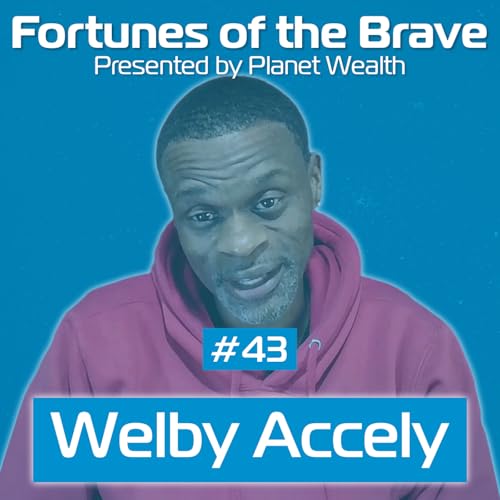
  • E43: Why Most People Fail in Real Estate (The Rule Many Ignore)
    Feb 23 2026
    Welby Accely, real estate investor and educator known across social media as @atmybest197, joins Mary Kathryn Johnson of Planet Wealth to break down the real story behind building wealth in real estate. Welby is direct about what most people hide: he was wiped out to zero three separate times, and the turning point was admitting the biggest problem was not the market or the "players" around him, it was him. He shares how a final 90,000 check became the seed for an eight-figure real estate portfolio that now produces tens of thousands of dollars in net income each month. This episode is a candid look at real estate investing without the influencer gloss. Welby explains how people get taken advantage of by common "players" in the business, including realtors, contractors, lenders, inspectors, and tenants, and why blaming them only goes so far when the same mistakes repeat. He also unpacks why passion is not enough, why "a job" rarely closes the gap long term, and how his fear of going back to economic rock bottom became fuel for discipline and execution. One of the most practical frameworks comes when Welby simplifies the entire real estate business into one concept: everything is a flip. Whether you wholesale, rehab and retail, or buy and hold for cash flow, the foundation is the same. You make your money on the buy, and the key is buying at the right price point. From there, he shares how he helps students stop paying for fluff, reverse engineer real goals from macro to micro, and avoid cookie-cutter strategies that do not fit their life. If you are serious about building wealth, cash flow, and ownership through real estate, this conversation will challenge your mindset and tighten your fundamentals. Watch the full episode of Fortunes of the Brave for the complete framework and the unfiltered truth. Key Takeaways: Own your outcomes before blaming the market or "the players." Buy at the right price point because you make money on the buy. Simplify real estate investing by recognizing everything is a flip. Reverse-engineer goals from macro vision to micro daily actions. Choose a strategy that fits your life, not what looks good online. Chapters: 00:00 – Welcome and Welby's real estate origin story 00:37 – Wiped out three times and the mindset shift that changed everything 02:40 – The "players" who take advantage and why responsibility still matters 05:09 – The 90,000 check and betting on yourself 07:20 – Why the influencer era is fading and truth is winning 10:21 – Passion is not enough and why a job rarely closes the gap 12:44 – Fear, survival drive, and "economic death" chasing you 18:42 – Helping dozens of people buy their first investment property 20:40 – Why "no fluff" mentorship works and how Welby teaches simply 26:40 – Everything is a flip: wholesale vs flip vs buy-and-hold 29:30 – The real key: buying at the right price point 31:22 – Macro vision to micro execution and avoiding cookie-cutter strategies 39:17 – Time, health, and protecting what you built 43:45 – Final advice: the world does not owe you understanding Resources Mentioned: Flips to Profits (Welby's company name referenced in the episode) "Economic death" concept (framework Welby uses for generational distance from poverty) Connect with Welby: Website: https://sociatap.com/atmybest/ YouTube: https://www.youtube.com/@atmybest197 Instagram: https://www.instagram.com/atmybest197/ TikTok: https://www.tiktok.com/@atmybest197 Facebook: https://www.facebook.com/atmybest197 Follow Planet Wealth: Instagram | TikTok | Facebook | LinkedIn | YouTube planetwealth.com
    Más Menos
    47 m
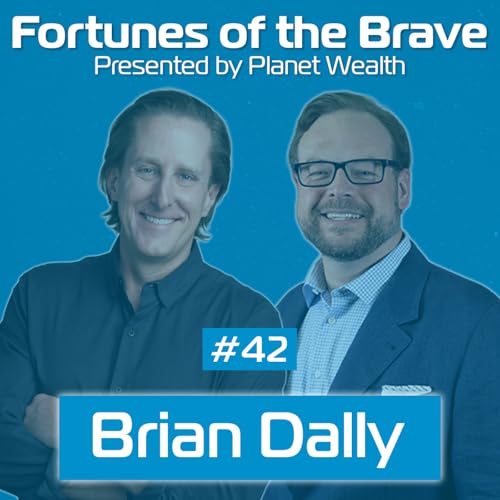
  • E42: Think Like a Bank: A Smart Way to Invest in Real Estate
    Feb 16 2026
    Brian Dally, Co-Founder and CEO of GroundFloor, is a pioneer in private market investing and one of the earliest category creators in real estate debt investing. In this episode of Fortunes of the Brave, Brian explains how he and his co-founder saw a future where everyday investors could access high-yield, short-duration private market opportunities backed by real estate. Brian's story starts with a lifelong interest in investing, sparked at age 15, and accelerates when he meets Nick, a regulatory strategist who helped shape the 2012 JOBS Act. Together, they pursued an approach most people dismissed: building a mass-market alternative investment product that fit inside securities regulations. Brian shares how more than 10 law firms told them the SEC would never allow it, and how that skepticism became their advantage over time. The conversation breaks down a key misunderstanding that keeps many investors stuck: the difference between owning an asset and financing an asset. Brian explains why being a creditor can offer lower volatility and more predictable outcomes, and why "acting like the bank" can be a powerful mental model for investors looking for yield without equity-level swings. Brian also offers a front-row view into how retail investors have evolved. He argues they are smarter and more organized than the industry admits, and that transparency and accountability are now mandatory. He warns of a coming "valley of despair" in private markets, where products with poor liquidity terms and fee structures may face serious pushback and legal consequences. Finally, Brian draws parallels between today's private market shift and the early days of index funds: controversial at first, then inevitable. If you want to understand where alternative investments, private credit, and retail access are headed next, this episode lays out the forces shaping the next decade. Watch the full episode of Fortunes of the Brave to get the complete framework and Brian's roadmap for what comes next. Key Takeaways: Reframe your strategy by thinking like a lender, not an owner Understand why real estate debt can produce high yield with lower volatility Recognize how retail investors have become organized and influential Spot structural red flags in private market products (fees, liquidity, redemption limits) Anticipate how private markets may evolve like public markets did with index-style vehicles Chapters: 00:00 – Intro and Brian's background 01:46 – Why private market real estate debt was worth creating 04:42 – The mass-market vision and early regulatory resistance 06:56 – Category creation: real estate debt for retail investors 08:22 – Why real estate is the perfect "Main Street" asset class 10:40 – Debt vs equity: why most investors misunderstand the advantage 12:16 – Retail investors are organizing, sharing intel, and influencing markets 14:56 – What retail investors demand now: transparency and accountability 17:38 – What $1.8B+ invested reveals about private market appetite 19:03 – The "valley of despair" coming for private market investing 22:17 – Index fund parallels: the next phase of alternatives 24:59 – Regulation and investor education: what has to change 30:16 – Liquidity, structures, Flywheel, and Notes 33:15 – The first loan story: scrappy, manual, and real 35:25 – Closing Resources Mentioned: GroundFloor (company/platform) JOBS Act (2012) WallStreetBets / GameStop (retail investor coordination example) Interval funds (liquidity and redemption pressure topic) Index fund history and evolution of retail access Connect with Brian Dally: Website: GroundFloor LinkedIn: Brian Dally Follow Planet Wealth: Instagram | TikTok | Facebook | LinkedIn | YouTube planetwealth.com
    Más Menos
    35 m
  • E41: Use Short-Term Deals to Build Long-Term Real Estate Wealth
    Feb 9 2026
    Daniel Borrero Jr., a real estate investor and entrepreneur, joins Mary Kathryn Johnson (CXO of Planet Wealth) to break down how he built long-term wealth by using short-term profits as fuel, not a finish line. Daniel is a Brooklyn-based investor who has been self-employed since 1985 and investing in real estate since 1989. His core philosophy is simple: build cash flow and equity through long-term holds, but use fix and flips and land flips strategically to generate the down payments and leverage needed to scale faster especially in high-cost markets like New York City. In this conversation, Daniel shares the practical "system" behind his portfolio growth: flipping to create capital, buying with fewer contingencies to negotiate better terms, and continuously reinvesting profits into assets that produce ongoing income. He explains why entrepreneurship is not a shortcut to freedom, how discipline and operational structure create compounding results, and why surrounding yourself with non-yes-people accelerates decision quality and growth. A major theme is preparation. Daniel doesn't wait for markets or politics to happen to him. He positions early by watching signals, listening to policy rhetoric without emotion, and making preemptive moves like accelerating capital improvements for depreciation benefits or buying renovation materials before tariffs raise costs. He also shares a pivotal networking lesson: the one concept he overheard at a bar that helped him lower payments by thousands through loan recasting. If you're serious about real estate investing, wealth building, financial literacy, and market timing, this episode is a direct, tactical roadmap for building resilient income and staying ready for opportunity. Watch the full episode of Fortunes of the Brave for the complete framework and the mindset behind it. Key Takeaways: • Use flips and land deals to generate down payments, then convert profits into long-term holds • Negotiate stronger terms by reducing contingencies and showing proof of capital • Build wealth through cash flow, equity growth, appreciation, and tax advantages, not just deal profit • Network to learn what you do not know and shorten your path with better relationships • Prepare for market shifts early by tracking policy signals, costs, and real-world indicators Chapters: • 00:00 – Welcome and Daniel's investing origin story • 00:42 – The flip-to-hold strategy for scaling in NYC • 03:26 – Buying with cash and reducing fees to increase profits] • 04:44 – College, entrepreneurship, and the myth of "degree equals wealth"] • 06:56 – Building businesses: video store, laundromats, ATMs, then real estate] • 10:18 – Entrepreneurship truth: time, sacrifice, and aligned partnership] • 11:14 – Operations, structure, and turning constraints into strengths] • 13:24 – Avoiding yes-people and accelerating growth through challenge] • 15:55 – Networking, recasting loans, and why listening wins] • 20:31 – Preparing for markets before they arrive] • 24:50 – Financial literacy and "relationship with money"] • 28:29 – Politics, markets, and positioning without emotion] • 33:04 – Florida condos, regulation signals, and defensive selling] • 39:05 – Final advice: enjoy the moments and celebrate milestones] Resources Mentioned: • Loan recasting (strategy to reduce monthly payments after principal paydown) • Accelerated depreciation (real estate tax strategy referenced in discussion) • "Mind Your Money" (book referenced as financial literacy resource) • AI as a competitive advantage: "AI won't beat you, the person using AI will" Connect with Daniel: • Website • LinkedIn • Other channels Follow Planet Wealth: Instagram | TikTok | Facebook | LinkedIn | YouTube planetwealth.com
    Más Menos
    40 m
  • E40: How Founders Build Trust Before Raising Capital
    Feb 2 2026
    McKeever "Mac" Conwell, Founder and Managing Partner of Rare Breed Ventures, joins Planet Wealth CXO Mary Katherine Johnson to break down how he went from a government contractor in Maryland to launching a venture capital fund built for overlooked founders. Mac shares the unconventional path that shaped his investing lens: dropping out of school for a Northrop Grumman opportunity, building and exiting a startup through pivots and accelerators, and then entering state-backed investing where he helped design a first-of-its-kind pre-seed program for women and minorities. This episode is a masterclass in capital raising, investor marketing, and community-powered fundraising. Mac explains why most founders struggle to raise money: not because their ideas are worse, but because they lack access to early friends-and-family capital, warm investor networks, and the confidence to talk about money. He walks through how he used Twitter (now X) to build trust at scale, create consistent value, and convert conversations into investor relationships without leading with an ask. The result was a fundraising engine driven by credibility, storytelling, and relentless reps. Mac also gets tactical about fundraising compliance, outlining why 506C matters for public solicitation under the JOBS Act, and how a founder's content and consistency can become a real distribution advantage. Then he goes deeper: the "North Star" behind his fund, how values shape who you should take money from, and why execution and self-care must coexist if you want to survive entrepreneurship long-term. If you want a practical, no-fluff conversation about raising capital outside the major tech hubs, building investor trust, and staying human in the process, this is the one. Watch the full episode of Fortunes of the Brave for the complete framework. Key Takeaways: • Build trust before you ask by sharing useful insights consistently • Use storytelling to make fundraising about mission, not transactions • Leverage 506C to publicly discuss fundraising while staying compliant • Create momentum with reps: conversations, feedback loops, and iteration • Protect your health and identity so the business does not consume you Chapters: • 00:00 – Meet Mac Conwell and Rare Breed Ventures • 01:10 – From government contractor to founder and exit • 02:32 – The state-backed pre-seed fund and "ask forgiveness" leadership • 06:38 – The real fear for founders: marketing and finding investors • 07:17 – How Twitter became the distribution channel • 11:13 – DM strategy, learning-first meetings, and early LP wins • 14:19 – Email storytelling to drive closes • 18:04 – Getting comfortable talking about money and yourself • 20:35 – Fundraising without a pitch deck: the 3-part story • 22:51 – The North Star story that defined the fund • 32:26 – 506C vs 506B: how public solicitation worked • 39:07 – Community flywheel: give first, ask later • 41:48 – Failure, burnout, and the self-care non-negotiable • 49:44 – Final advice: "You are enough." Resources Mentioned: • Rare Breed Ventures • Twitter/X as a fundraising channel • JOBS Act fundraising rules (506B and 506C) • Regulation Crowdfunding (Reg CF) • Harbor Bank of Maryland (public-private partnership example) • Hustle Fund (Elizabeth Yin) • Accenture partnership example • Kauffman Fellows program • American Express (IP acquisition reference) • Bill Me Later (sold to PayPal) Connect with Mac: • Website • LinkedIn Follow Planet Wealth: Instagram | TikTok | Facebook | LinkedIn | YouTube planetwealth.com
    Más Menos
    49 m
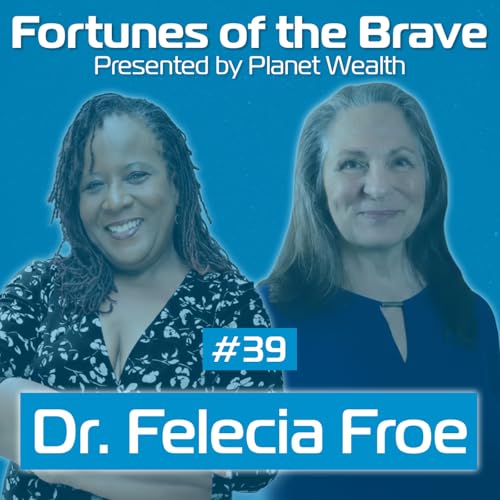
  • E39: Dr. Felecia Froe: How to Invest When You're Scared (Because Everyone Is)
    Jan 27 2026
    Dr. Felecia Froe, board-certified urological surgeon turned social impact investor, joins Mary Kathryn Johnson of Planet Wealth for a candid conversation about building wealth with purpose. As the founder behind Money with Mission and Wealth Be Hers, Dr. Froe shares how her path from medicine to real estate investing became a mission to help women gain the financial power to walk away from jobs or relationships that are not in their best interest. After reading Rich Dad Poor Dad, Dr. Froe began buying real estate and rapidly scaled to 18 properties. Then 2008 hit, and she lost everything. What followed was a difficult season of lawsuits, divorce, and hard lessons, but she kept moving forward, rebuilt with mentorship, and eventually found her true lane in social impact investing: investments designed to produce returns while strengthening communities. This episode explores the mindset shift from working for money to building assets that work for you, along with the truth that fear never fully disappears at higher levels of investing. Dr. Froe breaks down a practical framework for action: define your worst-case scenario, decide what you can afford to lose, and start small enough that you can learn without freezing. The conversation also highlights why "who" you invest with matters more than the product itself, and why women can build real wealth by aligning investments with a clear purpose. You will hear how Dr. Froe is investing in sober living homes through the Oxford House model, and why food deserts and access to nutrient-dense, local food are central to community health. If you care about social impact investing, real estate investing, regulation crowdfunding, and helping women investors build real financial freedom, this episode delivers both strategy and conviction. Listen to the full episode of Fortunes of the Brave for the deeper conversation. Key Takeaways: • Reframe money by prioritizing assets over consumption • Start investing by choosing a "small enough to learn" risk amount • Reduce fear by stress-testing the worst-case scenario • Align real estate investing with community outcomes and purpose • Vet the operator first because who you invest with matters most Chapters: • 00:00 – Welcome and who Dr. Felecia Froe is • 01:05 – The voice that said medicine was not the final chapter • 01:50 – Rich Dad Poor Dad and the first real estate buys • 02:57 – The 2008 crash and losing everything • 03:18 – Rebuilding with mentors and rediscovering purpose • 04:02 – Social impact investing as the "this is it" moment • 05:20 – Why investors invest in purpose, not just profit • 07:15 – Mindset after failure and finding the right people • 13:08 – Lessons from the mid-2000s lending era • 15:57 – Choosing freedom over the "safe" identity of medicine • 19:45 – Money with Mission: women should never feel stuck • 24:49 – Fear of losing money and starting with what you can afford • 30:03 – Sober living homes and the Oxford House model • 31:30 – Food deserts, grocery access, and "food is medicine" • 36:12 – The top rule: know who you are investing with • 36:58 – Closing and where to connect Resources Mentioned: • Rich Dad Poor Dad (Robert Kiyosaki) • The Rich Dad series (Robert Kiyosaki) • JOBS Act and Regulation Crowdfunding (Reg CF) • Oxford House (sober living model) • FreshRx / Food is Medicine (program concept) Connect with Felecia: • LinkedIn • Other: Money with Mission, Wealth Be Hers (names mentioned in episode) Follow Planet Wealth: Instagram | TikTok | Facebook | LinkedIn | YouTube planetwealth.com
    Más Menos
    35 m
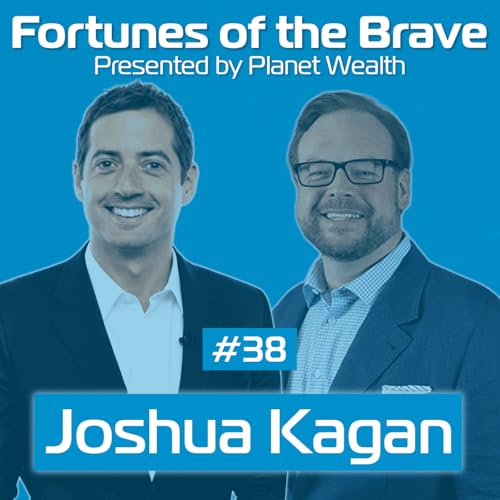
  • E38: Joshua Kagan: Locked Out of Real Estate? Why Land Is a Smart First Step to Owning Real Assets
    Jan 20 2026
    Joshua Kagan is a real estate and fintech builder focused on expanding access to ownership for everyday people. He is the co-founder of Bonfire and the founder of Friendly Acres, a land-focused venture designed to help people exit stranded land assets while creating affordable pathways into real asset ownership. In this episode of Fortunes of the Brave, Joshua shares how his journey from fix-and-flip investor to fintech founder reshaped his views on democratized access to real estate. Drawing on lessons from launching Bonfire during a volatile regulatory moment, he explains why land has emerged as one of the most practical and overlooked entry points for people who feel locked out of traditional real estate investing. Joshua breaks down why rising home prices, higher interest rates, and student debt have turned the American Dream of ownership into what he calls an "American myth." He explains how regulatory structures like Reg D offerings restrict non-accredited investors from accessing private real assets, and why that imbalance has accelerated wealth concentration over the last two decades. The conversation dives deep into Friendly Acres and Smart Land Investors, where Joshua is tackling the problem from both sides of the market. For sellers, land often becomes a stranded asset that generates taxes but little liquidity. For buyers, land can serve as a lower-cost, lower-maintenance starting point for real asset ownership, often with seller financing and significantly reduced upfront capital requirements. Beyond platforms and capital structures, Joshua emphasizes education as the real unlock. He shares first principles for evaluating land, including population growth, geography, slope, flood zones, and the long-term power of compound growth. The episode closes with a powerful reflection on curiosity, imposter syndrome, and why doing the work matters more than having the "perfect" background. If you care about real assets, inclusive ownership, and building long-term wealth without gimmicks, this conversation offers a grounded and honest framework for thinking differently about land and access. Key Takeaways: Reframe land as a viable first step into real asset ownership Understand how regulation limits access to private investments Recognize why stranded land assets create opportunity on both sides of the market Apply first-principle thinking when evaluating land deals Embrace action over perfection when building in capital-intensive spaces Chapters: 00:00 – Introduction and guest background 02:35 – From first fix-and-flip to real estate builder 04:45 – Lessons learned from building Bonfire 07:33 – Why land is an overlooked entry point to ownership 09:57 – The problem with accredited-only investment access 13:00 – Solving stranded land assets with Friendly Acres 15:31 – Lowering barriers to entry and seller financing 18:19 – First principles of land investing 20:51 – Democratizing access to real estate 25:48 – Advice for builders facing imposter syndrome 30:50 – A life-changing story from Nepal 33:12 – Final reflections on belief, work, and ownership Resources Mentioned: Friendly Acres Smart Land Investors Bonfire Connect with Joshua: Website: Friendly Acres LinkedIn: Joshua Kagan Follow Planet Wealth: Instagram | TikTok | Facebook | LinkedIn | YouTube planetwealth.com
    Más Menos
    26 m
  • E37: Lisa Phillips: Your 9–5 Can Be Fuel: Using Your Job to Fund Real Estate
    Jan 12 2026
    In this episode of Fortunes of the Brave, host Mary Kathryn Johnson sits down with Lisa Phillips, founder of Affordable Real Estate Investments, to unpack how she went from foreclosure to financial independence using affordable rental properties. Lisa is known for helping overlooked investors, especially Black professionals, build profitable real estate portfolios in working class and minority neighborhoods using low cost, high cash flow strategies. Lisa shares how she realized corporate America was not her long term path and reframed her engineering job as a paycheck to fund her real business: affordable real estate investing. She walks through buying an overpriced Las Vegas property at the top of the 2006 market, losing it to foreclosure, and then rebuilding by targeting sub 30k and 30k to 60k homes in lower income but stable areas. Instead of chasing luxury flips, she focused on out of state real estate investing, long distance rentals, and using time as her ally to renovate and stabilize properties on a modest budget. From her first 13k Baltimore house to assembling a portfolio across multiple cities, Lisa explains how investors without generational wealth can start small, live on less, and use each corporate paycheck to buy freedom. She breaks down the mindset shifts required to let go of ego, status, and the belief that your first deal has to be 50k or bigger. One house every 18 to 24 months, in the right market, can change a family's financial trajectory. Lisa also opens the door to global real estate investing, sharing how she now lives part time in France, uses her home as a primary residence and short term rental, and why getting a local property manager is essential when investing across cultures and continents. If you have ever felt "overlooked" by traditional wealth advice, this conversation will show you a practical path into rental properties, no matter your starting point. Listen to this episode of Fortunes of the Brave to learn how to use small, strategic moves to build big, long term freedom. Key Takeaways: • Reframe your day job as a paycheck to fund your real business or investments • Start with low cost rentals in the 30k to 60k range instead of waiting for a perfect big deal • Use time as your advantage by renovating slowly and avoiding rushed, high risk projects • Drop ego and status so you can use "layaway" style strategies and modest steps to build wealth • Apply long distance investing systems to both out of state and international real estate Chapters: • 00:00 - Welcome to Fortunes of the Brave with Lisa Phillips • 00:41 - From corporate burnout to a 40 by 28 retirement goal • 02:51 - Corporate America as a paycheck to your real business • 03:43 - Growing up low income and doing "whatever it took" • 06:29 - The first 13k house and rebuilding after foreclosure • 08:31 - Being forced to invest outside your city on a modest budget • 11:17 - Overlooked investors and why traditional advice misses them • 14:20 - Layaway, Klarna, and dropping ego to start small • 17:23 - Designing a plan for one house every 18 to 24 months • 20:40 - Taking the strategy global and investing while living in France • 23:43 - Short term rentals, property managers, and European market realities • 28:42 - Systems for long distance and out of country investing Resources Mentioned: • Book - The Millionaire Next Door • Book - Millionaire By 30 • Affordable Real Estate Investments (Lisa's company) • Concepts - Layaway, Klarna and modest step investing • Lisa's upcoming book on long distance investing (states and global) Connect with Lisa: • LinkedIn: Lisa Phillips • Other: Instagram, Twitter and YouTube under "Affordable Real Estate Investments" or "Affordablerei" • Follow Planet Wealth: Instagram | TikTok | Facebook | LinkedIn | YouTube planetwealth.com
    Más Menos
    39 m