Planet Wealth: Fortunes of the Brave Podcast Por Lance Woodson & Mary Kathryn Johnson arte de portada

Planet Wealth: Fortunes of the Brave

Planet Wealth: Fortunes of the Brave

De: Lance Woodson & Mary Kathryn Johnson
Escúchala gratis

Planet Wealth: Fortunes of the Brave spotlights the visionaries willing to step first, because—much like the old saying—fortune favors the brave. Hosted by Co-Founder & CEO Lance Woodson and CXO Mary Kathryn Johnson, every episode rallies around Planet Wealth's mission: expanding capital access and curating investments—powered by community, accelerated by technology, leading a movement together. Across candid conversations and tactical deep-dives, you'll hear how founders, investors, and trailblazing communities are targeting economic barriers and narrowing the wealth gap one regulated offering at a time. Listeners walk away with transparent frameworks, real-world case studies, and the conviction that nobody has to feel left behind on Planet Wealth. Disclaimer: This show is produced for educational and entertainment purposes only and does not constitute financial, legal, or tax advice. Nothing discussed should be interpreted as an offer to sell—or a solicitation to buy—any security. All investments involve risk. Conduct your own due diligence, consult licensed professionals, and decide whether the opening presented aligns with your personal objectives. Explore a world apart form Wall Street with the Planet Wealth: Fortunes of the Brave Podcast! Connect with Us: https://linktr.ee/planetwealthofficial Website: https://planetwealth.com/© Planet Wealth Economía Finanzas Personales
Episodios
  • E44: Why Money Still Feels Unsafe (Even When You're Doing "Well")
    Mar 2 2026
    Rahkim Sabree, financial therapist and author of Overcoming Financial Trauma, joins Mary Kathryn Johnson (Planet Wealth CXO) to unpack the hidden forces shaping your relationship with money. Rahkim explains why financial trauma is not just a budgeting problem but a nervous system problem, and why financial wellness often requires more than financial literacy. If you have ever felt anxiety opening your bank app, guilt after spending, or shame about your "status," this conversation reframes those reactions as learned survival responses, not character flaws. Rahkim breaks down how our earliest money memories form beliefs that can stick for decades, and how those beliefs show up as patterns in adulthood, even for high earners. He shares research-informed insights on financial socialization, the fight-flight-freeze response to money stress, and how intergenerational experiences can influence our money vigilance. Then he offers a practical framework from his book: the Three E's of overcoming financial trauma, Exposure, Education, and Execution. The goal is not to become emotionless about money, but to build safety, clarity, and alignment so your decisions stop being driven by fear. Mary adds personal examples of how childhood messages about "rich people" shape identity, self-worth, and wealth-building confidence. Together they explore the shift from scarcity and survival mode into values-based wealth building, including how to communicate financial boundaries without feeling smaller in the eyes of others. Rahkim also challenges the idea that money trauma only affects people who "don't have enough," describing how wealth can still coexist with hypervigilance, hustle culture, and a constant sense that safety is always one step away. If you want to build wealth without dragging shame, fear, or old narratives into every decision, this episode gives you language, tools, and a clear starting point. Watch the full episode of Fortunes of the Brave for the complete framework. Key Takeaways: Identify your earliest money memories to expose the narratives driving your behavior Notice how money stress shows up in your body and treat it like a threat response Use the Three E's framework to move from awareness to action without shame Align goals and values to reduce guilt and stop self-sabotage spending patterns Build a money-safe culture in your home and community to heal collectively Chapters: 00:00 – Welcome and why financial therapy matters 00:34 – What a financial therapist does and what financial trauma means 03:06 – How money beliefs form early and shape identity 05:20 – Intergenerational money stress and epigenetics 09:40 – The Three E's: Exposure, Education, Execution 12:20 – Money as a threat: the body's response to financial stress 18:40 – Money story vs money narrative and how to rewrite it 21:20 – Scarcity vs abundance and why "safety" is the real driver 24:19 – Values alignment, spending patterns, and financial boundaries 31:40 – Community, culture, and healing financial trauma collectively 42:25 – How financial trauma shows up even when you "have money" 50:16 – Closing thoughts and Rahkim's book Resources Mentioned: Overcoming Financial Trauma (Rahkim Sabree, Wiley, published November 2025) Connect with Rahkim: Website LinkedIn X Instagram YouTube Facebook Follow Planet Wealth: Instagram | TikTok | Facebook | LinkedIn | YouTube planetwealth.com
    Más Menos
    Aún no se conoce
  • E43: Why Most People Fail in Real Estate (The Rule Many Ignore)
    Feb 23 2026
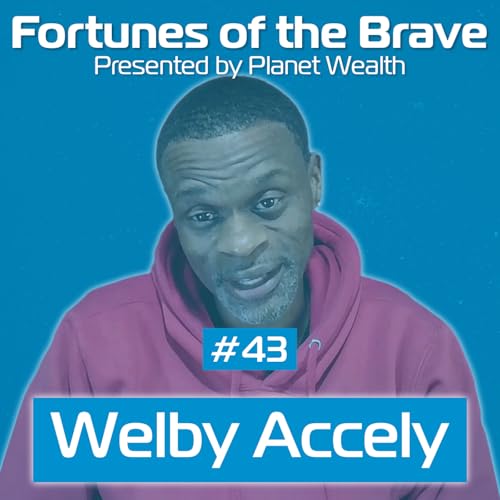
    Welby Accely, real estate investor and educator known across social media as @atmybest197, joins Mary Kathryn Johnson of Planet Wealth to break down the real story behind building wealth in real estate. Welby is direct about what most people hide: he was wiped out to zero three separate times, and the turning point was admitting the biggest problem was not the market or the "players" around him, it was him. He shares how a final 90,000 check became the seed for an eight-figure real estate portfolio that now produces tens of thousands of dollars in net income each month. This episode is a candid look at real estate investing without the influencer gloss. Welby explains how people get taken advantage of by common "players" in the business, including realtors, contractors, lenders, inspectors, and tenants, and why blaming them only goes so far when the same mistakes repeat. He also unpacks why passion is not enough, why "a job" rarely closes the gap long term, and how his fear of going back to economic rock bottom became fuel for discipline and execution. One of the most practical frameworks comes when Welby simplifies the entire real estate business into one concept: everything is a flip. Whether you wholesale, rehab and retail, or buy and hold for cash flow, the foundation is the same. You make your money on the buy, and the key is buying at the right price point. From there, he shares how he helps students stop paying for fluff, reverse engineer real goals from macro to micro, and avoid cookie-cutter strategies that do not fit their life. If you are serious about building wealth, cash flow, and ownership through real estate, this conversation will challenge your mindset and tighten your fundamentals. Watch the full episode of Fortunes of the Brave for the complete framework and the unfiltered truth. Key Takeaways: Own your outcomes before blaming the market or "the players." Buy at the right price point because you make money on the buy. Simplify real estate investing by recognizing everything is a flip. Reverse-engineer goals from macro vision to micro daily actions. Choose a strategy that fits your life, not what looks good online. Chapters: 00:00 – Welcome and Welby's real estate origin story 00:37 – Wiped out three times and the mindset shift that changed everything 02:40 – The "players" who take advantage and why responsibility still matters 05:09 – The 90,000 check and betting on yourself 07:20 – Why the influencer era is fading and truth is winning 10:21 – Passion is not enough and why a job rarely closes the gap 12:44 – Fear, survival drive, and "economic death" chasing you 18:42 – Helping dozens of people buy their first investment property 20:40 – Why "no fluff" mentorship works and how Welby teaches simply 26:40 – Everything is a flip: wholesale vs flip vs buy-and-hold 29:30 – The real key: buying at the right price point 31:22 – Macro vision to micro execution and avoiding cookie-cutter strategies 39:17 – Time, health, and protecting what you built 43:45 – Final advice: the world does not owe you understanding Resources Mentioned: Flips to Profits (Welby's company name referenced in the episode) "Economic death" concept (framework Welby uses for generational distance from poverty) Connect with Welby: Website: https://sociatap.com/atmybest/ YouTube: https://www.youtube.com/@atmybest197 Instagram: https://www.instagram.com/atmybest197/ TikTok: https://www.tiktok.com/@atmybest197 Facebook: https://www.facebook.com/atmybest197 Follow Planet Wealth: Instagram | TikTok | Facebook | LinkedIn | YouTube planetwealth.com
    Más Menos
    47 m
  • E42: Think Like a Bank: A Smart Way to Invest in Real Estate
    Feb 16 2026
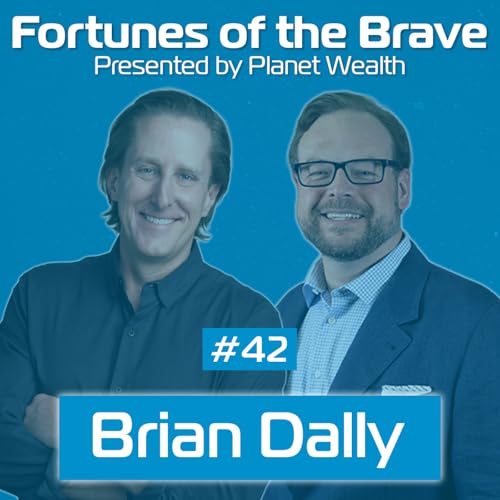
    Brian Dally, Co-Founder and CEO of GroundFloor, is a pioneer in private market investing and one of the earliest category creators in real estate debt investing. In this episode of Fortunes of the Brave, Brian explains how he and his co-founder saw a future where everyday investors could access high-yield, short-duration private market opportunities backed by real estate. Brian's story starts with a lifelong interest in investing, sparked at age 15, and accelerates when he meets Nick, a regulatory strategist who helped shape the 2012 JOBS Act. Together, they pursued an approach most people dismissed: building a mass-market alternative investment product that fit inside securities regulations. Brian shares how more than 10 law firms told them the SEC would never allow it, and how that skepticism became their advantage over time. The conversation breaks down a key misunderstanding that keeps many investors stuck: the difference between owning an asset and financing an asset. Brian explains why being a creditor can offer lower volatility and more predictable outcomes, and why "acting like the bank" can be a powerful mental model for investors looking for yield without equity-level swings. Brian also offers a front-row view into how retail investors have evolved. He argues they are smarter and more organized than the industry admits, and that transparency and accountability are now mandatory. He warns of a coming "valley of despair" in private markets, where products with poor liquidity terms and fee structures may face serious pushback and legal consequences. Finally, Brian draws parallels between today's private market shift and the early days of index funds: controversial at first, then inevitable. If you want to understand where alternative investments, private credit, and retail access are headed next, this episode lays out the forces shaping the next decade. Watch the full episode of Fortunes of the Brave to get the complete framework and Brian's roadmap for what comes next. Key Takeaways: Reframe your strategy by thinking like a lender, not an owner Understand why real estate debt can produce high yield with lower volatility Recognize how retail investors have become organized and influential Spot structural red flags in private market products (fees, liquidity, redemption limits) Anticipate how private markets may evolve like public markets did with index-style vehicles Chapters: 00:00 – Intro and Brian's background 01:46 – Why private market real estate debt was worth creating 04:42 – The mass-market vision and early regulatory resistance 06:56 – Category creation: real estate debt for retail investors 08:22 – Why real estate is the perfect "Main Street" asset class 10:40 – Debt vs equity: why most investors misunderstand the advantage 12:16 – Retail investors are organizing, sharing intel, and influencing markets 14:56 – What retail investors demand now: transparency and accountability 17:38 – What $1.8B+ invested reveals about private market appetite 19:03 – The "valley of despair" coming for private market investing 22:17 – Index fund parallels: the next phase of alternatives 24:59 – Regulation and investor education: what has to change 30:16 – Liquidity, structures, Flywheel, and Notes 33:15 – The first loan story: scrappy, manual, and real 35:25 – Closing Resources Mentioned: GroundFloor (company/platform) JOBS Act (2012) WallStreetBets / GameStop (retail investor coordination example) Interval funds (liquidity and redemption pressure topic) Index fund history and evolution of retail access Connect with Brian Dally: Website: GroundFloor LinkedIn: Brian Dally Follow Planet Wealth: Instagram | TikTok | Facebook | LinkedIn | YouTube planetwealth.com
    Más Menos
    35 m
Todavía no hay opiniones