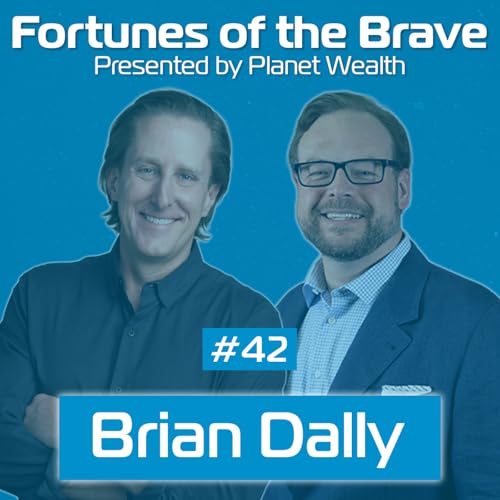
E42: Think Like a Bank: A Smart Way to Invest in Real Estate Podcast Por  arte de portada

E42: Think Like a Bank: A Smart Way to Invest in Real Estate

E42: Think Like a Bank: A Smart Way to Invest in Real Estate

Escúchala gratis

Ver detalles del espectáculo
Brian Dally, Co-Founder and CEO of GroundFloor, is a pioneer in private market investing and one of the earliest category creators in real estate debt investing. In this episode of Fortunes of the Brave, Brian explains how he and his co-founder saw a future where everyday investors could access high-yield, short-duration private market opportunities backed by real estate. Brian's story starts with a lifelong interest in investing, sparked at age 15, and accelerates when he meets Nick, a regulatory strategist who helped shape the 2012 JOBS Act. Together, they pursued an approach most people dismissed: building a mass-market alternative investment product that fit inside securities regulations. Brian shares how more than 10 law firms told them the SEC would never allow it, and how that skepticism became their advantage over time. The conversation breaks down a key misunderstanding that keeps many investors stuck: the difference between owning an asset and financing an asset. Brian explains why being a creditor can offer lower volatility and more predictable outcomes, and why "acting like the bank" can be a powerful mental model for investors looking for yield without equity-level swings. Brian also offers a front-row view into how retail investors have evolved. He argues they are smarter and more organized than the industry admits, and that transparency and accountability are now mandatory. He warns of a coming "valley of despair" in private markets, where products with poor liquidity terms and fee structures may face serious pushback and legal consequences. Finally, Brian draws parallels between today's private market shift and the early days of index funds: controversial at first, then inevitable. If you want to understand where alternative investments, private credit, and retail access are headed next, this episode lays out the forces shaping the next decade. Watch the full episode of Fortunes of the Brave to get the complete framework and Brian's roadmap for what comes next. Key Takeaways: Reframe your strategy by thinking like a lender, not an owner Understand why real estate debt can produce high yield with lower volatility Recognize how retail investors have become organized and influential Spot structural red flags in private market products (fees, liquidity, redemption limits) Anticipate how private markets may evolve like public markets did with index-style vehicles Chapters: 00:00 – Intro and Brian's background 01:46 – Why private market real estate debt was worth creating 04:42 – The mass-market vision and early regulatory resistance 06:56 – Category creation: real estate debt for retail investors 08:22 – Why real estate is the perfect "Main Street" asset class 10:40 – Debt vs equity: why most investors misunderstand the advantage 12:16 – Retail investors are organizing, sharing intel, and influencing markets 14:56 – What retail investors demand now: transparency and accountability 17:38 – What $1.8B+ invested reveals about private market appetite 19:03 – The "valley of despair" coming for private market investing 22:17 – Index fund parallels: the next phase of alternatives 24:59 – Regulation and investor education: what has to change 30:16 – Liquidity, structures, Flywheel, and Notes 33:15 – The first loan story: scrappy, manual, and real 35:25 – Closing Resources Mentioned: GroundFloor (company/platform) JOBS Act (2012) WallStreetBets / GameStop (retail investor coordination example) Interval funds (liquidity and redemption pressure topic) Index fund history and evolution of retail access Connect with Brian Dally: Website: GroundFloor LinkedIn: Brian Dally Follow Planet Wealth: Instagram | TikTok | Facebook | LinkedIn | YouTube planetwealth.com
Todavía no hay opiniones