Episodios

  • Paragliding Recovery for Wounded Warriors
    Apr 7 2026

    A missed bus. A dead phone. Smoke over lower Manhattan. A life that should have ended at work that morning went in a completely different direction, and years later, it turned into a mission to help wounded warriors feel alive again.

    This conversation carries the weight of 9/11, the long shadow of war, and the hard truth that many veterans come home with pain nobody around them fully understands. It also brings something a lot of men need to hear. That healing does not always begin in a clinic or an office. Sometimes it starts when someone builds a place where veterans can breathe, move, and remember they still have a future.

    Lyubim Kogan shares how surviving the 9/11 attacks in New York City shaped the way he sees service and sacrifice, why the Red Cross became a major inspiration in his life, and how Wings 4 Heroes grew from a paragliding idea into a hands-on mission that includes physical therapy, community, and a deeper sense of purpose. Scott also opens up about grief after losing his brother in Afghanistan, the slow slide into anger and self-destruction, and the moment he finally reached for help.

    For veterans carrying loss, transition stress, survivor's guilt, or the feeling that nobody gets it, this episode might be what you were looking for. You will walk away with a stronger sense that recovery can take many forms, that support is out there even if you don't see it, and that one person taking action can change far more lives than you think.

    Timestamps:

    • 00:07:52 - The missed bus that kept him out of the towers
    • 00:29:06 - How the Red Cross changed the way he sees service
    • 00:39:00 - Scott explains how grief wrecked his life after Afghanistan
    • 00:47:07 - The veteran resources too many people still do not know about
    • 00:53:21 - How paragliding and physical therapy became Wings 4 Heroes
    Links & Resources
    • Veteran Suicide & Crisis Line: Dial 988, then press 1
    • Website: https://www.wings4heroes.org
    • Follow Wings 4 Heroes on Facebook: https://www.facebook.com/wings4heroes
    • Follow Wings 4 Heroes on Instagram: https://www.instagram.com/wings4heroes
    Transcript

    View the transcript for this episode.

    Más Menos
    1 h y 19 m
  • What Keeps Vets Alive After Service
    Mar 31 2026

    The stress does not stay at work. It follows you into your sleep, your marriage, and your patience with your kids. Guest, Johnnie Gilpen, talks about a stretch in pediatric emergency medicine where he lost six kids in a short time and had to face a direct question from a colleague about how he was coping. He explains the three supports he relies on: faith, three people he can call without hesitation, and counseling plus honest conversation. He connects it to a simple military idea, the three-man foxhole, and shows how to set that up in civilian life so you are not isolated when things get heavy. He closes with writing and storytelling, including Warhorse Journal, and how putting events on paper can help your spouse understand what you have not been able to say out loud.

    Timestamps:

    • 03:15: Losing six kids fast and the coping question
    • 04:45: The three supports he uses every time
    • 06:15: A Vietnam-era dad and the cost of staying silent
    • 11:00: Building a three-person call list and using it early
    • 28:30: Writing small stories that change home life
    Links & Resources
    • Veteran Suicide & Crisis Line: Dial 988, then press 1
    • Website: https://www.johnniegilpen.com
    • Follow Johnnie Gilpen on LinkedIn: https://www.linkedin.com/in/johnniegilpen/
    Transcript

    View the transcript for this episode.

    Más Menos
    44 m
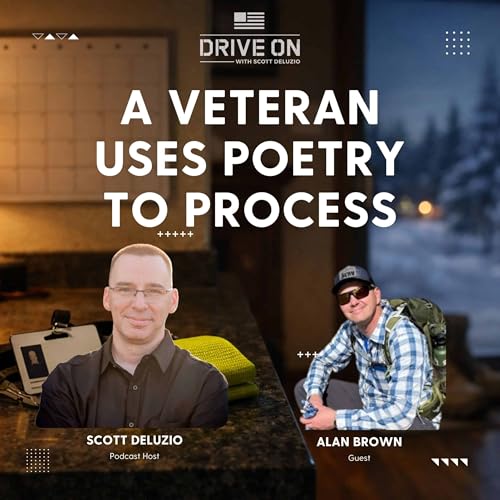
  • A Veteran Uses Poetry To Process
    Mar 24 2026

    A civilian job can pay well and still leave a veteran feeling irritated and restless by the end of the day. Alan Brown breaks down the parts of military life that disappear first after retirement: the uniform, the PT, the daily contact with soldiers, and the built in group that understands the standard without a long explanation. He retired in January 2020 after 23 years in the Army, and he describes the mix of frustration and trial and error that followed while he searched for work that felt like it mattered. The conversation also gets practical. Alan explains how he uses writing as a focused way to slow down and sort out memories from active duty and the pressure of family life. He spent the summer of 2025 revising poems he wrote years earlier, then published a collection in September 2025 on Amazon titled When the Uniform No Longer Fits: Reflections on Military Service, Family, and Being a Veteran. Many of the poems are autobiographical and written for veterans, active duty service members, and family members who want a clearer view of what service leaves behind. Key moments are below.

    Timestamps:

    • 01:30: Retired after 23 years and still sorting out the next job
    • 08:12: The loss of camaraderie
    • 16:30: Working at full speed while coworkers move slower and the anger that builds
    • 17:00: Writing started in college and turned into a way to put thoughts on the page
    • 35:52: When the Uniform No Longer Fits
    Links & Resources
    • Veteran Suicide & Crisis Line: Dial 988, then press 1
    • When the Uniform No Longer Fits Book: https://www.amazon.com/When-Uniform-Longer-Fits-Reflections/dp/B0FSYTQ777/
    Transcript

    View the transcript for this episode.

    Más Menos
    50 m
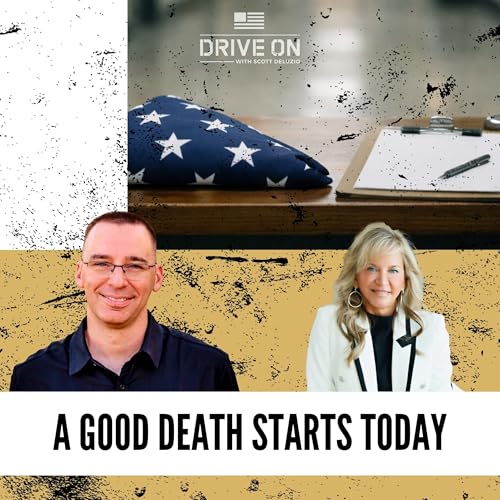
  • A Good Death Starts Today
    Mar 17 2026

    Hospitals can strip you down fast, not just physically, but mentally. You walk in hurting, and the system can make you feel lucky to be there at all. Dr. Pamela Pyle trained inside a VA hospital where camaraderie filled open wards, and she has spent decades watching what helps people fight for better care, and what quietly breaks them.

    This conversation gets practical fast: why the first answer is often no, how to push past it, how to get a second opinion, and how to walk in with a plan so you do not leave feeling powerless.

    Then it turns personal and heavy in the best way, with the moment a dying patient gave her a phrase that changed everything: a good death is built by how you live right now. If you are carrying depression, PTSD, or that numb, isolated feeling where it takes everything just to make it to tomorrow, you will also hear real treatment hope, plus a peer-to-peer tool built for the moments when talking to your spouse or a clinician feels impossible.

    Timestamps:

    • 14:30 - The "stripping" effect that steals your control the moment you enter the system
    • 17:00 - Knowledge is power, the questions that change your care and your confidence
    • 19:45 - A patient's final words that reshaped how to live with purpose now
    • 31:30 - PTSD and depression treatment hope, including EMDR and newer options she's seeing
    • 32:45 - White Flag App, peer support in your lane when you need an assist right away
    Links & Resources
    • Veteran Suicide & Crisis Line: Dial 988, then press 1
    • Website: https://drpamela.com
    • Follow Pamela Pyle on Facebook: https://www.facebook.com/drpamelapyle
    • Follow Pamela Pyle on Instagram: https://www.instagram.com/drpamelapyle/
    • Follow Pamela Pyle on LinkedIn: https://www.linkedin.com/in/pamela-prince-pyle-48323028/
    • White Flag App: https://www.whiteflagapp.com/
    Transcript

    View the transcript for this episode.

    Más Menos
    45 m
  • TAPS Suicide Prevention And Postvention
    Mar 10 2026

    Home should feel like the safe part. For many veterans, it is the opposite. The noise is gone, the mission is gone, and the people around you might not know how to read the signs when you are running low. That is where isolation starts, and isolation is where things can get dangerous fast.

    This conversation pulls you into the real stakes of suicide prevention through the eyes of someone who has lived the aftermath. You will hear why suicide loss hits far beyond one household, why "I do not want to say the wrong thing" keeps too many of us quiet, and how a simple, direct question can create enough space for a crisis to settle. Carla also shares how her own story began: a young Marine wife, pregnant, then suddenly a widow, trying to survive grief, trauma, and a community that did not know what to do with suicide loss.

    If you have ever worried about a buddy, a spouse, a coworker, or yourself, this gives you a grounded way to think about the next right move. You do not need a title or a uniform to help save a life. You need connection, a willingness to ask, and a plan to get to the next level of support.

    Timestamps:

    • 07:45: One death, 135 people impacted, and why that number changes how you show up
    • 17:30: Pregnant, widowed, and suddenly alone, how suicide loss cut her off from the community
    • 26:30: "Are you thinking about suicide?" Why asking it out loud is the turning point
    • 36:59: The myth that "nothing can stop it," and what actually helps in a crisis
    • 52:39: The Military Mentor Program, purpose and connection for veterans who want to give back
    Links & Resources
    • Veteran Suicide & Crisis Line: Dial 988, then press 1
    • Website: https://www.TAPS.org
    • Follow TAPS on Facebook: https://www.facebook.com/TAPSorg/
    • Follow TAPS on Instagram: https://www.instagram.com/tapsorg
    • Follow TAPS on Twitter/X: https://twitter.com/tapsorg
    • Follow TAPS on LinkedIn: https://www.linkedin.com/company/tragedy-assistance-program-for-survivors/
    • Follow TAPS on YouTube: https://www.youtube.com/c/tapsorg
    • Follow Carla Stumpf Patton on LinkedIn: https://www.linkedin.com/in/carla-stumpf-patton-edd-lmhc-1a242936
    Transcript

    View the transcript for this episode.

    Más Menos
    57 m
  • Free VA Eye Care Most Vets Don't Know About
    Mar 3 2026

    A lot of veterans grind through blurry vision, eye strain, and overpriced frames because nobody ever told them the VA can cover eye exams and prescription glasses. This episode puts that benefit in plain language, straight from a fellow infantryman who now runs the operation that fills millions of prescriptions for veterans each year. You will hear how Sean Loosen moved from West Point to Iraq, felt the culture shock of civilian work, and eventually stepped into leading PDS Optical, a company built around Pride, Dignity, and Service.

    Then the conversation locks onto the practical stuff veterans actually need, including who qualifies for VA eye care, how the VA workflow moves from optometrist to optician, and why the process can be smoother and faster than most people expect. It closes with a look at what it means to serve beyond the job, including their Honor Flight sponsorship.

    Timestamps:

    • 04:15 - The VA glasses benefit
    • 06:09 - Civilian culture shock and finding purpose again
    • 14:00 - Eligibility based on service-connected disability and the PACT Act ripple
    • 22:15 - Fast turnaround times
    • 26:15 - Honor Flight sponsorship and the emotion behind giving back
    Links & Resources
    • Veteran Suicide & Crisis Line: Dial 988, then press 1
    • Website: https://pdsoptical.com/
    • VA Vision Care Information: https://www.va.gov/health-care/about-va-health-benefits/vision-care/
    • Follow Sean Loosen on LinkedIn: https://www.linkedin.com/in/sean-loosen/
    Transcript

    View the transcript for this episode.

    Más Menos
    38 m
  • Four Ways Veterans Can Serve Again
    Feb 24 2026

    The hardest part of transition is not always the job search. It is the moment you realize the mission feeling did not automatically follow you home. This conversation is a reset for that. You will hear a clear, practical way to turn veteran strengths into local impact without burning out, starting with the Four Ts of true changemaking: time, talent, treasure, and testimony. The examples are grounded and real, from mentoring to board service, from small civic habits to the kind of logistics thinking that can take a nonprofit line from a long wait to a quick, efficient flow. The episode also goes deeper than volunteering. It gets into values alignment, purpose beyond titles, and emotional intelligence as a resilience skill you can train. The finish is a simple 30-day approach that starts with awareness, moves into small action, then self-regulation, and finally connection with other people, so service becomes a steady habit.

    Timestamps:

    • 03:17 - The Four Ts that make service possible again
    • 05:28 - Why veterans quietly transform nonprofits with execution and logistics
    • 15:00 - The volunteer crisis and the veteran-sized solution
    • 31:33 - Emotional intelligence as a resilience skill you can build
    • 45:00 - The 30-day changemaker plan from zero to momentum
    Links & Resources
    • Veteran Suicide & Crisis Line: Dial 988, then press 1
    • Website: http://www.meetsuzanne.com/
    • Follow Suzanne Smith on Facebook: https://www.facebook.com/SocialImpactArchitects
    • Follow Suzanne Smith on Instagram: https://instagram.com/socialtrendspot
    • Follow Suzanne Smith on Twitter/X: https://x.com/snstexas & https://x.com/socialtrendspot
    Transcript

    View the transcript for this episode.

    Más Menos
    57 m
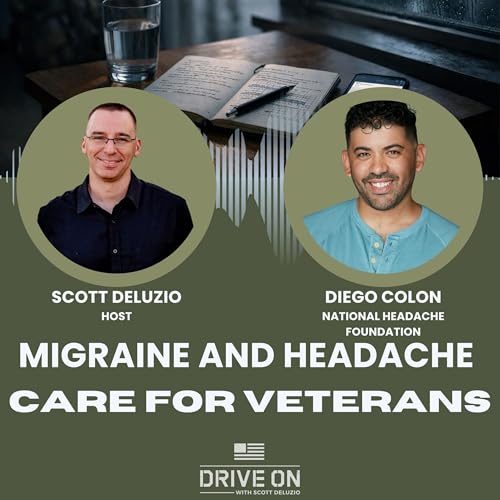
  • Migraine and Headache Care for Veterans
    Feb 17 2026

    Headache pain can look like a minor annoyance until it starts stealing whole days. For many veterans, it is not a random ache that fades with water and a nap. It can be a complex, repeating neurological problem that shows up after exposures, stress, disrupted sleep, or injuries that never fully healed.

    This episode walks through why headaches and migraines hit the veteran community so hard, why the root cause often gets missed, and how to stop walking into appointments empty-handed. You will hear how the National Headache Foundation built Operation Brainstorm to make resources easier to find and use, including stories from veterans who live with this every day.

    The takeaway from this episode is treat this like a mission. Track attacks, document patterns, identify triggers, and bring a clean record to a dedicated appointment that stays focused on headache care. The conversation also covers the differences between preventive and abortive meds, how to advocate for referrals when primary care reaches its limits, and why specialized care, like the VA Headache Centers of Excellence, matters, especially for the hardest cases. This is for anyone tired of powering through and ready to build a plan that respects work, family, and the reality of living with pain.

    Timestamps:

    • 01:47 - One third of veterans live with headaches and migraines
    • 06:15 - Hundreds of headache types and why the label matters
    • 09:45 - Cluster headache severity and the hidden days before head pain
    • 13:45 - Build a plan, track patterns, walk in prepared
    • 34:45 - VA Headache Centers of Excellence and the access fight
    Links & Resources
    • Veteran Suicide & Crisis Line: Dial 988, then press 1
    • Websites:
      • https://www.operationbrainstorm.org/
      • https://headaches.org/taking-charge/
    • Follow National Headache Foundation on Facebook: https://www.facebook.com/NationalHeadacheFoundation
    • Follow National Headache Foundation on Instagram: https://www.instagram.com/nationalheadachefoundation/
    • Follow National Headache Foundation on Twitter: https://x.com/nhf
    • Follow National Headache Foundation on LinkedIn: https://www.linkedin.com/company/national-headache-foundation/
    Transcript

    View the transcript for this episode.

    Más Menos
    47 m