Episodios

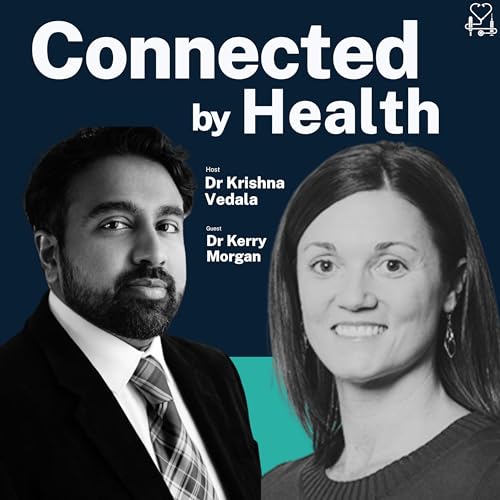
  • #07 - Prevention, Policy, and People: Public Health in Practice
    Apr 6 2026
    In this episode, we sit down with Dr. Kerry Morgan, public health professor and health behavior researcher at the University of Central Oklahoma, to explore the foundational role of public health in shaping healthier, more resilient communities. From disease prevention and health education to burnout, research, and policy, this conversation highlights how public health operates far beyond hospitals—impacting every aspect of society. We dive into the importance of investing in prevention systems like vaccination, sanitation, and disease surveillance, and how these efforts not only save lives but reduce long-term healthcare costs. Dr. Morgan also shares practical strategies for addressing burnout, improving health literacy, and making physical activity more accessible—while emphasizing the critical role of research in driving meaningful, evidence-based change. As we recognize National Public Health Week, this episode serves as a powerful reminder: the health of a society is built long before patients ever walk into a clinic. When we invest in public health, we invest in everything. 🔑 Key Highlights & Takeaways 🌍 Public Health = Prevention First Focuses on stopping problems before they become crises Reduces: Hospitalizations Healthcare costs Lost productivity Example: Vaccination and surveillance systems prevent outbreaks before escalation 💡 Health Is Shaped by More Than Medicine Behavior, environment, relationships, and policy all influence outcomes Public health works at the population level, not just individual care 🧠 Burnout Is Both Personal AND Systemic Individual strategies: Identify "depleters vs energizers" Lean into what restores energy System-level solutions: Flexible work environments Protected time for decompression Strong communication culture 📚 Health Education = Empowerment Health literacy enables better decision-making Small gaps in understanding (e.g., nutrition labels) can lead to major health impacts Critical for: Obesity prevention Chronic disease management Long-term behavior change 🏃 Physical Activity = Underrated Medicine Benefits go far beyond weight: Improves mental health (anxiety, depression) Enhances sleep and mood Reduces chronic disease risk Community design plays a key role in accessibility 🔬 Research Drives Everything Forward Innovations (like GLP-1 medications) take years to decades Requires: Rigorous scientific testing Replication across studies Long-term investment Without research → no safe or scalable solutions 🤝 Community Engagement Is Essential Trust is built through direct engagement Policy must be: Evidence-based Community-informed UCO's MPH program emphasizes real-world partnerships Where Health, Society, and Innovation Intersect Connected by Health is a forward-thinking podcast built on a simple but powerful truth: healthcare is not a cost to be cut — it is an investment that shapes the future of everything around us. Millions of people struggle with healthcare challenges each year — whether it's lack of insurance, unaffordable costs, limited access to care, or managing chronic disease — affecting not only their health, but their financial stability and overall quality of life. Their stories are not isolated — they are all connected. From economic growth and workforce productivity to education, technology, national security, and community stability, health is the thread weaving them together. Each episode blends real-world stories with data-driven insight to show how strategic healthcare investment drives innovation, reduces long-term costs, strengthens public health infrastructure, and fuels economic resilience. Grounded in evidence but driven by purpose, Connected by Health reframes healthcare not as a line item expense, but as foundational infrastructure — because when we invest in health, we invest in people, potential, and the strength of our entire society. ────────────────────────────────────────── 🤝 If today's conversation resonated with you, share it with someone who needs to hear it. ⭐ If you found value in this episode, please take a moment to leave a review, it truly makes a difference. 🎧 And don't forget to follow the podcast on your favorite platform so you never miss a new episode when it drops.
    Más Menos
    22 m
  • #06 - Resilient Leadership: Building Trust, Equity, and Safety in Health Systems
    Mar 30 2026
    In this episode of Connected by Health, host Krishna Vedala sits down with healthcare administrator Adrian Francisco from Advent Aurora Health in Wisconsin to explore what it truly means to lead in today's evolving healthcare system. Drawing from his experience within one of the largest nonprofit health systems in the U.S., Adrian explains how administrative decisions—from staffing models to reimbursement structures—ultimately determine what care is even possible for patients. Set against the backdrop of a $4.5–$5 trillion U.S. healthcare industry (nearly 18–20% of GDP), this conversation examines the immense scale—and pressure—placed on healthcare leaders. Since the COVID-19 pandemic, the role of administrators has shifted dramatically: from focusing on operational efficiency to leading through workforce burnout, staffing shortages, and ongoing system disruption. The episode highlights a critical reality: Nearly 1 in 5 healthcare workers have left their jobs since 2020, contributing to persistent workforce gaps Clinician burnout rates remain above 45–50% nationally, directly impacting care delivery and retention Health system consolidation continues to rise, with over 1,500 hospital mergers in the U.S. since 2000, accelerating post-pandemic due to financial pressures Adrian challenges the common misconception that efficiency and patient-centered care are in conflict, arguing instead that inefficiency is often what harms patients most. He emphasizes that short-term cost-cutting often leads to long-term quality decline, reinforcing the need for sustainable, system-level thinking. A major theme of the episode is psychological safety in healthcare leadership. Adrian explains that culture is not built through mission statements, but through how leaders respond when frontline staff raise concerns. Higher reporting of safety events, he notes, is often a sign of greater trust—not worse performance. The conversation also dives into healthcare equity, highlighting that: A patient's ZIP code can be a stronger predictor of health outcomes than genetic factors Inequitable access leads to higher emergency department use, avoidable admissions, and increased system costs Addressing equity is not just ethical—it is a financial and quality strategy essential for long-term sustainability Finally, the episode explores the future of healthcare through digital transformation, AI, and telehealth, stressing that technology must be designed with clinicians and patients in mind—or risk widening existing disparities. At its core, this episode is about stewardship. As Adrian puts it, healthcare leaders are not just managers—they are architects of systems that determine who gets care, how quickly, and at what quality. In a time of constraint and uncertainty, leadership rooted in clarity, courage, and consistency is what will ultimately shape the future of healthcare—and the health of our communities. Key Episode Highlights: Healthcare administration determines what care is possible—not just how it's delivered Post-COVID leadership requires resilience, not just efficiency Burnout and workforce shortages are among the greatest threats to system stability Efficiency ≠ cutting corners—it's about removing barriers to better care Psychological safety is built through actions, not slogans Equity reduces cost and improves outcomes—it's a strategic priority Technology must be implemented as a people-centered change strategy, not just an IT upgrade Strong leadership is measured by trust, consistency, and long-term impact—not short-term metrics Where Health, Society, and Innovation Intersect Connected by Health is a forward-thinking podcast built on a simple but powerful truth: healthcare is not a cost to be cut — it is an investment that shapes the future of everything around us. Millions of people struggle with healthcare challenges each year — whether it's lack of insurance, unaffordable costs, limited access to care, or managing chronic disease — affecting not only their health, but their financial stability and overall quality of life. Their stories are not isolated — they are all connected. From economic growth and workforce productivity to education, technology, national security, and community stability, health is the thread weaving them together. Each episode blends real-world stories with data-driven insight to show how strategic healthcare investment drives innovation, reduces long-term costs, strengthens public health infrastructure, and fuels economic resilience. Grounded in evidence but driven by purpose, Connected by Health reframes healthcare not as a line item expense, but as foundational infrastructure — because when we invest in health, we invest in people, potential, and the strength of our entire society. ─────────────────────────────────────── 🤝 If today's conversation resonated with you, ...
    Más Menos
    34 m
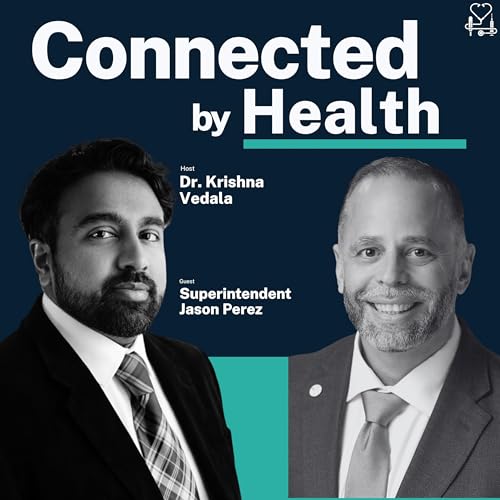
  • #05: Education, Health, and the Future of Our Communities
    Mar 11 2026
    Education, Health, and the Foundation of Human Potential Guest: Superintendent Jason Perez The Big Idea of the Episode This conversation explores how education and health are deeply connected, and why schools often serve as the front line for community wellbeing. Jason Perez discusses how meeting students' basic human needs is essential before learning can truly happen — a concept rooted in Maslow's Hierarchy of Needs. The core message: Students cannot succeed academically if their basic human needs are not met first. Key Themes From the Episode 1. Maslow's Hierarchy Still Applies Today Perez references Maslow's Hierarchy of Needs (1943) as a guiding principle for leadership and education. The hierarchy shows that before higher-level goals like learning or achievement can occur, basic needs must be satisfied: Physiological needs (food, shelter, safety) Security and stability Belonging and connection Self-esteem Self-actualization One powerful way Perez explains it: "Before we can enjoy a good book, be a good friend, or be a functional worker, we have to have our basic physiological needs met." 2. Schools Are Now Community Support Centers The conversation highlights how schools increasingly serve roles beyond education. Many students rely on schools for: Meals Safety Structure Emotional support Stability Perez shares a striking statistic: About 69% of students in Oklahoma qualify for free or reduced lunch. This means schools are often addressing basic survival needs, not just academic development. 3. Leadership in Education Perez also reflects on leadership lessons learned through his career as an educator and superintendent. Key leadership principles discussed: Listening to communities Understanding cultural and socioeconomic challenges Supporting both students and teachers Building systems that help children succeed beyond the classroom Education leadership today requires balancing policy, community needs, and human development. 4. The Intersection of Health and Education The episode ties directly into the Connected by Health mission: recognizing that health extends far beyond medical care. Education, nutrition, emotional wellbeing, and community stability all influence long-term health outcomes. In many ways: Healthy communities begin with supported students. The Core Takeaway Education and healthcare are not separate systems. They are deeply interconnected and if we want to improve the future of healthcare, we must also invest in supporting students and strengthening schools today. Where Health, Society, and Innovation Intersect Connected by Health is a forward-thinking podcast built on a simple but powerful truth: healthcare is not a cost to be cut — it is an investment that shapes the future of everything around us. Millions of people struggle with healthcare challenges each year; whether it's lack of insurance, unaffordable costs, limited access to care, or managing chronic disease affecting not only their health, but their financial stability and overall quality of life. Their stories are not isolated; they are all connected. From economic growth and workforce productivity to education, technology, national security, and community stability, health is the thread weaving them together. Each episode blends real-world stories with data-driven insight to show how strategic healthcare investment drives innovation, reduces long-term costs, strengthens public health infrastructure, and fuels economic resilience. Grounded in evidence but driven by purpose, Connected by Health reframes healthcare not as a line item expense, but as foundational infrastructure because when we invest in health, we invest in people, potential, and the strength of our entire society. ────────────────────────────────────────── 🤝 If today's conversation resonated with you, share it with someone who needs to hear it. ⭐ If you found value in this episode, please take a moment to leave a review, it truly makes a difference. 🎧 And don't forget to follow the podcast on your favorite platform so you never miss a new episode when it drops.
    Más Menos
    36 m