Note: Text has been lightly edited for clarity and does not match audio exactly.
Rachael Xerri: Hello, I'm Audible Editor Rachael Xerri, and today I'm joined by Gretchen Rubin. Gretchen is the author of seven New York Times bestsellers, including The Happiness Project, The Four Tendencies, and Outer Order, Inner Calm. Today we're talking about her latest Audible Original, Get It Done, a step-by-step guide designed to help you accomplish your next big project. Welcome, Gretchen.
Gretchen Rubin: Hello. I'm so happy to be talking to you.
RX: I'm so happy to be speaking with you. I absolutely adored everything about this listen, right down to the free downloadable workbook that I will absolutely be returning to on my next big project. So, I guess here's a good place to start: What inspired you to write Get It Done?
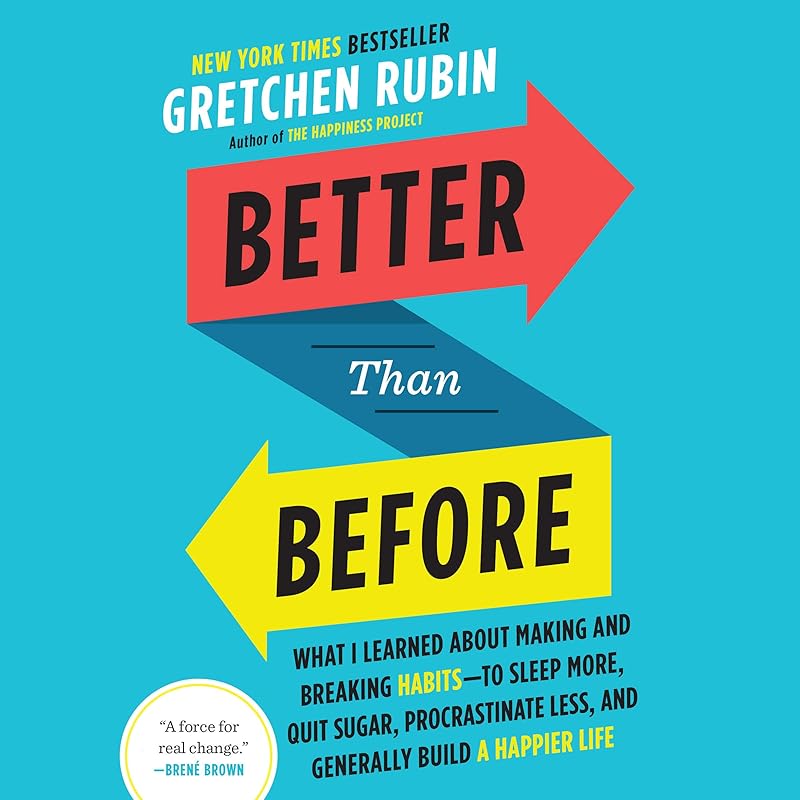
GR: It was really satisfying to do, because in my book Better Than Before I write about the 21 strategies we can use to make or break our habits. I got into writing about habits because I started out by writing about happiness, and if you're thinking about happiness, you quickly get to the point where you think, "Well, a lot of what I need to do to be happier is to change a habit. I need to sleep more or exercise more, or stop yelling at my kids, or read more,” or whatever it is. That gets you to habits. So, then I wrote the book Better Than Before, which is the 21 strategies we can use to make or break our habits.
As I was writing it, sometimes people would ask me questions and I would stop them and I would say, "But you're not asking about a habit, you're really talking about a project. You're talking about something that has a beginning, a middle, and an end that you are going to get done." I was often saying to people, "Well, don't think about a project, think about the habit. Don't think about running the marathon, think about exercising for the rest of your life." I was always trying to build systems that would help people do things indefinitely, right? Because usually with a habit, it's something that you either want to keep doing or stop yourself from doing, basically, forever.
But I realized that this created this huge hole in everything that I was writing about, which was I was always saying, "Well, you're talking about a project, we're talking about habits." But then I'm saying, "But sometimes people want to talk about projects, where they really do want to write a novel, they want to run the marathon, and that is the project they want to work on, or they want to have basic tourist Italian." That is something where you're like, “You could achieve that.”
I realized that a lot of the things that I wrote about in habit formation also apply when you're working on a project, but then some of the things don't apply. So, it was really interesting for me to rethink everything that I had thought about but from this different perspective, which kind of plugged a hole in a lot of the stuff that I had written about before, because I had always been focused on the enduring behavior rather than the get-it-done attitude that we have with many things in our life. Many things in our life aren't habits, they're projects.
RX: Absolutely. I know, personally, I've always said I want to finish my novel, and I feel like I've been working on it now for probably 10 years, and I can think of many people in my life who have had similar big projects that they want to complete. Now, a lot of your previous work comes into play in Get It Done, especially understanding the framework you created for understanding personality types in The Four Tendencies. Can you briefly explain what the four tendencies are for any listeners who aren't familiar with them?
GR: Yes. This is a personality framework, and I will say I discovered it, not that I created it, because I really do feel like I discovered this distinction among human nature. I feel like I was discovering the periodic table of the elements, like this is something that actually exists in the world that I was discovering with my microscope. There is a quiz that people can take online if they go to my website, gretchenrubin.com/quiz, and it's free, and you can get an answer. Are you an upholder, a questioner, an obliger, or a rebel? It will give you a little report. But I can just right now give a very brief description of the four. Most people know exactly what they are. They can do their family and friends. You could do the Game of Thrones characters, the Office characters. These are very obvious, once you know, and it's a huge tool to use when you're trying to get your project done, because you can set yourself up for success so much more effectively when you know your tendency.
"Well, don't think about a project, think about the habit. Don't think about running the marathon, think about exercising for the rest of your life."
So, the four tendencies, again, are upholders, questioners, obligers, and rebels. What this looks at is a very narrow but significant aspect of your nature, which is how do you respond to expectations? We all face two kinds of expectations, outer expectations, like a work deadline, and inner expectations, like our own desire to keep a New Year's resolution, our own desire to finish a novel. So, depending on whether you meet or resist outer and inner expectations, that's what makes you an upholder, a questioner, obliger, or rebel.
Upholders are people who readily meet both outer and inner expectations. They want to do what other people expect from them, but their expectations for themselves are just as important. These people tend to—and I'm one of them, so I'm describing myself—tend to love to-do lists, calendars. They're very good at execution, they don't need much supervision or oversight. They're very focused on just getting things done, and so their motto is “Discipline is my freedom.”
Then there are questioners, and questioners will do something if they think it makes sense. So, they're turning everything into an inner expectation. If an expectation makes sense to them, they will do it, no problem. If it fails to make sense to them, they'll push back. They resist anything arbitrary, ineffective, unjustified. They tend to love to customize, they tend to love to monitor. They can sometimes fall into analysis paralysis, where their desire for perfect information makes it hard for them to move forward. So, their motto is “I'll comply if you convince me why.”
Then there are obligers. This is the tendency that the biggest number of people fit into. For both men and women, this is the biggest tendency. Obligers readily meet outer expectations, but they struggle to meet inner expectations. So, these are the people who say, "Why is it that I keep my promises to everybody else, but I can't keep my promises to myself?" It is not a matter of priorities or self-care or clarity or knowing your why or any of those things. What obligers need is outer accountability. They need outer accountability even to meet an inner expectation. So, if you want to read more, join a book group. If you want to exercise more, work out with a trainer, work out with a friend who's annoyed if you don't show up. Think of your duty to be a role model. Take your dog for a run who's going to be so disappointed if she doesn't get to go.
There's a million ways to create outer accountability once you realize that you must have outer accountability even to meet an inner expectation, if you're an obliger. They're great leaders, great team members, great family members, great friends, because they're the people that go the extra mile, but they get frustrated because they're not keeping their promises to themselves. So, their motto is “You can count on me, and I'm counting on you to count on me.”
Then, finally, rebel. Rebel is the smallest tendency. In the book The Four Tendencies, it's the longest chapter because they are the most different from the other three tendencies, but it is the smallest number of people. Rebels are people who resist all expectations, outer and inner alike. They want to do what they want to do in their own way, in their own time. They can do anything they want to do, anything they choose to do. But if you ask or tell them to do something, they're very likely to resist, and typically they don't tell themselves what to do. They don't sign up for a 10 AM spin class on Saturday because they think, "I don't know what I'm going to want to do on Saturday. And just the idea that somebody's expecting me to show up is going to annoy me." So, their motto is “You can't make me, and neither can I.” Once you know your tendency, then you're much better able to set up your circumstances in a way that are going to help you carry through to get your project done.
RX: Thank you. So, spoiler alert, I took your quiz and I got obliger, which makes so much sense to me, because at work I'm on top of all my deadlines. For my friends, I can show up for them. But, again, when it comes down to wanting to work on my personal project, that's really where I struggle the most. So, I really appreciate all the advice that you have for how to help get that outer accountability.
GR: Yes, because if you don't know that's what it is, I think sometimes people misassign it. Like, they might say, "Oh, I have writer's block," but it's not writer's block, because it's not a problem of creativity, it's that outer accountability. So, once you know what it is, you're like, "Okay, well now I'm going to join a writer's group where we're all expected to share a chapter, even if we don't critique it or something, but they're expecting it.” Or “I'm going to work with a coach who's going to hold me accountable, or I'm going to have an accountability partner where we check in every day. I'm going to tell my kids, ‘When you're doing your homework, I'm going to be working on my book. And if I'm not working on my book, you don't have to do your homework.’" So, your kids then are your police. There's a million ways to create outer accountability once you realize that that is what the issue is. Because a lot of times people try to solve the wrong problem and then it doesn't help.
RX: I think you're hinting at this, but you talk about loopholes that inhibit us from meeting our project goals. I felt so called out during this chapter, or maybe I should say called in, because ultimately it was very helpful. What are some common loopholes and how can each tendency avoid them?
GR: I'm so glad that that really rang true for you because I love studying loopholes so much. This was a chapter in Better Than Before, which was like loopholes-spotting because that's a way to keep our good habits. But it's also really important for projects, because we use the exact same loopholes to get ourselves out of our work on our projects. I love loopholes so much. I keep thinking maybe I should write a little book of loopholes because they are so funny, the ingenuity that we come up with to let ourselves off the hook.
So, a loophole is when you come up with a justification to explain why, just this once, you're not going to do what you set out to do. There are 10 basic categories of loopholes. They're all super popular. Rachael, can you say what some of your favorites are? And then I will provide some of my favorites and some of the popular ones.
RX: Yeah, absolutely. I especially loathed being called out on the one-coin loophole. I would say I loathe it, but I love it because now I'm aware of what it is and how to change it.
GR: Okay, so let me explain the one-coin loophole because the name isn't very clarifying. I will say this is one of the most dangerous loopholes because it almost always can be used. Some of the loopholes, you can only invoke them in certain situations. This one works practically every time. The one-coin loophole gets its name from a very famous teaching story called “The Parable of the Growing Heap.” In this story, you say to somebody, "Does one coin make a person rich?" And they would say "No, one coin doesn't make a person rich." And then you would say, "Well, what if you gave the person another coin? Then what if you gave them another coin?" At a certain point you would have to say that they have become rich because one coin has made them rich. And the significance of this, for habits, as you know, is that you say, "Well, what's one trip to the gym? What difference is that going to make? Oh, one morning working on my novel, how much am I going to get done in one two-hour slot? Practically nothing. What's one cookie? What's one $30 T-shirt?" Why in any one case does this action make any difference at all?
The reason why it's so dangerously true is that it is the fact that one morning at the gym, one morning writing your novel, one impulse purchase, almost never is it going to be of any significance on its own. But the only way you get the benefit of your work towards your project is one coin after one coin after one coin. So, no one morning of writing matters, but the only way the book gets done is if it's one morning plus one morning plus one morning plus one morning.
It's kind of related to another loophole, the tomorrow loophole. "It doesn't matter what I'm going to do today because starting tomorrow I'm going to be so good. It doesn't matter if I don't keep my budget now, because starting in January I'm going to be so frugal." And then there's the moral licensing loophole, which is sort of the opposite, which is, "I've been so good that now I deserve to let myself off the hook. Oh, I've been so frugal, now I get to do my impulse purchase."
My personal favorite is the false-choice loophole: "I have no time to work on my book because I'm so busy chasing my kids around." And it's like, is it really a false choice? Is it really true that you can't? Or like, “I have no time to go to the dentist because I'm so busy writing.” It's like, “Don't you think you can go to the dentist and work on your book?” That's a false choice. But some of these are really sneaky. One of them is fake self-actualization, which is when it comes dressed up in the language of self-care or embracing life. Like, "Oh, the weather outside is so gorgeous, I can't stay stuck inside tapping away on my laptop." It's like, okay, but you want to get your book done.
We are all just so imaginative in thinking about how to let ourselves off the hook. So, sometimes just by reading them, you catch yourself in the act of invoking it. And then you can say, you can go to your bigger self and say, "Look, do I really want to let myself off the hook here? Or do I really want to stick to my guns and push through?"
RX: I think you should absolutely run with this loophole idea. I love the idea of having a whole book about the loopholes. Even you just now talking about the self-actualization loophole, all those days when I said like, "Oh, it's fine for me to just focus on this work project this weekend because that's more important than working on my manuscript."
GR: Okay, good, because I have a whole little document where I just keep track of them. I would really love to turn that into a little book, because it is true that you hear yourself saying these things, and as I say, my go-to is false choice. I cannot tell you how much I use false choice, but it is a false choice. And then just knowing, “Okay, I've set myself up in a binary here that just isn't the case.”
I mean, another one is concern for others. Like, "Well, I can't work on my novel because other people are expecting me to show up" or “This person will be disappointed if I…” A lot of times people will say, "Oh, my spouse really likes it when we have breakfast together." I'm like, "You're married, you can have breakfast together so many days." If once a week you do yoga, maybe that's a trade-off you're willing to make, but you have to think it through and accept that there is a trade-off, and maybe you want to decide one way and decide another. There's no one right way, but I think sometimes people aren't consciously making those trade-offs. We just kind of invoke them over and over and over as if they're one-time decisions instead of realizing, "Wait a minute, what do I really want? Do I really want to work on my novel and get it done? Or do I think that I need to catch up on work and kind of make that cold decision?"
RX: So, what can we do to safeguard ourselves against these loopholes?
GR: Well, I think part of it is just being aware of it, knowing them, having a name for them, catching yourself in them, knowing which ones you're most susceptible to. It is funny, just like you say, often people will say to me, “I can hear my own voice in my head saying these things.” I think sometimes it's just purely the recognition, so that you have that moment where you say, "Hang on." It's kind of like counting to 10 when you're angry. If you can manage to just have that moment of self-awareness, a lot of times that will let you shape your behavior in the direction that you really, truly want it to go.
"I get it when people say, 'Well, I don't like having to use all these different methods with all these different people.' And I'm like, 'I'm sorry, but that's kind of how people are.'"
I think for a lot of people, these are running almost underground. We're invoking them even before we're consciously aware of them, even something like writing it on your cork board or sticking a Post-it note on your laptop so that when you hear yourself saying those things, you can stop and say, "Wait a minute, is this truly what I want for myself? Is this really the choice that I want to make?" And you're the boss of you. Who's to say what you want to choose, but you want to make a choice instead of just letting all these things happen without intention.
RX: I'm curious, when we have multiple personality types who are working together on a project with different tendencies, maybe they fall into different loopholes. How can two people with different tendencies work together on a big project?
GR: Well, this is really a challenge, and I think it does help to understand how people have a different perspective. Because if you don't understand the tendencies, you could be very, very puzzled by somebody's behavior or how they approach something. A really hilarious way to see this in action in the workplace is if you do have an in-real-life workplace, go to the office kitchen and read the signs that people have posted. This is hilarious—I want to do a coffee table book that's just office kitchen signage—and you will see the tendencies on full display. I can look at a sign and say, "I know exactly what tendency wrote this sign."
It is a challenge, and people will often say to me, "Well, I'm busy, I have a big team, I cannot customize everything that I say for all the four tendencies." And my response to that is, "I get that it's hard, but it really does help if you think about how people are coming to it from a different perspective." So, let's say that you're a person, okay, Rachael, you're an obliger. Let's say that you're working with a questioner. A very typical conflict that would come up is you might say something like, "Oh, my gosh, I'm being loaded up with all these assignments. Everybody's giving me assignments, it's just not fair." And the questioner's like, "Well, then why do it? Don't do it. Just don't do it. Like, why would you do it?" Or they're asking you to volunteer for something, they'd be like, "Why are you going to volunteer for that? You're doing so much work already."
They don't understand that for an obliger, this outer expectation is very, very pressing. It's really hard to resist it. And obligers feel exploited and they are exploited because they are the ones that people will most often ask to go the extra mile, because they are the ones that are most likely to say yes. The questioners don't have a lot of sympathy for that. They're like, "Well, why did you say you're going to do it if you don't want to do it?" But that looks very cold to an obliger. An obliger is like, "I would do it for you. I don't understand why you won't do this for me." Or "I don't understand why you just are callously hand-waving these things and not understanding the pressure that I'm under."
But when you understand how a questioner sees it, then an obliger can understand, “Well, they aren't being cold, and they're not being callous, they just see it a different way.” Then the questioners can see for the obligers what they're operating under and why something that would just slide off a questioner’s back is actually a big issue for the obliger. That just creates more empathy, and it shows you how to set things up so that everybody can thrive.
As an upholder, I'll say upholders really often can get rigid. They get a plan in their head and it can be very hard for them to deviate from that. It's hard for them to be flexible. It's hard for them to make last-minute choices. And so now I can say to people, "Look, it's hard for me to change things in the last minute, if you can at all give me a heads-up, that's really going to help me plan my work and just stay calm, because otherwise I can get very high-strung and rattled if things are changing at the last minute. That would help me work better.” Whereas for other people, that might not be such a concern.
With rebels, I talk completely differently when I'm working with a rebel. I just say, "If this works for you, if this sounds like fun for you, if this is the kind of thing that you want to do, when you want to do it, in your own way, in your own time, it's up to you." But an obliger might need a lot of accountability, [they] might really benefit from having weekly check-ins with a manager. I know an obliger who always says when she's going in for an interview, she says, "I like a tough, demanding boss, that's when I do my best work. I want to be in a workplace where I'm going to have a tough, demanding boss." Whereas a rebel would do better when they're like, "This is the goal. We know you've got the chops to do it, go blow us away with how good you are." And then the rebel is like, "Great, see you in a month." That might not work for an obliger.
I get it when people say, "Well, I don't like having to use all these different methods with all these different people." And I'm like, "I'm sorry, but that's kind of how people are." If you want to get the best work from people, you have to take into account their differences. This is just, I think, a very helpful way of putting your finger on certain kinds of differences that tend to come up over and over and create very predictable conflicts or puzzlement, and so it points the way forward when you can try to create something where you try to meet everybody where they are. If you were giving a talk in a meeting, you could think, "Well, how am I going to push the button of the upholders, the questioners, the obligers and the rebels?" Just to have that in your mind as you're giving your presentation so that you know it's going to resonate with people who are listening for different things.
RX: I think that's excellent advice. I love that you're talking about both adjusting your expectations but also your approach and your communication and understanding for each of the tendencies. I'm going to think about that a lot on my next group project.
GR: It's funny, I often will say to people, "Oh, my gosh, now I understand why I have all this conflict with my boss." They'll instantly recognize everybody in their office, and it's very satisfying.
RX: Yeah, definitely. You offer so much great advice about how to keep momentum throughout Get It Done. For example, scheduling everything in advance. That's one of the methods for some of the tendencies. But you also say something really key about rest. What role does relaxation play in managing a project?
GR: The thing is, we need to be able to recharge, we need to be able to get ourselves energy. And so it's really important just to think about managing your energy, which means taking breaks, finding rest, relaxing, not letting yourself get just pushed to the edge of your capacity. It's interesting, in all my study of happiness, I think often people will overlook the role of the body. We treat our body like it's just the car we're driving around town, just carrying our brain, but our physical experience always colors our emotional experience, our mental experience, our creative potential. So, things like knowing your chronotype—are you a morning person or a night person?—and trying to lean into that. I think advice that I often see that I think is incorrect is if something's really important to you, you should get up and do it first thing in the morning. Now, this is really good advice for morning people, but only like 40 percent of people are morning people. Like 30 percent of people are night people, and then everybody else is kind of in between. It's largely a function of genetics and age.
If you're a night person, let's say you're working on your novel, you might be much better working on your novel at like 11 PM. Now, I am a true morning person, so to me this sounds bananas. I simply cannot wrap my mind around the idea that some people do their best work at night. But they always say, "Oh, but it's so quiet and everybody else is asleep, and it's just me and nobody's emailing me." And I'm like, "That's how I feel at 5:30 AM." But that's when I'm fresh. So, I think sometimes people, if we can't jam ourselves into somebody else's model of productivity and creativity, we think, "Well, there's something wrong with me and maybe I just need to try harder doing it somebody else's way." Instead of saying, "Actually, I do feel very creative and productive at 11 PM, and so maybe 11 to 12:30 is going to be my really precious creative time that I'm going to protect." All the people around you might be saying, "Don't do it. You need your sleep." And you're like, "No, I would actually be much better off trying to sleep until 9:30 and do my creative work at the very end of my day."
I think sometimes it's finding the rest, finding the energy, and adjusting our schedules as much as we can. Of course, you cannot have total control over your time and your energy because there's so many demands on our time and our energy. But to do what you can with what you can, and to find the rest that you need so that when you are going into those periods when you're really pushing yourself to get something done. Because for most people, if you're reading a book about Get It Done, it's because somehow you're challenged by that. The challenge is you need to push yourself, you need to find ways to get yourself to do things that are hard. Being rested is going to make it easier. The more we give to ourselves, the more we can ask from ourselves. And rest is a really important part of that.
RX: Well said. And in your final chapter, you talk about reflection, you introduce one of my favorite new concepts, the ta-da list. Can you please just explain for our listeners what this is and why we should all have one?
GR: So, we all have to-do lists, right? And we're always thinking today, tomorrow, next month, next year, what's on our to-do list. But a ta-da list is the opposite. The ta-da list is when you look at your list and you're like, "Look at all the things I crossed off my list." This is when we really allow ourselves to revel in the feeling of accomplishment and achievement. And back to this idea of rest and energy, it's very energizing to be reminded of how far we've come. I think this is a really good thing to do at the end of every year, or maybe if you have a season at work that's very intense, is to really look back and think, "What did I get done?" Because most of us, a lot more has happened in a short time than we remember, and sometimes we look at the to-do list, we think, "Oh, my gosh, there's so much still to go," but you don't give yourself credit for how far you've already come. And really looking back at the ta-da list can help give you that energy to keep going, because it is easy sometimes to get very discouraged and to feel like, "Well, I should be done by now, or this should be easier than it is. Or other people have tried this and finished it faster than I have, and I don't understand what's wrong with me."
"We treat our body like it's just the car we're driving around town, just carrying our brain, but our physical experience always colors our emotional experience, our mental experience, our creative potential."
I think the ta-da list is a really good antidote to that, because it reminds you, well, maybe you didn't finish but you made progress. There's a line from Voltaire that I love, which is, "Don't let the perfect be the enemy of the good." Maybe you said, "Okay, in 2025, I'm going to finish my novel," and you didn't finish your novel in 2025. But you could say, "But look, I made serious progress on my novel in 2025. I'm that much closer." Giving yourself credit for what you've already done helps you to keep going.
RX: On the topic of reflection, did you learn anything about yourself while you were reading Get It Done in the recording booth?
GR: Accompanying! Okay, Rachael, you mentioned the worksheets. I had to say, “The accompanying PDFs…” and I mean, how many times did I say accompanying? It's just a hard word to say, accompanying, accompanying. And then the more you say it, it starts to lose all meaning. And so that's something that I learned about myself, I have a very hard time saying the word accompanying. I said, "Can we just rephrase it?" You know, like, “the attached.” And they're like, "No, it's too late for that, we want to say accompanying."
So, that was this very silly thing that I learned about myself. It got me thinking about my own loopholes. I'm thinking of new ones that I've used, and I got started thinking about some projects that I wanted to tackle. It got me sort of fired up to think about what I wanted to do in future, because you just realize it's a process and you can go from beginning to middle and end, and there's just so much satisfaction with getting something done. So, it got me very fired up.
RX: Speaking of new projects, 2026, it's a new year. In 2025, you mastered watercolor.
GR: Well, I didn't master it, but I got into it. I got into it, yes.
RX: What is your plan for 2026?
GR: I'm coming up with that right now. I'm writing my 26 for '26 list, which is my list of 26 things that I want to do. I want to keep working on watercolor because it's probably a lifetime, but the more I do it, the more I want to keep doing it, which is something that's really nice with projects, often they create their own energy once you get started. I have a lot of things that I want to do. One thing I really—and my husband and I keep saying that we're going to do this—we want to entertain more. We want to have frequent small dinner parties, and I think we need to come up with a template. We do it exactly the same way every time. The only thing that will change is the people; maybe I'll wear a different outfit.
So, that's kind of like a sociability project or a hospitality project that I want to do. Now, that's something where I need his cooperation, so it's always a little bit trickier when two people need to cooperate, but I know that he's really on board with this as well. I'm planning on sitting down and saying to him, "Let's really make a plan and really try to commit to it," because it's something that we started doing and we were just getting underway and then COVID hit, and we've never really gotten back on. That's a very typical thing that happens when you are trying to do something. If something big gets in your way and derails you in the early stages, it can be really hard to get back to it. I have felt this. Starting over is sometimes harder than starting. I've experienced it, but I've put my mind to it. I'm saying it to you now here, Rachael, I'm committing. Now I've got some external accountability.
RX: Great. And I love a good dinner party.
GR: Yeah, we all do. We all do. By the way, nobody cares if the food is good. Nobody cares if your house is a little messy or whatever. Everybody just wants to have fun and everybody likes to meet new people or see old friends. I know that, and so I want to commit to that in 2026. I traveled so much in 2025, it was really hard. I'm going to try to be a little bit more of a homebody this year.
RX: Thank you so much, Gretchen. This has been a wonderful conversation. And for any of our listeners, please go download Get It Done. If you are working on your next project, this is a must-listen.
GR: Good. Yes. And enjoy your accompanying PDFs [laughs].
RX: Thank you.
GR: Thank you.