Episodios

  • Polarity, Power, and the Quiet Truths Leaders Avoid
    Apr 3 2026

    Founders, operators, and executives talk endlessly about strategy, data, and execution—but avoid the deeper forces shaping every decision they make.

    In this episode of Second Life Leader, Doug Utberg sits down with Asha LaCount to explore what happens when leadership goes beyond surface-level EQ—and into the uncomfortable, often unspoken realities of energy, identity, and polarity.

    This is not a typical leadership conversation.

    Asha shares her journey from high-performing consultant to confronting personal health, relationship, and identity breakdowns—despite outward success. What followed was a deeper exploration into emotional intelligence, energy dynamics, and the hidden patterns that quietly influence leadership performance.

    Doug and Asha unpack the “quiet parts” most leaders avoid: unresolved emotional patterns, validation-seeking behaviors, and the impact of suppressed identity on decision-making. Because when those remain unaddressed, they don’t disappear—they scale.

    From executive environments to personal relationships, they explore how polarity—masculine and feminine dynamics—affects clarity, performance, and connection. Ignore it, and you operate with half the system. Understand it, and you unlock a different level of leadership.

    This conversation challenges conventional leadership development and asks a harder question:What are you not saying out loud—and how much is it costing you?

    TL;DR

    * Leadership isn’t just strategic—it’s deeply emotional and energetic

    * The “quiet part” leaders avoid is often the highest leverage point

    * Suppressed identity and unresolved patterns scale across teams

    * Polarity (masculine/feminine dynamics) impacts decision-making and performance

    * Money and success often mask deeper misalignment

    * Validation-seeking drives burnout more than workload

    * Real transformation starts with internal clarity, not external tactics

    Memorable Lines

    * “Your team isn’t slow—your systems are.”

    * “What’s the quiet part you’re not saying out loud?”

    * “If you ignore half the system, you’ll never solve the full problem.”

    * “Money is an amplifier, not a solution.”

    * “You don’t need more validation—you need more clarity.”

    Guest

    Asha LaCount — Leadership consultant, hypnotherapist, and founder of Beyond EQSpecializes in integrating emotional intelligence, energy dynamics, and leadership performance through a deeper lens of human behavior and identity.

    Why This Matters

    Most leadership models are built on logic, frameworks, and performance metrics. But people don’t operate that way.

    Decisions are emotional first, rational second. Culture is shaped by unspoken dynamics, not just stated values. And leaders don’t just manage systems—they are the system others respond to.

    For anyone rebuilding after burnout, failure, or misalignment, this episode reframes leadership as an inside-out process.

    Because the real constraint isn’t strategy.It’s what leaders avoid facing within themselves.


    This is a public episode. If you would like to discuss this with other subscribers or get access to bonus episodes, visit www.dougutberg.com
    Más Menos
    55 m
  • Grief, Work, and Rebuilding Meaning After Loss
    Apr 2 2026

    Founder and creative professional Preston Zeller joins me to unpack a conversation most workplaces avoid—but everyone eventually faces: grief, and how it reshapes the way we work, lead, and live.

    This episode starts with a moment that changes everything. In early 2019, Preston lost his brother unexpectedly to a drug overdose. At the same time, he was navigating intense professional pressure during a major company merger, supporting a young family, and trying to function in environments that had no real framework for processing loss.

    What follows isn’t a polished narrative—it’s a raw look at what happens when your internal world collapses while external expectations keep moving.

    We explore the disconnect between how grief actually works and how culture expects it to work. It doesn’t follow timelines. It doesn’t resolve neatly. And it doesn’t stay separate from your performance, your relationships, or your identity.

    Preston shares how this experience forced him to confront emotional suppression, anger, and the limits of “pushing through.” Instead of defaulting to distraction through work, he committed to a daily creative practice—painting every day for a year—as a way to process what couldn’t be verbalized.

    That process became more than personal therapy. It evolved into a documentary, a framework for self-reflection, and ultimately a shift in how he led teams and approached empathy in the workplace.

    We also dig into a reality most leaders don’t want to confront: people don’t leave their personal lives at the door. Grief, trauma, and emotional strain show up in productivity, decision-making, and team dynamics—whether acknowledged or not.

    Ignoring it doesn’t protect performance. It erodes it.

    This is a candid conversation about loss, emotional awareness, creative processing, and what it actually means to support people—not just as employees, but as humans navigating difficult realities.

    TL;DR

    Grief doesn’t follow a schedule—and it doesn’t stay outside of work.Emotional suppression shows up as anger, burnout, or disconnection.Creative expression can process what logic can’t.“Pushing through” often delays—not resolves—pain.Empathy in leadership isn’t soft—it’s practical.People don’t need solutions in grief—they need space and presence.Workplaces that ignore human realities pay for it in performance.

    Memorable Lines

    “Grief isn’t one emotion—it’s all of them at once.”“You can’t schedule when something hits you—but you can choose how you process it.”“People at work aren’t distracted—they’re carrying something.”“Empathy isn’t fixing—it’s being willing to sit in it.”“What you don’t process doesn’t disappear—it leaks.”

    Guest

    Preston Zeller — Creative professional, former Chief Growth Officer, and abstract artistCreator of a year-long painting project and documentary exploring grief, emotion, and creative processing

    Why This Matters

    Most organizations are built for output, not reality. But reality always wins.

    Loss, stress, and emotional strain don’t pause for deadlines or KPIs. Leaders who understand this—and adapt—build stronger teams, deeper trust, and more sustainable performance.

    For founders, operators, and executives, this episode reframes empathy as a strategic advantage. Not because it feels good—but because it works.

    The goal isn’t to eliminate hardship. It’s to build systems—and people—capable of carrying it without breaking.


    This is a public episode. If you would like to discuss this with other subscribers or get access to bonus episodes, visit www.dougutberg.com
    Más Menos
    40 m
  • This Isn’t the AI You Think—And That’s the Point
    Apr 1 2026

    Commercial cleaning and AI don’t naturally belong in the same sentence. At least, not at first glance.

    But that’s exactly why this conversation matters.

    In this episode of Second Life Leader, Doug Utberg sits down with Adam Povlitz to break down what it actually looks like to build an AI-first mindset inside a very human, operationally messy business.

    Because the future of AI in service industries isn’t robots replacing people—it’s systems supporting them where failure is inevitable.

    What This Conversation Really Explores

    Most businesses obsess over delivering perfect experiences. But in reality, especially in service industries, mistakes are guaranteed.

    Adam flips the model:Instead of trying to eliminate failure, design systems that respond to it faster, smarter, and more transparently.

    In commercial cleaning, there are only two outcomes:• You don’t notice anything (everything works)• Or something is wrong

    There’s no “wow” moment—only silent success or visible failure.

    So the real competitive edge?How quickly and effectively you recover when things go wrong.

    The Shift: From Automation → AI

    What’s already in place:• Real-time issue reporting via a simple web app• Built-in translation to remove communication barriers• Escalation systems to ensure accountability• Data tracking by location and issue type

    But where it’s going is more interesting:• Automated retraining triggered by repeated mistakes• AI-driven learning modules replacing manual oversight• Customer “health scores” that create radical transparency• Closed-loop systems that don’t just fix problems—but prevent repeats

    This isn’t flashy AI.It’s operational AI.

    The Bigger Insight

    Most companies misunderstand where AI creates value.

    It’s not in the obvious places.It’s in the invisible ones:• Back-office workflows• Customer issue resolution• Training and compliance• Pattern recognition across small failures

    The kind of work people don’t want to do—but that defines whether a business scales or stalls.

    TL;DR

    • AI won’t replace service businesses—it will restructure how they operate• Mistakes are inevitable; recovery systems are optional• Speed of resolution beats perfection every time• Automation handles tasks; AI improves decisions• The real leverage is in back-end systems, not front-end hype

    Memorable Lines

    “It’s not about preventing every mistake—it’s about what happens next.”“In our industry, no news is good news.”“Let the painter paint and let the chef cook.”“AI isn’t replacing people—it’s removing the friction around them.”“Perfection doesn’t scale. Systems do.”

    Guest

    Adam Povlitz — CEO, Antigo CleaningOperator focused on scaling service businesses through systems, franchising, and now AI-driven infrastructure.

    Why This Matters

    There’s a misconception that AI transformation only applies to tech companies.

    It doesn’t.

    The businesses that win over the next decade won’t be the ones with the most advanced tools—They’ll be the ones that redesign their operations around reality:

    People make mistakes.Systems catch them.Great companies learn from them.

    If you’re building, scaling, or rebuilding—this is the playbook.


    This is a public episode. If you would like to discuss this with other subscribers or get access to bonus episodes, visit www.dougutberg.com
    Más Menos
    32 m
  • How Your Expertise Is Making You Unlikable (And Costing You Business)
    Mar 27 2026

    Founder and PR strategist Bryce North joins me to break down a counterintuitive truth: the more you try to look like the smartest person in the room, the less people trust you—and the less business you close.

    Most professionals believe authority comes from showcasing intelligence, credentials, and polished expertise. This episode challenges that assumption. Bryce unpacks why over-positioning yourself as “the expert” often creates distance instead of trust—and how relatability, humor, and authenticity outperform perfection in real-world business.

    We explore the gap between attention and conversion, why viral content doesn’t equal revenue, and how most founders misunderstand platforms like LinkedIn. From cold outreach strategies that actually get replies to the psychology behind why people hire those they like over those who look impressive, this conversation reframes what credibility really looks like in today’s market.

    This isn’t about dumbing yourself down. It’s about understanding that trust—not brilliance—is what closes deals.

    TL;DR

    * Being “the smartest person in the room” often makes you less relatable—and less trusted

    * Attention ≠ revenue; viral posts don’t guarantee business

    * People hire those they feel comfortable with, not those who intimidate them

    * Humor and authenticity disarm skepticism faster than polished expertise

    * LinkedIn content is a credibility layer—not the primary conversion engine

    * Cold outreach works best when it’s human, not templated

    * Trust first → then sell transformation

    Memorable Lines

    * “People don’t trust the smartest person in the room—they feel threatened by them.”

    * “If everyone is the best… then no one is.”

    * “You don’t win by being different in your offer—you win by being trustworthy.”

    * “Disarm with personality, then prove with competence.”

    * “People buy better versions of themselves—but only after they trust you.”

    Guest

    Bryce North — Founder & CEO, Don’t Be Little PitchPR strategist helping founders, startups, and tech companies earn attention through authenticity and unconventional outreach.

    Why This Matters

    Modern business isn’t a credentials game—it’s a trust game.

    In a world flooded with AI-generated content, recycled “thought leadership,” and templated outreach, the edge no longer comes from sounding smarter. It comes from sounding real.

    For founders, operators, and executives trying to grow in crowded markets, this episode reframes visibility and credibility. The goal isn’t to impress—it’s to connect. Because the fastest path to a deal isn’t proving you’re the best. It’s proving you understand—and care.

    If you rely only on expertise, you risk being ignored.If you combine expertise with authenticity, you become undeniable.


    This is a public episode. If you would like to discuss this with other subscribers or get access to bonus episodes, visit www.dougutberg.com
    Más Menos
    37 m
  • Enlightened Nihilism, Purpose, and the Freedom to Let Go
    Mar 26 2026

    Entrepreneur and author Tero Molis joins me to explore a deceptively simple idea: if nothing lasts, what actually matters?

    This conversation starts with Tero’s philosophy from his book Life Is a Sandcastle—the idea that everything we build eventually disappears. The question isn’t whether the wave comes. It’s what you do knowing that it will.

    Most people interpret nihilism as hopeless: nothing matters, so why try? This episode flips that. If nothing is permanent, you’re free to build, experiment, fail, and rebuild—without attaching your identity to the outcome.

    We unpack why purpose is often misunderstood, how social media distorts authenticity, and why many people confuse validation with meaning. Tero argues that real purpose is quiet—something you’d pursue even if no one ever noticed. I push on that and explore whether purpose is necessary at all, or if it’s simply a construct we use to avoid confronting uncertainty.

    The conversation gets personal when Tero reflects on the recent loss of his mother—despite decades of mental preparation, the experience still challenged his identity and beliefs. It’s a reminder that no philosophy survives reality unchanged.

    We also dig into:

    * Why defining happiness as outcomes leads to frustration

    * The difference between inputs (what you control) and outputs (what you don’t)

    * How expectations create disappointment—and how to let go of both

    * Why most “success advice” ignores responsibility toward others

    * The hidden cost of living for appearances instead of alignment

    This isn’t a conversation about having all the answers. It’s about learning how to move forward without needing them.

    TL;DR

    * Nothing lasts—and that’s what makes action meaningful

    * Purpose isn’t performance; it’s what you’d do without recognition

    * Happiness comes from inputs, not outcomes

    * Expectations create most of our suffering

    * You don’t need to solve life—just keep moving through it

    * A “good life” is built on simple fundamentals: food, sleep, and relationships

    Memorable Lines

    * “If nothing matters, you’re free to do what actually matters to you.”

    * “A real purpose doesn’t need an audience.”

    * “Expectations are premeditated disappointments.”

    * “You can’t control outcomes—only your inputs.”

    * “Everything is temporary. Build anyway.”

    * “If you don’t love it enough to do it yourself, remove it from your life.”

    Guest

    Tero Molis — Author of Life Is a SandcastlePhilosopher of “enlightened nihilism” focused on impermanence, self-awareness, and living without attachment to outcomes.

    Why This Matters

    Modern life is built on the illusion of permanence—careers, identities, reputations, even beliefs. But reality doesn’t cooperate. Things break. Plans collapse. People change.

    This episode reframes that instability as freedom.

    For founders, operators, and executives navigating uncertainty, the goal isn’t to eliminate risk or avoid failure. It’s to detach from outcomes enough that you can keep building—without losing yourself when things fall apart.

    Because in the end, the wave always comes. The only question is whether you’re willing to build again.


    This is a public episode. If you would like to discuss this with other subscribers or get access to bonus episodes, visit www.dougutberg.com
    Más Menos
    33 m
  • Preventing Capital Gains Tax “Armageddon” — And Why Inaction Is the Real Risk
    Mar 25 2026

    Capital gains taxes don’t usually sound like the beginning of a collapse story—but in this episode, they are.

    Brett Swarts, founder of Capital Gains Tax Solutions, joins me to break down a hidden risk many investors and entrepreneurs overlook: getting trapped between tax exposure, debt, and timing. What starts as a smart growth strategy can quietly turn into a situation where selling isn’t viable, holding is dangerous, and doing nothing becomes the default.

    We unpack the story of “Steve,” a real estate investor who built a $50M portfolio during the boom years—only to lose everything when he couldn’t exit without triggering massive tax consequences. With no clear path forward, he held. The market turned. The outcome was financial collapse, bankruptcy, and personal fallout that extended far beyond money.

    This conversation explores why capital gains taxes often act as a psychological barrier—not just a financial one—and how that hesitation can lead to catastrophic inaction.

    Brett walks through the limitations of traditional tools like 1031 exchanges, especially for highly leveraged investors, and introduces alternative strategies built around installment sales and structured exits designed to create flexibility, liquidity, and time.

    But this episode isn’t just about tax strategy. It expands into a broader conversation about capital allocation, incentives, and the systems shaping real estate, entrepreneurship, and wealth transfer over the next decade.

    We also go head-on into the tension between economic growth and social stability—housing shortages, regulation, capital flows, and whether current systems actually serve the people they’re supposed to support.

    This is a conversation about decisions under pressure—what happens when the playbook stops working, and why waiting can be the most dangerous move you make.

    TL;DR

    Inaction is still a decision—and often the most expensive one.Capital gains taxes can trap investors into holding risky positions.1031 exchanges don’t solve for liquidity, debt, or diversification.Structured exits can create flexibility, timing, and cash flow.Debt amplifies risk when markets shift.Tax strategy is really about control—over timing, capital, and decisions.Housing and capital allocation are deeply connected.Economic incentives shape behavior more than policy intent.

    Memorable Lines

    “Inaction is still a decision.”“You don’t lose everything at once—you lose your options first.”“Tax pressure doesn’t just cost money—it distorts decisions.”“Liquidity is freedom. Timing is leverage.”“The system rewards movement—but punishes hesitation.”

    Guest

    Brett Swarts — Founder, Capital Gains Tax SolutionsReal estate broker turned capital gains strategist specializing in tax deferral, structured exits, and wealth transition planning.

    Why This Matters

    Most financial advice focuses on growth—how to build, scale, and maximize returns. But far fewer conversations focus on how to exit intelligently.

    The reality is, markets change. Liquidity disappears. Debt compounds. And tax structures can lock you into decisions you wouldn’t otherwise make.

    For founders, operators, and investors, the real edge isn’t just knowing how to win—it’s knowing how to reposition before you’re forced to.

    This episode reframes tax strategy as something bigger than compliance. It’s about maintaining control when conditions shift—and avoiding the kind of forced decisions that lead to irreversible outcomes.


    This is a public episode. If you would like to discuss this with other subscribers or get access to bonus episodes, visit www.dougutberg.com
    Más Menos
    45 m
  • From Rock Bottom to Reinvention: Why Your Mindset Shapes Your Comeback
    Mar 20 2026

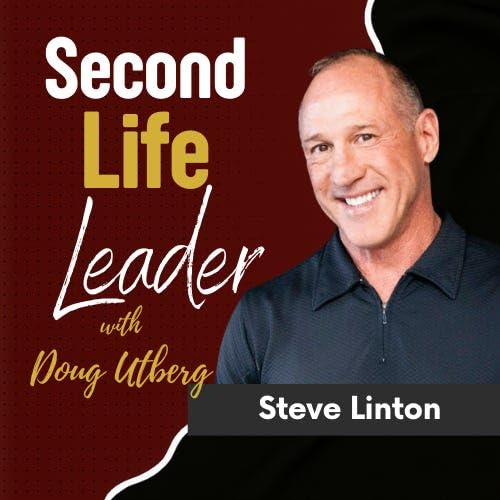
    Entrepreneur and speaker Stephen Linton joins me to unpack what it really takes to climb out of the bottom—and why most people misunderstand what drives success in the first place.

    It’s easy to look at successful people and assume luck, timing, or some hidden advantage. What you don’t see is the frustration, setbacks, and years of uncertainty behind the scenes. In this episode, Stephen and I break down the reality of rebuilding from nothing—financial struggle, career dead ends, and the mental shift required to turn things around.

    Stephen shares his journey from earning $400 every two weeks as a struggling pilot to building a six-figure-per-month business. But the turning point wasn’t a tactic or opportunity—it was a shift in mindset. We explore how personal responsibility, self-development, and disciplined thinking patterns create the foundation for long-term success.

    This conversation goes beyond surface-level motivation. We dig into the mechanics of belief systems, why most people stay stuck, and how changing the way you think directly impacts the results you get. From “you get what you are” to the power of reframing failure, this episode is about doing the internal work required to produce external results.

    The lesson isn’t blind positivity or wishful thinking. It’s understanding that success starts internally—and then gets built through consistent action, iteration, and resilience.

    TL;DR

    * There is no such thing as an “overnight success”—just long timelines people don’t see

    * Personal responsibility is the foundation of any comeback

    * You don’t get what you want—you get what you are

    * Mindset shifts must be paired with consistent action

    * Success often requires multiple pivots, not one perfect plan

    * Limiting beliefs quietly dictate outcomes until you challenge them

    * Nobody is coming to save you—ownership changes everything

    Memorable Lines

    * “It was a 25-year overnight success.”

    * “You don’t get what you want—you get what you are.”

    * “Nobody’s coming to save you.”

    * “If you want different results, change your frequency.”

    * “Everything in life is on you.”

    * “Success is simple—but not easy.”

    Guest

    Stephen Linton — Entrepreneur, speaker, and author of The Frequency of SuccessCreator of the FLIGHT Method focused on mindset, personal development, and performance transformation.

    🔗 TheFrequencyOfSuccess.com

    Why This Matters

    Most people aren’t stuck because they lack opportunity—they’re stuck because of how they think about themselves and their circumstances.

    Careers stall. Plans fail. Markets shift. None of that is new.

    What separates people who stay stuck from those who rebuild is the ability to take ownership, adjust internally, and keep moving forward—even when progress is slow or unclear.

    For founders, operators, and anyone navigating uncertainty, this episode reframes success as something you build from the inside out.

    The real advantage isn’t avoiding failure—it’s becoming the kind of person who can recover, adapt, and keep going no matter what.


    This is a public episode. If you would like to discuss this with other subscribers or get access to bonus episodes, visit www.dougutberg.com
    Más Menos
    32 m
  • Losing Everything in 90 Days—and Rebuilding from the Inside Out
    Mar 19 2026

    Entrepreneur and leadership pioneer Robert White joins me to unpack what happens when success doesn’t just slow down—it collapses all at once.

    Most business conversations celebrate scale, status, and wins.This episode goes in the opposite direction.

    Robert White built one of the largest leadership training companies in the world, with operations across Asia and the U.S. He had the house, the jet, the global footprint, and what looked like complete freedom.

    Then, in a 90-day span, it unraveled.

    His top leadership team walked out overnight—taking people, clients, and intellectual property with them.At the same time, his marriage ended.The result: a $30M loss, a damaged reputation, and a complete reset.

    This conversation isn’t about the mechanics of rebuilding.It’s about what breaks internally—and what has to change to come back stronger.

    We explore the hidden cost of success, the danger of tying identity to status, and why even those who teach personal responsibility can fall into victimhood when everything falls apart.

    One turning point changed everything:Not blame. Not strategy.But a single question—

    “Would it be useful to take 100% responsibility for all of this?”

    From there, the conversation shifts into something deeper:

    What it actually means to take ownership.Why letting go of identity can be more painful than losing money.And how rebuilding starts with who you are being—not just what you are doing.

    This is a candid look at loss, ego, recovery, and the discipline of reclaiming control when everything familiar disappears.

    TL;DR

    * Massive success can hide fragile foundations

    * Collapse often happens faster than expected

    * Victimhood can exist even in high performers

    * Personal responsibility is a practical tool—not a philosophy

    * Identity loss is often harder than financial loss

    * Recovery starts with “being,” not just “doing”

    Memorable Lines

    * “Would it be useful to take 100% responsibility for all of this?”

    * “When you own it, you get your power back.”

    * “Success built on identity can collapse with it.”

    * “You can be a more sophisticated version of a victim.”

    * “Who you are being matters more than what you are doing.”

    Guest

    Robert White — Entrepreneur, leadership trainer, and founder in the human potential spaceBuilt one of the largest leadership training organizations globally, with decades of international experience across the U.S. and Asia.

    Why This Matters

    Success isn’t stability—it’s often leverage built on invisible dependencies.

    Teams leave. Relationships end. Markets shift.And when they do, what’s left isn’t your strategy—it’s your identity.

    For founders, operators, and executives, this episode reframes collapse as something deeper than failure.It’s a forced separation from who you thought you were.

    The real advantage isn’t avoiding the fall.It’s rebuilding without clinging to what no longer serves you.


    This is a public episode. If you would like to discuss this with other subscribers or get access to bonus episodes, visit www.dougutberg.com
    Más Menos
    35 m