Episodios

  • Episode 189: NASA’s Flawed Plan to Return to the Moon – with Mike Griffin & Lisa Porter
    Dec 11 2025
    Today’s episode of STEM-Talk features a timely and wide-ranging discussion with Drs. Michael Griffin and Lisa Porter about NASA’s plans to return humans to the Moon, the history of lunar missions, and how China’s advances in space technology pose a serious threat to U.S. national security. IHMC founder and CEO Emeritus Ken Ford’s interview with Griffin and Porter came 10 days before Griffin appeared before the U.S. House Committee on Science, Space and Technology to give testimony on China’s advancements in space and the risks it poses for the United States. “We have squandered a 60-year head start on pioneering the space frontier to a nation that, without reason or provocation on our part, has chosen to become our nation’s adversary,” said Griffin in his opening comments to Congress. In this episode, Griffin and Porter explain why it is critical for the U.S. to return to the Moon before China. They also argue that NASA’s Artemis III mission to return to the lunar surface and establish a permanent base on the Moon is seriously flawed and should be scrapped. Griffin and Porter are co-founders and co-presidents of LogiQ Inc., a company providing high-end management, scientific and technical consulting services. Griffin’s background includes roles as the former Undersecretary of Defense for Research and Engineering, the Administrator of NASA, the Space Department Head at the John Hopkins University Applied Physics Laboratory as well as Chairman and CEO of Schafer Corporation. Porter’s background includes roles as the former Deputy Undersecretary of Defense for Research and Engineering, the founding Director of the Intelligence Advanced Research Projects Activity (IARPA) in the Office of the Director of National Intelligence, and the Associate Administrator for Aeronautics at NASA. Show notes: [00:04:44] Ken opens the interview by welcoming Mike back to STEM-Talk, who was a guest on Episodes 23 and 134. He also welcomes Lisa to her first appearance on STEM-Talk and asks her to talk about her decision to major in nuclear engineering at the Massachusetts Institute of Technology. [00:08:50] Ken asks Lisa why she went to Stanford for a Ph.D. in physics. [00:10:43] Ken explains that Lisa was the founding director of the Intelligence Advanced Research Projects Activity (IARPA), a department within the Office of the Director of National Intelligence. Ken asks about some of the challenges the American intelligence community faced that she addressed as director of IARPA. [00:16:15] Ken asks about Lisa’s time working for Mike as Associate Administrator for Aeronautics at NASA, and how she came to accept that role. [00:18:07] Ken explains that when Mike became Undersecretary for Defense for Research and Engineering in 2018, he invited Lisa to become the Deputy Undersecretary for Defense for Research and Engineering. Ken asks Mike why Lisa was ideal for that role. [00:21:07] Ken explains that Mike and Lisa are working together again as co-founders and co-presidents of LogiQ Inc., a company that provides scientific consulting services. Ken asks Mike to give a brief overview of LogiQ’s work. [00:24:44] Ken shifts the discussion to space exploration, noting that he wants to talk about Mike’s 2024 congressional testimony on returning to the Moon, and a paper that he and Lisa published titled “A system architecture for human lunar return.” To begin the discussion, Ken asks why it is so important for us to return to the Moon. [00:29:11] Ken asks Mike and Lisa to explain why it is important for the US to be the first to return to the Moon in the context of China’s ambition to send humans to the Moon and establish a permanent lunar presence. [00:33:24] Ken asks Mike and Lisa if they see the cancellation of the Apollo program as a mistake. [00:35:36] Ken asks Mike and Lisa to give an overview of the Artemis program. [00:41:45] Ken mentions the centrality of the Gateway in the Artemis plan, and the problem with making something that is already hard even harder for no good reason. [00:43:28] Ken mentions his concern that the focus on a Mars-forward approach might impede our success with the current Moon missions. [00:46:40] In Mike and Lisa’s aforementioned paper, they propose a dual-launch lunar landing architecture, which is simpler than the current NASA architecture and presents lower risks to the crew. Ken asks Mike and Lisa to elaborate on this idea. [00:48:41] Ken asks Mike and Lisa what they think are some of the other technical and programmatic problems with the current Artemis plan. [00:52:31] Ken asks Mike and Lisa what NASA’s response has been, as well as the response of others in the human space flight community, to their paper and recommendations for the Artemis mission architecture. [00:54:25] Ken explains that Sean Duffy, the Secretary of Transportation and acting NASA administrator, has opened the door to some additional lander ideas in light of concerns that the two current ...
    Más Menos
    1 h y 18 m
  • Episode 188: Marina Walther-Antonio discusses the microbiome’s role in women’s health and cancer
    Nov 4 2025
    Today we have Dr. Marina Walther-Antonio, a Mayo Clinic researcher who investigates the role of the microbiome in cancer and reproductive health, particularly endometrial and ovarian cancers. According to the World Cancer Research Fund International, endometrial and ovarian cancers are among the top 10 most prevalent cancers in women worldwide, and there are still no standard screenings for early detection. Marina is an assistant professor in the Department of Surgery and the Mayo Clinic Center for Individualized Medicine Microbiome Program. She has a joint appointment in the department of Obstetrics and Gynecology. Today we talk to Marina about how she and her colleagues are utilizing the methodologies of environmental microbiology and technologies used in astrobiology to improve our understanding of endometrial and ovarian cancers. Through her investigations into the microbiome, she and her team are developing early detection tests that will enable clinical interventions before certain cancers develop. Show notes: [00:03:13] Dawn opens our interview asking Marina about the history of her interest in extraterrestrial life. [00:05:49] Dawn mentions that Marina did her undergraduate studies in Portugal at the University of Aveiro, where she majored in biology. Dawn asks why Marina chose biology as her major. [00:06:39] Ken explains that the undergraduate programs at Aveiro University require students to do a year of research outside the university and asks Marina about her experience with this requirement. [00:08:34] Ken explains that while Marina was conducting her internship at NASA Ames Research Center, there were several projects under way at the astrobiology institute, with the one that Marina was assigned to looking at a Mars analogue site in Oregon’s Warner Valley. Ken asks what kind of work Marina did on this project. [00:10:06] Ken asks Marina why after earning a master’s degree in microbiology from Indiana University, she went to Washington State University to earn a Ph.D. in environmental sciences. [00:13:29] Dawn asks about Marina’s Ph.D. research on microbialites, which are microbial structures that can thrive at the bottom of certain freshwater lakes and other extreme environments. [00:16:02] Dawn explains that just as Marina began researching microbial populations, the Mayo Clinic Center for Individualized Medicine created a microbiome program. Dawn asks Marina about the circumstances that led to her joining Mayo. [00:19:05] Dawn mentions that Dr. Claire Fraser, the director of Maryland’s Institute for Genome Sciences pointed out in Episode 32 of STEM-Talk that there are more microbes on a single person’s hands than there are people on Earth, as well as the fact that our gut is home to more than 100 trillion bacteria. Dawn asks Marina to talk about this microbial side of humanity. [00:21:51] Ken mentions that if listeners are interested in learning more about the microbiome and how it affects human health, they should listen to Episodes 20 and 168 with Dr. Alessio Fasano. Ken asks Marina to give a short overview of the microbiome. [00:25:37] Dawn asks Marina how the focus of her research shifted to the role of the microbiome in cancer and reproductive health. [00:29:00] Dawn explains that endometrial and ovarian cancers are among the top 10 most prevalent cancers in women worldwide; with ovarian cancer being the most common gynecological malignancy and the fifth leading cause of death due to cancer in women in the nation. Dawn goes on to explain that in a 2023 paper Marina investigated the area of microbiome that is associated with ovarian cancer to better understand the microbiome’s potential in early detection. Dawn asks Marina to talk about this study and its findings. [00:35:55] Given the small scale and sample size of her initial study, Ken asks Marina what her ideal follow-up study would look like. [00:38:37] Ken mentions that in 2019 Marina published the results of a study that found that post-menopause is a key factor in the composition of endometrial cancer microbiome. This study also investigated the impact of patient factors on the microbiome, including menopausal status, BMI, and vaginal pH balance. Ken asks Marina to elaborate on the findings. [00:44:13] Dawn notes that there is no standard screening for early detection of ovarian and endometrial cancers despite their prevalence worldwide. Dawn asks Marina about the work she and her colleagues are engaged in in this space. [00:47:17] Dawn explains that prior to Marina’s aforementioned study, vaginal pH had not been associated as a risk factor in endometrial cancer. Dawn goes on to explain that variations in microbial compositions are implicated in a number of gynecologic and obstetric diseases. Marina’s core question was that since the vaginal microbiome is so crucial to women’s health, why then do vaginal microbial profiles vary strikingly from person to person. This question, as Dawn explains, led to a ...
    Más Menos
    1 h y 19 m
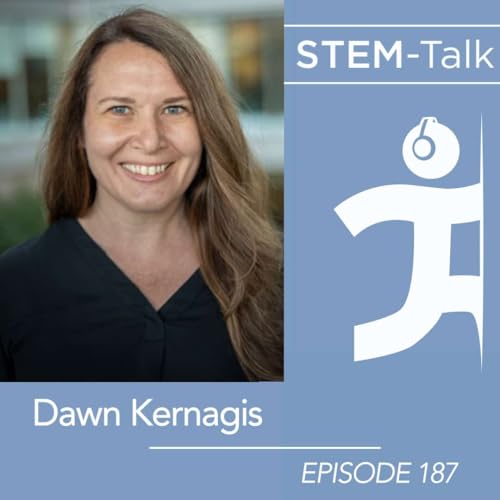
  • Episode 187: Dawn Kernagis talks about creating permanent subsea human habitats
    Oct 2 2025
    Today Ken interviews his co-host Dr. Dawn Kernagis about her new position as the Director of Scientific Research for DEEP, a UK startup that is pioneering a new era of ocean exploration. For listeners unfamiliar with Dawn’s background, she is a NASA-trained NEEMO Aquanaut, a Fellow of the Explorer’s Club Fellow and has been inducted into the Women Divers Hall of Fame. In addition to co-hosting STEM-Talk for the past nine years, Dawn is also a Visiting Research Scientist at IHMC. Dawn’s research over the years has been focused on protecting the brain and nervous system of people working in extreme environments. Prior to joining IHMC, Dawn completed her Ph.D. and Postdoctoral training at Duke University, where she studied the genetics of decompression sickness and mechanisms of oxygen toxicity in divers. In today’s interview, Dawn talks about DEEP’s mission to create subsea stations that will allow humans to live and work permanently underwater. Show notes: [00:03:20] Ken reminds listeners of Dawn’s first STEM-Talk appearance as a guest on Episode 19 where she conducted the interview from the bottom of the ocean floor while she was a member of NASA’s NEEMO Mission 21. [00:04:13] Ken asks Dawn what she was like as a child. [00:05:48] When Ken asks Dawn what she was like as a child, she talks about how she was an annoying kid because she was always asking people questions like, “Why is the sky blue?” [00:06:49] Dawn talks about the different places she lived during her childhood. [00:07:34] Ken mentions that Dawn was inducted into the Women’s Divers Hall of Fame. He asks her how old she was when she first became interested in diving. [00:10:35] Dawn talks about how she wanted to attend the University of North Carolina after high school but ended up at North Carolina State University and then Duke University. [00:12:18] Ken asks Dawn to elaborate on her decision to change her field of study multiple times throughout her collegiate career. What follows is an interesting conversation about the importance of a person following their passion. [00:14:53] Dawn talks about cave diving and how she and her friends used to do deep dives of six and seven hours at a time. Dawn explains how this led to her obsession with ways to protect people who dive into extreme underwater environments. [00:18:28] Ken asks Dawn how she learned that some people have a genetic predisposition to decompression sickness. [00:21:32] The conversation shifts to Dawn’s Ph.D. journey and how Richard Moon, who was a STEM-Talk guest on episode 26, played a significant role in her development. [00:26:14] Ken and Dawn reminisce on the practice of performing academic research in libraries. [00:28:20] Ken points out that despite Dawn’s extensive experience in human physiology with respect to diving, her doctoral work focused on cancer-related research. He asks her to talk about that seemingly odd combination. [00:34:10] Dawn talks about two papers that emerged from this research. One paper addressed how genes with bimodal expression patterns not only define clinically relevant molecular subtypes of ovarian carcinoma, but also provide ideal targets for translation into the clinical laboratory. The other paper looked at precise microarray-based predictions of tumor behavior in breast cancer patients. [00:39:00] Ken asks Dawn to recount the story of how the two of them met. [00:41:52] Ken asks Dawn to discuss the paper she co-wrote with Dom D’Agostino on mitochondrial health and its relationship to potentially preventing oxygen toxicity during exposure to hyperbaric environments. Dawn goes on to talk about some of her other IHMC-related research. [00:43:22] Ken asks Dawn to discuss her acceptance into the Aquanaut Program and her participation during one of NASA’s NEEMO missions. [00:46:04] Ken asks Dawn to reflect on her time on NEEMO Mission 21, and if there are any key takeaways she can discuss. [00:49:04] Ken asks Dawn to describe saturation diving, the research involved, and the health implications on saturation divers that are not present in other forms of underwater exploration. [00:52:04] The conversation shifts to how Dawn became the Director of Scientific Research for DEEP, a UK startup that aims to “Make Humans Aquatic.” [00:55:02] Ken explains that DEEP is a company that is pioneering a new era of ocean exploration and asks Dawn to give a primer on the importance of better understanding the Earth’s oceans. [00:56:12] Ken mentions DEEP’s mission to expand human subsea habitation through research and innovation. Dawn explains some of the challenges associated with constructing underwater habitats. [00:57:36] Ken asks about DEEP’s goal to create a relatively permanent deep-sea human habitat, analogous to the International Space Station. Called the Sentinel System, the underwater habitat will serve as a place for researchers to live and work. [01:01:23] Ken explains that the Sentinel System will operate at ...
    Más Menos
    1 h y 13 m
  • Episode 186: Mari Dezawa discusses her discovery of MUSE cells and the role of stem cells in regenerative medicine
    Sep 4 2025
    Today we have Dr. Mari Dezawa, one of the world’s leaders in stem-cell research and regenerative medicine. Mari is a pioneer in this emerging field and is known worldwide for her discovery of MUSE cells, a unique type of stem cell with exciting clinical potential. MUSE is short for Multilineage-Differentiating Stress-Enduring Cells. The discovery of the MUSE cell in humans has many biological and medical implications, and the human body may have a greater regenerative potential than we might have ever imagined. In collaboration with major national and international institutions, Mari and her colleagues are promoting research on MUSE cell-based regenerative medicine for diseases without definitive treatments. She and her team are also exploring the differences in regenerative capacity between less and more complex animals from the viewpoint of the stem-cell system. Mari is a professor and chair of the Division of Stem Cell Biology and Histology at Tohoku University School of Medicine. She has published more than 200 papers and is particularly known for her 2010 paper on the mechanisms of MUSE cells. In 2018, she was appointed a fellow of the U.S. National Academy of Inventors and has been the recipient of numerous awards, including the Japanese Government’s Prize for the Commendation for Science and Technology. Show notes: [00:04:10] Ken opens the interview by mentioning that although Mari was born in Japan, her family moved to the U.S. when she was only eight months old. Ken asks if it is true that Mari finds it difficult to answer the question of where her hometown is. [00:05:23] Ken asks Mari how she handled moving so much as a child. [00:05:52] Ken mentions that Mari’s father was a researcher and asks when she became passionate about research and science. [00:06:58] Ken mentions that Mari attended the Chiba University School of Medicine and asks what inspired her to go to medical school. [00:07:19] Ken explains that after Mari earned her medical degree, she attended Chiba University Graduate School of Medicine for her Ph.D. Ken mentions that while Mari was initially a cardiology resident, she later decided to focus on clinical research and became a stem-cell researcher. Ken asks what led her to shift from cardiology to stem-cell research. [00:08:25] Ken explains that Mari is well-known for her research into the role of stem cells in regeneration and functional recovery of nerve and muscle cells. Ken asks how and when she first became interested in stem cells. [00:09:56] Ken asks Mari to give a brief overview of stem cells and their significance. [00:11:18] Ken mentions that Mari remained at Chiba University as a research associate after earning her Ph.D in 1995. She then took a position as an associate professor at Yokohama City University Graduate School of Medicine before accepting a position at Kyoto University Graduate School of Medicine as an associate professor in 2003. Ken explains that while at Kyoto, Mari developed methods to induce bone marrow stromal cells to generate neuro and skeletal muscle cells, which play a crucial role in tissue repair and regeneration and are widely studied for their potential to serve as therapeutic agents. Ken asks Mari to give a quick primer on the crucial role these cells play in tissue repair. [00:13:25] Ken explains that in 2003, a member of Mari’s technical staff at Kyoto asked her whether they should discard some cultured adult rat and human bone marrow mesenchymal stem cells (MSCs) after she had noticed several strange cell clusters. Ken asks Mari to share what happened next and how this set her on the path to the discovery of Multilineage-Differentiating Stress-Enduring Cells. [00:16:03] Ken asks Mari to elaborate on this story and explain how a mistake led to this incredible discovery. [00:20:48] Ken explains that in 2008 Mari became professor and chair of the Department of Stem Cell Biology and Histology at Tohoku University Graduate School of Medicine. Then in 2010 she published a paper on the results of her investigations into MUSE cells. Ken asks about this paper and why it was so significant. [00:25:11] Ken mentions that one of the key characteristics of MUSE cells is their ability to repair organ tissues, and their ability to repair themselves quickly. Ken asks Mari to explain the significance of MUSE cell resilience and self-repair. [00:26:30] Ken asks Mari how MUSE cells are collected. [00:28:26] Ken asks Mari about her 2018 paper that looked at the use of MUSE cells in the treatment of acute myocardial infarction. [00:31:03] Ken explains that stem cells go through cytokine differentiation, a process that can often take several weeks or more to complete. However, Mari uncovered that a simple mechanism could substantially shorten this timeframe, which she reported on in a 2022 paper, titled “Phagocytosing Differentiated Cell-Fragments is a Novel Mechanism for Controlling Somatic Stem Cell Differentiation Within a Short Timeframe.” Ken...
    Más Menos
    47 m
  • Episode 185: Andrew Koutnik discusses metabolic health, athletic performance and growing up with type-1 diabetes
    Jul 31 2025
    Today we have our good friend and colleague Dr. Andrew Koutnik on the show. Andrew is a research scientist who studies the influence of nutrition and metabolism on health, disease and performance. He specializes in Type 1 diabetes and works with a wide range of people to improve their metabolic health and athletic performance. Andrew is a visiting research scientist at IHMC and has worked with Harvard, Johns Hopkins, NASA, and the Department of Defense to develop evidence-based strategies for overcoming complex health challenges. He is a graduate of Florida State University and earned his Ph.D. in medical sciences at the University of South Florida, where he worked with another good friend of ours, Dr. Dominic D’Agostino, who has been a previous STEM-Talk guest. Show notes: [00:02:50] Dawn welcomes Andrew to the show and asks him about his website, andrewkoutnik.com, the quote on the site’s homepage “Demystifying complex science to help you thrive in your health journey,” and the tagline “Challenging the status quo of metabolic health, human performance, and the management of type1 diabetes.” [00:05:31] Ken asks Andrew how old he was when he first learned he had Type 1 diabetes. [00:08:32] Dawn asks why Andrew believes his Type 1 diabetes is one of his life’s ultimate assets? [00:12:51] Ken mentions that Andrew grew up in Tallahassee and that despite suffering from childhood obesity, he was relatively athletic as a child. Ken asks Andrew to talk about his childhood. [00:14:20] Dawn asks Andrew to talk about the weight-loss journey he underwent as a teenager. [00:17:25] Dawn shifts gears to ask Andrew about how he got into science, mentioning that when he was younger, he never saw himself becoming a scientist. [00:20:19] Dawn asks if it is true that Andrew was the sort of kid who would constantly asked questions. [00:22:11] Dawn asks Andrew if it is true that after enrolling at Tallahassee Community College, it took him a while to decide on his major. [00:22:58] Ken asks Andrew to talk about the impact that his undergraduate anatomy and physiology class and professor had on his journey. [00:24:44] Ken mentions that after graduating from FSU, Andrew went to the University of South Florida where he worked with Dominic D’Agostino, who is both a previous STEM-Talk guest and a current colleague of Andrew’s. Ken asks Andrew how he met Dom. [00:27:46] Dawn asks Andrew how he came to work in Dom’s lab. [00:29:00] Dawn asks Andrew if his wife is still in touch with her former roommate, who connected Andrew and Dom. [00:29:21] Ken asks Andrew to touch on some of the research he did with Dom while he was pursuing his Ph.D. [00:31:49] Dawn shifts gears to talk about Andrew’s work in metabolic health and Type 1 diabetes. Dawn explains that a study published by the University of North Carolina found only 12 percent of Americans were metabolically healthy. Additionally, researchers from the Friedman School of Nutrition Science and Policy at Tufts University found in 2022 that only 6.8 percent of Americans had good cardiometabolic health. Dawn asks Andrew how he works with people who want to improve their metabolic health. [00:34:19] Ken asks Andrew for his thoughts on the sentiment that a ketogenic diet is hard to sustain. [00:36:55] Ken mentions that Andrew was part of a review that looked at carbohydrate restriction for diabetes, which is a practice that had been in use since the 1700s. It fell out of favor once insulin was discovered in the 1920s. Ken goes on to explain that carbohydrate restrictive diets, like the ketogenic diet, have regained popularity for the treatment and management of diabetes, weight-loss and a range of other health issues such as migraines, cancer and depression. Ken asks Andrew to first explain the history of carb-restrictive diets as a treatment of diabetes. [00:39:43] Ken asks Andrew to talk more about the aforementioned 2021 review and its argument in favor of a medical nutrition therapy for diabetes management. [00:47:21] Dawn quotes a passage from the American Diabetes Association website that reads, “Before insulin was discovered in 1921, people with diabetes didn’t live for long. There wasn’t much doctors could do for them. The most effective treatment was to put patients with diabetes on very strict diets with minimal carbohydrate intake. This could buy patients a few extra years but couldn’t save them. Harsh diets, some prescribed as little as 450 calories a day, sometimes caused patients to die of starvation.” Dawn asks Andrew if he feels that this quote discourages the use of carb-restriction and medical nutrition therapy for diabetes management. [00:49:22] Dawn asks Andrew how the treatment of diabetes went from the use of insulin being prescribed along with carbohydrate restriction, to purely pharmacological interventions. [00:50:59] Dawn asks Andrew to talk about the significance of the fact that carbohydrates are the only macronutrient ...
    Más Menos
    1 h y 32 m
  • Episode 184: Ken and Dawn answer listener questions on AI, grip strength, ketamine, protein, digital twins, and more!
    Jul 10 2025
    It’s time for another episode of Ask Me Anything. Dawn and Ken answer listener questions that range from generative AI to whether grip strength is a biomarker for longevity and the potential of ketamine as a treatment for depression. Dawn also gives a brief overview of work she is doing with the deep-sea technology company Deep. As a special treat at the end of today’s episode, Dawn plays a recording of the commencement speech that Ken recently gave at the University of West Florida. As the saying goes, you don’t want to miss it. Show notes: [00:02:18] Ken starts off the episode with a listener question about whether Dawn and Ken read print books or digital, the reason being that a listener recently came across an article that claimed digital screens are rewiring our brains. [00:05:32] A listener asks about a paper titled “Grip Strength An Indispensable Biomarker for Older Adults” which claims that the ability to hang from a bar for 60 seconds for men, and 30 seconds for women, indicates that a person is likely to live longer. The paper claims that a decline in grip strength is associated with adverse health consequences, and the listener asks Ken what advice he has for developing and maintaining grip strength. [00:10:20] A listener asks a question inspired by our recent interview with Dr. Frank Butler. The listener asks if Ken has heard about the FDA approved depression therapy, esketamine, which is a derivative of ketamine and is a long-standing therapy for depression. [00:12:37] A listener asks Ken about a 2023 paper in the journal Age and Aging titled “Higher Dietary Protein Intake is Associated with Sarcopenia in Older British Twins” [00:16:13] A listener asks Ken about “Whisper,” which is a transcription product from OpenAI. The listener explains that OpenAI disclaims that Whisper should not be used in high-risk domains. However, according to a story by the Associated Press titled “Researchers Say an AI Powered Transcription Tool Used in Hospitals Invents Things No One Ever Said,” medical centers have already begun to use the tool to transcribe physician consultations. The listener explains that, according to the article, the use of Whisper in these contexts has led to numerous ‘hallucinations’ from the AI tool and the listener asks Ken what his thoughts are on how tools like Whisper should be integrated into various industries. [00:20:21] A listener asks for Ken’s thoughts on a series of articles by Kevin Roose in The New York Times claiming that there is no reason to learn how to code and program because very soon AI will take over all coding. Mr. Roose also asserts that the time is soon approaching when we need to have discussions on what rights to grant sentient AI. [00:21:57] A listener asks Ken if he concurs with a report from the National Academy of Medicine titled “Generative Artificial Intelligence in Health and Medicine – Opportunities and Responsibilities for Transformative Innovation,” which notes that large language models (LLMs) hold huge promise for patient care and healthcare system workflows, as well as risks. The listener asks if Ken agrees with the report’s claims that two areas in which we could see near term applications of LLMs are patient education and synthesis of information of electronic medical records. [00:23:35] As a follow up question, Ken is asked about the aforementioned report’s discussion of the “digital twin” concept. A digital twin is a computational representation of a patient or disease that could be used to speed up virtual experiments or subgroup analysis of investigational agents that carry risk for real patients. [00:26:26] A listener asks for Ken’s thoughts on a paper published in the journal of Nutrition Health and Aging titled “Effects of Vitamin D3 Omega 3 Fatty Acids and a Simple Home Exercise Program on Change in Physical Activity Among Generally Healthy and Active Older Adults.” The paper claims that among generally healthy, active and vitamin D3 replete individuals 73 and older, that Vitamin D supplementation had a detrimental effect on physical function and activity. [00:28:32] A listener asks Ken and Dawn what their take is on the term “settled science” and if it is ever appropriate to call some science “settled.” [00:30:06] A listener asks both Ken and Dawn whether they have a favorite healthy snack. [00:31:31] A listener asks Ken about his blood flow restriction training and what devices he uses for these workouts. [00:32:29] A listener asks about a new sub-sea technology company called Deep, which Dawn works with. [00:34:21] Dawn wraps up the episode mentioning that a little birdie told her that Ken recently gave a good commencement address to the graduating class of 2025 at the University of West Florida. Dawn then plays the audio from Ken’s speech. Links: Learn more about IHMC STEM-Talk homepage Ken Ford bio Ken Ford Wikipedia page Dawn Kernagis bio
    Más Menos
    44 m
  • Episode 183: Michael Schmidt on the challenges of building a space-faring civilization
    Jun 24 2025
    Today we have the second installment of our interview with Dr. Michael A. Schmidt, the founder, CEO, and Chief Scientific Officer of Sovaris Aerospace, a company focused on assessments and solutions applied to humans in space and extreme environments on Earth. In today’s interview, we talk to Michael about NASA’s plans to send humans to Mars and build permanent colonies on the Moon and Mars. We also talk to Michael about his recent book, “Building a Space-Faring Civilization,” which addresses the challenges of civilian spaceflight and the construction of space settlements. In part one of our interview, Episode 182, we talked with Michael about his pioneering work in the field of precision medicine and how he has used it to improve the cognitive and physical performance of astronauts as well as NBA, NFL players and Special Operations forces. In addition to his work with Sovaris, Michael also is a professor of aerospace medicine at the University of Central Florida College of Medicine, one of the few programs in the U.S. that offers a medical residency in aerospace medicine. Show notes: [00:03:00] Dawn picks up our interview from where we left off in part one, discussing the Human Research Program for Civilian Spaceflight. She goes on to mention that Chris Mason at Cornell University has a biobank of 1,500 samples across 22 astronauts and seven missions, and that these samples will lead to deeper insights on the effects of spaceflight on humans. Dawn switches gears to ask Michael about the cognitive and physical challenges of spaceflight over long duration missions. [00:13:03] Following up on the cognitive challenges of long duration spaceflight, Ken mentions that the hippocampus, the primary memory center of the brain, has a relatively low radiation threshold compared to other tissues in the brain. Ken asks Michael to touch on the vulnerability of specialized brain tissues to radiation, particularly in the context of a long duration spaceflight to Mars. [00:21:53] Ken mentions that it is understood that the APOE4/4 genotype is associated with impaired cognitive performance under certain circumstances and an elevated risk of dementia. While it is currently unknown whether APOE4/4 has any correlation of increased risk associated with cognitive impact resultant from environmental exposure due to spaceflight, Ken highlights the concern with sending APOE4/4-positive astronauts on long duration spaceflights without knowing the risks. [00:29:26] Ken notes the worsened cognitive impacts resultant from medical radiation, and while therapeutic radiation is different than radiation experienced by astronauts, these results give some indication of the effects astronauts might experience. [00:33:27] Dawn mentions that we recently had planetary scientist and director of NASA’s Haughton-Mars project, Pascal Lee, on the podcast, who explained his view that since there are so many engineering and biological challenges with going to Mars, we should take a more measured approach to a Mars mission, perhaps even beginning with a roundtrip to Mars rather than landing on our first visit. Dawn asks Michael what his thoughts are on this approach. [00:37:29] Ken shifts the discussion to the subject of one of Mars’ moons, Phobos, and its potential role in a Mars mission. [00:40:30] Dawn pivots to talk about Michael’s Book “Building a Space-Faring Civilization: Advancing the Renaissance of Science, Medicine and Human Performance in Civilian Spaceflight.” Dawn asks Michael to talk about the chapter concerning the question of space radiation from the standpoint of precision medicine. [00:55:12] Dawn asks Michael to talk about the lack of appreciation people have for the fact that a Mars mission would be the most dangerous thing we’ve ever done. [00:59:06] Ken mentions that Michael has worked with a lot of organizations, including Space X, which has a program, the Space X Mars Colonization Program, dedicated to the establishment of a permanent colony on Mars. Space X’s founder Elon Musk recently made a statement to his employees that in 20 years he anticipates having a million people colonizing Mars. Ken asks Michael to elaborate on the difficulties entailed with not just a sortie mission to Mars but attempting to establish a permanent presence there. [01:03:38] Ken notes the effect that lofty ideas about colonizing Mars have on people is a lack of appreciation for the tremendous difficulty of the task before us. Ken notes that when we do make it to Mars, the appreciation for the monumental accomplishment that it will be could be seen as inadequate by a public fed ideas about colonizing Mars in the next 20 years. [01:11:08] Dawn notes that one of the most underappreciated, yet critical, components of long duration spaceflight is the psychology of team dynamics. Considering the isolation and close quarters environment of a spacecraft, how teams interact and how they will mediate conflict is an important problem ...
    Más Menos
    1 h y 35 m
  • Episode 182: Michael Schmidt on what precision medicine means to human spaceflight
    Jun 2 2025
    Today we have Dr. Michael A. Schmidt, the founder, CEO, and Chief Scientific Officer of Sovaris Aerospace, a company focused on assessments and solutions applied to humans in space and extreme environments on Earth. Michael is also a professor of aerospace medicine at the University of Central Florida College of Medicine, one of the few programs in the U.S. that offers a medical residency in aerospace medicine. Michael is known for his work pioneering the field of precision medicine. He uses molecular analytics, coupled with physiologic and behavioral assessments, to facilitate human performance and resilience on Earth as well as in the extreme environment of space. His work covers a spectrum from NASA, the NFL, the NBA, U.S. Olympic teams, Nike, SpaceX, Axiom Space, NASCAR, Special Operations, the Naval Submarine Medical Research Lab, the Mayo Clinic, and others. We had a long and fascinating conversation with Michael and decided to break the interview into two parts. This episode focuses on Michael’s background and the cognitive and physical challenges astronauts experience in spaceflight. We also dive into the many ways that precision medicine is facilitating human performance and resilience here on Earth. In part two of our conversation, Michael talks about his work with NASA and SpaceX on the challenges of civilian spaceflight and the future of Mars exploration, including the construction of permanent colonies on the Moon and Mars. You won’t want to miss that conversation. Show notes: [00:03:59] Dawn opens our interview mentioning that Michael grew up in Minnesota in a small farming community, asking if it’s true that he sometimes had to do chores in 20- to 30-degree weather. [00:06:50] Dawn asks if it is true that Michael fell in love with science at a young age, even building telescopes at the age of 11. [00:08:00] Dawn asks Michael what it was that led him to become so fascinated with space specifically. [00:08:58] Dawn asks if Michael ever thought about becoming an astronaut. [00:10:09] Ken asks if it is true that Michael was a big reader as a child. [00:11:21] Dawn asks Michael to talk about his childhood athletic interests. [00:11:55] Dawn asks how it was that a high school quarterback from a small town in Minnesota ended up at university in the United Kingdom. [00:13:38] Ken asks Michael what years he worked at NASA Ames Research Center. [00:14:51] Ken mentions that when Michael was at NASA Ames, he did work collecting molecular and physiologic assessments of humans using NASA’s 20-G centrifuge. Ken asks Michael to talk about the centrifuge and how he used it in his studies of hypergravity. [00:17:49] Ken comments on the fact that pieces of equipment like NASA’s 20-G centrifuge are a precious scientific resource, and when they cease functioning, unfortunately, they are unlikely to be replaced. [00:19:40] Ken and Michael discuss the fact that microgravity, despite being one of the most pressing effects on astronaut health, is the one of the least addressed problems in human spaceflight. [00:21:48] Ken explains that Michael is the founder, CEO and Chief Scientific Officer of a company called Sovaris Aerospace, which is focused on assessments and solutions applied to humans in space and extreme environments on Earth. Ken asks Michael where the idea came from to found this company. [00:24:35] Dawn explains that since the human genome was first sequenced, there has been an acceleration of genome-based technologies that have made it possible to consider a person’s genetic makeup, both in healthcare and optimizing performance. Dawn asks Michael to talk about the work he does applying genomics to human spaceflight. [00:28:52] Dawn asks about Michael’s direction of the molecular profiling and precision medicine efforts for the Golden State Warriors during their record-breaking 73-9 season [00:32:57] Dawn mentions that Michael published a review in the journal Metabolomics in 2013 that looked at the use of omics-based analyses and their potential to enhance astronaut safety and performance. Dawn goes on to say that omics allows us to identify differences in humans responsible for different responses to extreme conditions. Dawn asks Michael to talk about this review and what he learned in terms of the risk profile of individual astronauts and how personalized medicine could mitigate some of the risks. [00:42:01] Ken circles back to the heterogeneity of responses to exercise in space, a phenomenon that is seen on Earth as well. Ken notes that while large populations of astronauts don’t yet exist to be studied, large populations and their response to exercise can be studied on Earth, such as Marcas Bamman’s current NIH-funded multicenter exercise study with aging populations here at IHMC. Here Michael talks about his work creating “digital twins” of astronauts to model exposure to extreme environments on personalized digital models of astronauts. [00:46:04] Ken mentions that the...
    Más Menos
    1 h y 15 m