Episodios

  • 308: Resiliency Radio with Dr. Jill: The Inflamed Brain – How Mold and Infections Trigger Chronic Illness
    Apr 1 2026

    In this episode of Resiliency Radio with Dr. Jill, Dr. Jill Carnahan explores the growing science behind brain inflammation and its connection to chronic illness with Dr. Eboni Cornish.

    Dr. Cornish, Associate Medical Director at Amen Clinics and Treasurer of the International Lyme and Associated Diseases Society, shares how underlying inflammation in the brain can drive symptoms often labeled as psychiatric, neurological, or behavioral conditions.

    Together, they discuss how mold toxicity, chronic infections, gut dysfunction, hormone imbalances, and environmental toxins can disrupt brain health and lead to symptoms such as brain fog, anxiety, depression, personality changes, and fatigue.

    This powerful conversation highlights the importance of identifying root causes of neuroinflammation and offers hope for individuals struggling with complex chronic conditions through advanced diagnostics, functional medicine strategies, and personalized care.

    🔑 5 Key Discussions
    ① 🧠 The Inflamed Brain and Mental Health
    ⇨ Many conditions labeled as psychiatric—including anxiety, depression, and behavioral disorders—may actually be driven by underlying brain inflammation.
    ⇨ Neuroinflammation can affect mood, cognition, personality, and overall neurological function.

    ② 🦠 Infections That Trigger Brain Inflammation
    ⇨ Tick-borne infections such as Lyme, Babesia, and Bartonella can contribute to chronic inflammation affecting the brain and nervous system.
    ⇨ Viral, bacterial, and parasitic infections may also disrupt neurological health.

    ③ 🧫 Mold Toxicity and Environmental Triggers
    ⇨ Mold exposure and environmental toxins can activate immune responses that lead to chronic neuroinflammation.
    ⇨ Patients may experience chemical sensitivities, mast cell activation, and neurological symptoms.

    ④ 🦠 The Gut–Brain Connection
    ⇨ Gut microbiome imbalances and intestinal permeability ("leaky gut") can significantly influence brain health.
    ⇨ Nutritional deficiencies and food sensitivities, including gluten sensitivity, may also contribute to brain inflammation.

    ⑤ 🔬 Advanced Diagnostics for Brain Health
    ⇨ Tools such as SPECT brain imaging, laboratory testing, and environmental assessments help identify hidden causes of neuroinflammation.
    ⇨ A comprehensive functional medicine approach allows clinicians to personalize treatment strategies.

    ⭐ Key Takeaways

    🔹 Brain inflammation can contribute to psychiatric, neurological, and behavioral symptoms.
    🔹 Chronic infections and environmental toxins are major drivers of neuroinflammation.
    🔹 The gut–brain axis plays a significant role in neurological health.
    🔹 Advanced diagnostics such as SPECT imaging help identify patterns of brain dysfunction.
    🔹 Addressing root causes—including infections, toxins, sleep, hormones, and gut health—is essential for healing.

    👩‍⚕️ Guest Biography

    Dr. Eboni Cornish is the Associate Medical Director at Amen Clinics and Treasurer of the International Lyme and Associated Diseases Society, the world's leading organization focused on Lyme disease and tick-borne illnesses.

    A nationally recognized expert on neuroinflammation, chronic infections, and environmental toxicity, Dr. Cornish combines advanced brain imaging with precision functional medicine to uncover the hidden drivers of complex illness.

    She has helped patients from around the world recover from conditions once considered untreatable—including Lyme disease, mold illness, PANS/PANDAS, long COVID, and autoimmune brain disorders—by identifying root causes and tracking healing through SPECT brain imaging and advanced diagnostics.

    Known for her dynamic speaking style and evidence-based approach, Dr. Cornish educates both clinicians and patients about the science of neuroinflammation and the path toward recovery.

    🔗 Website: https://www.drebonicornish.com/
    🔗 Amen Clinics: https://www.amenclinics.com/
    🔗 ILADS: https://www.ilads.org/

    Más Menos
    44 m
  • 307: Resiliency Radio with Dr. Jill: Hormones, Peptides and Performance with Dr. Gordon Crozier
    Mar 25 2026

    In this episode of Resiliency Radio with Dr. Jill, Dr. Jill Carnahan explores the powerful intersection of hormone optimization, peptide therapy, and cellular health with Dr. Crozier.

    Dr. Crozier shares insights from years of treating complex chronic illnesses and explains how many patients struggle with overlapping root causes such as mold toxicity, infections, immune dysregulation, and environmental toxins.

    These factors often disrupt hormones, mitochondrial function, and metabolic health.

    The conversation dives into how therapeutic peptides are emerging as powerful tools for cellular repair, immune balance, and performance optimization.

    🔑 5 Key Discussions
    ① 🧬 Root Causes of Chronic Illness
    ⇨ Mold exposure, infections, environmental toxins, and immune dysregulation often combine to create complex chronic health conditions.
    ⇨ Many patients experience layered illnesses that require a personalized, root-cause treatment approach.

    ② ⚖️ Hormone Optimization as the Foundation
    ⇨ Adrenal health and the HPA axis are essential for energy, metabolism, and overall resilience.
    ⇨ Hormone imbalances such as low testosterone, estrogen dominance, and premature hormonal decline are increasingly common due to environmental toxins.

    ③ 🔬 Peptides for Cellular Repair and Performance
    ⇨ Peptides like BPC-157, SS31, MOTS-C, and Humanin support mitochondrial repair and tissue regeneration.
    ⇨ These therapies may help improve metabolism, insulin sensitivity, and cellular resilience.

    ④ 🛡️ Immune Regulation and Infection Support
    ⇨ Peptides such as Thymosin Alpha-1 and LL-37 may help regulate immune responses.
    ⇨ These therapies can support individuals dealing with chronic infections, viral reactivation, and toxin exposure.

    ⑤ ⚠️ Safety and Physician-Guided Peptide Therapy
    ⇨ Peptide therapy should always be used under qualified medical supervision.
    ⇨ Unregulated or black-market peptides may be contaminated and pose significant health risks.

    ⭐ Key Takeaways

    🔹 Chronic illness often involves multiple root causes, including toxins, infections, and immune imbalance.
    🔹 Hormone optimization is a foundational step for restoring metabolic health and vitality.
    🔹 Therapeutic peptides may support mitochondrial repair, immune balance, and tissue regeneration.
    🔹 Environmental toxins such as plastics and mold can significantly disrupt hormonal balance.
    🔹 Advanced therapies are most effective when combined with foundational health practices and personalized care.

    👨‍⚕️ Guest Biography

    Dr. Crozier is the owner and medical director of Crozier Clinic, one of America's premier genetic-based clinics specializing in personalized medicine, hormone optimization, IV therapy, peptide therapy, and advanced diagnostic testing.

    Dr. Crozier's early experience working in neurology, neurosurgery, and ophthalmology provided critical insight into neurological and toxicological conditions that continue to shape his clinical protocols today.

    He serves as a clinical faculty member at the University of Kentucky, is a lead educator and curriculum developer for A4M (Informa), and is a steering committee member of the International Peptide Society.

    Dr. Crozier lectures nationally and internationally on Lyme disease, mold illness, peptide science, glutathione therapy, and integrative approaches to chronic disease.

    🔗 Website: https://crozierclinic.com/
    🔗 Facebook: https://www.facebook.com/DrCrozier
    🔗 YouTube: https://www.youtube.com/@dr.gordoncrozier8325

    Más Menos
    54 m
  • 306: Resiliency Radio with Dr. Jill: Connection & Innovation for Resilience w/ Beth Benatti Kennedy
    Mar 18 2026

    Welcome to Resiliency Radio with Dr. Jill Carnahan, where today's episode explores one of the most essential skills for thriving in today's high-pressure world: resilience. Dr. Jill is joined by resilience expert, author, and burnout prevention strategist Beth Benatti Kennedy to discuss how connection, purpose, and personal innovation can help individuals navigate stress, avoid burnout, and rediscover fulfillment.

    In this powerful conversation, Dr. Jill Carnahan and Beth explore the hidden stages of burnout and introduce the Benatti Resiliency Model, a practical framework for building resilience through well-being, self-awareness, connection, personal brand, and continuous growth.

    This episode is especially valuable for professionals, caregivers, and high achievers who feel overwhelmed, exhausted, or disconnected from their sense of purpose—and want practical strategies to restore energy and balance.

    ✨ Like, subscribe, and share to help more people build resilience and prevent burnout in today's demanding world.

    🔑 Key Discussions – What You'll Learn

    ① Understanding the Burnout Escalator
    ⇨ The five stages of burnout—from early exhaustion to severe emotional and physical breakdown—and how to recognize warning signs early.

    ② The Benatti Resiliency Model
    ⇨ Beth's five pillars of resilience: well-being, self-awareness, personal brand, connection, and innovation.

    ③ The Role of Relationships in Resilience
    ⇨ Why supportive partners, friendships, and community connections are critical for preventing burnout and sustaining well-being.

    ④ Micro-Actions for Sustainable Change
    ⇨ Small daily habits that build resilience over time, including journaling, time management, and intentional rest.

    ⑤ Rediscovering Purpose Through Innovation
    ⇨ How learning new skills, exploring creativity, and using personal strengths can reignite passion and prevent stagnation.

    ⭐ Key Takeaways
    ⇨ Burnout develops gradually and can be reversed when recognized early
    ⇨ Resilience requires both personal habits and supportive relationships
    ⇨ Small daily "micro-actions" create powerful long-term change
    ⇨ Purpose, creativity, and growth are essential for sustained well-being
    ⇨ Connection and validation play a crucial role in emotional resilience

    👩‍💼 Beth Benatti Kennedy
    Beth Benatti Kennedy has more than twenty-five years of experience as a leadership coach, resiliency-training expert, and speaker. As a leadership coach, Beth guides leaders to develop resilience habits to support peak performance, maximize their professional and personal impact, positively influence the people they work with, and build their brand.

    Her training programs focus on giving employees the tools to stay resilient, make sense of organization changes, and manage transition while continuing to be productive and engaged. As a motivator and speaker at conferences, seminars, and symposiums, Ms. Kennedy has presented her Benatti Resiliency Model® across the globe, including at TEDxNortheasternU.

    In addition, because of her expertise in resilience and burnout, she has been quoted in articles, interviewed on podcasts, and contributed to various publications. Beth is also the author of Career ReCharge: Five Strategies to Boost Resilience and Beat Burnout and co-author of ReThink Resilience: 99 Ways to ReCharge Your Career and Life.

    🔗 Website: https://www.bethkennedy.com
    🔗 LinkedIn: Connect with Beth Benatti Kennedy: https://www.linkedin.com/in/bethbenattikennedy/
    🔗 Her Book: https://www.amazon.com/dp/1632998416

    Más Menos
    41 m
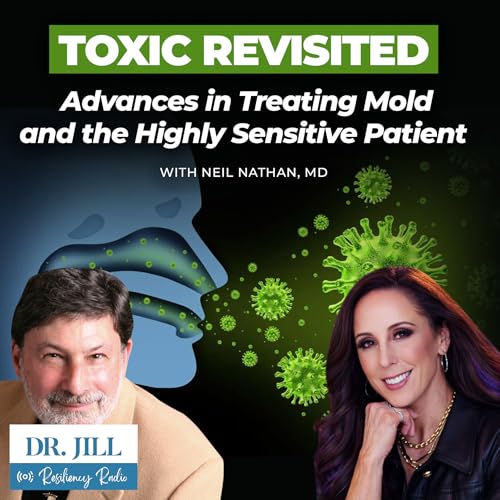
  • 305: Resiliency Radio with Dr. Jill – Toxic Mold Revisited: Mold & the Highly Sensitive Patient with Dr. Neil Nathan
    Mar 11 2026

    Welcome to Resiliency Radio with Dr. Jill Carnahan, where today's episode revisits one of the most complex and misunderstood areas in integrative medicine: toxic mold illness and the highly sensitive patient.

    Dr. Jill is joined by renowned functional medicine pioneer Dr. Neil Nathan, author of Toxic: Heal Your Body and The Sensitive Patient's Healing Guide, for a powerful and deeply insightful conversation on environmental toxins, limbic dysfunction, mast cell activation, and healing chronic inflammatory illness.

    In this episode, Dr. Jill Carnahan and Dr. Nathan explore why many highly sensitive individuals struggle with conventional detox protocols—and how healing requires safety, precision, and a stepwise approach.

    This discussion offers both clinicians and patients a roadmap for navigating mold illness, nervous system overload, and sensitivity syndromes with greater clarity and compassion.

    ✨ Like, subscribe, and share to help more sensitive patients find safe and effective pathways to recovery.

    🔑 Key Discussions – What You'll Learn

    ① The Highly Sensitive Patient (HSP)
    ⇨ Why sensitivity is both a gift and a liability—and how to manage emotional and environmental overwhelm.

    ② Limbic, Vagal & Mast Cell Interconnection
    ⇨ How these three systems drive chronic inflammation, anxiety, POTS, gut dysfunction, and chemical sensitivity.

    ③ Why Mold Treatment Must Be Stepwise
    ⇨ The importance of stabilizing the nervous system before binders or antifungals—especially in sensitive patients.

    ④ Environmental Toxic Load & Modern Stressors
    ⇨ How chemicals, mold, EMFs, and post-pandemic stress overload detox pathways.

    ⑤ Healing Beyond Protocols
    ⇨ The role of clinician presence, precise language, love, spirituality, and nature in long-term recovery.

    ⭐ Key Takeaways
    ⇨ Highly sensitive patients require gentler, staged detox strategies
    ⇨ Limbic and vagal retraining are foundational before aggressive mold treatment
    ⇨ Mast cell activation often overlaps with mold and Lyme illness
    ⇨ Starting low and slow with binders prevents setbacks
    ⇨ Love, connection, and safety are essential biological regulators

    👨‍⚕️ Guest Biography

    Dr. Neil Nathan, MD, has practiced medicine for over 50 years and is considered a pioneer in functional medicine. He specializes in mold toxicity, Lyme disease, mast cell activation, and complex chronic inflammatory illness.

    Dr. Nathan is the author of Toxic: Heal Your Body, The Sensitive Patient's Healing Guide, and Energetic Diagnosis. His work focuses on helping highly sensitive individuals recover safely through stepwise detoxification, nervous system stabilization, and holistic healing strategies.

    🔗 Website: http://www.neilnathanmd.com/

    Más Menos
    56 m
  • 304: Resiliency Radio with Dr. Jill – Restless Legs Syndrome Breakthroughs: Nerve Compression and New Treatments
    Mar 4 2026

    Welcome to Resiliency Radio with Dr. Jill Carnahan, where today's episode challenges decades of conventional thinking about Restless Legs Syndrome (RLS). Dr. Jill is joined by Dr. James C. Anderson, whose groundbreaking research suggests that RLS may not be primarily a dopamine disorder—but instead, a problem of mechanical nerve compression in the lower leg.

    In this fascinating and science-driven discussion, Dr. Jill Carnahan and Dr. Anderson explore how decompression of the common fibular, superficial fibular, and tibial nerves may significantly reduce symptoms like burning, tingling, cramping, creeping sensations, and sleep disruption.

    This episode offers hope to patients who have failed dopaminergic medications and provides clinicians with deeper mechanistic insight into the root causes of RLS and peripheral neuropathy.

    ✨ Like, subscribe, and share to help more people discover innovative, root-cause solutions for chronic restless legs and sleep disruption.

    🔑 Key Discussions – What You'll Learn

    ① Rethinking RLS Pathophysiology
    ⇨ Why RLS may stem from peripheral nerve compression rather than solely dopamine imbalance.

    ② The Science Behind Nerve Decompression
    ⇨ Clinical outcomes from Dr. Anderson's 2017 and 2026 studies showing symptom reduction after surgical decompression.

    ③ Peripheral vs. Central RLS
    ⇨ How axonal hyperexcitability and ischemia may drive symptoms like tingling, burning, and nighttime discomfort.

    ④ Why Dopaminergic Medications Fail
    ⇨ Understanding medication augmentation and what it reveals about misdiagnosis or incomplete treatment models.

    ⑤ Who Should Be Evaluated for Nerve Compression
    ⇨ Identifying patients with diabetic neuropathy, venous insufficiency, or unexplained lower-leg pain who may benefit from structural evaluation.

    ⭐ Key Takeaways

    ⇨Restless Legs Syndrome may have a structural, peripheral nerve component

    ⇨Nerve decompression surgery has shown measurable symptom improvement

    ⇨Medication failure may signal an underlying mechanical issue

    ⇨Peripheral neuropathy and vascular issues often overlap with RLS

    ⇨Root-cause evaluation expands treatment possibilities beyond symptom control

    👨‍⚕️ Guest Biography

    Dr. James C. Anderson, DPM, is a peripheral nerve surgeon and founder of Anderson Podiatry Center in Colorado. His work focuses on restoring nerve function by addressing structural compression in the lower extremities, particularly for patients with Restless Legs Syndrome and diabetic neuropathy.

    Dr. Anderson has authored peer-reviewed publications on surgical reversal of RLS symptoms and objective improvements in nerve function using intraoperative monitoring. His research has earned the prestigious Jules Tinel Award for contributions to peripheral nerve science.

    He is also the author of A Perfect Night's Sleep, exploring the connection between mechanical nerve compression and chronic restless legs symptoms.

    🔗 Website: https://andersonpodiatrycenter.com/

    🔗 Book: https://amzn.to/4aNkk1d

    Más Menos
    42 m
  • 303: Resiliency Radio with Dr. Jill: The Missing Piece in Toxic Mold Recovery: Therapeutic Plasma Exchange (TPE) with Dr. Paul Savage
    Mar 2 2026

    Welcome to Resiliency Radio with Dr. Jill Carnahan, where today's episode explores one of the most debated and rapidly evolving topics in environmental medicine: Therapeutic Plasma Exchange (TPE) for toxic mold illness and chronic inflammatory syndromes.

    Dr. Jill is joined by Dr. Paul Savage, founder of MDLifespan, to break down the science, safety, and real-world application of TPE and the patent-pending PlasmaXchange™ protocol.

    For many patients struggling with persistent mold toxicity, autoimmune flares, chronic inflammation, and toxic burden, traditional detox strategies—binders, sauna, fasting, chelation—may not be enough. This episode provides an evidence-informed, transparent Q&A exploring whether Therapeutic Plasma Exchange could be a missing link in complex recovery cases.

    Together, they examine what TPE actually removes from the bloodstream, who may benefit most, potential risks and contraindications, and how clinicians measure outcomes before and after treatment.

    ✨ Like, subscribe, and share to help more patients and practitioners understand advanced options for toxic mold and environmental illness recovery.

    🔑 Key Discussions – What You'll Learn

    ① What Is Therapeutic Plasma Exchange (TPE)?
    ⇨ What is physically removed during the procedure—free toxins, protein-bound toxins, inflammatory cytokines, immune complexes—and what is returned.

    ② How TPE Reduces Toxic Burden Mechanistically
    ⇨ The difference between removing circulating toxins versus mobilizing stored toxins—and why this distinction matters.

    ③ Who May Benefit Most from TPE
    ⇨ Mold illness, persistent inflammatory syndromes, autoimmune flares, complex toxic load, and medication-resistant cases.

    ④ Safety, Contraindications & Risk Mitigation
    ⇨ Who is not an ideal candidate, potential side effects, rare risks, and the importance of proper screening.

    ⑤ Is TPE a Reset or Long-Term Strategy?
    ⇨ How many sessions are typically needed, what "removing up to 90% of circulating toxins" actually means, and whether TPE should be viewed as a bridge or foundational intervention.

    ⭐ Key Takeaways
    ⇨ TPE removes circulating inflammatory mediators and toxin-bound plasma components
    ⇨ It may benefit patients with severe or persistent toxic mold illness
    ⇨ Proper patient selection and medical supervision are critical
    ⇨ Objective biomarkers help track effectiveness
    ⇨ TPE may function as a reset within a broader long-term recovery plan

    👨‍⚕️ Guest Biography

    Dr. Paul Savage, M.D., FACEP, FAARM, is a physician, innovator, and founder of MDLifespan, where he serves as Chief Medical Officer and leads development of the patent-pending PlasmaXchange™ protocols focused on reducing environmental toxins and enhancing long-term vitality.

    With more than 35 years of clinical experience, Dr. Savage transitioned from emergency medicine into integrative, personalized longevity care after transforming his own health through lifestyle medicine, hormone optimization, and regenerative therapies. He is also the founder of the national hormone therapy network BodyLogicMD and is a recognized leader in precision longevity and biomarker-driven medicine.

    🔗 Learn more: http://www.mdlifespan.com/drjill

    Más Menos
    56 m
  • 302: Resiliency Radio with Dr. Jill – Midlife Reset: Hormones, Identity, and the Courage to Become Who You Are
    Feb 25 2026

    Welcome to Resiliency Radio with Dr. Jill Carnahan, where today's episode explores the powerful and transformative season of midlife—a time of hormonal shifts, identity changes, and profound personal reinvention. Dr. Jill is joined by Dr. Trevor Cates, bestselling author and pioneer in women's health, for an inspiring conversation about navigating perimenopause, purpose, and the courage to evolve.

    In this episode, Dr. Jill Carnahan and Dr. Cates discuss why midlife isn't a crisis—it's a reset. From hormonal fluctuations and metabolic changes to deeper emotional awakenings, this phase often acts as a "stress test," revealing what's no longer aligned in our health, work, and relationships.

    This conversation is for women who feel called to something more—more energy, more authenticity, more purpose—and want practical, holistic strategies to support both physical and emotional transformation.

    ✨ Like, subscribe, and share to help more women embrace midlife as a powerful new beginning.

    🔑 Key Discussions – What You'll Learn

    ① Midlife as a Stress Test
    ⇨ Why perimenopause often surfaces unresolved health, emotional, and identity issues—and how this creates opportunity for growth.

    ② Hormones, Gut Health & Metabolism
    ⇨ How shifting estrogen and progesterone levels impact inflammation, sleep, mood, and metabolic resilience.

    ③ Identity Shifts & Limiting Beliefs
    ⇨ Why many women struggle with "Who am I now?" and how awareness dissolves self-doubt and fear of reinvention.

    ④ Daily Habits that Anchor Transformation
    ⇨ The power of sleep, mindful mornings, nourishing food, movement, and time in nature.

    ⑤ The Role of Human Connection & Courage
    ⇨ Why authentic relationships, surrender, and inspired action are essential for midlife fulfillment.

    ⭐ Key Takeaways
    ⇨ Midlife is not decline—it's a powerful invitation to reset and redefine
    ⇨ Hormonal changes amplify underlying health and emotional patterns
    ⇨ Awareness of limiting beliefs is the first step toward reinvention
    ⇨ Small daily habits create massive long-term resilience
    ⇨ Connection, purpose, and rest are as vital as productivity

    👩‍⚕️ Guest Biography

    Dr. Trevor Cates is a USA Today and Amazon bestselling author of Clean Skin From Within and Natural Beauty Reset. She was the first woman licensed as a naturopathic doctor in California and brings over 25 years of experience in women's health, functional medicine, and integrative dermatology.

    Dr. Cates founded and later sold a successful natural skincare and supplement company rooted in her clinical work helping women achieve vibrant health from the inside out. Today, she focuses on patient care and mentoring health and wellness entrepreneurs, empowering women to navigate midlife with clarity, resilience, and confidence.

    🔗 Website: https://drtrevorcates.com/

    Más Menos
    39 m
  • 301: Resiliency Radio with Dr. Jill: Meta-Inflammation & Women's Health with the Foodie Farmacist Dr. Lara Zakaria
    Feb 18 2026

    Welcome to Resiliency Radio with Dr. Jill Carnahan, where today's episode uncovers a critical and often overlooked driver of chronic symptoms in women: meta-inflammation. Dr. Jill is joined by Dr. Lara Zakaria, widely known as The Foodie Farmacist, for a practical, empowering conversation on how inflammation, metabolism, stress, and lifestyle intersect in women's health.

    In this episode, Dr. Jill Carnahan and Dr. Lara Zakaria explore why so many women feel exhausted, inflamed, and burned out—despite doing "all the right things." Drawing from Dr. Zakaria's journey from retail pharmacy to functional and personalized nutrition, this conversation reveals why addressing root causes—not just symptoms—is essential for long-term resilience.

    This episode is for women who want clarity, sustainable strategies, and permission to stop striving for perfection while still supporting deep healing.

    ✨ Like, subscribe, and share to help more women reclaim energy, balance, and metabolic health.

    🔑 Key Discussions – What You'll Learn

    ① What Meta-Inflammation Really Is
    ⇨ How chronic, low-grade inflammation quietly disrupts metabolism, hormones, and energy in women.
    ② Metabolic Inflexibility & Energy Crashes
    ⇨ Why "hangry," afternoon fatigue, cravings, and reliance on caffeine are signs of poor fuel switching.
    ③ The Stress–Cortisol–Burnout Loop
    ⇨ How chronic stress alters cortisol rhythms, drives weight gain, and worsens inflammation.
    ④ Food, Circadian Rhythm & Movement as Medicine
    ⇨ Why real food, protein-forward breakfasts, sunlight exposure, and "movement snacks" matter more than perfection.
    ⑤ Rewriting the Productivity Script
    ⇨ How boundaries, self-compassion, and redefining "productive" activities protect long-term health.

    ⭐ Key Takeaways

    ⇨ Meta-inflammation is a major, underrecognized driver of women's fatigue, weight changes, and hormonal imbalance
    ⇨ Metabolic flexibility—not restriction—is key to stable energy and mood
    ⇨ Chronic stress silently fuels inflammation and burnout
    ⇨ Small, consistent habits outperform extreme protocols
    ⇨ Self-compassion and boundaries are essential for sustainable healing

    👩‍⚕️ Dr. Lara Zakaria

    Dr. Lara Zakaria is an integrative pharmacist, nutritionist, and professor specializing in Functional Medicine and Personalized Nutrition. Known as The Foodie Farmacist, she helps translate complex science—nutrition, diagnostics, natural products, and health technology—into clear, clinically relevant strategies.

    Her work bridges education and implementation, empowering women and clinicians to understand inflammation, metabolism, and personalized nutrition without overwhelm. Dr. Zakaria is passionate about helping women nourish their bodies, regulate stress, and restore metabolic resilience through practical, real-life solutions.

    🔗 Website: https://larazakaria.com/
    🔗 Instagram: https://www.instagram.com/foodiefarmacist/
    🔗 YouTube: https://www.youtube.com/@foodiefarmacist
    🔗 Substack: https://substack.com/@foodiefarmacist

    Más Menos
    53 m