Episodios

  • Data Grab: The New Colonialism | Ulises Mejias
    Jan 27 2026

    Data is the resource, and our lives are the territory. Ulises Mejias, co-author of Data Grab: The New Colonialism of Big Tech and How to Fight Back, reflects on data colonialism as a new social order that extends the extractive logic of historical colonialism into our everyday lives. Highlights include:

    • How terms of digital service agreements, written in dense legalese, resemble past colonial proclamations to indigenous people intended to dispossess;
    • How data colonialism, a system of continuous data extraction from our everyday lives, mirrors traditional colonialism in that both generate wealth for the few and enable new forms of social and behavioral control;
    • Why colonialism was essential for the development of capitalism and remains central in understanding today's data-driven capitalism;
    • How data colonialism uses the 4 X's of traditional colonialism - explore, expand, exploit, and exterminate - to move into new 'data territories' like education, health, agriculture, policing, and war;
    • How both traditional and data colonialism use 'civilizing narratives' to justify their extraction and colonize peoples' minds;
    • How AI amplifies the worst of bureaucratic proceduralism and the costs fall on the least powerful in society;
    • What resistance to data colonialism can learn from resistance to traditional colonialism: working within the system, against the system, and beyond the system.

    See episode website for show notes, links, and transcript:

    https://www.populationbalance.org/podcast/ulises-mejias

    OVERSHOOT | Shrink Toward Abundance

    OVERSHOOT tackles today's interlocked social and ecological crises driven by humanity's excessive population and consumption. The podcast explores needed narrative, behavioral, and system shifts for recreating human life in balance with all life on Earth. With expert guests from wide-ranging disciplines, we examine the forces underlying overshoot: from patriarchal pronatalism that is fueling overpopulation, to growth-biased economic systems that lead to consumerism and social injustice, to the dominant worldview of human supremacy that subjugates animals and nature. Our vision of shrinking toward abundance inspires us to seek pathways of transformation that go beyond technological fixes toward a new humanity that honors our interconnectedness with all beings.

    Hosted by Nandita Bajaj and Alan Ware. Brought to you by Population Balance.

    Subscribe to our newsletter here: https://www.populationbalance.org/subscribe

    Support our work with a one-time or monthly donation: https://www.populationbalance.org/donate

    Learn more at https://www.populationbalance.org

    Copyright 2016-2026 Population Balance

    Más Menos
    1 h y 9 m
  • Epicurean Simplicity | Stephanie Mills
    Jan 13 2026

    Shaped by fears of overpopulation and ecological collapse, Stephanie Mills was launched into prominence with her 1969 college commencement vow not to have children. A long-time bioregionalist, Mills reflects on decades of questioning growth and cultivating a rooted relationship with the living world, and explains why bioregional living will become a necessity as global industrial civilization continues to unravel. She finds solace in and advocates for an Epicurean simplicity - choosing the simple pleasures of community, place, and nature. Highlights include:

    • How the conversation around overpopulation has shifted over time and why today's birth-rate panic and pronatalist politics are a retrograde distraction from the deeper failures of growth-based economics;
    • How exposure to bioregionalist ideas and people and a deep desire to reconnect with land led Stephanie from urban San Francisco to rural Michigan in the 1980s;
    • Why our sense of awe and meaning arose within wild and biodiverse habitat and what we lose when nature is reduced to resources that feed the technosphere;
    • Why ecological restoration and bioregionalism are fundamentally community endeavors, grounded in cooperation, mutual aid, and shared stewardship;
    • How learning the natural history, watershed, and foodshed of one's place help us become more bioregional in thought and action;
    • How 'epicurean simplicity' provides a materially simple but inwardly rich approach to living, helping us distinguish needs from wants and avoiding the pain caused by a life of 'getting and spending'.

    See episode website for show notes, links, and transcript:

    https://www.populationbalance.org/podcast/stephanie-mills

    OVERSHOOT | Shrink Toward Abundance

    OVERSHOOT tackles today's interlocked social and ecological crises driven by humanity's excessive population and consumption. The podcast explores needed narrative, behavioral, and system shifts for recreating human life in balance with all life on Earth. With expert guests from wide-ranging disciplines, we examine the forces underlying overshoot: from patriarchal pronatalism that is fueling overpopulation, to growth-biased economic systems that lead to consumerism and social injustice, to the dominant worldview of human supremacy that subjugates animals and nature. Our vision of shrinking toward abundance inspires us to seek pathways of transformation that go beyond technological fixes toward a new humanity that honors our interconnectedness with all beings.

    Hosted by Nandita Bajaj and Alan Ware. Brought to you by Population Balance.

    Subscribe to our newsletter here: https://www.populationbalance.org/subscribe

    Support our work with a one-time or monthly donation: https://www.populationbalance.org/donate

    Learn more at https://www.populationbalance.org

    Copyright 2016-2026 Population Balance

    Más Menos
    56 m
  • The Dangers of Effective Altruism | Alice Crary
    Dec 9 2025

    Effective altruism's technocratic worldview narrows our moral imagination and helps sustain human and animal injustice. Philosopher Alice Crary argues that effective altruism (EA) and longtermism, both shaped by Silicon Valley's techno-utopian fantasies, ignore social structures of oppression and offer either incremental welfarism or galactic transhumanism over genuine animal and human liberation. Highlights include:

    • Why effective altruists treat concerns about personal integrity as a form of self-indulgence;
    • How EA's welfarist approach functions as a band-aid that allows its billionaire funders and organizations like Open Philanthropy, Animal Charity Evaluators, and Faunalytics to avoid confronting the larger systems generating animal and human oppression;
    • How longtermism - rooted in Silicon Valley transhumanist ideology - both preceded EA and continues to shape EA's pro-technology stance;
    • What longtermism's emphasis on maximizing numbers of future off-planet, posthuman beings reveals about its disregard for present-day ecological and social crises;
    • Why EA and longtermists are some of the biggest champions of declining-birth-rate panic;
    • Why longtermist transhumanism reframes existential risk not as threats to social justice or planetary limits but as anything that obstructs an off-planet, techno-utopian future - including growth-limiting social and ecological movements.

    See episode website for show notes, links, and transcript:

    https://www.populationbalance.org/podcast/alice-crary

    OVERSHOOT | Shrink Toward Abundance

    OVERSHOOT tackles today's interlocked social and ecological crises driven by humanity's excessive population and consumption. The podcast explores needed narrative, behavioral, and system shifts for recreating human life in balance with all life on Earth. With expert guests from wide-ranging disciplines, we examine the forces underlying overshoot: from patriarchal pronatalism that is fueling overpopulation, to growth-biased economic systems that lead to consumerism and social injustice, to the dominant worldview of human supremacy that subjugates animals and nature. Our vision of shrinking toward abundance inspires us to seek pathways of transformation that go beyond technological fixes toward a new humanity that honors our interconnectedness with all beings.

    Hosted by Nandita Bajaj and Alan Ware. Brought to you by Population Balance.

    Subscribe to our newsletter here: https://www.populationbalance.org/subscribe

    Support our work with a one-time or monthly donation: https://www.populationbalance.org/donate

    Learn more at https://www.populationbalance.org

    Copyright 2025 Population Balance

    Más Menos
    1 h
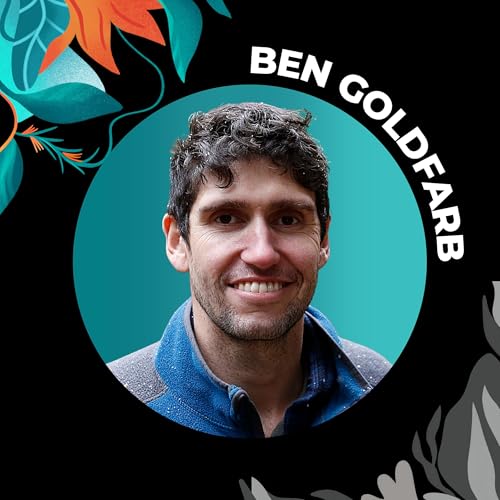
  • An "Abundance Agenda" for Nature | Ben Goldfarb
    Nov 25 2025

    We need an "abundance agenda" for nature. Ben Goldfarb, environmental journalist and author, challenges the techno-fix growth agenda that delivers an abundance of concrete and condos and a scarcity of wildness and wildlife. He urges us to replace extinction-prevention minimalism with a bolder commitment to restoring the abundance of keystone species, thriving ecosystems, and the freedom of wildlife to roam, migrate, and flourish. Highlights include:

    • Why the so-called "abundance agenda" and its proposed weakening of environmental laws creates an abundance of concrete and a scarcity of nature;
    • How the renewable energy abundance of solar and wind farms, and AI data centers, spells even greater destruction of wildlife habitat;
    • How 40 million miles of global roads devastate ecosystems through roadkill, noise, and pollution - and why electric vehicles aren't the solution;
    • Why the "development agenda", including the building of highways and induced demand for transportation, have been used as tools to subjugate the most marginalized human communities;
    • Why the first rule of environmentally sound road building is asking whether a new road is needed at all;
    • Why true abundance for wildlife depends on their ability to roam and migrate long distances, as shown by the Yellowstone-to-Yukon corridor;
    • How beavers generate extraordinary ecological benefits for both wildlife and humans;
    • Why restoring keystone species such as beavers, salmon, prairie dogs, and sea otters creates nature abundance by rebuilding biodiverse ecosystems;
    • Why fish and marine creatures are undervalued and how their beauty and ecological importance emerge when we pay closer attention.

    See episode website for show notes, links, and transcript:

    https://www.populationbalance.org/podcast/ben-goldfarb

    OVERSHOOT | Shrink Toward Abundance

    OVERSHOOT tackles today's interlocked social and ecological crises driven by humanity's excessive population and consumption. The podcast explores needed narrative, behavioral, and system shifts for recreating human life in balance with all life on Earth. With expert guests from wide-ranging disciplines, we examine the forces underlying overshoot: from patriarchal pronatalism that is fueling overpopulation, to growth-biased economic systems that lead to consumerism and social injustice, to the dominant worldview of human supremacy that subjugates animals and nature. Our vision of shrinking toward abundance inspires us to seek pathways of transformation that go beyond technological fixes toward a new humanity that honors our interconnectedness with all beings.

    Hosted by Nandita Bajaj and Alan Ware. Brought to you by Population Balance.

    Subscribe to our newsletter here: https://www.populationbalance.org/subscribe

    Support our work with a one-time or monthly donation: https://www.populationbalance.org/donate

    Learn more at https://www.populationbalance.org

    Copyright 2025 Population Balance

    Más Menos
    56 m
  • Leading the Legal Fight for Animals | Jeff Kerr
    Nov 11 2025

    Animal rights are the next frontier of civil rights. Jeff Kerr, PETA's longtime Chief Legal Officer, leads the organization's bold, precedent-setting legal strategy. From the "monkey selfie" case to freeing animals from experimentation and exploitative entertainment to exposing agribusiness humane-washing, Jeff fights to secure legal recognition of animals as beings with inviolable rights. Highlights include:

    • How Jeff was inspired to get involved in animal law and become a lifelong vegan after attending an accidental lecture on animal rights;
    • Why PETA's legal strategy rejects timidity and instead boldly confronts the legal system's speciesist hypocrisy head-on;
    • How PETA uses bold, precedent-setting cases, like orcas at SeaWorld and a monkey's selfie copyright, to challenge the boundaries of animal personhood;
    • How PETA has won cases against animal cruelty in factory farming and freed thousands of animals from exotic animal dealers;
    • How PETA exposes humane-washing and fights ag-gag laws that conceal the violence of industrial animal agriculture;
    • How PETA's advocacy helped end the use of elephants, big cats, and other animals in circuses and petting zoos;
    • How PETA invokes free speech law to defend its right to communicate with monkeys tortured in laboratories;
    • Why the foundation of animal rights lies in rejecting the notion that animal "otherness" justifies human domination.

    See episode website for show notes, links, and transcript:

    https://www.populationbalance.org/podcast/jeff-kerr

    OVERSHOOT | Shrink Toward Abundance

    OVERSHOOT tackles today's interlocked social and ecological crises driven by humanity's excessive population and consumption. The podcast explores needed narrative, behavioral, and system shifts for recreating human life in balance with all life on Earth. With expert guests from wide-ranging disciplines, we examine the forces underlying overshoot: from patriarchal pronatalism that is fueling overpopulation, to growth-biased economic systems that lead to consumerism and social injustice, to the dominant worldview of human supremacy that subjugates animals and nature. Our vision of shrinking toward abundance inspires us to seek pathways of transformation that go beyond technological fixes toward a new humanity that honors our interconnectedness with all beings.

    Hosted by Nandita Bajaj and Alan Ware. Brought to you by Population Balance.

    Subscribe to our newsletter here: https://www.populationbalance.org/subscribe

    Support our work with a one-time or monthly donation: https://www.populationbalance.org/donate

    Learn more at https://www.populationbalance.org

    Copyright 2025 Population Balance

    Más Menos
    55 m
  • The Rise of One-Child Families | Susan Newman
    Oct 28 2025

    The one-child family is becoming the fastest-growing family size in many countries. Social psychologist Susan Newman, author of Just One, shares the abundant research challenging long-held myths that only children are lonely, selfish, or spoiled, and why the growing popularity of one-child families reflects greater parental and child satisfaction and ecological awareness. Highlights include:

    • How Susan's experience parenting four stepchildren earlier in her life and one biological child later in life shaped her understanding of one-child families;
    • Why negative stereotypes of only children as spoiled or lonely stemmed from flawed early research and cultural bias;
    • What modern cross-cultural studies reveal about only children being as well-adjusted and socially capable as those with siblings;
    • Why mothers of only children often report higher happiness and lower stress than mothers of larger families;
    • Why parental influence and home environment matter more to child development than the number of siblings;
    • How the one-child family has become normalized worldwide amid rising costs, alternative life opportunities, and climate anxiety;
    • Why pronatalist government policies are failing to reverse declining birth rates;
    • What parents of only children can do to foster independence and realistic expectations for their child;
    • Why the choice to have one child is increasingly pursued as a proactive, deliberate, values-based decision rather than a perceived limitation.

    See episode website for show notes, links, and transcript:

    https://www.populationbalance.org/podcast/susan-newman

    OVERSHOOT | Shrink Toward Abundance

    OVERSHOOT tackles today's interlocked social and ecological crises driven by humanity's excessive population and consumption. The podcast explores needed narrative, behavioral, and system shifts for recreating human life in balance with all life on Earth. With expert guests from wide-ranging disciplines, we examine the forces underlying overshoot: from patriarchal pronatalism that is fueling overpopulation, to growth-biased economic systems that lead to consumerism and social injustice, to the dominant worldview of human supremacy that subjugates animals and nature. Our vision of shrinking toward abundance inspires us to seek pathways of transformation that go beyond technological fixes toward a new humanity that honors our interconnectedness with all beings.

    Hosted by Nandita Bajaj and Alan Ware. Brought to you by Population Balance.

    Subscribe to our newsletter here: https://www.populationbalance.org/subscribe

    Support our work with a one-time or monthly donation: https://www.populationbalance.org/donate

    Learn more at https://www.populationbalance.org

    Copyright 2025 Population Balance

    Más Menos
    1 h y 3 m
  • Capitalism's War Against Animals | Dinesh Wadiwel
    Oct 14 2025

    A global war against animals is driven by capitalist exploitation and profit. Dinesh Wadiwel, author of Animals and Capital and The War Against Animals, shows how capitalism treats animals as commodities, raw materials, and self-reproducing labor. He advocates for an anti-capitalist animal politics that builds alliances with social justice movements to advance both animal and human justice. Highlights include:

    • Why the concept of 'hierarchical anthropocentrism' is essential in revealing how human-centered thinking and systems of hierarchy together justify domination over both animals and marginalized human groups;
    • How 'hierarchical anthropocentrism' spread globally through colonialism with its racial and ethnic hierarchies and was then exponentially increased in its destructiveness by global capitalism;
    • How human relationships with animals - from industrial farming to pet ownership - reflect human domination and control of animals;
    • How we are waging a war against animals, even as we try to hide the reality of industrial animal killing through consumer distance and sanitized language;
    • Why animals' physical resistance to human violence is politically significant and doesn't rely on moral appeals to animal sentience;
    • Why the rise of utilitarianism within animal rights philosophical theory coincides with the rise of neoliberal capitalism;
    • How animal agriculture has grown so large - not because of human need - but to serve capitalist profits by stimulating demand for cheaply overproduced animal products;
    • How capitalism sustains animal exploitation by treating animals as laborers that reproduce themselves as profitable commodities;
    • Why an effective animal rights movement must have a structural critique of capitalism that allows it to build alliances with social justice groups, such as labor and indigenous rights, in order to resist the capitalist structures that oppress both animals and people;
    • Why the lack of a theory of the state weakens animal advocacy by leading activists to overestimate the role of liberal democracies and legal reform, even as both animals and many humans experience increasingly totalitarian relations to the state.

    See episode website for show notes, links, and transcript:

    https://www.populationbalance.org/podcast/dinesh-wadiwel

    OVERSHOOT | Shrink Toward Abundance

    OVERSHOOT tackles today's interlocked social and ecological crises driven by humanity's excessive population and consumption. The podcast explores needed narrative, behavioral, and system shifts for recreating human life in balance with all life on Earth. With expert guests from wide-ranging disciplines, we examine the forces underlying overshoot: from patriarchal pronatalism that is fueling overpopulation, to growth-biased economic systems that lead to consumerism and social injustice, to the dominant worldview of human supremacy that subjugates animals and nature. Our vision of shrinking toward abundance inspires us to seek pathways of transformation that go beyond technological fixes toward a new humanity that honors our interconnectedness with all beings.

    Hosted by Nandita Bajaj and Alan Ware. Brought to you by Population Balance.

    Subscribe to our newsletter here: https://www.populationbalance.org/subscribe

    Support our work with a one-time or monthly donation: https://www.populationbalance.org/donate

    Learn more at https://www.populationbalance.org

    Copyright 2025 Population Balance

    Más Menos
    57 m
  • Humachines, Big Tech, & Our Future | Michael D.B. Harvey
    Sep 30 2025

    A dystopian fusion of human and machine is being pushed on us by a big tech elite. Michael D.B. Harvey, author of The Age of Humachines: Big Tech and the Battle for Humanity's Future, warns of the 'humachinator' worldview that weds unrestrained technology and capitalism - and what we might do to reclaim a future rooted in democracy and ecological balance. Highlights include:

    • How the 'humachine' blurs the line between human and machine, technologizing everything and everyone;
    • How the history of scientism and empiricism has led humachinators to imagine the brain as a computer and the body as a machine and the belief that engineering can control humanity, biophysical laws, and even death itself;
    • How big tech oligarchs merge unfettered science with unfettered capitalism to produce 'ultrascience';
    • Why big tech oligarchs' faith in unrestrained technology and markets has merged into 'ontocapitalism' - a form of capitalism that commodifies nature and all human experience;
    • How humachinators use 'tricknology' to hype their technologies and get us, especially the young, addicted to their products;
    • What the five types of humachination are: cognitive, emotional, relational, the mechanized human, and a totalizing daily environment where our lives are surveilled, interpreted, and mediated by machines;
    • How the extreme individualism in Silicon Valley undermines democracy and collective decision-making;
    • How the 'G' word, growth, is behind all the humachinators' actions and dreams;
    • Why our relationship with technology is ultimately political, not inevitable, and that we need to resist big tech oligarchs who profit most from unrestricted technology;
    • Why we need to move from CIMENT values (competitiveness, individualism, materialism, elitism, nationalism, and technologism) to CANDID values (cooperative, altruistic, non-materialist, democratic, internationalist, and deferential to nature) - and how we might shift those values.

    See episode website for show notes, links, and transcript:

    https://www.populationbalance.org/podcast/michael-db-harvey

    OVERSHOOT | Shrink Toward Abundance

    OVERSHOOT tackles today's interlocked social and ecological crises driven by humanity's excessive population and consumption. The podcast explores needed narrative, behavioral, and system shifts for recreating human life in balance with all life on Earth. With expert guests from wide-ranging disciplines, we examine the forces underlying overshoot: from patriarchal pronatalism that is fueling overpopulation, to growth-biased economic systems that lead to consumerism and social injustice, to the dominant worldview of human supremacy that subjugates animals and nature. Our vision of shrinking toward abundance inspires us to seek pathways of transformation that go beyond technological fixes toward a new humanity that honors our interconnectedness with all beings.

    Hosted by Nandita Bajaj and Alan Ware. Brought to you by Population Balance.

    Subscribe to our newsletter here: https://www.populationbalance.org/subscribe

    Support our work with a one-time or monthly donation: https://www.populationbalance.org/donate

    Learn more at https://www.populationbalance.org

    Copyright 2025 Population Balance

    Más Menos
    1 h y 29 m