Episodes

  • Episode 753: The Case for Pacific Optimism, with Blake Herzinger
    Mar 30 2026
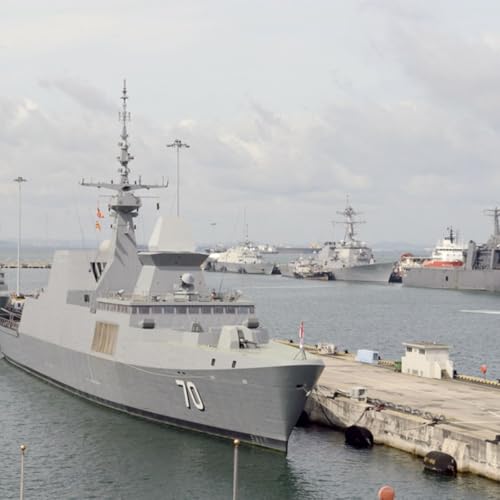
    Having trouble keeping up with the world around you? Head swirling with too much?You’re not alone. Good news…we’ll get you all caught up and set right.Returning to the Midrats Podcast is Blake Herzinger.Blake Herzinger is Microsoft’s Defense and National Security Policy Lead for Asia. Previously, he led policy strategy and advocacy at Citi across North and South Asia and Australia, advised senior leaders on geopolitical and regulatory trends at Indo-Pacific Advisors, and held roles at Twitter and Booz Allen Hamilton focused on defense policy, risk, and market strategy. He has been affiliated with think tanks including the American Enterprise Institute and the US Studies Centre in Sydney. From 2008 to 2017, Blake served as an active-duty officer in the U.S. Navy as an intelligence officer; he continues to serve in the U.S. Navy Reserve. He holds an M.A. in Strategic Studies from the S. Rajaratnam School of International Studies (Nanyang Technological University, Singapore) and a B.A. in Political Science from Brigham Young University. He speaks English and Bulgarian. In this episode:The significance of Japan increasing its defense expenditure to 2% of GDP and regional implicationsJapan’s soft power growth through development aid and maritime security contributionsThe increasing security cooperation between Japan, Australia, South Korea, and regional partnersHow regional maritime choke points affect security and trade resilienceThe digital revolution in shipbuilding and defense modernization effortsThe strategic importance of AUKUS and integrated supply chains for alliance strengthInsights into Singapore’s strategic posture and its partnerships in Southeast AsiaChallenges in defense procurement, cyber security, and digital infrastructure resilienceThe shifting dynamics of global energy supply and regional economic interestsTimestamps:00:00 - Welcome and introduction to the regional security context02:05 - Blake Herzinger’s role and current focus in Asia02:33 - Japan’s defense spending increase and regional security implications03:56 - Japan’s relationships with neighbors and regional development efforts04:50 - Japan’s soft power in Southeast Asia and maritime security contributions05:43 - Japan’s defense export initiatives and security cooperation07:43 - Personal experiences with Japan-U.S. naval exercises and alliance benefits08:13 - Japan’s assertiveness regarding Taiwan and regional security alignments08:46 - Building security networks among U.S. allies in the Indo-Pacific09:36 - The evolution of regional defense partnerships and trilateral arrangements10:01 - Historical context of Pacific conflicts and current opportunities for cooperation11:20 - The non-expansionist nature of current regional disputes and interests overlap12:15 - The growing economic and security ties around Southeast Asia13:26 - Japan’s defense uplift post-Shangri-La Dialogue and its regional impact14:01 - Ukraine’s influence on Japan and regional resilience initiatives15:04 - Cyber warfare, critical infrastructure, and future regional security challenges16:17 - Maritime choke points’ strategic importance and regional defense planning17:41 - U.S. and regional shipbuilding efforts, technological modernization18:48 - Evolving international relationships beyond traditional hubs20:01 - The growing defense collaborations across Asia and beyond21:35 - The importance of digital infrastructure and cyber security in defense22:53 - The challenge of modernizing shipbuilding through data and digital supply chains24:07 - Regional energy security, oil dependencies, and diversifying supplies26:21 - Australia’s energy policies and regional resilience strategies29:33 - The potential of nuclear energy and green energy initiatives in Asia31:18 - The strategic significance of AUKUS and regional perceptions36:54 - Modernizing defense logistics, munition production, and industrial cooperation38:21 - Overcoming bureaucratic hurdles in defense modernization and tech sharing40:30 - The ongoing efforts to evolve U.S. defense capabilities and partnership standards43:18 - Australian and Japanese shipbuilding cooperation and regional interoperability46:49 - Singapore’s strategic posture, partnerships, and regional stability efforts51:24 - Final thoughts: emerging issues and the importance of optimism in security54:12 - Blake’s recent publications, ongoing initiatives, and staying connectedResources & Links:Managing the Unbreakable Alliance: Agreements, Core Instruments, and Related Documents, by Blake HerzingerJapan International Cooperation Agency (JICA)As the US Navy just demonstrated, war at sea is global, John Andrews at ASPIMobilize: How to Reboot the American Industrial Base and Stop World War III, Shyam Sankar and Madeline Hart
    Show more Show less
    56 mins
  • Episode 752: March NATSEC Free-for-All
    Mar 23 2026
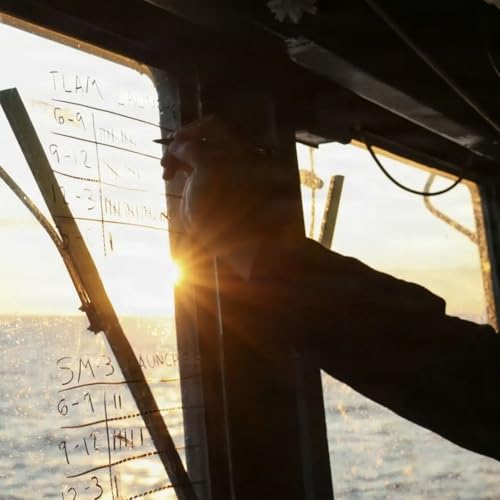
    After a series of great guests, the Midrats Podcast returns this week with the ever popular, “Free-for-All” format!It’s just Mark and me for the full hour as we discuss the latest developments from the Iranian conflict and elsewhere.

    Summary

    Sal and Mark discuss the meticulous planning behind military operations, the nuances of Iran’s strategic posture, and the broader implications for global security. Whether you’re a defense enthusiast or a security professional, this discussion sheds light on the complexity and professionalism inherent in modern military planning.

    In this episode:
    • The myth of spontaneous military actions and the importance of detailed operational planning
    • Decades of strategic intelligence and military preparation on Iran
    • The layered process of deliberate planning, from high-level directives to tactical execution
    • The significance of coalition operations, particularly with Israel, and target division strategies
    • How the U.S. and allies use phased operations to achieve specific objectives and measure success
    • The potential long-term impacts of current operations on Iran’s regime and regional stability
    • The role of misinformation and the importance of diversified information sources in understanding geopolitical events
    • Insights on missile defense systems, threats in the Strait of Hormuz, and implications for Europe and Asia
    • Reflections on Iranian capabilities, internal resistance, and future regional conflicts
    Timestamps:

    00:00 - Introduction and episode overview
    00:42 - The importance of deliberate military planning
    02:24 - Iran’s decades-long strategic preparation
    03:46 - Hierarchical planning from national directives to tactical execution
    05:05 - Goals of the recent operations and response to higher command
    06:57 - The reality of complex war plans, including branch and serial strategies
    08:15 - Collaboration with Israel and target sharing
    09:29 - Long-term planning and crisis adaptation
    10:55 - Asset management and tactical operational adjustments
    12:30 - The process of assessing mission success and defining end states
    15:39 - Comparative military experience of the U.S. and Israel
    17:02 - Duration and exit strategies for military operations
    18:17 - How success is measured and operational end points
    19:38 - Risks of mission creep and regime stability post-operation
    21:11 - Insights from military leadership on regime resilience
    22:58 - Impacts of leadership losses and succession in Iran
    24:44 - Potential for regime radicalization and future conflicts
    27:40 - Clarification on key geographic targets in the Strait of Hormuz
    30:01 - Ballistic missile threats to Europe and the U.S.
    33:07 - Iranian missile development and regional motivations
    36:15 - Defense systems in Europe and political considerations
    43:03 - China’s position regarding tanker escort and regional interests
    50:38 - Focus on geographic hotspots and missile threats near Iran
    52:29 - Israeli agility and sensor capabilities in targeting
    57:41 - Internal resistance within Iran and revolution prospects
    59:34 - Strategic patience and operational objectives
    60:10 - Teaser for next week’s guest: Blake Herzinger

    Show Links:
    • Jim Mattis and Ryan Holiday | Full Episode 3.20.26 | Firing Line with Margaret Hoover | PBS
    • The Rise of the Punitive Expedition & the Repudiation of the Era of Errors, 02 March 2026
    • Iran Strategy and Planning Resources
    Show more Show less
    1 hr and 2 mins
  • Episode 751: Dmitry Gorenberg on Russia in year five of the war
    Mar 16 2026
    Here we find ourselves approaching the fifth spring of the Russo-Ukrainian War of 2022.As the rest of the world’s geopolitical landscape changes dramatically, Russia’s “friend group” shrinks, and Ukraine’s friends grow weary and distracted, where is the war moving and where could we expect Russia to adjust for another year of conflict?Returning to Midrats again to discuss this and related issues is Dr. Dmitry Gorenburg, a Senior Research Scientist in the Strategy, Policy, Plans, and Programs division of CNA, where he has worked since 2000.Dr. Gorenburg is an associate at the Harvard University Davis Center for Russian and Eurasian Studies and previously served as Executive Director of the American Association of the Advancement of Slavic Studies (AAASS). His research interests include security issues in the former Soviet Union, Russian military reform, Russian foreign policy, and ethnic politics and identity. Dr. Gorenburg is author of Nationalism for the Masses: Minority Ethnic Mobilization in the Russian Federation (Cambridge University Press, 2003), and has been published in journals such as World Politics and Post-Soviet Affairs. He currently serves as editor of Problems of Post-Communism and was also editor of Russian Politics and Law from 2009 to 2016. Dr. Gorenburg received a B.A. in international relations from Princeton University and a Ph.D. in political science from Harvard University.SummaryIn this episode, we explore the ongoing Russia-Ukraine conflict, marking its fifth spring, and analyze Russia’s current military strategy, technological dependencies, economic adjustments, and geopolitical efforts. Our expert guest, Dr. Dmitry Gorenberg, a senior research scientist at CNA, provides insights into Russia’s military tactics, technological challenges, and international alliances, painting a comprehensive picture of a pivotal moment in the conflict.Key Topics:The significance of the fifth spring of the Russia-Ukraine war and its implicationsThe role and impact of Starlink and Russian anti-satellite capabilitiesRussian military tactics: steady grinding, troop mobilization, and drone warfareThe Russian psyche regarding prolonged conflict and public sentimentThe influence of repression and government control on information disseminationEconomic resilience: sanctions, oil prices, and support from BRICS nationsRussia’s strategic partnerships: Venezuela, Iran, China, and othersThe role of sabotaging NATO and Western countries to weaken collective defenseInformation warfare: Russian propaganda, disinformation, and influence operationsTechnological dependencies: reliance on US-based satellite systems and Chinese componentsRussian military leadership: promotions, strategic updates, and future outlooksThe geopolitics of energy, with focus on shadow fleets and the Straits of HormuzTimestamps:00:00 - Introduction and overview of Russia’s fifth spring in the Ukraine conflict02:09 - The impact of cutting off Starlink and communication disruptions on the front lines04:20 - Russian troop mobilization strategies and tactics05:39 - External foreign fighters: North Koreans, North Africans, and recruitment trends08:33 - Russian public perception and cultural narrative about the war’s longevity09:29 - The influence of repression, propaganda, and societal attitudes in Russia12:46 - Government control of communications, internet censorship, and surveillance16:15 - Russia’s dependence on US satellite systems and Chinese technology17:36 - Russia’s technological gap: Satellites, GPS, and domestically developed systems19:10 - Economic impacts: sanctions, oil prices, and Russia’s financial resilience 21:25 - Russia’s efforts with BRICS and global network of allies to bypass sanctions23:24 - The role of Venezuela, Iran, and other countries in Russia’s geopolitical web27:06 - Russia’s sabotage operations against NATO and Western nations30:13 - Political influence campaigns, disinformation, and influence operations32:09 - Reflection on Cold War-era propaganda and current information strategies33:38 - The use of media, social platforms, and online influence in shaping narratives37:40 - Historical perspective on propaganda, public manipulation, and media control39:51 - Modern military technology, including missile attacks and Ukraine’s defense42:11 - The evolving missile landscape, targeting energy infrastructure and battlefield logistics44:46 - Russia’s advanced satellite capabilities: intercepting and maneuvering satellites46:47 - External support for Russia: North Korean, Iranian weapons, and China’s role48:00 - Chinese technology and components aiding Russia’s military industry50:17 - Russia’s long-term concerns about China’s rising dominance52:24 - Russia’s diplomatic and military support networks in Latin America and beyond54:00 - Shadow tanker ships, oil sanctions, and economic strategies related to energy55:47 - The geopolitical implications of oil sales, shadow fleets, ...
    Show more Show less
    59 mins
  • Episode 749: Operation Epic Fury Free for All
    Mar 2 2026
    Hard to think of a better time to have a Midrats Podcast Free-for-All.2026 continues to produce more content than we know what to do with, but we’ll give it our best.

    Show Links
    • CENTCOM’s Epic Fury Day-1 Summary
    • LUCAS attack drone
    • Intifada Podcast: Hamas in the U.S.
    • UK gives a nod for base use
    • Sal Mercogliano on the Strait of Hormuz
    • Israeli bomb shelter dating app
    Summary

    Join Sal and Mark as they analyze the recent military operations, geopolitical implications, and strategic considerations surrounding Operation Epic Fury and the broader Middle East tensions. This episode offers in-depth insights into military assets, regional dynamics, and the future of Iran and its neighbors.

    Chapters

    00:00: Introduction
    02:04: Main Focus: Operation Epic Fury and Iran
    03:07: Details of US Military Assets Used in the Strike
    06:28: Targeting Command and Control Centers in Iran
    08:12: Iran’s Military Capabilities and Regional Impact
    09:38: Iranian Public Sentiment and Future Opportunities
    11:25: Support for Iranian People and Regime Dynamics
    13:46: Iranian Revolutionary Guard and Sleeper Cells
    16:52: Impact of Expatriates and International Support
    18:14: Challenges of Leadership and Control in Iran
    20:09: Strategic Goals and Limitations of the Operation
    22:02: Analysis of Military and Political Leadership Decisions
    25:24: Logistics, Risks, and Future Outlook
    28:43: Potential for Further Actions and Regional Stability
    31:17: European and Global Reactions to the Strike
    34:38: International Responses and NATO’s Role
    37:11: Iran’s Response and Proxy Activities
    41:54: Intelligence, Misinformation, and Media Challenges
    45:18: Implications for US and Allies’ Security
    49:25: Operational Successes and Future Risks
    54:31: Technological Innovations and Regional Impact
    55:57: Humor and Human Element in Military Operations
    01:00: Conclusion
    Show more Show less
    1 hr
  • Episode 748: The 21st Century Battleship, with Robert Farley
    Feb 23 2026
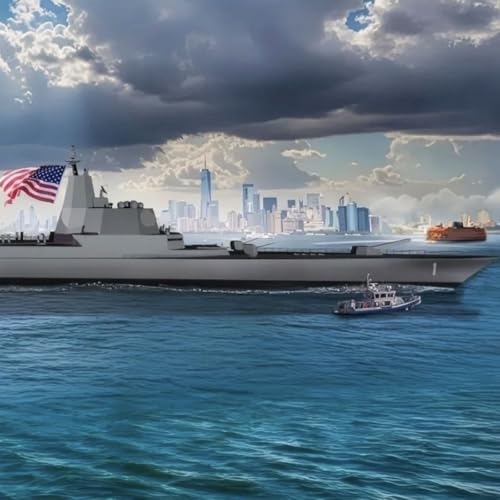
    So, is this the time to make battleships great again?I would be hard-pressed to think of a better guest to help us explore that question than returning guest, Rob Farley. A starting point for our conversation will be his article from December, The Trump-Class Battleship Summed Up In 1 Word.

    Show Links
    • The Battleship Book, by Robert Farley’s
    • Patterson School of Diplomacy and International Commerce
    • Lawyers, Guns, and Money
    • Dr. Robert Farley’s X Profile
    • Dr. Robert Farley’s Blue Sky Profile
    • My thoughts on SLCM-N
    Summary

    In this episode, Dr. Robert Farley discusses the concept of battleships, their historical significance, and the strategic considerations for modern naval warfare. The conversation covers technological challenges, political implications, and future force structure planning.

    Chapters

    00:00: Introduction to the Battleship Debate
    02:31: Historical Context and Modern Relevance of Battleships
    07:44: Survivability and Modern Warfare Challenges
    13:11: The Role of Nuclear Capabilities in Battleships
    20:11: Political and Strategic Implications of Battleship Armament
    23:15: Technological Innovations and Future of Naval Warfare
    32:36: Design Philosophy and Size of Modern Warships
    39:32: Historical Lessons and Future Capabilities
    46:03: Political Implications of Naval Procurement
    52:30 Shipbuilding Challenges and Future Directions

    Dr. Robert Farley has taught security and diplomacy courses at the Patterson School since 2005. He received his BS from the University of Oregon in 1997, and his Ph.D. from the University of Washington in 2004. In addition to the book of the moment, The Battleship Book (Wildside, 2016), Dr. Farley is the author of Grounded: The Case for Abolishing the United States Air Force (University Press of Kentucky, 2014), and Patents for Power: Intellectual Property Law and the Diffusion of Military Technology (University of Chicago, 2020). He has contributed extensively to a number of journals and magazines, including the National Interest, the Diplomat: APAC, World Politics Review, and the American Prospect. Dr. Farley is also a founder and senior editor of Lawyers, Guns and Money.
    Show more Show less
    56 mins
  • Episode 747: Mid-February Free for All
    Feb 16 2026
    Need a moment to recover from Valentine’s Day? Of course you do!

    Showlinks
    • Truxtun-Supply Collision
    • Secretary of State Marco Rubio at the Munich Security Conference
    • Maritime Action Plan
    Summary

    In this episode of Midrats, Sal and Mark discuss various topics related to national security, starting off with the Truxton-Supply collision. They also delve into Secretary Rubio’s speech regarding NATO relations, the decline of the international order, and the challenges posed by China’s global influence. Additionally, they explore the Maritime Action Plan and its significance for the future of shipbuilding and economic policy in the U.S.

    Chapters

    00:00: Introduction
    02:10: The Truxtun-Supply Collision
    11:55: Operational Tempo and Navy Readiness
    17:24: Secretary Rubio’s Speech and NATO Relations
    27:18: The Decline of the International Order
    37:03: China’s Global Influence and Fishing Practices
    45:51: Maritime Action Plan and Economic Policy
    57:59: Strategic Capabilities and Future of Shipbuilding
    Show more Show less
    1 hr and 1 min
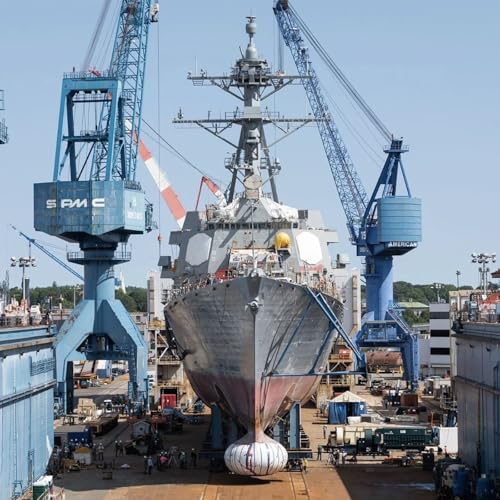
  • Episode 746: Budgets, Ships, and the CBO, with Eric Labs - on Midrats
    Feb 1 2026
    Show Links
    • The Congress, the Golden Fleet, and the Shipbuilding Industrial Base in 2026
    Summary

    In this episode of Midrats, Sal and Mark engage with Eric Labs, a senior analyst at the Congressional Budget Office (CBO), to discuss the complexities of shipbuilding costs, the role of the CBO in providing independent estimates, and the challenges faced by the U.S. Navy in maintaining and expanding its fleet. Eric shares insights on the differences between CBO and Navy cost estimates, the impact of maintenance on overall ship costs, and the importance of a skilled labor force in shipbuilding. The conversation also touches on the historical context of shipbuilding budgets, congressional appropriations, and the future of naval forces in the face of evolving defense needs.

    Dr. Eric Labs is Senior Analyst for Naval Forces and Weapons at the Congressional Budget Office in Washington, D.C. He specializes in issues related to the procurement, budgeting, and sizing of the forces for the Department of the Navy. He received his doctorate in political science from the Massachusetts Institute of Technology and graduated from Tufts University, summa cum laude, in 1988. He has worked for the Institute for Foreign Policy Analysis in Cambridge, Massachusetts and, from 1994 to 1995, as a Visiting Scholar at the Center for International Security Studies at the University of Maryland. Dr. Labs has been with the Congressional Budget Office since 1995.

    Chapters

    00:00: Introduction to the CBO and Eric Labs
    03:01: Understanding the Role of the CBO
    06:01: Cost Estimation Approaches in Shipbuilding
    08:54: Historical Context of CBO Estimates vs Navy Estimates
    12:04: Challenges in Shipbuilding Cost Estimates
    15:09: The Impact of Maintenance on Ship Costs
    18:00: Congressional Budgeting and Shipbuilding Appropriations
    20:48: Labor Force Challenges in Shipbuilding
    23:58: Future of the U.S. Navy Fleet and Shipbuilding
    27:05: Conclusion and Future Considerations
    Show more Show less
    58 mins