Episodios

  • My Original Plan Was...
    Apr 5 2026

    There’s a line I keep hearing from people who run small businesses in Baton Rouge. It goes something like: I didn’t plan this. I was doing something else, I saw a gap, and I walked through it.

    Norisha Kirts Glover has a degree in mass communication and an MPA. She spent years in nonprofit fundraising in Washington, D.C. and California. In 2015 she walked through a door marked “commercial construction” — an industry where women and people of color were barely present — and decided that was exactly where she needed to be.

    Norisha is originally from the Alexandria area. She came to LSU for college and stayed. In 2015, an opportunity came along to enter commercial construction. She researched it, noticed that women and people of color were dramatically underrepresented, and decided to launch NRK Construction anyway — or maybe because of that. The firm picked up early traction after the 2016 floods, working through extensive residential renovation before moving deeper into commercial work.

    NRK is intentionally small — three to four employees, about $3 million in annual revenue, with two major projects at a time. Norisha says that’s not a limitation; it’s a choice. Her superintendent is on every job site and every client meeting comes with an agenda. Norisha’s aiming next at healthcare, education and federal contracting.

    Ralph Whalen grew up in New Orleans, studied English at Dartmouth, and has tried to leave Louisiana several times. Chicago, New Hampshire. He keeps coming back.

    Ralph started his career implementing Epic — the electronic health records platform that runs inside most major hospitals — and worked his way up to Senior Vice President at a healthcare IT firm called Divurgent. In September 2020, he launched Benzait, a consulting firm that helps hospitals and health systems figure out how to adopt artificial intelligence responsibly.

    Benzait works with medium to large health systems, building the governance frameworks and technical infrastructure that AI actually requires before it goes anywhere near a patient. Ralph says the biggest problem in healthcare AI right now isn’t a lack of technology — it’s organizations rushing to adopt it before they’ve figured out what problem they’re trying to solve. His job, a lot of the time, is to slow people down just enough to get it right.

    Ralph and Norisha both entered rooms where the conventional wisdom said they didn’t quite belong — a woman in commercial construction, an English major in healthcare tech — and found that being the unexpected person in the room turned out to be an advantage.

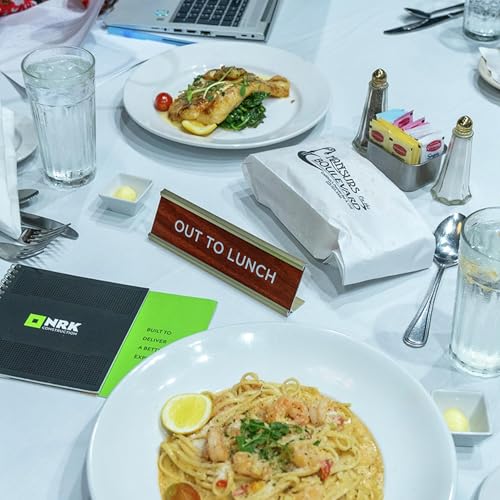
    Out to Lunch is recorded live over lunch at Mansurs on the Boulevard. You can find photos from this show by Ian Ledo and Miranda Albarez at itsbatonrouge.com.

    See omnystudio.com/listener for privacy information.

    Más Menos
    29 m
  • Tech Never Sleeps
    Mar 22 2026

    Think about the last time you showed your ID. Maybe at the airport, maybe at a bar, maybe somewhere you had to prove you were who you said you were. You pulled out a card. A piece of plastic. Maybe it was a little beat up. Maybe the photo was from ten years ago.

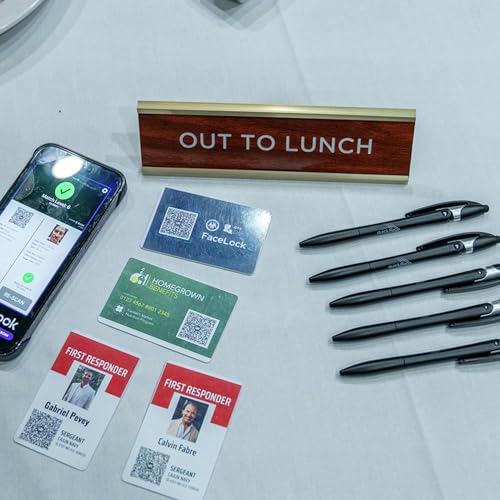
    There’s a decent chance that if you live in Louisiana, you’ve also used a phone to do that. That digital driver’s license on your phone — that was built right here, in Baton Rouge, by a company called Envoc. Calvin Fabre built it.

    Calvin is a long-time friend of Out to Lunch: he's made multiple appearances on this show over the years as he's developed his company, and some of Louisiana's most advanced tech. He's been writing code since he was 12 years old — 1978, give or take — when he got an Atari 800 and discovered that he could make a computer do exactly what he told it to do. He has essentially been doing that ever since.

    Calvin studied computer science at Southeastern Louisiana University and built Envoc into a software firm that now works on some of the most consequential identity technology in the country. You may know Envoc best as the company behind LA Wallet — Louisiana’s digital driver’s license. Calvin divested the IP on that about a year ago, but the work continues: he’s now sitting at international standards meetings with Apple, Samsung, Google, and representatives from Hong Kong, New Zealand and Canada, working out what digital identity should look like everywhere.

    He’s also thinking carefully about who gets left behind when identity goes digital — seniors, low-income users, people who don’t trust the technology or can’t easily access it. For Calvin, that’s not an afterthought. It’s the whole point.

    Samantha Morgan started her career as a journalist — arts writing, then Hurricane Katrina turned it into hard news overnight, then broadcast, then the BP oil spill, then digital. Eventually she stopped working for other people’s newsrooms and started her own production company - Quick Flip Media. She says she named it after a phrase she repeated every day for twenty years in television: flip it quick.

    Samantha is a Baton Rouge native — Old Goodwood, specifically — who has tried to leave more than once. She jokes that the natural disasters keep pulling her back.

    Calvin and Samantha have both ended up running their own business after years of building something for someone else. And in both cases, the reason seems to be the same: the problem was too interesting to leave to other people.

    Calvin has been at this long enough that he was building software before most of the people who use it were born. Samantha has covered enough Louisiana history that she has a personal archive most newsrooms would envy. Not surprisingly, neither one of them are done. Because, after all, tech never sleeps.

    Out to Lunch is recorded live over lunch at Mansurs on the Boulevard. You can find photos from this show by Ian Ledo and Miranda Albarez at itsbatonrouge.com.

    See omnystudio.com/listener for privacy information.

    Más Menos
    30 m
  • Apps Born In Baton Rouge
    Mar 14 2026

    I’m Amy Irvin, host of Out to Lunch in Baton Rouge. I was a college student once. A long time ago. And like a lot of college students, I picked some of my classes based on the professor. Word of mouth, mostly. What my friends said. Whether the 8 a.m. course section was worth getting out of bed for or not.

    These days, there’s a website that tries to do that systematically. You’ve probably heard of it. Rate My Professor. And if you’ve ever spent time on it, you might have noticed it’s also a place where students settle scores, write reviews about a professor’s appearance, and occasionally make things up entirely.

    My lunch guest, Nash Mahmoud, noticed the same thing. He happens to be a professor. He also happens to be a software engineer. So he built something better.

    Nash came to the United States from Jordan in 2008 to pursue a graduate degree at Mississippi State. He got his master’s, then his PhD, then a tenure-track faculty offer at LSU — and somewhere along the way between learning his way around campus, walking to football games, and dining at local spots around town, Baton Rouge became home.

    He’s been teaching software engineering at LSU for the better part of a decade. A few years ago, while advising nearly 40 students at once, he started paying close attention to how they were using Rate My Professor to make decisions about their education. What he saw bothered him: anonymous reviews, no way to verify whether the reviewer was even a real student, bias against female faculty, and a single bad comment that could follow a professor for years.

    Nash spent a couple of years researching the problem. Then he started coding. On March 14th, 2024 — Pi Day — Nash launched Professor Index, a verified, AI-powered professor review platform designed to reduce misinformation and bias. It’s now live at 20 universities and has more than 3,500 downloads. Professor Index has become so popular that students are sending in requests to add more campuses faster than he can keep up.

    My other lunch guest, Courtney Sparkman, taught himself to code because a problem at his job was driving him crazy and he couldn’t find anyone else to fix it. He was running security companies, then. Now he runs a software company that serves 700 of them.

    Courtney is from Chicago and moved to Baton Rouge when his wife — his fiancée at the time — got a job here after pharmacy school. He says the thing that surprised him most about Baton Rouge was how welcoming the city is to newcomers.

    Courtney is a self-described serial entrepreneur. Before coming to Baton Rouge, he helped his father build a security guard company from the ground up — zero employees to about 300, and several million dollars in revenue — before they sold it. Then he went to work for a larger security firm and immediately recognized every problem he thought he’d left behind: guards showing up late, incident reports written hours after the fact, supervisors with no real-time visibility into what was happening in the field.

    Courtney taught himself to code and built the solution himself. It’s called OfficerApps.

    OfficerApps launched in 2013. Today, OfficerApps serves about 700 security companies, from five-person operations to firms with thousands of officers in the field.

    Nash and Courtney have both figured out — the hard way, mostly — that building the thing is only the beginning. Getting people to use it, trust it, and tell someone else about it: that’s the actual work.

    Nash launched his Professor Index app on Pi Day and is now traveling to college campuses to make the case in person. And in Courtney's case, besides being the software developer he also answers OfficerApps support calls himself so customers know somebody’s there.

    Neither of these fathers of apps born in Baton Rouge planned it quite the way it happened. That turns out to be a pretty common feature of good ideas.

    Out to Lunch is recorded live over lunch at Mansurs on the Boulevard. You can find photos from this show by Ian Ledo and Miranda Albarez at itsbatonrouge.com.

    See omnystudio.com/listener for privacy information.
    Más Menos
    28 m
  • The Art of Camping
    Mar 8 2026

    Think about the last time you visited a city you’d never been to before. Not for business — just to go. What made you decide to stay somewhere? What made you feel like the place wanted you there?

    Most of the time, we don’t give a lot of credit to the people who set that stage. The campground owner who keeps a shuttle running at midnight so you can get back safely from the French Quarter. The art curator who figured out that if he put a show up in a doctor’s office, more people would see it than in any gallery. These are the people who decide, quietly and without much fanfare, what kind of place a city is going to be.

    Camping

    Mike Dunn did not grow up dreaming of owning a campground. He grew up on a dairy farm in Maryland, spent his career running cranes and heavy equipment, and took a wrong turn somewhere around 2011 that led him to a night attendant job at the New Orleans KOA — which, as wrong turns go, turned out pretty well.

    Within six months, KOA had promoted him to run the park. A few years after that, he and his wife Deborah bought it. They are now in their third year as owners of the New Orleans KOA Holiday in River Ridge — 100 RV sites, three deluxe lodges, 12 full-time employees, shuttle service to the French Quarter and the Superdome, a souvenir shop, a dog park, and a recreation hall.

    For most of its history the park’s guests were 60% international. Canadians, Europeans, Australians. In the last year or so that has flipped to 90% domestic. Mike and Deborah are figuring out what that means for a business built around introducing the world to New Orleans.

    If you're wondering what a person with a business in New Orleans is doing on a show about Baton Rouge business - well, people who stay in an RV park are generally not people who live in the same city as the RV park. So I thought it might be useful for those of us here in Baton Rouge who visit New Orleans to know about it.

    Art

    Keidrick Alford grew up in Zachary, Louisiana. His parents let him draw on the walls. That tells you most of what you need to know.

    He went to college, spent time in real estate, then nearly a decade in hospitality — long hours, demanding work, not a lot left over at the end of the day. The whole time, he was watching something on the side: Baton Rouge was turning out artists from LSU who had no idea what to do with themselves once they left. The business side of being an artist — contracts, galleries, marketing, pricing — nobody was helping them with any of that.

    In 2018, Keidrick started Ellemnop to fill that gap. Since then, he’s curated nearly 90 exhibitions — in galleries, in medical offices, in whatever space made sense. Today he’s a managing partner in The Pearl, a 5,000-square-foot warehouse in Old South Baton Rouge that will house gallery space, artist residencies, and apprenticeship programs in bodyshop work, barbering, and welding. Yes, all in the same building.

    There’s a word that comes up a lot when you talk to Mike and Keidrick, and that word is “guests.” Mike uses it for the people who pull into his campground, and Keidrick uses it for the people who walk into his exhibitions. They both mean the same thing by it: these are people who trusted you with their time, and you don’t waste it.

    Mike went to New Orleans planning to stay a little while. Keidrick has been in Baton Rouge his whole life, looking for ways to make it worth staying. Different journeys, same destination.

    Out to Lunch is recorded live over lunch at Mansurs on the Boulevard. You can find photos from this show by Ian Ledo and Miranda Albarez at itsbatonrouge.com.

    See omnystudio.com/listener for privacy information.

    Más Menos
    30 m
  • Fake Video & The Real Thing
    Mar 1 2026

    Today’s edition of Out to Lunch sits at the intersection of two big ideas: immersion and reach. One guest is building virtual worlds for the world’s largest energy companies and the U.S. Air Force — right here in Baton Rouge. The other is shaping how millions of people around the globe experience the NFL — from a home office in Baton Rouge.

    Both guests grew up in Louisiana, both left, both came back or stayed — and both are doing work that most people wouldn’t expect to find anchored in the Capital Region. The through-line is this: the future doesn’t always happen in Silicon Valley or New York. Sometimes it’s being built from a studio off Perkins Road and a home office in Baton Rouge. Today we’re talking about what it looks like when Louisiana shows up on the cutting edge.

    Cody Louviere grew up in Lake Charles dreaming about video games and ended up building simulations for the U.S. Air Force and ExxonMobil. He’s the founder of King Crow Studios, a Baton Rouge company that uses virtual reality, augmented reality and AI to train people on equipment worth tens of millions of dollars — without anyone ever touching the real thing.

    Cody came to Baton Rouge when his ex-wife enrolled at LSU, and the city kept him. More than 50 simulations later, King Crow is quietly doing some of the most sophisticated technical work happening anywhere in the South.

    Danielle Brown is a Baton Rouge High graduate who interned at Google as a college student and never really left — except that she did come back, during the pandemic, and helped rewrite Google’s remote work policies so she could stay.

    Today Danielle leads global marketing for NFL Sunday Ticket on YouTube TV, overseeing a 15-person team, co-marketing partnerships with the NFL itself, and subscriber strategy for one of the most-watched sports products in the world. Eighteen million people watched a recent international NFL game on the platform she helps run. She is doing that work from Baton Rouge, Louisiana — and she seems to think that’s exactly right.

    Out to Lunch is recorded live over lunch at Mansurs on the Boulevard. You can find photos from this show by Ian Ledo and Miranda Albarez at itsbatonrouge.com.

    See omnystudio.com/listener for privacy information.

    Más Menos
    30 m
  • Beauty Guru
    Feb 15 2026

    A little wartime history: In 1940, at the start of World War II, approximately 12 million women were working outside the household in the United States, comprising about 25% of the female population. That number rose significantly during the war to over 18 million by 1945, as the U.S. government encouraged women in posters and commercial advertising to volunteer for wartime service in factories. Inspired by a song by Redd Evans and John Jacob Loeb, Rosie the Riveter, the brawny brunette with a red, polka dotted headscarf, became an icon of the war and women’s movement.

    Today, women make up nearly half of the total U.S. labor force. And if, like me, you grew up with a mother who owned a small business, then you won’t be surprised at all that women make up nearly 45% of all businesses in the U.S., employing over 10.5 million workers and generating over $3.3 trillion in revenue. As an ad from the Sixties used to say, “You’ve come a long way, baby.”

    Sidney Coffee became a small business owner after decades of public service. Originally from Texas, Sidney came to Baton Rouge to attend college at LSU. She began her career in journalism at The Advocate, working on special sections, then moved to WBRZ Channel 2 as a news producer, creating morning and evening broadcasts.

    Sidney then pivoted to positions in public communications—first as Gov. Buddy Roemer’s press secretary, which then led to a position with the Lower Mississippi Delta Development Commission, chaired at the time by then-Arkansas Gov. Bill Clinton. Recognizing her work in coastal policy, Govs. Mike Foster and Kathleen Blanco each tapped Sidney for positions during their administrations.

    For the last decade, Sidney has been the owner and operator of The Guru, an art gallery, spiritual retreat, and event venue, set inside a restored 1920s mechanic’s garage on Government Street.

    When we think about the factors that drive consumer purchases, convenience often tops the list, with 77% to 83% of consumers citing it as a key factor that influences, or sometimes dictates, their buying decisions. From fast food to five-minute oil changes, our modern lifestyles demand ease and immediacy.

    Anna Beth Guillory, has developed an app for busy professional women to book appointments directly with beauty professionals. It's called BeautyFindr.

    After nearly a decade of co-owning a blowout bar in Lake Charles, Anna Beth identified a persistent problem: connecting clients to available beauty professionals in real time. Working with a developer, Anna Beth spent 11 months building the BeautyFindr app, which launched in 2024.

    Today, BeautyFindr operates in 19 states and is quickly evolving into a business-development hub for beauty professionals, and, as well as scheduling, offers peer networking, social sharing and business-growth tools.

    Out to Lunch is recorded live over lunch at Mansurs on the Boulevard. You can find photos from this show by Ian Ledo and Miranda Albarez at itsbatonrouge.com.

    See omnystudio.com/listener for privacy information.

    Más Menos
    27 m
  • O'Neal Audio Meets Albaledo Media
    Feb 8 2026

    If you listen to this show you’ve heard at the end of every episode the credits “today’s show was engineered by J T O’Neal” and “photos were taken by Ian Ledo and Miranda Albarez.” But do you know what that actually means? What is an audio engineer? What do photographers actually do that’s different from what you do with your phone?

    On today's Out to Lunch we turn the mics on our production crew.

    J T O’Neal got into audio engineering by recording his own music as a teenager. He started by making beats and recording instruments, which naturally led him to learn how to record live drums and bands.

    J T got his big break when, while working as a barback at Spanish Moon, he took over for the house sound engineer who was going on tour. He was such a success that J T became the full-time sound engineer there in 2013.

    J T is now a full-time freelance audio engineer, working at such diverse locations as Chelsea’s Live, Varsity Theatre, Bethany Church, and touring with Small Pools and Marc Broussard.

    Miranda Albarez and Ian Ledo met while studying at LSU and working in marketing at LSU UREC. Both had creative backgrounds—Miranda in digital art, communications, and music, and Ian in photography, videography, and screen arts.

    It was while they were dating that they realized how well they work together. So, they decided to launch Albaledo Media while still full-time students. Now, after just a few years in business, Albaledo Media has completed more than 40 projects, ranging from small-business branding and websites to large-scale creative work for Louisiana Public Broadcasting, Tulane University and LSU Opera.

    JT, Ian and Miranda are vital contributors to the production Out to Lunch. In the future when you hear their credits at the end of the show you'll have an appreciation of what their professional lives entail.

    Out to Lunch is recorded live over lunch at Mansurs on the Boulevard. You can find photos from this show by Ian Ledo and Miranda Albarez at itsbatonrouge.com.

    See omnystudio.com/listener for privacy information.

    Más Menos
    29 m
  • Disco Dinosaur
    Jan 24 2026

    The disco era of the Seventies is characterized by a danceable "four-on-the-floor" beat, lush orchestration, synthesizers, and glamorous fashion, ultimately exploding into mainstream pop culture with hits, iconic clubs like Studio 54, and films like Saturday Night Fever, before fading by 1980.

    Filmed in 1977, Saturday Night Fever was a critical and commercial success, helping to popularize disco around the world. The soundtrack, featuring songs from the Bee Gees, has sold over 40 million copies worldwide, making it one of the best-selling albums and the second-biggest-selling soundtrack of all time.

    I don’t know about you but I still like dancing to Stayin’ Alive, Jive Talkin, and More than a Woman. By all accounts, so does my lunch guest Alyssa Lundy, Founder & CEO of 5 to 9 Dance Club, a sober, early-evening dance club for women only.

    Turning coffee shops into Miami-themed dance floors, 5 to 9 Dance Club transforms each venue into a full, nightclub experience with lighting, screens, DJ production, and beach décor. Every event also includes access to mental health professionals, business resources, and women-focused non-profits, as well as a welcome committee to ensure no one feels excluded.

    The most famous dinosaur, Barney, an anthropomorphic purple Tyrannosaurus rex, didn’t come onto the scene until 1992 but was as ubiquitous on television and in toy stores for three decades as the disco ball was on dance floors in the Seventies and Eighties. Beloved by school children, Barney, of Barney & Friends, conveyed educational messages through songs and small dance routines with a friendly, huggable and optimistic attitude.

    Dinosaurs dominated Earth for over 165 million years, and still dominate the imagination of scientists and children alike today. Martin Wilmott, owner of The Dinosaur Experience, has seen for himself both the wonder and delight children have for dinosaurs.

    A Londoner, Martin first came to Louisiana in 2009 for a Saints game. In 2013, he moved to Baton Rouge after marrying his wife, a Louisiana native.

    Martin began noticing children’s love for dinosaur themes while hosting water-slide and bounce house parties. Armed with his first dinosaur costume purchased from a specialty store in England, Martin began performing. The business exploded during COVID when he and his wife created a drive-around dinosaur show to cheer up children, growing his Facebook page from 400 followers to 10,000 in one month.

    Today, Martin is one of only a handful of dinosaur entertainers in the U.S., and the only one in Louisiana. He performs at birthday parties, school events, corporate events, and museums. He’s especially popular at libraries across multiple states.

    What’s striking about both of Alyssa and Martin is neither of them set out to “disrupt an industry.” They weren’t trying to invent trends. They were trying to solve human problems—loneliness, disconnection, stress, isolation—with experiences that feel safe, playful, and immersive.

    Alyssa has built a space where women don’t have to be impressive—they just have to show up. Martin has built a world where adults remember what it feels like to be amazed. And what I think they both remind us is that joy isn’t decorative. It’s functional. It heals. It rebuilds. It gives people permission to breathe.

    So whether it’s through dancing or dinosaurs, what Martin and Alyssa are really offering is the same thing: a moment where people feel seen, lighter, and less alone. And in today’s world, that’s not entertainment—that’s infrastructure.

    Out to Lunch is recorded live over lunch at Mansurs on the Boulevard. You can find photos from this show by Ian Ledo and Miranda Albarez at itsbatonrouge.com.

    See omnystudio.com/listener for privacy information.

    Más Menos
    30 m