Episodios

  • If You Can’t Measure Emissions, You May Pay More
    Apr 13 2026

    Send me a message

    What happens when weak carbon data stops being a reporting problem and starts raising your cost of capital?
    Because that’s no longer hypothetical. It’s starting to hit financing, insurance, and risk in the real world.

    In this episode, I’m joined by Cynthia Lai, former banker, executive coach, and board advisor, with nearly 20 years’ experience in tier-one banking, including HSBC and Bank of China. We dig into why this matters now for supply chain resilience, sustainability, risk, data, and visibility. The big shift? Banks and insurers are increasingly treating emissions data as a risk signal, not a box-ticking exercise.

    You’ll hear how weak or missing carbon data can push companies into a higher-risk bucket, raising borrowing costs and insurance premiums. We break down why Scope 3 is no longer just an ESG reporting issue, but a commercial one with real consequences for supply chain leaders. And you might be surprised to learn that if you don’t provide the data, the market may fill in the blanks for you using proxy figures you probably won’t like.

    We also get practical. Cynthia lays out an 80/20 approach to getting started: focus on the 20% of suppliers driving 80% of the impact, build a workable heat map, and start the conversation before perfect data arrives. Because in this environment, having a credible plan may matter almost as much as having the final numbers.

    🎙️ Listen now to hear how Cynthia Lai connects sustainability data, financing, insurance, and supply chain resilience in a way every senior leader should understand.

    Leadership Lessons From The Great Books
    Understanding great literature is better than trying to read and understand (yet)...

    Listen on: Apple Podcasts Spotify

    Support the show


    Podcast supporters
    I'd like to sincerely thank this podcast's generous Subscribers:

    • Alicia Farag
    • Kieran Ognev
    • Gary Lynch

    And remember you too can become a Resilient Supply Chain+ subscriber - it is really easy and hugely important as it will enable me to continue to create more excellent episodes like this one and give you access to bonus episodes of topical, timely supply chain resilience analysis.

    Podcast Sponsorship Opportunities:
    If you/your organisation is interested in sponsoring this podcast - I have several options available. Let's talk!

    Finally
    If you have any comments/suggestions or questions for the podcast - feel free to just send me a direct message on LinkedIn, or send me a text message using this link.

    If you liked this show, please don't forget to rate and/or review it. It makes a big difference to help new people discover it.

    Thanks for listening.

    Más Menos
    31 m
  • Why More Robots Don’t Always Fix Warehouse Performance
    Apr 6 2026

    Send me a message

    What if the real bottleneck in warehouse performance isn’t the tech, but the people, decisions, and systems needed to make it work together? Keith Moore says it plainly: software is easy, people are hard.

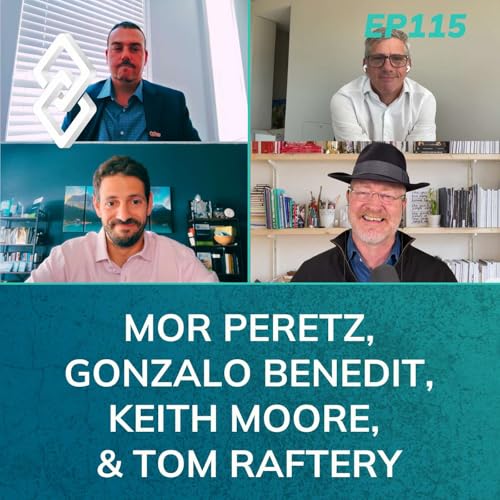
    In this special Resilient Supply Chain roundtable, I’m joined by Mor Peretz, CEO of CaPow, Keith Moore, CEO of AutoScheduler, and Gonzalo Benedit, CRO of Aera Technology, to unpack what warehouse orchestration really means and why it matters now. For leaders focused on supply chain resilience, sustainability, risk, data, and visibility, this is a timely conversation about moving beyond isolated optimisation and getting the whole operation to work in sync.

    You’ll hear how even well-equipped sites can still lose serious performance because the pieces don’t fit together properly, and why downtime can represent 10% at a really good site to 30 or 40% of the time just wasted. We break down why more automation is not always the answer, why companies so often become data rich but insight poor, and how orchestration can help teams act faster, not just see more.

    You might be surprised to learn how often the real failure point is change management, not technology. We also get into energy as infrastructure, the cost of siloed decisions, and why the future is shifting from visibility to velocity. If you care about resilient operations, better decisions, and smarter growth, there’s a lot in here for you.

    🎙️ Listen now to hear how CaPow, AutoScheduler, and Aera Technology are rethinking warehouse performance through orchestration, better data, and sharper decision-making.

    Support the show


    Podcast supporters
    I'd like to sincerely thank this podcast's generous Subscribers:

    • Alicia Farag
    • Kieran Ognev

    And remember you too can become a Resilient Supply Chain+ subscriber - it is really easy and hugely important as it will enable me to continue to create more excellent episodes like this one and give you access to bonus episodes of topical, timely supply chain resilience analysis.

    Podcast Sponsorship Opportunities:
    If you/your organisation is interested in sponsoring this podcast - I have several options available. Let's talk!

    Finally
    If you have any comments/suggestions or questions for the podcast - feel free to just send me a direct message on LinkedIn, or send me a text message using this link.

    If you liked this show, please don't forget to rate and/or review it. It makes a big difference to help new people discover it.

    Thanks for listening.

    Más Menos
    39 m
  • Your Transformation Isn’t Failing Because of Technology
    Mar 30 2026

    Send me a message

    What if the real reason transformation stalls isn’t the tech, but the fact that everyone is making decisions with a different rubric?
    And what happens when you start training AI on processes built 30 years ago?

    In this episode of the Resilient Supply Chain Podcast, I’m joined by Don Mahoney, Global Head of Products and Innovation at SNP Group. Don has had a ringside seat to some of the world’s largest enterprise transformations, and he brings a sharp perspective on what actually drives supply chain resilience, business agility, and better decision-making when the pressure is on.

    We get into why transformation is no longer a one-off event, but an ongoing capability, and why so many firms still get trapped between “lift-and-shift” modernisation that delivers weak ROI and greenfield ambitions that exceed what the business can absorb. You’ll hear how Don thinks about the sweet spot in the middle, why organisational change is often the real constraint, and why “your plan, my plan, our plan” matters far more than most people admit.

    You might be surprised to learn that 80-something percent of enterprise data sits outside ERP systems, much of it unstructured, which makes data quality, visibility, and trust far more strategic than they look on a slide. We also break down one of my favourite lines in the episode: the shift from running a transaction machine to building a decision machine. That’s where the real value is.

    🎙️ Listen now to hear how Don Mahoney and SNP Group are rethinking supply chain resilience, data, visibility, and transformation in an AI-driven world.

    Support the show


    Podcast supporters
    I'd like to sincerely thank this podcast's generous Subscribers:

    • Alicia Farag
    • Kieran Ognev

    And remember you too can become a Resilient Supply Chain+ subscriber - it is really easy and hugely important as it will enable me to continue to create more excellent episodes like this one and give you access to bonus episodes of topical, timely supply chain resilience analysis.

    Podcast Sponsorship Opportunities:
    If you/your organisation is interested in sponsoring this podcast - I have several options available. Let's talk!

    Finally
    If you have any comments/suggestions or questions for the podcast - feel free to just send me a direct message on LinkedIn, or send me a text message using this link.

    If you liked this show, please don't forget to rate and/or review it. It makes a big difference to help new people discover it.

    Thanks for listening.

    Más Menos
    31 m
  • Fuel, Freight, Fertiliser: The Iran War’s Supply Chain Cost
    Mar 27 2026

    Send me a message

    What happens when a war hits not just oil, but fertiliser, LNG, jet fuel, shipping, and food? This isn’t just geopolitics. It’s a live stress test for global supply chains.

    In this first bonus episode of Resilient Supply Chain+, I break down how the US and Israel’s war on Iran is rippling through global trade, energy markets, inflation, and food systems, and why this matters right now for anyone serious about supply chain resilience, sustainability, risk, and visibility. There’s no guest this week. Just me, cutting through the noise and focusing on the second-order effects business leaders and policymakers can’t afford to miss.

    You’ll hear how disruption in the Strait of Hormuz is affecting far more than oil, from LNG and jet fuel to fertiliser, sulphur, and industrial inputs that sit underneath manufacturing and food production. I break down why this war is already becoming an inflation story, why shipping firms are sacrificing payload just to carry more fuel, and why fertiliser shocks may turn out to be quieter, slower, and even more destabilising than oil shocks.

    You might be surprised to learn that the biggest strategic lesson here isn’t just about diversifying suppliers. It’s about reshoring energy. I explain why nearshoring manufacturing is only half the job if your operating model still depends on imported fossil fuels moving through militarised choke points, and why more local renewables, storage, electrification, and flexibility are increasingly resilience tools as much as sustainability tools. I also share a practical personal example from Spain’s blackout that brings that point home.

    🎙️ Listen now to hear how this war is reshaping the future of resilient, sustainable supply chains.

    Support the show


    Podcast supporters
    I'd like to sincerely thank this podcast's generous Subscribers:

    • Alicia Farag
    • Kieran Ognev
    • Gary Lynch

    And remember you too can become a Resilient Supply Chain+ subscriber - it is really easy and hugely important as it will enable me to continue to create more excellent episodes like this one and give you access to bonus episodes of topical, timely supply chain resilience analysis.

    Podcast Sponsorship Opportunities:
    If you/your organisation is interested in sponsoring this podcast - I have several options available. Let's talk!

    Finally
    If you have any comments/suggestions or questions for the podcast - feel free to just send me a direct message on LinkedIn, or send me a text message using this link.

    If you liked this show, please don't forget to rate and/or review it. It makes a big difference to help new people discover it.

    Thanks for listening.

    Más Menos
    19 m
  • The Real Supply Chain Bottleneck Isn’t AI. It’s Integration
    Mar 23 2026

    Send me a message

    If your AI strategy can’t show hard ROI, it’s not a strategy at all. And if your supply chain still runs on phone calls, emails, and patchy partner data, resilience is weaker than it looks.

    In this episode, I’m joined by JP Wiggins, CEO of 1Logtech, co-founder of GLog which became Oracle Transportation Management, co-founder of 3G TMS, and a former SAP transportation leader. JP has spent decades in logistics, transport, and TMS, so when he says the real bottleneck in supply chain resilience isn’t intelligence but integration, it’s worth paying attention.

    We break down why so many firms are still chasing AI headlines while the real work sits lower down the stack: clean data, connected trading partners, and operational visibility that actually works when disruption hits. You’ll hear why AI in supply chain is “a tool, not a strategy”, and why boards demanding an AI plan without hard ROI are often asking the wrong question.

    You might be surprised to learn that integrating a single carrier can still take three months and cost around $10,000 in dev work. We also get into the absurd but revealing story of “FOB” meaning not Free On Board, but “fruit on bottom”, a perfect example of why supply chain visibility, data normalisation, and logistics integration are still such stubborn problems. And yes, we talk about why modern supply chain resilience still collapses into manual check calls far more often than anyone likes to admit.

    🎙️ Listen now to hear how JP Wiggins and 1Logtech are rethinking supply chain resilience, visibility, data, and logistics integration.

    Support the show


    Podcast supporters
    I'd like to sincerely thank this podcast's generous Subscribers:

    • Alicia Farag
    • Kieran Ognev

    And remember you too can become a Resilient Supply Chain+ subscriber - it is really easy and hugely important as it will enable me to continue to create more excellent episodes like this one and give you access to bonus episodes of topical, timely supply chain resilience analysis.

    Podcast Sponsorship Opportunities:
    If you/your organisation is interested in sponsoring this podcast - I have several options available. Let's talk!

    Finally
    If you have any comments/suggestions or questions for the podcast - feel free to just send me a direct message on LinkedIn, or send me a text message using this link.

    If you liked this show, please don't forget to rate and/or review it. It makes a big difference to help new people discover it.

    Thanks for listening.

    Más Menos
    41 m
  • Miss the Slot, Lose the Customer
    Mar 16 2026

    Send me a message

    What happens when last-mile delivery stops being a logistics function and starts becoming a strategic differentiator?
    It changes how you think about cost, resilience, sustainability, and even customer retention.

    In this week's episode of the Resilient Supply Chain Podcast, I’m joined by Nishith Rastogi, Founder and CEO of Locus, to explore why last mile has become one of the most consequential decision layers in modern supply chains. For leaders focused on supply chain resilience, sustainability, risk, data, and visibility, this matters because delivery is no longer just about moving goods. It’s about making better decisions, faster, in environments where complexity keeps rising and customer tolerance keeps falling.

    We break down why traditional TMS and routing models struggle when delivery networks span stores, warehouses, captive fleets, 3PLs, gig capacity, and rising service expectations. You’ll hear why “more data” is not the answer on its own, and why the real advantage now comes from turning that data into real-time decisions that improve cost, service, and emissions in parallel.

    We also get into the growing role of AI in logistics, the limits of rules-based automation, and why resilience increasingly depends on optionality, adaptability, and reducing dependence on tribal knowledge.

    One of the sharpest ideas in the episode is this: if you miss a linehaul slot, you lose a day; if you miss a customer delivery slot, you may lose the customer.

    🎙️ Listen now to hear how last-mile logistics is reshaping the future of resilient, sustainable supply chains.

    Support the show


    Podcast supporters
    I'd like to sincerely thank this podcast's generous Subscribers:

    • Alicia Farag
    • Kieran Ognev

    And remember you too can become a Resilient Supply Chain+ subscriber - it is really easy and hugely important as it will enable me to continue to create more excellent episodes like this one and give you access to bonus episodes of topical, timely supply chain resilience analysis.

    Podcast Sponsorship Opportunities:
    If you/your organisation is interested in sponsoring this podcast - I have several options available. Let's talk!

    Finally
    If you have any comments/suggestions or questions for the podcast - feel free to just send me a direct message on LinkedIn, or send me a text message using this link.

    If you liked this show, please don't forget to rate and/or review it. It makes a big difference to help new people discover it.

    Thanks for listening.

    Más Menos
    39 m
  • Your Safety Metrics Are Improving. Serious Harm Isn’t
    Mar 9 2026

    Send me a message

    If your safety metrics are improving, are your people actually safer? Or are you just getting better at measuring the wrong things?

    In this episode of the Resilient Supply Chain Podcast, I’m joined by John Dony, CEO and co-founder of the What Works Institute, and Mike Swain, Technical Enablement Manager at Evotix, to unpack a stubborn problem hiding in plain sight: why serious injuries and fatalities remain frustratingly hard to reduce, even as traditional safety metrics appear to improve. In a world of tighter regulation, more fragile operating models, and rising scrutiny across global supply chains, this is a resilience issue, a risk issue, and very much a leadership issue.

    We dig into why lagging indicators can create a false sense of control, and why better reporting can actually be a sign that the truth is finally surfacing. You’ll hear how Mike saw incident reporting jump by 800% after better systems were introduced, and why that was good news, not bad. We also break down why the classic safety triangle often fails to predict serious harm, especially in complex supply chains shaped by contractors, seasonal labour, handoffs, and fragmented accountability.

    We also explore where AI, data, visibility, and governance genuinely add value, and where hype still outruns reality. You might be surprised to learn that one of the sharpest lines in the episode is John’s view that if organisations want AI to work, they need a time machine to go back and get their data right first.

    🎙️ Listen now to hear how John Dony, What Works Institute, and Evotix are rethinking supply chain resilience, safety, risk, and data from the ground up.

    Support the show


    Podcast supporters
    I'd like to sincerely thank this podcast's generous Subscribers:

    • Alicia Farag
    • Kieran Ognev

    And remember you too can become a Resilient Supply Chain+ subscriber - it is really easy and hugely important as it will enable me to continue to create more excellent episodes like this one and give you access to bonus episodes of topical, timely supply chain resilience analysis.

    Podcast Sponsorship Opportunities:
    If you/your organisation is interested in sponsoring this podcast - I have several options available. Let's talk!

    Finally
    If you have any comments/suggestions or questions for the podcast - feel free to just send me a direct message on LinkedIn, or send me a text message using this link.

    If you liked this show, please don't forget to rate and/or review it. It makes a big difference to help new people discover it.

    Thanks for listening.

    Más Menos
    40 m
  • Finding the One Thing That Can Break Your Supply Chain
    Mar 2 2026

    Send me a message

    Is your supply chain one nut away from failure?

    In this episode of the Resilient Supply Chain podcast, I’m joined by Jonathan Doller, Senior Solution Consultant at Logility (now part of Aptean), to explore how AI is reshaping supply chain resilience - beyond the hype, and into real operational impact. At a time of tariff shocks, port disruptions, climate risk and talent pressure, the question isn’t whether to use AI, but how to use it intelligently.

    You’ll hear how AI can distinguish correlation from causation in forecasting - including a case where a company stopped discounting a Mother’s Day product and saw no drop in demand, only improved margins. We break down why constrained inventory allocation may be AI’s real superpower, and how agentic AI can connect demand, supply, and distribution decisions across the network. And you might be surprised to learn why Jonathan compares fragile supply chains to the “Jesus nut” on a helicopter, a single point of failure with no redundancy.

    We also explore supplier visibility, digital readiness assessments, anti-fragility, and why AI should be treated as infrastructure, not a buzzword.

    🎙️ Listen now to hear how Jonathan Doller and Logility are redefining data-driven, resilient, sustainable supply chains.

    Support the show


    Podcast supporters
    I'd like to sincerely thank this podcast's generous Subscribers:

    • Alicia Farag
    • Kieran Ognev

    And remember you too can become a Resilient Supply Chain+ subscriber - it is really easy and hugely important as it will enable me to continue to create more excellent episodes like this one and give you access to bonus episodes of topical, timely supply chain resilience analysis.

    Podcast Sponsorship Opportunities:
    If you/your organisation is interested in sponsoring this podcast - I have several options available. Let's talk!

    Finally
    If you have any comments/suggestions or questions for the podcast - feel free to just send me a direct message on LinkedIn, or send me a text message using this link.

    If you liked this show, please don't forget to rate and/or review it. It makes a big difference to help new people discover it.

    Thanks for listening.

    Más Menos
    42 m