Episodios

  • Why Plant Adaptogens Work for Zonal Dysbiosis: The Science of the O-Zone
    Apr 8 2026

    Is your skin behaving like two different ecosystems? If you are struggling with an oily T-zone alongside parched, sensitive cheeks, you aren’t just dealing with combination skin—you are experiencing Zonal Dysbiosis.

    In this episode, I break down the clinical reality of the O-Zone, a term I coined in my 2021 research on the maskne microbiome. We explore why different areas of the face maintain distinct bacterial compositions and microclimates, and why traditional one-size-fits-all skincare often fails to address these localized shifts.

    Join me as we transition from basic cleansing to microclimate regulation for a balanced, resilient microbiome.

    Follow the Research:

    Official Website: ⁠⁠⁠drtwlderma.com⁠⁠⁠

    The Syllabus: ⁠twlskin.com

    Instagram: ⁠@drteowanlin

    Más Menos
    14 m
  • The Brain-Skin Axis: Bridging Psychodermatology & AI-Biotech
    Apr 7 2026

    In this special editorial supplement to our podcast, we dive into the clinical evidence supporting the Brain-Skin Axis—the bidirectional ecosystem where the nervous system and skin cells interact. As a board-certified dermatologist and lead researcher at the Asian Bio-Dermatology Institute, my research has long focused on the total skin exposome.

    I am incredibly excited to finally share a project that has been the focus of our clinical R&D for years. As of this week, our patent filing for the Signature Purple Code is officially complete. A culmination of a decade’s research on the skin microclimate and emotional states in the psychodermatological feedback loop, it is the first protocol designed to materialize these findings into a functional, closed-loop intervention.


    Follow the Research:

    Official Website: ⁠⁠drtwlderma.com⁠⁠

    The Syllabus: https://scienceofbeauty.net/brain-skin-axis-psychodermatology/

    Instagram: @drteowanlin

    Más Menos
    5 m
  • Do retinoids thin your skin? Mastering Retinoids: Dermal Remodelling vs. Stratum Corneum Thinning
    Mar 18 2026

    I break down the histological reality of how retinoids affect the cellular matrix.While social media often warns that these ingredients "thin" the skin, the peer-reviewed evidence tells a different story of epidermal compaction and dermal thickening. In this episode, I specifically explore:

    • The Science of Retinization: Why the initial "glassy" look and peeling are often misunderstood as skin thinning.
    • The Asian Skin Phenotype: Why East Asian skin and skin of color have a unique genetic susceptibility to irritation from Western high-strength protocols.
    • Aging and Sensitivity: How the skin's lipid production changes over time, potentially unmasking conditions like xerotic eczema or perioral dermatitis.
    • Gentler Alternatives: The role of retinyl propionate and soothing ethnobotanicals like Centella Asiatica (Cica) in a modern skincare routine.

    Whether you are a long-time retinol user or are hesitant to start, this episode aims to set the record straight with a dermatologist’s evidence-backed perspective.

    Follow the Research:

    Official Website: ⁠⁠drtwlderma.com⁠⁠

    The Syllabus: https://twlskin.com/retinoids-asian-skin-barrier-thinning/

    Instagram: @drteowanlin

    Más Menos
    10 m
  • Dermatologist Guide: Retinoids, Skin Barrier Health, and Lessons from Asian Skin
    Mar 18 2026

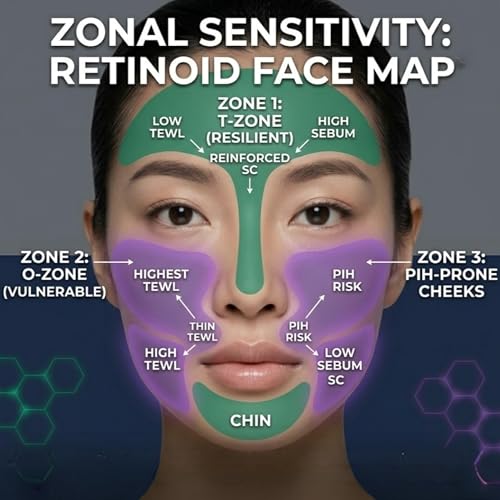
    Do retinoids thin the skin? No. In fact, they induce dermal remodeling that strengthens your skin’s foundation. But if you’re Asian, the answer to the retinoid burn is more nuanced than the standard pea-sized amount instruction.


    📌 Why do retinoids irritate Asian skin more?

    The Asian skin phenotype often presents with a thinner stratum corneum and a higher baseline of Trisepidermal Water Loss (TEWL). Most standard retinoid studies were conducted on Caucasian populations. It’s important to consider specific studies which show different zones of the face have different stratum corner thickness, which explains why some areas like the O-zone may be more sensitive to retinoid use.


    East Asian skin has also been proven to be genetically susceptible to retinol irritation based on genetic analysis of the Korean population which show 30 distinct genes that are related.


    In my research I have mapped the face into distinct vulnerability zones, specifically the O-Zone™️, which requires attention precisely because of these factors.


    * 🧬 The “Thinning” Myth: Retinoids compact the top layer while stimulating Type I Collagen synthesis in the dermis, increasing overall thickness.

    * 💧 The TEWL Spike: Expect a temporary barrier disruption in Weeks 1–4. If you have a Filaggrin (FLG) mutation (Eczema), this is a strict contraindication.

    * 🦠 Zonal Dysbiosis: Retinoids are microbiome modulators that shift C. acnes strains from inflammatory to healthy, commensal flora.

    Más Menos
    1 m
  • Is Oxygen the Secret to Resilient Asian Skin?
    Mar 11 2026

    In this episode of The Dermatologist Talks: Science of Beauty, I’m taking you inside the glass-walled laboratories of LVMH Research to discuss a breakthrough dominating the conversation in 2026: the intersection of high-performance biotech and luxury skincare.

    For the Asian skin demographic, sensitivity goes beyond skin types. While our skin has high dermal density, it is also uniquely prone to hyperpigmentation and environmental reactivity. I delve into how Dior Science is proving that oxygen is the key to cellular resilience.

    In this episode, I cover:

    • The Problem of Skin Hypoxia: How urban pollution (PM2.5) triggers oxygen deprivation and disrupts skin homeostasis.

    • The Science of Inflammaging: Understanding the silent trigger for sensitivity and accelerated aging in modern environments.

    • The OX-C Breakthrough: How Dior’s technology recharges cellular energy (ATP) to triple the synthesis of Collagen I.

    • The Exo-Liposome Delivery System: Why this patented 8-hour continuous diffusion is the real genius for preventing inflammatory spikes and redness in sensitive skin.

    • Proven Resilience: I break down the clinical results, including a 41% stronger skin barrier and a 59% increase in radiance.

    Join me as I explore the future of Longevity Science and how we can finally balance high-performance results with delicate, sensitive skin.

    Stay radiant, and stay curious.

    Más Menos
    9 m
  • Beyond Collagen: Dior Ox-C & The 12 Hallmarks of Aging
    Mar 10 2026

    A glimpse into the Dior International Skincare Summit in Tokyo, which I had the pleasure of attending in October 2025. The LVMH Recherche team shared a groundbreaking deconstruction of the 12 Hallmarks of Aging, signaling a critical shift toward skin longevity mechanisms.


    The future of skincare lies in the integration of molecular, epigenetic, and cellular mechanisms. At the heart of this innovation is Dior’s Ox-C technology, specifically engineered by the LVMH Research Institute to optimize oxygen transport and stimulate collagen synthesis.


    Discover the Dior Capture Totale Pro-Collagen Shot: a biotech-driven messenger that tells your skin to rebuild its own support structure. Experience an immediate cosmetic patch effect that tightens and lifts, with firmness clinically proven to double in just 7 days.

    Más Menos
    1 m
  • Decoding Zonal Dysbiosis: The Future of Asian Skin Science
    Mar 7 2026

    Dry, oily, or sensitive skin? Guess what, it’s Skin Health, Not Skin Type™.

    In this episode, I explain why the era of traditional skin typing is over. We dive into the cutting-edge research coming out of the Dr. TWL Asian Skin Research Institute, shifting the narrative toward targeted protocols based on original Zonal Dysbiosis research published in the Journal of the American Academy of Dermatology (JAAD).

    Learn how we are decoding the O-Zone—an area frequently affected by hormonal acne and rosacea—using AI-powered algorithms and ethnobotanical research from our Guangdong bioengineering lab. We discuss the triple-threat approach to skin health:

    • Ethnobotanical Harmonization: Balancing sebum with Saw Palmetto and Argan.

    • Oxidative Shielding: Deploying antioxidants to preserve barrier integrity.

    • Phyto-Botanical Synergy: Using Centella Asiatica to stabilize the skin microbiome.

    Stop guessing. Start decoding with an evidence-based routine engineered for your biological map.

    Follow the Research:

    Official Website: ⁠⁠drtwlderma.com⁠⁠

    The Syllabus: ⁠⁠twlskin.com

    Instagram: @drteowanlin

    Más Menos
    7 m
  • Skin Health, Not Skin Type: The Science behind Zonal Dysbiosis
    Feb 23 2026

    Is skin type just a biological myth? Here’s a dermatologist’s take. Categorizing your face as oily/dry or combination is scientifically obsolete. At the Asian Skin Research Institute's Biodermatology Division, our quest has gone beyond skin types to the treatment of Zonal Dysbiosis. Join me, board-certified dermatologist, chief scientific officer and author of peer-reviewed papers on zonal dysbiosis in leading dermatology journals as she unveils her latest research.

    Here’s what we cover in this episode:

    • Your face as a topographic map and complex ecosystem with distinct zonal microclimates

    • Our work at the institute fusing Eastern botanical adaptogens with modern peptides to target specific inflammatory pathways

    • The role of fermentation in the 500 Dalton rule: molecular size determines absorption

    Follow the Research:

    Official Website: ⁠⁠drtwlderma.com⁠⁠

    The Syllabus: ⁠⁠twlskin.com/skin-health-not-skin-type-dermatology-zonal-dysbiosis/⁠⁠

    Instagram: ⁠⁠@drteowanlin⁠

    Más Menos
    10 m