Episodios

  • SBP 191: The PostPod - Lessons from Andrew Tindall: The Confidence Crisis in Marketing
    Apr 16 2026

    In this episode of the Sleeping Barber Podcast, Marc and Vassilis reflect on their conversation with Andrew Tindall about the complexities of advertising, creativity, and the current state of the industry.

    They explore the Advertising Planning Matrix, discuss the confidence problem within the industry, and emphasize the importance of creativity as a growth lever. The conversation also highlights the evolving role of creators in marketing and the need for a strategic approach to leverage their influence effectively.

    Enjoy the show!

    Key Takeaways

    • The industry struggles with a confidence problem rather than a data problem.
    • Creativity is often undervalued in marketing strategies.
    • Short-term metrics can harm long-term business impact.
    • Effective advertising requires a balance of media and creative quality.
    • The price of creative agency work has significantly decreased over the years.
    • Creativity is a key lever for growth that marketers can control.
    • Brands often misuse creators without a clear strategy.
    • The effectiveness of advertising is a product of both media and creative efforts.
    • Optimizing for easy metrics can lead to poor marketing outcomes.
    • Creators bring humanity back into the digital ecosystem.

    Chapters

    00:00 - Introduction

    02:00 - Exploring the Advertising Planning Matrix

    12:58 - The Confidence Problem in the Industry

    14:53 - Creativity as a Growth Lever

    25:52 - The Role of Creators in Modern Marketing

    Más Menos
    31 m
  • SBP 190: Your Marketing Dashboard is Lying to You. With Andrew Tindall
    Apr 14 2026

    Description

    Your media dashboard looks confident. Clicks up. Conversions tracked. Reach reported. But according to three years of evidence built on 1,265 global campaigns, that dashboard may be the single biggest obstacle standing between you and real business growth.

    Andrew Tindall is Chief Growth Officer at System1 and the author of The Creative Dividend, a landmark publication built on the Effie Awards global case library representing $139 billion in market share. His finding is blunt: the more short-term digital metrics you chase, the less profit and market share you report. Not because measurement is the problem, but because marketers have been measuring the wrong things and the platforms selling those metrics have every incentive to keep it that way.

    In this conversation, Marc and V dig into the data behind that claim: what Excess Share of Creativity (ESOC) actually measures and why it predicts profit growth exponentially, why all four dimensions of effective advertising: emotion, distinctiveness, showmanship, and consistency, are declining simultaneously, and why creator content outperformed TV as a builder of long-term brand demand in the research.

    If you've ever sat in a room where the digital dashboard was treated as gospel and felt something was off — this episode is the evidence you were looking for.

    Timestamps

    00:00: Introduction — The Wanamaker problem and why digital metrics created a vicious cycle

    11:35: Defending the research — methodology, the awards-database critique, and what the FE case library actually proves

    20:10: ESOC: Excess Share of Creativity — the new metric that pairs creative quality with media spend

    29:10: What marketers are actually measuring vs. what drives profit and market share

    35:50: The four creative qualities — emotion, distinctiveness, showmanship, consistency — and why all four are declining

    43:15: The non-negotiables — how to prioritise when budget is tight

    49:35: Super Touch Points and creators — why creator content beat TV for building future demand

    54:58: Closing — the one thing every marketer should take from The Creative Dividend

    References

    Primary Source — Episode Focus

    1. Tindall, A. (2026). The creative dividend: Advertising that pays back. System1 & Effie Worldwide. https://system1group.com/the-creative-dividend

    IPA Effectiveness Research

    Binet, L., & Field, P. (2013). The long and the short of it: Balancing short and long-term marketing strategies. Institute of Practitioners in Advertising.

    Field, P. (2019). The crisis in creative effectiveness. Institute of Practitioners in Advertising. https://ipa.co.uk/knowledge/publications-reports/the-crisis-in-creative-effectiveness

    Field, P. (2016). Selling creativity short. Institute of Practitioners in Advertising.

    System1 Research

    Wood, O. (2019). Lemon: How the advertising brain turned sour. Institute of Practitioners in Advertising.

    Agency Economics

    Farmer, M. (2019). Madison Avenue manslaughter: An inside view of fee-cutting clients, profit-hungry owners and declining ad agencies (3rd ed.). Lioncrest Publishing.

    Referenced in Discussion (Contextual)

    Kahneman, D. (2011). Thinking, fast and slow. Farrar, Straus and Giroux.

    Más Menos
    57 m
  • SBP 189: The Sharp Cut - The Invisible Hands: How Dead Ideas Run Your Marketing Strategy
    Apr 9 2026
    In this episode, Marc and Vassilis explore the invisible mental models that shape marketing decisions, questioning long-held beliefs such as the funnel model, the five times customer acquisition myth, and the effectiveness of purpose-driven marketing. They discuss the cashflow funnel as a more accurate representation of customer journeys and emphasize the importance of mental availability in driving growth. The conversation highlights the disconnect between customer satisfaction and revenue, urging marketers to adopt better models for understanding and measuring success.Enjoy the show!TakeawaysThe funnel model oversimplifies the customer journey.Customer behaviour is not linear; it's more complex.The cashflow funnel provides a better framework for understanding market dynamics.The five-times myth lacks solid evidence and can mislead marketing strategies.Purpose-driven marketing may not deliver the expected results.Customer loyalty is often a byproduct of brand size, not a cause of growth.Satisfaction scores do not correlate directly with revenue.Mental availability is crucial for brand success.Marketers need to challenge outdated paradigms and adopt new models.Organizational structures must evolve to support better marketing practices.Chapters00:00 - Introduction to the Invisible Hands of Marketing02:51 - The Funnel Fallacy: Rethinking Customer Journeys05:47 - The Cashflow Funnel: A New Perspective09:01 - Challenging the Five Times Myth12:09 - The Purpose-Driven Marketing Debate15:00 -The Loyalty Myth: Understanding Customer Retention17:53 - The Reality of Customer Satisfaction vs. Revenue21:07 - The Role of Mental Availability in Growth23:50 - Conclusion: Embracing Better Marketing ModelsCitationsBinet, L., & Field, P. (2013). The long and the short of it: Balancing short and long-term marketing strategies. Institute of Practitioners in Advertising.Dawes, J. G. (2024). The net promoter score: What should managers know? International Journal of Market Research, 66(1). https://doi.org/10.1177/14707853231195003Dawes, J. G. (2025). Examining the longitudinal association between positive and negative likelihood-to-recommend scores and brand growth. Australasian Marketing Journal. https://doi.org/10.1177/14413582241255388Edelman, D. C., & Singer, M. (2015). Competing on customer journeys. Harvard Business Review, 93(11), 88–100.Ehrenberg-Bass Institute for Marketing Science. (2025). Net Promoter Score (NPS) does not predict growth — it's fake science. University of South Australia. https://marketingscience.info/net-promoter-score-nps-does-not-predict-growth-its-fake-scienceGoogle/Shopper Sciences. (2011). ZMOT: Winning the zero moment of truth. Google. https://www.thinkwithgoogle.com/marketing-strategies/micro-moments/2011-winning-zmot-ebook/Keiningham, T. L., Cooil, B., Andreassen, T. W., & Aksoy, L. (2007). A longitudinal examination of net promoter and firm revenue growth. Journal of Marketing, 71(3), 39–51. https://doi.org/10.1509/jmkg.71.3.039Kuhn, T. S. (1962). The structure of scientific revolutions. University of Chicago Press.Lombardo, J. (n.d.). The loyalty lie. LinkedIn B2B Institute. https://business.linkedin.com/advertise/resources/b2b-institute/b2b-research/trends/the-loyalty-lieMcKinsey & Company. (2009). The consumer decision journey. McKinsey Quarterly. https://www.mckinsey.com/capabilities/growth-marketing-and-sales/our-insights/the-consumer-decision-journeyReichheld, F. F. (1993). Loyalty-based management. Harvard Business Review, 71(2), 64–73.Reichheld, F. F. (2003). The one number you need to grow. Harvard Business Review, 81(12), 46–54.Ritson, M. (2023). The top 10 most bullshit ideas in marketing [Seminar presentation]. Marketing Week Mini MBA.Romaniuk, J., & Sharp, B. (2022). How brands grow part 2: Emerging markets, services, durables, new and luxury brands (2nd ed.). Oxford University Press.Sharp, B. (2010). How brands grow: What marketers don't know. Oxford University Press.Sharp, B., Wright, M., & Goodhardt, G. (2002). Purchase loyalty is polarised into either repertoire or subscription patterns. Australasian Marketing Journal, 10(3), 7–20.Sinek, S. (2009). Start with why: How great leaders inspire everyone to take action. Portfolio.St. Elmo Lewis, E. (1898). Side talks about advertising. The Western Druggist, 20, 65–66.Vakratsas, D., & Ambler, T. (1999). How advertising works: What do we really know? Journal of Marketing, 63(1), 26–43.
    Más Menos
    33 m
  • SBP 188: The Barber's Brief - Does brand purpose actually lead to growth?
    Apr 7 2026

    In this edition of the Barber's Brief, Marc and Vassilis discuss various things that caught their attention, including the role of brand purpose in driving growth, the challenges faced by D2C brands, TikTok's new commerce initiative, Coca-Cola's innovative campaign, and KitKat's creative response to a theft incident.

    They explore how brands can navigate the evolving landscape of consumer behaviour and marketing strategies, emphasizing the importance of fundamentals and adaptability in a rapidly changing environment.

    Enjoy the episode!

    Key takeaways

    • Purpose isn't a growth strategy at best; it's an amplifier.
    • Brands don't buy brands for their mission statements; they buy what's easy to find.
    • The tech-first approach doesn't change fundamental business laws.
    • There's a blurring line between media and retail in marketing.
    • Coca-Cola's campaign acts as a business partner rather than just a supplier.
    • KitKat's response to theft turned into a participatory brand moment.
    • The funnel for consumer purchases is collapsing into a single scroll.
    • Brands need to focus on fundamentals rather than chasing trends.
    • D2C brands often overestimate their market size and potential.
    • E-commerce can exist without a dedicated platform, leveraging existing channels.

    Chapters

    00:00 - Introduction and Easter Reflections

    01:54 - The Role of Brand Purpose in Growth

    08:48 - The D2C Illusion and Market Realities

    14:42 - TikTok's Commerce Initiative: Watch It, Love It, Want It

    20:23 - Coca-Cola's New Campaign: Anna Coke

    25:37 - KitKat's Creative Response to the "Kitkat Heist"

    Links:

    Does having a brand purpose actually lead to growth?

    Link:https://www.marketingweek.com/purpose-brands-actually-grown/

    The DTC Tech Illusion by Tom Goodwin

    Link: https://www.linkedin.com/posts/tomfgoodwin_from-4bn-to-39m-there-was-a-weird-window-share-7444774792198651904-jtuR

    TikTok For Business Introduces: Watch it. Love it. Want it.

    Link: https://newsroom.tiktok.com/tiktok-for-business-introduces-watch-it-love-it-want-it-ca?lang=en-CA

    Coca-Cola unveils “And a Coke” campaign

    Link: https://www.cnbc.com/2026/04/02/coca-cola-ad-campaign-dominos-wendys-wingstop.html

    Más Menos
    31 m
  • SBP 187: The PostPod - Lessons from David Aaker: The Power of Origin Stories
    Apr 2 2026

    In this PostPod, Marc and Vassilis unpack their conversation with David Aaker, diving deep into brand strategy, organizational structure, and the evolution of performance marketing. They reflect on David's thoughts around LL Bean's origin story, the importance of communication in organizational design, and the cyclical nature of short-termism in marketing, especially when the economy faces uncertainty.

    They discuss the tension between brand marketing and demand marketing, and how those tensions have been present throughout history. This episode offers valuable insights for marketers grappling with the ever-present challenge of balancing long-term brand growth with short-term performance tactics.

    Enjoy the conversation

    Key takeaways

    • The conversation highlighted the importance of origin stories in branding.
    • Internal communication challenges often lead to organizational inefficiencies.
    • Brand strategy should align with business strategy, not the other way around.
    • Regularly revisiting strategy is crucial for organizational success.
    • Differentiation is a key growth lever in marketing.
    • Short-termism has historical roots and is a recurring issue in marketing.
    • Effective communication can bridge silos within organizations.
    • Innovation is stifled without a clear strategic vision.
    • The importance of storytelling in maintaining brand identity.
    • Market share growth is often linked to how different a brand is perceived.

    Chapters

    00:00 - Introduction

    02:02 - Exploring Origin Stories in Branding

    04:40 - Internal Structures and Communication Challenges

    08:02 - Brand Strategy vs. Business Strategy

    10:42 - The Importance of Revisiting Strategy

    12:20 - Differentiation as a Growth Lever

    14:55 - Market Share and Brand Energizers

    17:50 - Short-Termism in Marketing

    21:53 - Conclusion and Reflections on the Conversation

    Más Menos
    25 m
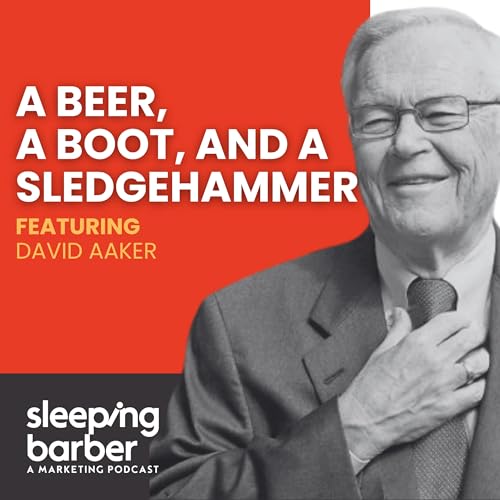
  • SBP 186: A Boot, A Beer and a Sledgehammer. With David Aaker
    Mar 31 2026

    What do a cold beer, a pair of duck-hunting boots, and a heavy sledgehammer have to do with $14 trillion in brand equity?

    In this masterclass, David Aaker—the "Father of Modern Branding" explains how these iconic "memory anchors" do the heavy lifting that traditional "demand marketing" cannot. We dive into the "Curse of Success," why most companies are stuck in a "herd" of sameness, and how to navigate the silo problem without falling into the trap of centralization.

    If you’ve ever struggled to justify brand spend to a CFO, Aaker provides the evidence-based ammunition needed to prove that brand is a strategic asset, not a line-item expense.

    Key Takeaways

    • The Power of Signature Stories: Why L.L. Bean’s boots and Haier’s sledgehammer are more effective than mission statements for aligning culture and brand.
    • Escaping the Herd: Growth doesn't come from being "better" than the competition; it comes from being different enough to own a new subcategory.
    • The $14 Trillion Asset: Brand equity is a massive financial engine. Aaker explains why short-termism and "performance marketing" are currently eroding this global wealth.
    • Solving the Silo Problem: The natural instinct is to centralize. Aaker argues the real solution is cooperation and communication, allowing local units to stay agile while remaining brand-aligned.
    • The Curse of Success: Why the most successful firms (like Kodak or Xerox) are often the most vulnerable to disruptive innovation because they are optimized for their current business.

    Timestamps

    01:11 – The $14 Trillion Framework: Why Aaker’s work governs modern marketing.

    12:20 – The Silo Trap: Why centralization is the "natural" but wrong solution.

    17:20 – Short-Termism: How "demand marketing" risks the long-term health of brand equity.

    22:14The Beer: The Asahi Super Dry story and the power of owning a subcategory.

    32:01The Boot: L.L. Bean’s origin story as a "memory anchor" for brand loyalty.

    35:15The Sledgehammer: How Haier’s signature story baked quality into their culture.

    42:43 – The Curse of Success: Why winners like Kodak and Xerox fail to innovate.

    About Our Guest

    David Aaker is the Vice Chairman of Prophet and Professor Emeritus at the Haas School of Business, UC Berkeley. He is the author of over 15 books and is widely credited with creating the modern framework for brand equity.

    • LinkedIn: David Aaker
    • Latest Book: Aaker on Branding: 2nd Edition

    References

    Aaker on Branding https://prophet.com/2025/04/aaker-on-branding-second-edition/

    Blog davidaaker.com

    Brand Relationship Spectrum https://medium.com/@DavidAaker/branding-a-new-offering-the-brand-relationship-spectrum-649d6b33eddf

    Más Menos
    49 m
  • SBP 185: The Sharp Cut - The Incentives Trap: The Blueprint for Success [Part 3]
    Mar 26 2026

    The final installment (part 3) of our series about the incentives trap.

    In this episode, Marc and Vassilis outline the blueprint for success where they actively challenge the complexities of marketing measurement, emphasizing the need for a goal-oriented approach rather than relying on easily accessible metrics.

    They also discuss the dangers of short-term measurement, the importance of understanding long-term brand health, and introduce the concept of incrementality measurement as a way to better assess marketing effectiveness. The conversation also highlights the need for a shift in media metrics to ensure that marketing is viewed as an investment rather than a cost center.

    Enjoy the show!

    Takeaways

    1. The most common mistake in marketing measurement is starting in the wrong place.
    2. Measurement that doesn't change decisions has zero ROI.
    3. Metrics should be chosen based on their ability to inform strategic decisions.
    4. Long-term metrics reflect brand investment and market share growth.
    5. Brand building and performance activation require different measurement frameworks.
    6. Small brands need brand health tracking more urgently than large ones.
    7. Incrementality measurement helps clarify marketing's true impact on sales.
    8. Marketing effectiveness is more important than marketing efficiency.
    9. The cost per thousand impressions is becoming a misleading metric.
    10. A measurement philosophy should start with the desired outcome and build backward.

    Chapters

    00:00 - Introduction to Measurement Challenges in Marketing

    02:55 - The Importance of Goal-Oriented Measurement

    06:06 - Understanding Long-Term vs Short-Term Metrics

    09:07 - The Cashflow Funnel Framework

    12:07 - Incrementality Measurement: A New Approach

    15:04 - Reframing Marketing as an Investment

    18:04 - The Future of Media Metrics

    Más Menos
    20 m
  • SBP 184: The Barber's Brief - Have most marketers not learned the basics?
    Mar 24 2026

    In this episode of the Sleeping Barber Podcast, Marc and Vassilis delve into various topics surrounding marketing, brand performance, and the evolving landscape of digital advertising.

    They discuss a recent study on brand performance metrics, the importance of foundational marketing knowledge, and how nostalgia can be leveraged by heritage brands. Additionally, they explore Google's new AI advertising engine and highlight a creative ad campaign by Patron Tequila.

    Enjoy the show!

    Key Takeaways:

    1. Great creative still deserves a spotlight in marketing.
    2. Reclassifying traffic can help measure brand-driven sales accurately.
    3. Only 35% of marketers passed a basic knowledge test.
    4. Formal training is a better predictor of success than experience.
    5. Nostalgia can effectively bridge generations in marketing.
    6. Google's AI mode is methodically rolling out to enhance advertising.
    7. Patron Tequila's new campaign emphasizes high production value.
    8. The importance of distinctive brand assets in advertising.
    9. AI search will change the marketing funnel incrementally.
    10. Engagement with listeners is crucial for future content.

    Chapters

    00:00 - Introduction to the Podcast

    01:01 - Exploring Brand Performance in Digital Marketing

    06:13 - The Marketing Savant Myth and Knowledge Gaps

    12:08 - Reviving Heritage Brands with Nostalgia

    17:02 - Google's AI Mode and the Future of Advertising

    22:02 - Creative Ad of the Week: Patron Tequila

    28:58 - Upcoming Episodes and Closing Thoughts

    News Links:

    The commercial power of brands in the Digital World

    Link: https://kapero.com/en/commercial-power-of-brands/

    Ritson calls for end to ‘marketing savant myth’ as Ipsos lays bare knowledge gaps

    Link: https://www.thedrum.com/news/ritson-calls-for-end-to-marketing-savant-myth-as-ipsos-lays-bare-knowledge-gaps

    McDonald’s on its mission to gamify its ‘treasure trove’ of brand assets

    Link: https://www.marketingweek.com/mcdonalds-cards-brand-assets/

    AI Mode is Google’s next ads engine — and it already knows how to monetize it

    Link: https://searchengineland.com/ai-mode-google-next-ads-engine-471967

    Ad of the week:

    The Perfect Pour - Guillermo del Toro

    Link: https://www.youtube.com/watch?v=SLvR8ru2D8U

    Más Menos
    32 m