The Nick Taylor Horror Show Podcast Por American Nightmare Studios arte de portada

The Nick Taylor Horror Show

The Nick Taylor Horror Show

De: American Nightmare Studios
Escúchala gratis

Exploring the techniques, strategies, and key pieces of advice for aspiring horror directors, straight from the minds of some of the greatest filmmakers and creators in horror. Host Nick Taylor engages in one-on-one conversations with directors, producers, writers, actors and artists to uncover the keys to their creative and professional success in the horror business.2024 by American Nightmare Studios. All rights reserved. Arte
Episodios
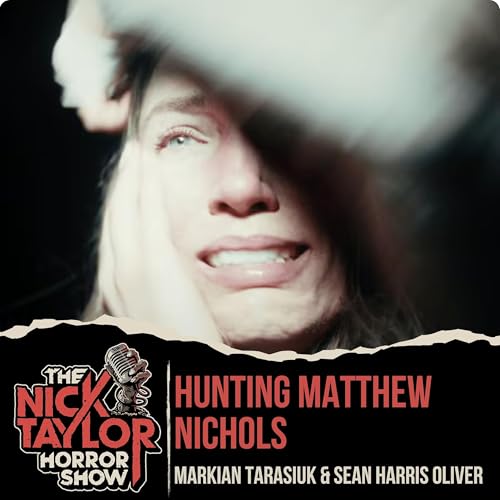
  • HUNTING MATTHEW NICHOLS Director/Producer | Markian Tarasiuk & Sean Harris Oliver
    Apr 17 2026
    Markian Tarasiuk and Sean Harris Oliver are the filmmakers behind Hunting Matthew Nichols, a true-crime-style horror mockumentary that has become a notable self-distribution success story. Made for a budget of $300K Canadian, roughly $215K USD, the movie made all of its money back before it was even released through presales, then did $600K in its opening weekend in theaters, all thanks to the enterprising bootstrapping of the filmmakers, who entirely took charge of the future of their own film.This is, without a doubt, one of the most important and inspiring conversations I’ve had in recent years, and it is very indicative of the type of stewardship filmmakers need to take over their projects. In this conversation, Markian and Sean discuss the making of Hunting Matthew Nichols, from a COVID-era concept to theatrical distribution, all done without distributors or studios. You might want to take notes on this one, and definitely check out William Earl’s article in Variety (see show notes) on this project, because this is a case study worth studying.Key TakeawaysDo not wait indefinitely for permission to make the movie.A major thread in this story is how much time was lost trying to get the “normal” system to say yes. The guys spent years pitching, hoping for financing via a traditional path, only to realize later that they might have been better off making the film sooner on their own terms, which they did. Then, once they got their movie made, the deals distributors offered them were so bad and senseless that they thought, maybe we can do this ourselves, which they did, and they were successful. The lesson for filmmakers: if the system keeps stalling you, fuck the system, do it yourself. Filmmaking is punk rock, baby. Sometimes you gotta do it your own way.Maintain Beginner’s Mind. A lot of would-be filmmakers are insecure about their lack of experience to the point of paralysis, but this interview clearly shows you that being green can be your greatest asset.The industry is going through an overhaul and growing pains, and many of the insiders have not caught up with the times and are still doing things in archaic ways. You do not need to follow them. As you get your movie made, you will be faced with so many people who tell you, this is how it’s done, but you can question that, you can doubt that, and ultimately you can reject that.Self-distribution is possible, but it is a full-time operational job.This is the counter to the other two lessons. Yes, you can do this all yourself, but it’s going to be a full-time job. Markian and Sean were very clear that the release and marketing involved months of constant work, long daily hours, pressure from deadlines, and a huge amount of problem-solving across both the U.S. and Canada. And now they have to handle distribution themselves, which is even more full-time work. So if you’re gonna go this route — and you can — you’ve gotta be ready to go all the way. It’s grueling, constant work, but at the end of it, you’ll have an incredibly comprehensive education in what it takes to get movies funded, made, and distributed, which is the best film school you can imagine and puts you in the most favorable leadership position for your own production company.Show NotesMovies and Shows MentionedShelby OaksUndertoneBest in ShowChris Guest mockumentariesStrange HarvestTerrifier 2 and Terrifier 3Good BoyBooks and ResourcesWilliam Earl’s Variety Article: ‘Hunting Matthew Nichols’: From Guerrilla Marketing to Directly Pitching Theater Owners, This $275K Indie Turned a Profit Before It Even Was Released https://variety.com/2026/film/features/hunting-matthew-nichols-viral-horror-movie-1236713088/Team Click, the influencer support company they brought in late in the campaign for boxes and outreach supportMoon7, a key marketing partner on the theatrical rolloutHorrorTok, referenced as an influential horror-centered online community they were interested in reachingFollow Markian Tarasiuk at:IMBd: https://www.imdb.com/name/nm5950996/Instagram: https://www.instagram.com/marktaras/X (Twitter): https://x.com/MarkianTarasTikTok: https://www.tiktok.com/@markiantarasiukWebsite: https://www.markiantarasiuk.com/Follow Sean Harris Oliver at:IMBd: https://www.imdb.com/name/nm1725784/Instagram: https://www.instagram.com/seanharrisoliver/LinkedIn: https://ca.linkedin.com/in/sean-harris-oliverWebsite: https://www.seanharrisoliver.com/
    Más Menos
    40 m
  • A NIGHTMARE ON ELM STREET Editors | Rick Shaine & Patrick McMahon
    Apr 10 2026

    Patrick McMahon and Rick Shaine are the editors behind the original Nightmare on Elm Street. In this special live conversation at the Metrograph theatre in New York, Pat and Rick reflect on everything from working with Wes Craven to the intense amount of pressure they were under and their specific techniques for editing to induce fear.

    On today’s episode of The Nick Taylor Horror Show, here, without further ado, are Patrick McMahon and Rick Shaine.

    Más Menos
    29 m
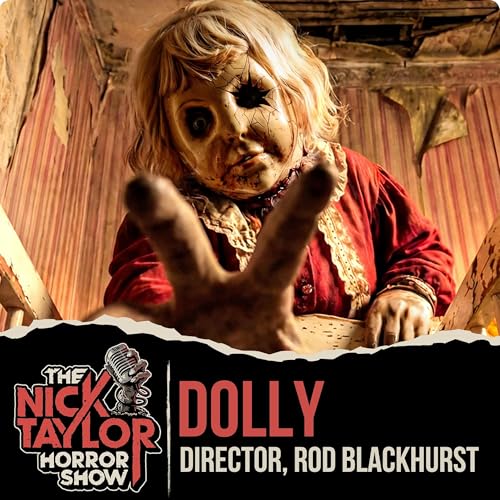
  • DOLLY Director | Rod Blackhurst
    Apr 3 2026

    Rod Blackhurst is a filmmaker, director, and producer whose work spans documentary, narrative, and horror.

    He made his narrative feature debut with Here Alone, winner of the Audience Award at the 2016 Tribeca Film Festival, and later returned to Tribeca with Blood for Dust (2023), starring Scoot McNairy and Kit Harington. He also co-directed and produced the Emmy-nominated Netflix documentary Amanda Knox. He also co-created The White Room, a Blood List script later acquired by Amblin, and co-wrote the story for Blumhouse’s Night Swim, which grew out of the 2014 short film he made with Bryce McGuire. Rod also directed and served as showrunner for Peacock’s John Wayne Gacy: Devil in Disguise and directed on National Geographic’s Welcome to Earth with Will Smith.

    His latest film, Dolly, is a beautifully shot 16mm slasher that evokes the grime and menace of early horror classics while carving out its own identity. In this episode, Rod and I talk about his path into filmmaking, the realities of getting indie films made, and the making of Dolly. Please enjoy this conversation with Rod Blackhurst.

    Key TakeawaysWear your influences openly, but metabolize and integrate them.

    Rod talks about The Texas Chain Saw Massacre as a major influence, and it is really clear when you see the movie, but he is careful not to recreate it in a way that feels like blatant homage. The useful principle is that inspiration works best when it is absorbed into the DNA of the film and filmmaker rather than pasted on top of it as a wink. As a result, the movie feels like it takes place in the same world as these influences instead of attempting to overtly acknowledge or recreate them, which can take viewers out of the movie.

    Investor trust is built with transparency.

    Rod is one of the most financially responsible filmmakers I have spoken to. His financing advice is unusually concrete. He informs investors how the equity works, how they might recoup, what the timeline is, and acknowledges the very real risk that they could lose all their money. He also shows prior accounting and distribution sheets to demonstrate his own personal track record, treating his career like a business, which it is. That mindset treats filmmaking as entrepreneurship, not just art, and it is one of the most practical pieces of advice in the conversation.

    Cast the person who can give the monster a soul.

    Rod found Max the Impaler through wrestling and quickly realized he had found more than a physical presence. Max’s background as a largely nonverbal performance artist made them perfect to play Dolly, the slasher, and their emotional investment transformed the character into something much richer than what was on the page. Think about David Howard Thornton and Doug Jones. A monster is not just a costume and makeup job; it comes down to the soul of the performer.

    Show NotesMovies Mentioned
    • Dolly
    • The Texas Chain Saw Massacre
    • The Evil Dead
    • Blood for Dust
    • Snow White (1937/1938 animated film)
    • The Vanishing
    • High Tension
    • Martyrs
    • Barbarian
    • Night Swim
    • Undertone
    • It (via the Bill Skarsgård / Pennywise discussion)
    • Castle in the Sky
    • The Iron Giant
    • E.T. the Extra-Terrestrial
    • Project Hail Mary
    • Marty Supreme
    • Backrooms
    • Obsession
    • Here Alone

    Follow Rod Blackhurst at:
    • IMBd: https://www.imdb.com/name/nm2060444/
    • Instagram: https://www.instagram.com/rodblackhurst/
    • X (Twitter): https://x.com/rodblackhurst
    • Vimeo: https://vimeo.com/rodblackhurst
    • Website: https://www.rodblackhurst.com/

    Más Menos
    1 h y 2 m
Todavía no hay opiniones