Episodios

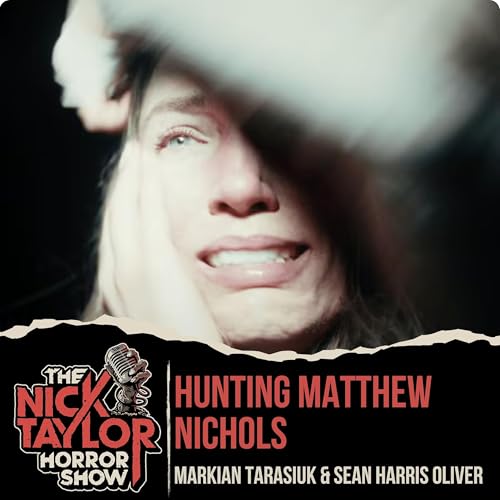
  • HUNTING MATTHEW NICHOLS Director/Producer | Markian Tarasiuk & Sean Harris Oliver
    Apr 17 2026
    Markian Tarasiuk and Sean Harris Oliver are the filmmakers behind Hunting Matthew Nichols, a true-crime-style horror mockumentary that has become a notable self-distribution success story. Made for a budget of $300K Canadian, roughly $215K USD, the movie made all of its money back before it was even released through presales, then did $600K in its opening weekend in theaters, all thanks to the enterprising bootstrapping of the filmmakers, who entirely took charge of the future of their own film.This is, without a doubt, one of the most important and inspiring conversations I’ve had in recent years, and it is very indicative of the type of stewardship filmmakers need to take over their projects. In this conversation, Markian and Sean discuss the making of Hunting Matthew Nichols, from a COVID-era concept to theatrical distribution, all done without distributors or studios. You might want to take notes on this one, and definitely check out William Earl’s article in Variety (see show notes) on this project, because this is a case study worth studying.Key TakeawaysDo not wait indefinitely for permission to make the movie.A major thread in this story is how much time was lost trying to get the “normal” system to say yes. The guys spent years pitching, hoping for financing via a traditional path, only to realize later that they might have been better off making the film sooner on their own terms, which they did. Then, once they got their movie made, the deals distributors offered them were so bad and senseless that they thought, maybe we can do this ourselves, which they did, and they were successful. The lesson for filmmakers: if the system keeps stalling you, fuck the system, do it yourself. Filmmaking is punk rock, baby. Sometimes you gotta do it your own way.Maintain Beginner’s Mind. A lot of would-be filmmakers are insecure about their lack of experience to the point of paralysis, but this interview clearly shows you that being green can be your greatest asset.The industry is going through an overhaul and growing pains, and many of the insiders have not caught up with the times and are still doing things in archaic ways. You do not need to follow them. As you get your movie made, you will be faced with so many people who tell you, this is how it’s done, but you can question that, you can doubt that, and ultimately you can reject that.Self-distribution is possible, but it is a full-time operational job.This is the counter to the other two lessons. Yes, you can do this all yourself, but it’s going to be a full-time job. Markian and Sean were very clear that the release and marketing involved months of constant work, long daily hours, pressure from deadlines, and a huge amount of problem-solving across both the U.S. and Canada. And now they have to handle distribution themselves, which is even more full-time work. So if you’re gonna go this route — and you can — you’ve gotta be ready to go all the way. It’s grueling, constant work, but at the end of it, you’ll have an incredibly comprehensive education in what it takes to get movies funded, made, and distributed, which is the best film school you can imagine and puts you in the most favorable leadership position for your own production company.Show NotesMovies and Shows MentionedShelby OaksUndertoneBest in ShowChris Guest mockumentariesStrange HarvestTerrifier 2 and Terrifier 3Good BoyBooks and ResourcesWilliam Earl’s Variety Article: ‘Hunting Matthew Nichols’: From Guerrilla Marketing to Directly Pitching Theater Owners, This $275K Indie Turned a Profit Before It Even Was Released https://variety.com/2026/film/features/hunting-matthew-nichols-viral-horror-movie-1236713088/Team Click, the influencer support company they brought in late in the campaign for boxes and outreach supportMoon7, a key marketing partner on the theatrical rolloutHorrorTok, referenced as an influential horror-centered online community they were interested in reachingFollow Markian Tarasiuk at:IMBd: https://www.imdb.com/name/nm5950996/Instagram: https://www.instagram.com/marktaras/X (Twitter): https://x.com/MarkianTarasTikTok: https://www.tiktok.com/@markiantarasiukWebsite: https://www.markiantarasiuk.com/Follow Sean Harris Oliver at:IMBd: https://www.imdb.com/name/nm1725784/Instagram: https://www.instagram.com/seanharrisoliver/LinkedIn: https://ca.linkedin.com/in/sean-harris-oliverWebsite: https://www.seanharrisoliver.com/
    Más Menos
    40 m
  • A NIGHTMARE ON ELM STREET Editors | Rick Shaine & Patrick McMahon
    Apr 10 2026

    Patrick McMahon and Rick Shaine are the editors behind the original Nightmare on Elm Street. In this special live conversation at the Metrograph theatre in New York, Pat and Rick reflect on everything from working with Wes Craven to the intense amount of pressure they were under and their specific techniques for editing to induce fear.

    On today’s episode of The Nick Taylor Horror Show, here, without further ado, are Patrick McMahon and Rick Shaine.

    Más Menos
    29 m
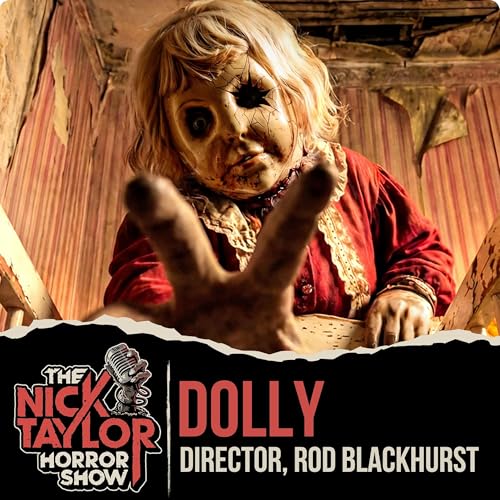
  • DOLLY Director | Rod Blackhurst
    Apr 3 2026

    Rod Blackhurst is a filmmaker, director, and producer whose work spans documentary, narrative, and horror.

    He made his narrative feature debut with Here Alone, winner of the Audience Award at the 2016 Tribeca Film Festival, and later returned to Tribeca with Blood for Dust (2023), starring Scoot McNairy and Kit Harington. He also co-directed and produced the Emmy-nominated Netflix documentary Amanda Knox. He also co-created The White Room, a Blood List script later acquired by Amblin, and co-wrote the story for Blumhouse’s Night Swim, which grew out of the 2014 short film he made with Bryce McGuire. Rod also directed and served as showrunner for Peacock’s John Wayne Gacy: Devil in Disguise and directed on National Geographic’s Welcome to Earth with Will Smith.

    His latest film, Dolly, is a beautifully shot 16mm slasher that evokes the grime and menace of early horror classics while carving out its own identity. In this episode, Rod and I talk about his path into filmmaking, the realities of getting indie films made, and the making of Dolly. Please enjoy this conversation with Rod Blackhurst.

    Key TakeawaysWear your influences openly, but metabolize and integrate them.

    Rod talks about The Texas Chain Saw Massacre as a major influence, and it is really clear when you see the movie, but he is careful not to recreate it in a way that feels like blatant homage. The useful principle is that inspiration works best when it is absorbed into the DNA of the film and filmmaker rather than pasted on top of it as a wink. As a result, the movie feels like it takes place in the same world as these influences instead of attempting to overtly acknowledge or recreate them, which can take viewers out of the movie.

    Investor trust is built with transparency.

    Rod is one of the most financially responsible filmmakers I have spoken to. His financing advice is unusually concrete. He informs investors how the equity works, how they might recoup, what the timeline is, and acknowledges the very real risk that they could lose all their money. He also shows prior accounting and distribution sheets to demonstrate his own personal track record, treating his career like a business, which it is. That mindset treats filmmaking as entrepreneurship, not just art, and it is one of the most practical pieces of advice in the conversation.

    Cast the person who can give the monster a soul.

    Rod found Max the Impaler through wrestling and quickly realized he had found more than a physical presence. Max’s background as a largely nonverbal performance artist made them perfect to play Dolly, the slasher, and their emotional investment transformed the character into something much richer than what was on the page. Think about David Howard Thornton and Doug Jones. A monster is not just a costume and makeup job; it comes down to the soul of the performer.

    Show NotesMovies Mentioned
    • Dolly
    • The Texas Chain Saw Massacre
    • The Evil Dead
    • Blood for Dust
    • Snow White (1937/1938 animated film)
    • The Vanishing
    • High Tension
    • Martyrs
    • Barbarian
    • Night Swim
    • Undertone
    • It (via the Bill Skarsgård / Pennywise discussion)
    • Castle in the Sky
    • The Iron Giant
    • E.T. the Extra-Terrestrial
    • Project Hail Mary
    • Marty Supreme
    • Backrooms
    • Obsession
    • Here Alone

    Follow Rod Blackhurst at:
    • IMBd: https://www.imdb.com/name/nm2060444/
    • Instagram: https://www.instagram.com/rodblackhurst/
    • X (Twitter): https://x.com/rodblackhurst
    • Vimeo: https://vimeo.com/rodblackhurst
    • Website: https://www.rodblackhurst.com/

    Más Menos
    1 h y 2 m
  • MORTUARY ASSISTANT Director | Jeremiah Kipp
    Mar 27 2026
    Jeremiah Kipp is a New York–based horror filmmaker whose work includes The Sadist, Slapface, and The Geechee Witch: A Boo Hag Story. In this episode, Jeremiah breaks down his expansive career journey and finely tuned process for working with actors, maximizing low budgets, and keeping sets running smoothly. Jeremiah also discusses the importance of mentorship in his career, including his longstanding relationships with genre greats, and former guests of the show, Larry Fessenden and Jim Mickle. And of course, we dive deep into his most recent feature, the adaptation of the viral video game The Mortuary Assistant, coming to Shudder on March 27th. Without further ado, here is Mortuary Assistant Director, Jeremiah Kipp.KEY TAKEAWAYSChoose Material That Speaks to You PersonallyJeremiah initially had little interest in adapting a video game. But when he played The Mortuary Assistant, he connected deeply to the protagonist, Rebecca Owens, a woman who hides inside her work to avoid confronting her personal demons.That personal entry point became his entire pitch: preserve the game’s dread and atmosphere while grounding the film in emotional vulnerability. He and game creator Brian Clark bonded over shared anxieties and experiences, and it became the start of an excellent collaboration because Jeremiah was able to relate to the material on a deeply personal level.When directing, it’s critical to put a big part of yourself into your projects, otherwise, why should you be the one to direct it?If you can’t channel personal experience into a movie, or if the producers don’t leave room for that, it might not be the right fit for you, and that’s fine. Find the emotional core that connects to your own life or unique sensibility. Otherwise, the movie becomes just a gig. Producers can tell when your heart isn’t in it. Audiences can too. Make it personal, or don’t do it.Make sure Everyone is Rowing in the Same DirectionThe Mortuary Assistant, a very creatively unified, cohesive production as opposed to an earlier project that Jeremiah passed on where the vision kept shifting. That earlier project had producers that first wanted Blair Witch-style dread, then Herschell Gordon Lewis gore, then something akin to Black Phone. This unfocused behavior is a MASSIVE red flag, and even if you’re just starting out, you should run because you’re probably being setup to fail. Of course, not everyone is going to agree and get your vision, but if producers don’t know what they want, or you’re getting massively conflicting feedback from those you’re meant to report to, no one will win, and you as the director will get all the blame.As Budgets Increase, Money Feels SmallerJim Mickle warned Kipp: “As you move up the budget ladder, it feels like you have less money.” This is a fascinating paradox but really makes sense when you think about it. More money means more department heads, larger builds, higher actor costs, bigger expectations, more moving parts, and less margin for error. More money means better production value but often less time and less freedom. We all want bigger budgets but, heed this warning going in.De-escalation Is a Crucial Leadership SkillMovie-making is grueling and involves long nights, early mornings, physically punishing days, little sleep, and less-than-adequate nutrition from crafty — all within a high-pressure environment. In other words, it’s a recipe for potential volatility among those involved. Things go wrong on sets, tensions run high, and having worked on as many movies as he has, Jeremiah learned that de-escalating situations is a critical skill.A lot of would-be directors expect to take on a domineering presence where they demand full obedience from everyone on set. This attitude will have your cast and crew turning on you by day one, and your movie will suffer for it. Instead, assume a posture of humility. Take your ego out of volatile situations to relieve tension — even when the people you’re dealing with are the ones at fault.You gain nothing by arguing or by being “right,” especially if it comes at the expense of someone else. Your goal should never be to win or assert dominance, but to keep the movie on track by stabilizing those working around you. It’s massively humbling but absolutely critical.This doesn’t mean you tolerate blatant disrespect. But avoiding needless confrontation doesn’t make you weak; it makes you smart because you’re protecting the steadiness of your production. One bad attitude can poison a set quickly, so it’s critical to protect morale at all costs and handle conflict privately and strategically. The real leadership flex is emotional regulation.Show NotesMovies MentionedThe Mortuary AssistantSlapfaceThe Geechee Witch: A Boo Hag StoryThe BabadookHereditaryThe WitchI Sell the DeadFried BarryHalloween (John Carpenter)Dawn of the Dead (George A. Romero)The Last of UsSuper Mario Bros. (film)Blade RunnerDoom (film)The MegThe ...
    Más Menos
    1 h y 37 m
  • BODYCAM Director | Brandon Christensen
    Mar 20 2026
    Brandon Christensen is back. A Canadian horror filmmaker, his recent run includes Puppet Man, Night of the Reaper, and his most recent release, Bodycam.Brandon writes, directs, produces, edits, and often handles visual effects on his own films, building ambitious genre work by keeping crews small, budgets tight, and the process intensely hands-on.In this episode, Brandon breaks down the making of Bodycam, his found-footage feature told entirely through police body cameras. He also gets into how he’s been able to release four movies in the past six years, and shares his model for low-budget, high-impact horror filmmaking. On today’s episode of The Nick Taylor Horror Show.Key TakeawaysSpend on the people who can solve whole categories of problems.Rather than building a big crew, Brandon focuses on hiring a few choice highly capable collaborators who can wear multiple hats. He cites cinematographer Clayton Moore as a key example, since Clayton handled the camera system and also rolled sound during takes, which freed up money for other departments. His larger point is that on movies with this low of a budget, the trusted and dedicated people can be far more valuable than a larger headcount. Brandon’s approach is not about dismissing department but more about building a lean team around the specific needs of the movie.Shoot in Calgary or other undiscovered production hotspots.Brandon makes a strong case for building films in places like Calgary, where the production environment still works in an independent filmmaker’s favor. In his experience, the city offers a rare combination: people are less jaded by film shoots, locations are more attainable, and the city access can deliver real scope on screen. This all matters because production value is often less about how much money you have than how much access you can get. Brandon was able to pull off some very high production value scale on Bodycam, and it was largely due to having a very accessible production city.Brandon was able to use large houses, full streets, city blocks, and striking urban spaces that made the film feel much bigger than its budget. In a more production-saturated city, many of those same locations may have been harder to secure, more expensive, or simply out of reach for a small indie team. Calgary gave him room to move, and the movie benefits from it in every frame.Build a sustainable career where you can keep making things.Brandon is candid that the traditional studio path no longer appeals to him the way it once did. At this point in his life, he would rather keep making movies he can control than spend years in meetings chasing permission and larger budgets. Brandon is in his forties, has three kids, and no longer wants to organize his career around endless travel and meetings when he can continue making movies in Alberta. The deeper meaning of this conversation is that Brandon’s system is not just a production model; it is a life model. He wants to keep directing, keep learning, and keep getting back on set without sacrificing everything else. For filmmakers, that is a valuable perspective: sustainability is part of the craft.Show NotesMovies MentionedBodycamPuppet ManNight of the ReaperSuperhostHardcore HenryThe Last of UsBooks and ResourcesAlberta Media FundMark DuplassFollow Brandon Christensen at:IMBd: https://www.imdb.com/name/nm3417134/Instagram: https://www.instagram.com/thebrandonchristensen/X (Twitter): https://x.com/thebrandonc85Facebook: https://www.facebook.com/brandonchristensendirector/Website: http://thebrandonchristensen.com/
    Más Menos
    38 m
  • THE BUNKER Director | Brian Hanson
    Mar 13 2026
    Brian Hanson is a veteran and filmmaker who’s features include The Black String and most recently, The Bunker, an ultra low budget alien invasion horror/thriller starring Chelsea Edmundson, Tobin Bell and the late great Tony Todd. Brian and I get into how he made The Bunker during the height of COVID, how to build a credible sci-fi world on an ultra-low budget and how his military service shaped his filmmaking discipline on today’s episode of The Nick Taylor Horror Show. Please give it up for Brian Hanson. Key TakeawaysThe obstacle is the way.The Bunker was born out of the darkest stretch of COVID, when Brian and his collaborators genuinely did not know when normal filmmaking would return. Rather than wait for ideal conditions, they reverse-engineered a story around what was actually possible: one actor on set at a time, a mostly empty institutional building, and remote communication like Zoom. That limitation led directly to the movie’s video-call structure and the film’s unique isolated sci-fi logic. The practical lesson is clear: when resources are limited, stop fighting the limitation and embrace it by building the premise around it.Showing less causes more impact.Brian knew they could not afford to show elborately concieved aliens so the film leaned into more original and frankly fascinating aspects of an alien invasion like telepathy, psychological breakdown, and mind control. That choice did more than save money; it sharpened the horror. The aliens become frightening because they invade thought, memory, and perception rather than simply appearing as creatures in frame, which has been done thousands of time before. It is a strong reminder that limitation often pushes filmmakers toward more distinctive, and sometimes more powerful, storytelling.Attention to detail is a creative skill, not just an administrative one.Brian’s military background sharpened his appreciation for systems, hierarchy, file naming, logistics, and precision. He connects that directly to filmmaking, where one mislabeled file or one overlooked production detail can cause disaster across departments and. His point is especially useful for younger filmmakers who romanticize spontaneity: professionalism and precision are not the enemy of creativity. They are often what allow the creative vision to survive contact with reality.Show NotesMovies and Shows MentionedThe BunkerThe Black StringHostArrivalCommunionFire in the SkyIndependence DayThe NightmareRoom 237The Shining2001: A Space OdysseyEvent HorizonColor Out of SpaceRe-AnimatorFrom BeyondThe MistThe EndlessStranger ThingsStranger Things: The First ShadowFinal DestinationOzJunoNight VisionsTV and Paranormal Media MentionedSightingsThe X-FilesRescue 911Discovery+ paranormal programming, including ghosts, Bigfoot, and aliensCoast to Coast AM with Art Bell and George NooryBooks and ResourcesH. P. Lovecraft’s fictionArthur Machen, cited as one of Lovecraft’s predecessorsThe King in YellowStephen King’s The ShiningArthur C. Clarke’s 2001: A Space Odyssey novelFollow Brian Hanson at:IMBd: https://www.imdb.com/name/nm6969909/Instagram: https://www.instagram.com/hanson375X (Twitter): https://x.com/hanson375LinkedIn: https://www.linkedin.com/in/brian-hanson-00689890/
    Más Menos
    1 h y 1 m
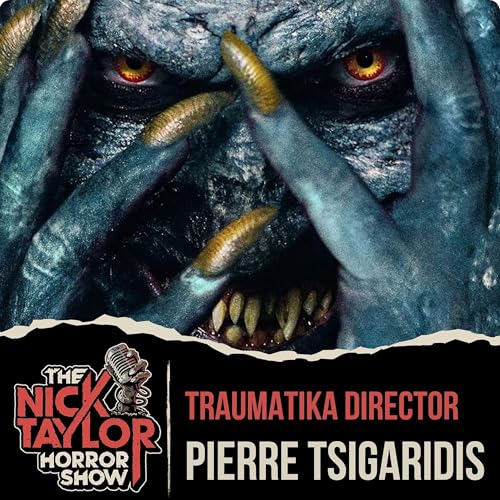
  • TRAUMATIKA Director | Pierre Tsigaridis
    Mar 6 2026
    Pierre Tsigaridis is the filmmaker behind such indie horror films as Two Witches and Traumatika. Pierre is a quadruple threat as he writes, directs, DPs, and edits his own movies, and in this episode he breaks down the making of Traumatika, a very brutal possession story and exploration of trauma and abuse. Fair warning, the movie is called Traumatika so you can expect that we dive into darker than usual subject matter in this episode.So, without further ado, here is Pierre Tsigaridis.Key TakeawaysHook the audience up front.Traumatika is a movie that goes for your throat at the jump. Not waiting to build up suspense or believability, this movie eventually goes to 11 but starts around 6 or 7. For newer and indie filmmakers you sometimes need to cater to the waning attention span of viewers by hooking them in the very beginning. You need to remember that you’re competing with a lot of other movies and if the viewer isn’t immediately hooked, sometimes they can move on. The implications of this may be unfortunate but doing this can make for a very impactful movie. So don’t ask permission to scare, just go for it. Foreign horror movies usually do this very well. Of course this depends on the type of movie you’re trying to make and sometimes you need a slow burn, but other times, you gotta just go for the jugular up front.There’s no limits to the amount of hats you can wear.Pierre wrote/produced/directed/shot/edited and even funded Traumatika. Doing this essentially makes him unstoppable as a filmmaker. His reasoning is practical: micro-budgets and fractured schedules mean you need to be able to pick up a camera and continue the movie even when people or days fall through. Being able to do all of this yourself simplifies scheduling, but can still be physically and mentally taxing, or as Pierre said, “the only thing that can stop me is my back.” Remember though, pain is temporary but cinema is forever.Light sets allow for dark explorations.Traumatika explores extremely dark subject matter, like REALLY DARK. Pierre was able to go there with his actors and get extremely gut-wrenching performances out of them because they trusted him and because he ran a supportive set. Pierre’s process included constant check-ins and letting actors shape choices. By setting up such an insulated and supportive set, the actors were actually able to go even deeper into the dark material as Pierre claimed that some of the most disturbing ideas were suggested by the actors. The big lesson: if you create a respectful and supportive environment and listen, actors will often take you further than you planned and they’ll feel ownership instead of pressure. Yes, we all know how Stanley Kubrick got the performance he did out of Shelly Duvall in The Shining, but despite how amazing that performance is, the method was abusive and should be forgotten. The real key to going super dark is creating a super safe space.Show NotesMovies and Shows MentionedTraumatikaThe Grudge (Japanese version)The Ring (Japanese and American versions referenced)ScreamHalloweenThe ExorcistEvil DeadNosferatuThe DescentThe Lord of the RingsCastle FreakPulse (also referenced by its original title Kairo)A Tale of Two SistersMulholland DriveLost HighwayInland EmpireTwin PeaksTwin Peaks: The ReturnManiac (1980)The Texas Chain Saw MassacreHenry: Portrait of a Serial KillerFollow Pierre Tsigaridis at:IMBd: https://www.imdb.com/name/nm8705238/Instagram: https://www.instagram.com/pierretsiga/X (Twitter): https://x.com/PTsigaridisFacebook: https://www.facebook.com/pierre.tsigaridis/
    Más Menos
    1 h y 9 m
  • THE BLACK PHONE 2 Composer | Atticus Derrickson
    Feb 27 2026
    Atticus Derrickson is a composer and music producer who recently scored The Black Phone 2. He is also the son of Scott Derrickson, director of both Black Phone movies, Sinister, and many others. In this conversation, Atticus and I get into composing horror scores, how to achieve fear through sound design, and much much more.Show NotesMovies and TV MentionedThe Black Phone 2The Black PhoneSinisterV/H/S 85SmileThe WitchThe LighthouseShadow Crawler (Short)People & Artists MentionedChristopher YoungTangerine DreamVangelisCliff MartinezMark Korven (including his “Apprehension Engine”)Throbbing GristleChris Carter (Throbbing Gristle member referenced in gear discussion)Ulver (band whose music is used in the Sinister tapes discussion)Scott DerricksonJoe HillAdam HendricksLou Ford (editor)Luciano (sound designer)Marina Moore (string player)Robert EggersGear and Music Tech MentionedProphet synthesizer, including Prophet-5 and Prophet-10John Carpenter style synthCrystallizer pedal recreation from Dirt Monger InstrumentsLogic Pro XCanter reel (used to create drone textures)Dulcimer (used in experimentation)Atmos and surround mixing formats, including 5.1Physical MediaWaxwork Records vinyl release for The Black Phone 2 soundtrackKey TakeawaysStart early and let tone guide the whole production.Atticus began writing tonal score pieces before the script was even finished. That let production carry his music into the shoot, so the score could help dictate direction. A lot of those early pieces ended up in the final film because they already lived inside the world of the story—and inside the director’s head.This is why Atticus recommends avoiding temp tracks: they can be a trap, tying you to a specific (often derivative) sound instead of pushing you toward something new. Working this far upstream also allows for a more holistic approach to scoring the film. The tone and feeling of Black Phone 2 is one of the things that made it so distinctive, and a big reason is that the score was completely original rather than shaped by temp music.Merge score and sound design for unified texture.Atticus describes a constant collaboration with the sound designer and mixer so elements like static, wind, and snowy ambience could interlock with the music instead of competing with it. The goal was one cohesive system—where sound design and score feel like the same organism. As a result, the movie has a very strong sense of surrealism that makes you feel like you’re in a very beautiful nightmare.Protect what’s working.Atticus told a story about a final music cue that had to be shortened to fit the edit. When he tried to cut it down, he realized it damaged the overall effect, so he fought to keep the full cue intact—and won. As a result, the scene works beautifully. Whether it’s a music cue or any other element, sometimes something is perfect as-is and it’s the surrounding pieces that need to be reshaped to support it. When something is working, protect it.Follow Atticus Derrickson at:IMBd: https://www.imdb.com/name/nm12279894/Instagram: https://www.instagram.com/atticusderricksonSpotify: https://open.spotify.com/artist/1ZAQG5e9sxTTkxKjr5OcLs?si=bT32GgkJTpKHqThqabqT1A
    Más Menos
    55 m