Episodios

  • EXPRESS MAIL: Sysco Drops ~15% after $29 Billion Bet — Dividend Growth at Risk?
    Apr 2 2026

    Sysco ($SYY) just announced the acquisition of Restaurant Depot in a $29 billion deal — and the market didn't like it. The stock fell more than $10 in a single day, briefly dipping below $70.

    Did this deal break the dividend growth story… or create a rare opportunity for long-term investors?

    Most acquisitions destroy shareholder value, but this one is more complicated. The deal expands Sysco's revenue base by roughly 20%, targets a complementary customer segment, and appears reasonably priced on a free cash flow basis. But it also introduces meaningful risks—rising debt, pressure on credit quality, and a near-term dividend growth story that looks very different from what it did a week ago.

    Greg walks through the numbers, the strategic rationale, and the trade-offs investors need to consider. More importantly, he tackles the core dilemma: how do you balance dividend growth discipline with total return potential when a high-quality business enters a gray area?


    Topics Covered:

    [00:00:41] Overview of Sysco’s $29B acquisition

    [00:02:13] Restaurant Depot’s niche and why the deal could work

    [00:05:24] Valuation breakdown: Did Sysco overpay or get a fair deal?

    [00:07:45] Debt impact, interest costs, and credit rating risks

    [00:11:11] Deleveraging plan and what it means for financial flexibility

    [00:12:18] Dividend outlook: Why growth may stall in the near term

    [00:14:24] Valuation opportunity, execution track record, and upside potential

    [00:15:26] The core dilemma: balancing dividend growth vs total return

    ________

    Dividend Growth: The Quiet Engine of Wealth

    Dividend growth investing sounds simple, but doing it well for decades is not. That’s why we wrote Dividend Growth: The Quiet Engine of Wealth—a practical guide to building a framework you can stick with when things get uncomfortable. You can get a free copy here.

    Plus, join our market newsletter for more on dividend growth investing.

    Send us Fan Mail


    ________

    Disclaimer: Past performance does not guarantee future results. This episode is for educational purposes only and is not investment advice.

    ________

    RESOURCES:

    Schedule a meeting with us: Financial Planning & Portfolio Management

    Getting into the weeds: DCM Investment Reports & Models

    If you enjoy the show, we'd greatly appreciate it if you subscribe and leave a review

    Follow us on:
    Instagram | Facebook | LinkedIn | X

    Más Menos
    18 m
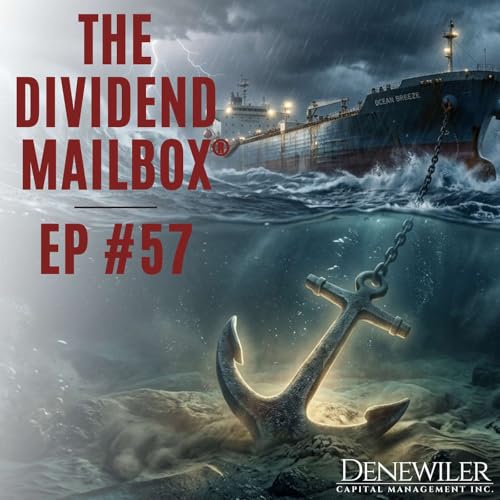
  • What’s Your Anchor? Dividends in an Uncertain Market
    Mar 23 2026

    Markets feel uncertain. Headlines are driving sentiment. Oil prices are volatile, and cracks are forming in private credit, making high yield look more attractive than ever. But is that yield actually protecting you, or pulling you into risk?

    In this episode, Greg looks at three real-world examples to examine how income behaves under pressure and what that reveals about portfolio stability.

    We break down private credit and the hidden risks behind high yields and limited liquidity, evaluate Campbell’s ($CPB) and whether its elevated dividend is sustainable amid weakening fundamentals, and revisit Chevron ($CVX) as a case study in durable, growing income during oil market volatility.

    Along the way, we explore why rising yield can be a warning sign, how cash flow drives long-term returns, and what separates sustainable dividend growth from income traps.

    Because when volatility rises, the goal isn’t to predict the next move. It’s to stay anchored.

    Topics Covered

    [00:11] Introduction

    [03:31] Market Volatility & Investor Sentiment

    [04:47] Private Credit Risks & High Yield Illusion

    [11:04] Campbell’s ($CPB): High-Yield Warning Signs

    [17:17] Chevron ($CVX): Dividend Stability in Oil Volatility

    [26:38] Berkshire Hathaway: Reminder on the Importance of Cash Flow

    [29:11] The Dividend Anchor & Final Takeaways


    ________

    Dividend Growth: The Quiet Engine of Wealth

    Dividend growth investing sounds simple, but doing it well for decades is not. That’s why we wrote Dividend Growth: The Quiet Engine of Wealth—a practical guide to building a framework you can stick with when things get uncomfortable. You can get a free copy here.

    Plus, join our market newsletter for more on dividend growth investing.

    Send us Fan Mail


    ________

    Disclaimer: Past performance does not guarantee future results. This episode is for educational purposes only and is not investment advice.

    ________

    RESOURCES:

    Schedule a meeting with us: Financial Planning & Portfolio Management

    Getting into the weeds: DCM Investment Reports & Models

    If you enjoy the show, we'd greatly appreciate it if you subscribe and leave a review

    Follow us on:
    Instagram | Facebook | LinkedIn | X

    Más Menos
    34 m
  • From Lagging to Leading: When Success Gets Complicated
    Feb 24 2026

    Dividend Growth: The Quiet Engine of Wealth

    Dividend growth investing sounds simple, but doing it well for decades is not. That’s why we wrote Dividend Growth: The Quiet Engine of Wealth—a practical guide to building a framework you can stick with when things get uncomfortable. You can get a free copy here.

    Plus, join our market newsletter for more on dividend growth investing.

    ________

    After a year of lagging the S&P 500, dividend investors are finally playing catch-up. Income is growing. Prices are rising. Total returns are improving.

    But success brings a new challenge: what happens when valuations rise, yields fall, and future returns get harder to find?

    In this episode, Greg explores the hidden downside of success in dividend growth investing. With dividend stocks outperforming early in 2026 and capital rotating out of growth and AI, he explains why rising prices create a new challenge: redeploying capital without sacrificing long-term returns. He revisits income growth vs. total return, explains why cash flow acts as the anchor in volatile markets, and walks through why sometimes the best move is to do nothing. He also contrasts chasing yield with sustainable compounding, including why shifting into Treasuries for higher income can miss the bigger picture.

    The second half of the episode moves into real portfolio examples—showing what “sell,” “hold,” and “buy” look like in practice:

    Why Emerson Electric ($EMR) no longer fits the model
    What Clorox’s ($CLX) acquisition strategy could mean for dividend growth
    How Hershey ($HSY) shows patience through commodity cycles
    Why Accenture ($ACN) represents a redeployment opportunity

    Long-term success isn’t about chasing what’s working today. It’s about discipline, letting income compound, and trusting that if cash flow grows, prices follow.


    Topics Covered:

    [00:11] Introduction
    [03:45] Income growth vs. total return investing
    [07:24] Why dividend income is the anchor
    [09:52] Valuation risk and redeployment challenges
    [10:22] Buffett, patience, and portfolio discipline
    [11:38] Treasuries vs. dividend stocks: yield vs. growth
    [13:03] Cash flow as the North Star
    [15:26] Emerson Electric ($EMR): selling a winner
    [20:03] Clorox ($CLX): acquisition risk and dividend sustainability
    [27:40] Hershey ($HSY): commodity cycles and patience
    [32:03] Accenture ($ACN): dividend growth opportunity
    [35:11] Redeploying capital in rising markets
    [36:07] Final takeaway: consistency and long-term compounding


    Send us Fan Mail


    ________

    Disclaimer: Past performance does not guarantee future results. This episode is for educational purposes only and is not investment advice.

    ________

    RESOURCES:

    Schedule a meeting with us: Financial Planning & Portfolio Management

    Getting into the weeds: DCM Investment Reports & Models

    If you enjoy the show, we'd greatly appreciate it if you subscribe and leave a review

    Follow us on:
    Instagram | Facebook | LinkedIn | X

    Más Menos
    39 m
  • The One Number That Drives Long-Term Returns
    Jan 24 2026

    Dividend Growth: The Quiet Engine of Wealth

    Dividend growth investing sounds simple, but doing it well for decades is not. Markets get noisy. Numbers get confusing. That’s why we wrote Dividend Growth: The Quiet Engine of Wealth—a practical guide to building a framework you can stick with when things get uncomfortable. You can get a free copy here.

    Plus, join our market newsletter for more on dividend growth investing.

    ________

    If you could only look at one number to judge whether a dividend can keep growing for decades, what would it be?

    In this episode, we strip investing back to first principles. Greg talks about why investors get overwhelmed with data and how focusing on the wrong metrics can quietly lead you off track. Using a simple hot dog stand analogy, he explains why familiar numbers like return on equity (ROE) and return on assets (ROA) can distort reality, especially when leverage enters the picture.

    From there, he introduces return on invested capital (ROIC) and shows why it does a better job connecting business quality to long-term dividend growth. Later, Greg addresses what ROIC can’t tell you and why context always matters.

    Along the way, he walks through real-world examples, including Kraft Heinz ($KHC), Southern Company ($SO), Williams-Sonoma ($WSM), and Microsoft ($MSFT), to show how capital allocation decisions compound over time.


    [00:11] Introduction

    [02:50] Information overload and the danger of focusing on the wrong numbers

    [04:40] The hot dog stand: ROA vs. ROE and the role of leverage

    [08:15] Why both ROA and ROE can mislead dividend investors

    [09:35] Return on invested capital (ROIC) explained in plain English

    [13:30] ROIC, cost of capital, and long-term value creation

    [14:55] Case study: Kraft Heinz and why high yield can be a trap

    [18:30] Case study: Southern Company and when low returns still “work”

    [22:10] Case study: Williams-Sonoma and disciplined capital allocation

    [24:55] Case study: Microsoft and the power of long-term compounding

    [29:10] The limits of ROIC and why incremental returns matter

    [31:25] Final takeaway: one number, long time horizons, evolving businesses

    Send us Fan Mail


    ________

    Disclaimer: Past performance does not guarantee future results. This episode is for educational purposes only and is not investment advice.

    ________

    RESOURCES:

    Schedule a meeting with us: Financial Planning & Portfolio Management

    Getting into the weeds: DCM Investment Reports & Models

    If you enjoy the show, we'd greatly appreciate it if you subscribe and leave a review

    Follow us on:
    Instagram | Facebook | LinkedIn | X

    Más Menos
    34 m
  • Dividend Growth vs. Distraction: A Reset for Long-Term Investors
    Dec 23 2025

    📘Free Short Book: Dividend Growth, the Quiet Engine of Wealth

    If today’s market feels noisy, this short book lays out a calmer framework.

    Dividend Growth: The Quiet Engine of Wealth explains the same principles discussed in this episode—discipline, compounding, sustainable income growth, and staying focused when markets distract.

    It’s a quick read (about 90 minutes) and walks through how dividend growth works across full market cycles, including bull and bear markets.

    👉 Download the free eBook:
    growmydollar.com/dividend-growth-book

    Plus, join our market newsletter for more on dividend growth investing.

    ________

    Dividend growth investing can feel uncomfortable when a handful of growth stocks dominate headlines and performance. When value lags and momentum strategies seem unstoppable, it’s easy to wonder whether patience and discipline still make sense.

    To round out 2025, Greg steps back from the noise to revisit foundational principles of dividend growth investing and explain why they remain intact, even in today’s market. He walks through why distraction is one of the biggest risks investors face, how compounding quietly does the heavy lifting, and why tying income growth to long-term economic growth creates a durable framework that doesn’t depend on short-term cycles

    From the “Vitamin C” concept to classic compounding examples like the penny story and the Rule of 72, this episode reinforces how small, consistent decisions compound into meaningful income over time. Greg also revisits dividend growth targets, yield “sweet spots,” and the practical levers investors can pull to sustain income growth. The episode culminates in a real-world look at the model portfolio, which has been running since 2010.

    From all of us here at The Dividend Mailbox®, Happy Holidays!


    Topics covered:

    00:00 – Introduction and why this is a good time to revisit first principles

    01:10 – Market distractions, information overload, and staying focused

    03:20 – Introducing the new book: Dividend Growth: The Quiet Engine of Wealth

    04:20 – The “Vitamin C” concept and daily discipline

    05:40 – The penny story and how compounding really works

    09:40 – The Rule of 72 and the long-term cost of short-term decisions

    11:10 – “The line”: GDP growth, earnings growth, and dividend growth

    14:30 – Targeting 7% dividend income growth

    16:30 – The 2–4% dividend yield sweet spot

    17:55 – Income growth levers: reinvesting, reallocating, and dividend increases

    20:40 – The Model Portfolio story and track record

    26:40 – Final thoughts on discipline, sustainability, and staying the course


    Have questi

    Send us Fan Mail


    ________

    Disclaimer: Past performance does not guarantee future results. This episode is for educational purposes only and is not investment advice.

    ________

    RESOURCES:

    Schedule a meeting with us: Financial Planning & Portfolio Management

    Getting into the weeds: DCM Investment Reports & Models

    If you enjoy the show, we'd greatly appreciate it if you subscribe and leave a review

    Follow us on:
    Instagram | Facebook | LinkedIn | X

    Más Menos
    30 m
  • No Revenue Growth, No Dividend Growth
    Nov 19 2025

    How strong is your dividend growth portfolio? Send it to us for a free evaluation at dcm.team@growmydollar.com. Plus, join our market newsletter for more on dividend growth investing.

    ________

    Consumer staples look reliable with strong brands, steady cash flow, and good yields. But dividends can’t outrun revenue forever, and across this sector the growth engine has stalled.

    In this episode, Greg begins with a quick recap of how 2025 has unfolded so far, highlighting strong income growth for the model portfolio, a handful of growth names driving market performance, and value strategies continuing to lag. From that backdrop, he digs into the disconnect between the appearance of safety in consumer staples and the underlying fundamentals that truly support dividend growth.

    Using Kimberly-Clark ($KMB), General Mills ($GIS), Colgate ($CL), Procter & Gamble ($PG), and Church & Dwight ($CHD) as case studies, Greg shows how companies with high ROIC and defensive business models can still become no-growth traps. These companies were once consistent outperformers with impressive dividend histories, but the economy evolves and so have their growth profiles.

    Topics Covered:

    03:05 – Comparing dividend growth to the S&P 500

    05:43 – Investing styles cycle and chasing rarely works

    07:07 – Surface numbers can be misleading

    11:00 – Kimberly-Clark: attractive metrics masking zero growth

    16:42 – General Mills: high yield but barely growing

    18:36 – Colgate: excellent margins, slow dividend progression

    19:58 – Procter & Gamble: financial strength, but limited growth

    21:03 – Church & Dwight: a past outlier that doesn’t meet our targets

    23:57 – Kimberly-Clark’s planned Kenvue acquisition

    29:36 – The mosaic of evidence investors should pay attention to

    Have questions or want a second opinion on your dividend strategy?
    Email us anytime at dcm.team@growmydollar.com for a free portfolio review and ongoing dividend insights.

    Send us Fan Mail


    ________

    Disclaimer: Past performance does not guarantee future results. This episode is for educational purposes only and is not investment advice.

    ________

    RESOURCES:

    Schedule a meeting with us: Financial Planning & Portfolio Management

    Getting into the weeds: DCM Investment Reports & Models

    If you enjoy the show, we'd greatly appreciate it if you subscribe and leave a review

    Follow us on:
    Instagram | Facebook | LinkedIn | X

    Más Menos
    34 m
  • The Free Lunch Illusion: How Fear and FOMO Feed Wall Street
    Oct 15 2025

    How strong is your dividend growth portfolio? Send it to us for a free evaluation at dcm.team@growmydollar.com. Plus, join our market newsletter for more on dividend growth investing.

    ________

    Wall Street’s creativity knows no bounds, especially when it comes to selling safety or income. In this episode, Greg revisits Warren Buffett’s timeless wisdom to uncover who’s “swimming naked” in today’s market.

    Drawing on Rob Arnott and Edward McQuarrie’s recent CFA research on risk and investor psychology, he explains how both fear of loss and fear of missing out drive market behavior far more than models admit. Greg dissects several headline-grabbing products, from “high income” S&P 500 ETFs and 77% yielding Nvidia options funds to the Dual Directional Buffer ETF and the “Magnificent Seven Snowball,” revealing how they offer the illusion of safety or income while eroding long-term returns. He closes with a Buffett-style case study on Occidental Petroleum and Berkshire Hathaway’s recent deal, underscoring the power of simple, steady cash flow over engineered complexity.

    As Leonardo da Vinci said, “Simplicity is the ultimate sophistication,” and it is also one of the surest ways to compound wealth.

    Topics Covered

    [00:00:41] – Who’s swimming naked? The illusion of risk-free returns
    [00:02:31] – Understanding risk and fear in markets: Rob Arnott’s research
    [00:06:22] – How fear of loss and FOMO distort risk premiums
    [00:09:19] – The rise of high-income ETFs: chasing yield in disguise
    [00:12:32] – The Nvidia ($NVDA) income strategy ETF: 77% yield, but at what cost?
    [00:16:09] – Dual Directional Buffer ETF: the illusion of protection
    [00:21:14] – The “Mag 7 Snowball” structured note: Wall Street’s creative packaging
    [00:25:47] – Why these structures guarantee Wall Street wins
    [00:26:45] – Buffett, Occidental ($OXY), and the value of consistent cash flow
    [00:32:20] – Simplicity, cash flow, and the sophistication of staying patient

    For more on dividend growth investing or to request a free portfolio review, email dcm.team@growmydollar.com.


    Past performance does not guarantee future results. This episode is for educational purposes only and is not investment advice.

    Send us Fan Mail


    ________

    Disclaimer: Past performance does not guarantee future results. This episode is for educational purposes only and is not investment advice.

    ________

    RESOURCES:

    Schedule a meeting with us: Financial Planning & Portfolio Management

    Getting into the weeds: DCM Investment Reports & Models

    If you enjoy the show, we'd greatly appreciate it if you subscribe and leave a review

    Follow us on:
    Instagram | Facebook | LinkedIn | X

    Más Menos
    34 m
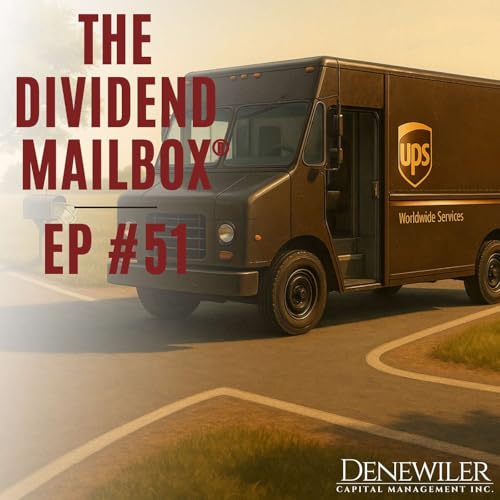
  • UPS Stock: Can It Still Deliver for Dividend Investors?
    Sep 23 2025

    How strong is your dividend growth portfolio? Send it to us for a free evaluation at dcm.team@growmydollar.com. Plus, join our market newsletter for more on dividend growth investing.

    ________

    When a stock’s price is falling, its yield is sky-high, and there’s plenty of doubt, it looks like a classic value trap. Does it ever make sense for dividend growth investors to walk into that trap? Sometimes, what’s under the hood tells a very different story.

    In Episode 51, Greg revisits UPS ($UPS), a company we last covered years ago but is now back on our radar for entirely new reasons. Rising wages, Amazon contract changes, and global trade tariffs have cut the stock price in half since 2022, sending its dividend yield toward 8%. At first glance, it looks like the market is pricing it for a dividend cut.

    But step behind the headlines, and the story gets more compelling: UPS continues to post solid margins, generates strong cash flow, and has the scale and efficiency to remain a leader in global logistics. Even if a dividend cut occurs, investors may still come out ahead with sustainable yields and renewed dividend growth potential. Greg breaks down the scenarios, risks, and catalysts that make UPS a compelling story to consider.


    Topics Covered:

    • [00:03:32] Why UPS looks like a high-yield “problem child” but may still be a dividend growth play
    • [00:06:20] UPS’s history: growth in revenue, profits, and dividends since 1999
    • [00:09:58] The “trifecta” of headwinds—union wage hikes, Amazon contract cuts, and tariffs
    • [00:12:36] Comparing UPS vs. FedEx ($FDX), Amazon ($AMZN), USPS, and DHL in market share and profitability
    • [00:19:57] How AI could improve delivery efficiency
    • [00:21:12] Business metrics, profitability, debt profile, and why UPS’s financing signals investor confidence
    • [00:25:27] The dividend dilemma: can UPS sustain its payout, or is a cut coming?
    • [00:27:44] Three scenarios: steady dividend, improved valuation, or a cut that resets growth
    • [00:31:47] Long-term catalysts: tariffs, Amazon shifts, and global trade recovery
    • [00:33:37] What research firms (Morningstar, Value Line) are projecting for UPS
    • [00:34:56] Final take: UPS as a value play that still pays you to wait


    Send us Fan Mail


    ________

    Disclaimer: Past performance does not guarantee future results. This episode is for educational purposes only and is not investment advice.

    ________

    RESOURCES:

    Schedule a meeting with us: Financial Planning & Portfolio Management

    Getting into the weeds: DCM Investment Reports & Models

    If you enjoy the show, we'd greatly appreciate it if you subscribe and leave a review

    Follow us on:
    Instagram | Facebook | LinkedIn | X

    Más Menos
    38 m