Episodios

  • 174 - Amit Goldenberg: Collective Emotions and Social Media (REAIR)
    Apr 17 2026

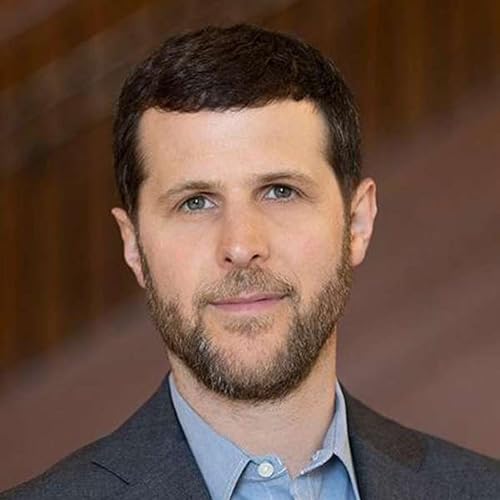
    In this reair episode from 2023, Eric chats with Amit Goldenberg, Assistant Professor of Business Administration at Harvard Business School. Amit studies emotions in social interactions, for example in political contexts and on social media. He was a journalist and author before becoming an academic.

    In this episode, Eric and Amit talk about how emotions operate in groups. Do crowds easily go “mad”? What emotions spread faster in groups? Why are we drawn to people more politically extreme than us? How is social media shaping our emotions and political behavior? Finally, Amit shares his journey from being a journalist to being a psychologist at a business school.

    JOIN OUR SUBSTACK! Stay up to date with the pod and become part of the ever-growing community :) https://stanfordpsypod.substack.com/

    If you found this episode interesting at all, consider leaving us a good rating! It just takes a second but will allow us to reach more people and make them excited about psychology.

    Links:

    Amit's paper on collective emotions
    Amit's paper on why we are attracted to morally extreme individuals
    Amit's website

    Eric's website
    Eric's Twitter @EricNeumannPsy

    Podcast Twitter @StanfordPsyPod
    Podcast Substack https://stanfordpsypod.substack.com/

    Let us know what you think of this episode, or of the podcast! :) stanfordpsychpodcast@gmail.com

    Más Menos
    48 m
  • 173 - Juliana Schroeder: Mistakenly Seeking Solitude (REAIR)
    Apr 3 2026

    In this reair episode, Eric chats with Juliana Schroeder, Associate Professor in the Management of Organizations at Berkeley Haas. She studies how people think about the minds of other people, and how they are often wrong trying to understand what others are up to. Her work has been discussed in outlets ranging from Vice to The Atlantic and Forbes.

    Eric and Juliana review her exciting recent work on “undersociality.” Talking to other people is often meaningful, not just for extraverts, and yet we hesitate to talk to others, making overly pessimistic predictions about how awkward and unpleasant such interactions would be. This leads us to “mistakenly seek solitude.” Juliana discusses what we can do to motivate ourselves to talk to others more, why that is so beneficial, and why she herself struggles to do it.

    Links:

    Juliana's review paper on undersociality: https://www.sciencedirect.com/science/article/pii/S1364661322000432?casa_token=KI1Vjeg9NKUAAAAA:aTAEDP2eF1ay3I0rGI74FHNW21s83r_KvXCQMvr5auCxaVnhEah82tbASwjzwfc-68D54q8Kc2E

    Juliana's key empirical paper: https://psycnet.apa.org/doiLanding?doi=10.1037/a0037323

    Juliana's Twitter

    Eric's website

    Eric's Twitter @EricNeumannPsy

    Podcast Twitter @StanfordPsyPod

    Podcast Substack https://stanfordpsypod.substack.com/

    Let us know what you think of this episode, or of the podcast! :) stanfordpsychpodcast@gmail.com

    Más Menos
    47 m
  • 172 - Julia Chatain: Embodied Learning and Educational Technology in Mathematics and Beyond (REAIR)
    Mar 20 2026

    Adani chats with Dr. Julia Chatain, Senior Scientist at the Singapore-ETH Centre of ETH Zürich. Julia is a computer scientist and learning scientist responsible for building a new research program, “Future Embodied Learning Technologies” (FELT), focusing on exploring AI-powered embodied learning interventions to support low-progress learners and learners with special needs, both at the cognitive and the affective levels. Before that, she led the EduTech group at ETH Zürich, conducting Research and Development of educational technology through co-design with lecturers and students, with a focus on XR, AI-supported learning, and accessibility.

    In this episode, Adani and Julia discuss Julia’s recent work on embodied learning in mathematics, much of which was part of her doctoral research at ETH Zürich conducted with her advisors Prof. Manu Kapur and Prof. Robert Sumner. They also dive into her journey that led her to where she is now, and discuss what she is currently working on at the Singapore-ETH Centre and beyond!

    If you found this episode interesting at all, subscribe on our Substack and consider leaving us a good rating! It just takes a second but will allow us to reach more people and make them excited about psychology.

    Julia’s website: https://juliachatain.com/
    Julia’s paper on Grounding Graph Theory in Embodied Concreteness with VR: https://doi.org/10.3929/ethz-b-000583039
    Singapore-ETH Centre’s website: https://sec.ethz.ch/
    Julia’s Twitter @JuliaChatain

    Adani’s website: https://www.adaniabutto.com/
    Adani’s Bluesky: https://bsky.app/profile/adani.bsky.social

    Podcast Twitter @StanfordPsyPod
    Podcast Substack https://stanfordpsypod.substack.com/

    Let us know what you thought of this episode, or of the podcast! :)
    stanfordpsychpodcast@gmail.com

    Más Menos
    38 m
  • 171 - Casey Kenyon Brown: Can Your Relationships Make You Depressed? (REAIR)
    Mar 6 2026

    This week, Enna chats with Dr. Casey Kenyon Brown, Professor at Georgetown University in the Department of Psychology and the Interdisciplinary Program in Neuroscience. She has received numerous honors and awards, including the prestigious Pathway to Independence Award from the National Institute on Aging and the Rising Star Award from the Association for Psychological Science.

    Casey’s research examines how we share, understand, and influence one another’s emotions. She’s interested in how these interpersonal emotional processes are beneficial for healthy aging, and how these processes may go awry and contribute to depression.

    In this episode, Casey shares her journey in psychology, talks about her research on emotion and relationships, and provides advice on how we can build strong connections with people we love.

    Please join our substack (https://stanfordpsypod.substack.com/) to stay connected with our community of listeners from all over the world! If you found this episode interesting, please consider leaving us a good rating. It just takes a minute but will allow us to reach more listeners to share our love for psychology.


    Casey’s Lab Website: https://careslab.facultysite.georgetown.edu/

    Casey’s Lab Twitter: @CARESlab_GU

    Casey’s paper on empathy and shared depression: https://doi.org/10.1177/21677026221141852


    Enna’s LinkedIn: https://www.linkedin.com/in/ennayuxuanchen/

    Enna’s Twitter: @EnnaYuxuanChen


    Podcast Contact: stanfordpsychpodcast@gmail.com

    Podcast Twitter: @StanfordPsyPod

    Más Menos
    40 m
  • 170 - Marginalia Episode: Erica Bailey on Authenticity (REAIR)
    Feb 20 2026

    Marginalia Episodes are in collaboration with Marginalia Science! Marginalia Science is a community committed to promoting the work of scholars who are traditionally underrepresented in academia. In each Marginalia Episode, we feature a guest who has been featured in the Marginalia Science Monthly Newsletter.

    In this re-air episode from 2025, Enna chats with Professor Erica Bailey at UC Berkeley Haas School of Business. Erica broadly studies the construct of authenticity, asking questions like, how do we know who we are? When do we feel the most like ourselves? Why do we often fail, despite our best efforts, to share our inner world with others? In this episode, we discuss her recent paper on how self-perceptions influence subjective authenticity. To learn more about Erica, you can read the Marginalia Science Newsletter below.

    Episode on Marginalia Science: https://www.stanfordpsychologypodcast.com/episodes/episode/7927b876/104-special-episode-marginalia-science

    Marginalia Newsletter featuring Erica: https://substack.com/home/post/p-153969383

    Erica’s Paper: https://osf.io/preprints/psyarxiv/9tc27

    Erica’s Website: https://sites.google.com/view/ericarbailey

    Erica’s LinkedIn: https://www.linkedin.com/in/erica-bailey-ph-d-22038172/

    Erica’s Twitter: @ericarbailey

    Enna’s LinkedIn: https://www.linkedin.com/in/ennayuxuanchen/

    Enna’s Twitter: @EnnaYuxuanChen

    Podcast Twitter: @StanfordPsyPod

    Podcast Substack: https://stanfordpsypod.substack.com/

    Podcast Contact: stanfordpsychpodcast@gmail.com

    Más Menos
    50 m
  • 169 - Tamar Kushnir: The Power of Imagination
    Feb 6 2026

    Adani chats with Tamar Kushnir, Professor of Psychology and Neuroscience at Duke University. Tamar’s research spans pretty much everything you can imagine: Cognitive development, causal learning, social cognition, moral cognition, cultural psychology, free will, imagination, counterfactual thinking, self-control, and more! In this conversation, we discuss Tamar’s fascinating review on imagination and social cognition in childhood alongside many fun tangents about superheroes, the Wright Brothers, and collective social change. Tamar also shares what she most enjoys about research in the first place, and what she’s excited for next!

    Tamar’s faculty webpage: https://dibs.duke.edu/profile/tamar-kushnir/

    Tamar’s lab website: https://ecclabduke.com/

    Tamar’s paper: https://doi.org/10.1002/wcs.1603


    Adani’s website: https://www.adaniabutto.com

    Adani’s Bluesky: @adani

    Podcast Twitter @StanfordPsyPod

    Podcast Substack https://stanfordpsypod.substack.com/

    Let us know what you thought of this episode, or of the podcast! :) stanfordpsychpodcast@gmail.com

    Más Menos
    47 m
  • 168 - Robin Dunbar: How Many People Can You Be Friends With? (REAIR)
    Jan 23 2026

    In this re-air episode from 2022, Eric chats with Robin Dunbar, Emeritus Professor of Evolutionary Psychology at Oxford. Robin has famously studied the evolution of the human brain, arguing that our brain developed to understand the complex social world we have created for ourselves. Most know him for “Dunbar’s number,” or the limit to the number of individuals we can maintain stable relationships with. Robin has received more awards than could be counted, including the prestigious Huxley Memorial Medal. He has written various books, most relevant for this conversation a book called “Friends: Understanding the Power of our Most Important Relationship.”

    In this wide-ranging episode, Eric and Robin discuss why Dunbar’s number is actually a whole series of numbers. Robin explains how he arrived at this number, why it is so relevant to everything from our globalized world and big cities to maintaining friendships. Do psychopaths need friends to be happy? If you don’t like people, should you move into the woods and never talk to anyone again? He explains why we gossip and what makes something funny. Finally, he shares some personal stories about his career and why his discovery of Dunbar’s number was actually an accident.

    Links:

    Robin's Friendship book: https://www.barnesandnoble.com/w/friends-robin-dunbar/1138785864
    Robin's most recent book on religion: https://www.penguin.co.uk/books/316135/how-religion-evolved-by-dunbar-robin/9780241431788

    Eric's website
    Eric's Twitter @EricNeumannPsy

    Podcast Twitter @StanfordPsyPod
    Podcast Substack https://stanfordpsypod.substack.com/

    Let us know what you think of this episode, or of the podcast! :) stanfordpsychpodcast@gmail.com

    Más Menos
    1 h y 13 m
  • 167 - Nicky Sullivan: Bridging the Gap Between Academic Research and Real-World Impact
    Jan 8 2026

    Anjie chats with Dr. Nicky Sullivan, senior researcher at Impact Justice, a national non-profit innovation and research center focused on transforming the U.S. criminal justice system. Dr. Sullivan received his PhD from Stanford Psychology Department in 2024. During his PhD, he studied parents' and children's beliefs about race and racial inequality. In this episode, Nicky shares his journey from studying race in the lab to evaluating innovative initiatives like The Homecoming Project at Impact Justice. He offers practical advice for grad students on networking, while reflecting on the challenges of pursuing system reform in today’s shifting political landscape.

    If you found this episode interesting at all, subscribe on our Substack and consider leaving us a good rating! It just takes a second but helps us reach more people and get them excited about psychology.

    Links:

    Nicky’s linkedin: https://www.linkedin.com/in/nicky-sullivan-phd/
    Impact Justice: https://impactjustice.org/

    Anjie’s website: https://anjiecao.github.io/

    Podcast X @StanfordPsyPod
    Podcast Substack: https://stanfordpsypod.substack.com/

    Más Menos
    38 m