

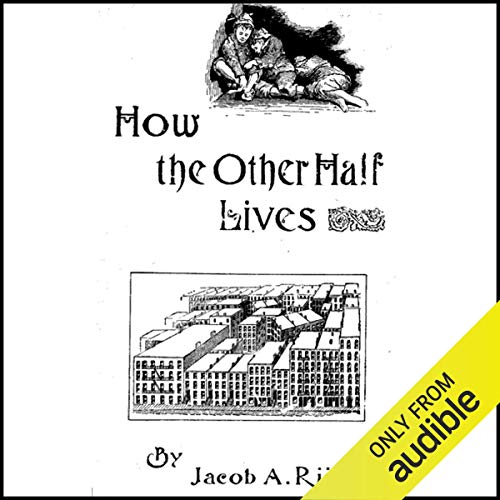
How the Other Half Lives
No se pudo agregar al carrito
Add to Cart failed.
Error al Agregar a Lista de Deseos.
Error al eliminar de la lista de deseos.
Error al añadir a tu biblioteca
Error al seguir el podcast
Error al dejar de seguir el podcast
Obtén 30 días de Standard gratis
Compra ahora por $20.56
-
Narrado por:
-
Danny Campbell
-
De:
-
Jacob Riis
How the Other Half Lives was a pioneering work of photojournalism by Jacob Riis, documenting the squalid living conditions in New York City slums in the 1880s. It served as a basis for future muckraking journalism by exposing the slums to New York City's upper and middle class. How The Other Half Lives quickly became a landmark in the annals of social reform. Riis documented the filth, disease, exploitation, and overcrowding that characterized the experience of more than one million immigrants. He helped push tenement reform to the front of New York's political agenda, and prompted then-Police Commissioner Theodore Roosevelt to close down the police-run poor houses. Roosevelt later called Riis "the most useful citizen of New York". Riis's idea inspired Jack London to write a similar expos on London's East End, called People of the Abyss.
Public Domain (P)2009 Audible, Inc.Los oyentes también disfrutaron:



Reseñas editoriales
Narrator Danny Campbell beautifully illustrates this blunt and righteous text. Photojournalist and consciousness objector Jacob Riis unearthed the plight of New York slum dwellers in the 1880s via brutally honest photography. He was a pioneer of art in the cause of social justice. He also wrote singeing indictments of the other half, the people of privilege who are indifferent to and often profit from the misery of the poor. His criticism is specific to the New York of that time, but on a broader note it highlights the legacy of inequity among mankind. Riis is not the dispassionate witness; he is deeply committed to shaming those who pretend ignorance of inequity. Campbell’s quietly angry voice shares Riis’ turbulent emotions, which range from outrage to grief.
Las personas que vieron esto también vieron:

Great trip back in time
Se ha producido un error. Vuelve a intentarlo dentro de unos minutos.
Of Historical Interest
Se ha producido un error. Vuelve a intentarlo dentro de unos minutos.
Early Muckraking to a Fault
Se ha producido un error. Vuelve a intentarlo dentro de unos minutos.
Mini series please
Se ha producido un error. Vuelve a intentarlo dentro de unos minutos.
. the similarities of the lower middle and upper class to today's political and class issues are astounding and I opening.
great history
Se ha producido un error. Vuelve a intentarlo dentro de unos minutos.