

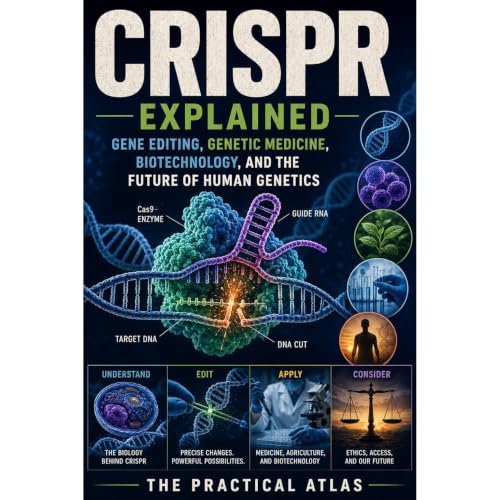
CRISPR Explained
Gene Editing, Genetic Medicine, Biotechnology, and the Future of Human Genetics
Failed to add items
Add to Cart failed.
Add to Wish List failed.
Remove from wishlist failed.
Adding to library failed
Follow podcast failed
Unfollow podcast failed
3 Months Free + $20 Audible credit

CRISPR Explained
Buy for $3.99
-
Narrated by:
-
Virtual Voice

This title uses virtual voice narration
CRISPR Explained: Gene Editing, Genetic Medicine, Biotechnology, and the Future of Human Genetics is a practical introduction to how modern gene editing works and why it matters. It begins with the biological basics that make CRISPR possible: DNA, genes, chromosomes, cells, and the repair systems cells use when genetic material is damaged. From there, it shows how a bacterial immune defense was turned into a method for locating, cutting, and rewriting specific DNA sequences. The result is a grounded explanation of a technology that has moved gene editing from a narrow specialist task into a major tool in research, medicine, and agriculture.
The book explains the core parts of CRISPR clearly: guide RNA, Cas enzymes, target recognition, DNA cutting, and the repair pathways that determine what happens after an edit is made. It also covers the main versions of the technology now shaping the field, including standard CRISPR-Cas systems, base editing, prime editing, and gene regulation tools that change gene activity without cutting DNA. Readers are shown how a real editing project is planned, including target choice, delivery into cells, experimental design, accuracy testing, and common reasons an edit may fail. The emphasis is on the practical logic of the process, not just the headline claims.
A major focus is what CRISPR can and cannot do in the real world. The book looks at inherited disorders, cancer research, antiviral strategies, and the effort to build new forms of genetic medicine. It also examines crop improvement, food production, and engineered organisms, with attention to the practical effects these applications may have for patients, farmers, researchers, and consumers. Rather than treating gene editing as a simple breakthrough story, it explains the obstacles that shape actual use, including off-target effects, delivery problems, unintended changes, biological complexity, and the difference between success in a laboratory experiment and safe results in living organisms.
The ethical and regulatory questions are treated with the same level of care. Human germline editing, fairness in access to treatment, oversight of powerful biotechnology, and the long-term consequences of changing human genetics are presented in a balanced and readable way. This is a useful guide for readers who want a clear account of the science, the methods, the applications, and the limits of CRISPR without hype, jargon, or vague promises.
FROM THE HALF HOUR HELP SERIES OF BOOKS
The Half Hour Help Series is a collection of concise, practical guides designed to teach the basics of a subject or provide quick solutions to everyday problems. Each book is crafted to be read in about 30-60 minutes, making it ideal for busy readers who want to learn something new or solve a specific issue without wading through lengthy manuals or complex jargon.
Whether you're looking to understand a new concept, develop a skill, or tackle a challenge, these guides break things down into simple, actionable steps.
Focused on clarity and efficiency, the Half Hour Help Series covers a wide range of topics—from personal development and productivity to science and technology, wellness, culture, and beyond.
Every title is built around the idea that a little help can go a long way, and with just half an hour, readers can gain valuable insights and confidence to move forward.
It's smart support when you need it, without the fluff.