Episodios

  • Certainty Kills Civic Imagination | Michael Rohd
    Mar 30 2026

    Send us Fan Mail

    Bio:

    Michael Rohd has spent thirty-five years asking the same question from increasingly systemic angles: what does it take for people who don't usually talk to each other to actually talk, and what happens when they do?

    He started in 1991, running theater workshops on the secret fifth floor of a Washington DC homeless shelter — a hidden HIV clinic where people sought care anonymously because being seen there put them at risk. He didn't know yet that what he was building had a name. A decade later, he co-founded Sojourn Theatre in Portland, spent nine years at Northwestern University, then moved to ASU before joining the University of Montana in 2022 to found the Co-Lab for Civic Imagination. His book, *Theatre for Community, Conflict, and Dialogue*, has been widely translated and remains the field manual for applied civic theater practice in the US.

    His current project — State of Mind, done in partnership with Montana Repertory Theater — is a touring theater and public dialogue residency on behavioral health that has now reached 37 Montana communities and more than 2,700 participants. Montana has ranked in the top five states for suicide for thirty consecutive years. The work is not incidental.

    In this conversation: what kills civic imagination (certainty is first on the list), what a well-designed facilitation process makes possible that a badly designed one doesn't, why theater can't change people's deeply held beliefs but can be a gymnasium for practicing courage, what students in rural Montana keep telling adults about adult behavior, the moment a Great Falls school board meeting stopped because board members were moved to tears, and what you do with thirty years of witnessing.

    ---

    In this episode:

    - The origin story: HIV workshops on a secret fifth floor in 1991
    - Dwight Conquergood and the ethics of working as an outsider in communities not your own
    - Augusto Boal and the discovery that someone else was already doing adjacent work
    - What kills civic imagination: certainty, lack of trust, no analysis of power, racism and exclusion
    - Process design: what a well-designed facilitation makes possible
    - What theater can't do — and why Rohd is careful not to overclaim
    - State of Mind: 37 communities, care commitments, and what young people keep saying about adults
    - The Great Falls moment: a school board meeting halted by student testimony
    - The most surprising finding: students surfacing adult drinking, drug use, and modeling as the obstacle to their own wellbeing
    - What you do with thirty years of bearing witness

    ---

    Links:

    - Michael Rohd's article on the Malta 2.0 residency (with photographs): https://michaelrohd.substack.com/p/state-of-mind-20-malta-montana
    - Co-Lab for Civic Imagination at University of Montana: https://www.umcivicimagination.com/
    - State of Mind project: https://www.headwatersmt.org/stateofmind-mentalhealth/
    - *Theatre for Community, Conflict, and Dialogue* by Michael Rohd: https://www.heinemann.com/products/e00002.aspx
    - Augusto Boal, *Games for Actors and Non-Actors*:

    Support the show

    The Principal Uncertainty is a podcast by George Laufenberg. It's not about finding solid ground — it's about staying oriented in open water.

    Más Menos
    1 h y 3 m
  • Not the Hardest Thing We've Done | Salmaan Kamal
    Mar 17 2026

    Send a text

    Dr. Salmaan Kamal is an internal medicine physician and addiction specialist at the VA Medical Center in West Los Angeles, where he cares for veterans experiencing homelessness. At every major crossroads — leaving Alabama for Princeton, returning home for medical school, turning down an Ivy League fellowship — he chose proximity to need and to family over prestige. In this conversation, we trace that pattern and what it taught him about trusting his own instincts. We talk about what happens when his daughter was born at 23 weeks and how surviving that changed the scale of everything that followed. And we get into the daily discipline of putting the phone away at six in the evening — what that discomfort actually feels like, and what's on the other side of it. Salmaan is one of the most thoughtful people I know. This conversation is about what it costs to stay that way.

    ---

    Salmaan Kamal, MD, was raised in Tuscaloosa, Alabama, and he attended Princeton University with a focus on global health and health policy. After graduation, Kamal worked as a policy associate at the National Coalition on Health Care in Washington, D.C., where he advocated for policy reform that improved value in the U.S. health care system.

    Kamal attended medical school at the University of Alabama at Birmingham (UAB), where he led the student-run free clinic for the uninsured. He completed internal medicine residency and chief residency at UAB Hospital, where he completed the Society of General Internal Medicine's Leadership in Health Policy Program. After residency, he completed the UCLA National Clinician Scholars Program, a health services research and public health fellowship. His work focuses on improving care for people with a history of homelessness, addiction, and criminal legal system involvement. He currently cares for people experiencing homelessness at the West Los Angeles VA Medical Center.

    For more on some of Salmaan's work: https://youtu.be/VG3R6XNC1Qk?si=_MNIzk2xDRqBMB4J and https://healthpolicy.ucla.edu/our-work/health-equity-challenge/finalists/2024/salmaan-kamal

    In this episode:

    - Growing up in Tuscaloosa with two physician parents — and the family intervention that sent him to Princeton instead of Alabama
    - The moment in the operating room when he realized he was the only one looking at the clock
    - A cold email, a twenty-minute walk across campus, and finding his people
    - What it means to choose a safety-net hospital over a bigger name — again and again
    - His daughter's birth at 23 weeks, and how "this is not the hardest thing we've done" became a family compass
    - Putting the phone away at six — what boredom actually feels like, and why productivity was the permission structure to start
    - The question he's sitting with now: what happens when the constraint disappears and work becomes optional again
    - What he'd build if he trusted himself completelyDr. Salmaan Kamal, MD, was raised in Tuscaloosa, Alabama, and he attended Princeton University with a focus on global health and health policy.

    Support the show

    The Principal Uncertainty is a podcast by George Laufenberg. It's not about finding solid ground — it's about staying oriented in open water.

    Más Menos
    47 m
  • A Shrine to Something | Alison Dilworth
    Mar 3 2026

    Send a text

    Alison Dilworth is a Philadelphia-based artist, muralist, and shrine-maker whose work spans the profoundly private and the intensely public. She is also someone who has spent her adult life thinking about what it costs to hold things — grief, love, other people's stories, a kid running toward traffic — and what it means to be genuinely present to any of it.

    We talk about what it means to make a shrine, and how that practice bleeds into everything else she makes. We talk about the difference between curiosity and bearing witness — and why that distinction matters more than it might seem. We talk about girlhood, about what it felt like to watch herself become visible to men before she had any framework for it, about the refusal that followed, and about the door she's walking through now on the other side of all that. We talk about a miscarriage, a snow cone, and a little girl named Dagitu who showed up at exactly the right moment without knowing why. And we talk about an elder neighbor with a shovel and a gaze that went straight through her.

    Alison is one of the people who taught me — without trying to — that holding space is a real thing you can do in the world. Talking to her again after fifteen years was a genuine joy.

    In this conversation:

    • Making art in Philadelphia vs. New York — and why "time-rich" is the thing
    • The handmade books that hold other people's stories and are never for anyone else
    • What attention actually is, and what it means that it's been captured
    • Curiosity as childlike wonder vs. bearing witness as ethical presence
    • What it felt like to become visible to men as a girl, and the refusal that followed
    • Pregnancy loss, the Magic Gardens, and Dagitu's snow cone
    • Why she doesn't respect grownups — and why elders and children are the only ones worth being
    • Perimenopause as threshold
    • What it means to honor something invisible
    • The Norris Holmes mural: Sky Woman, Eve, Alice, Miss Gloria — women who chose wisdom over safety
    • Why the process is everything and the finished thing isn't hers anymore

    ...more of Alison's work: https://www.instagram.com/brainsoulface/

    Support the show

    The Principal Uncertainty is a podcast by George Laufenberg. It's not about finding solid ground — it's about staying oriented in open water.

    Más Menos
    1 h y 16 m
  • On The Other Side of Boredom | Adam Ekberg
    Feb 18 2026

    Send a text

    Adam Ekberg is a photographer whose work lives in the permanent collections of the Museum of Contemporary Art Chicago, the George Eastman Museum, the Museum of Fine Arts Houston, and the Worcester Art Museum. His solo exhibition Minor Spectacles ran at the George Eastman Museum in 2023.

    Adam and I met years ago when our kids were in forest school together in rural New Jersey — one of those places where you sign a waiver so your preschooler can use an axe. He's one of the most delightfully goofy people I know, and also one of the most serious artists I know. Those things are connected, and I wanted to understand how.

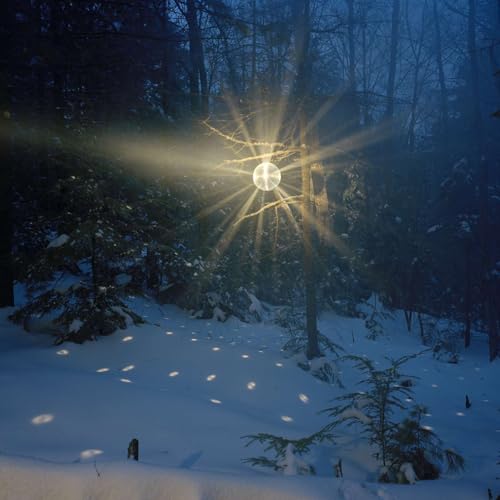
    This conversation covers enormous ground. It begins with a barn fire — a four-year-old in spaceship pajamas holding a glow stick, watching hundreds of feet of flame erase something he took for granted was permanent. From there we move through the man across the street who taught Adam to watch ants for hours, through years of caring for people with HIV and AIDS in early-2000s Portland, to a night on a mountain in Maine when a disco ball, a flashlight, and a smoke machine produced the photograph that made everything snap into focus.

    We talk about the game of Go and why clinging to what mattered fifty moves ago will kill you. About riding a bicycle at twelve miles an hour as a way of not quite being anywhere. About the difference between making something for real and making it in Photoshop — and whether that difference matters. About the pocket watch his dying friend gave him with a note that said have a different relationship to time.

    And we talk about boredom — specifically, what lives on the other side of it. The land within all of our minds that opens up when you sit with the discomfort long enough to push through.

    Fair warning: the range of this conversation goes from Bluey to Walter Benjamin.


    (cover photo: A Disco Ball on the Mountain, 2005, courtesy of the artist and CLAMP, New York)

    Support the show

    The Principal Uncertainty is a podcast by George Laufenberg. It's not about finding solid ground — it's about staying oriented in open water.

    Más Menos
    1 h y 30 m
  • Everything Is Relational | Kanwal Matharu
    Feb 3 2026

    Send a text

    Kanwal Matharu is a cornea surgeon, Fulbright scholar, and global health educator who has spent his career building pipelines between American academic medicine and under-resourced communities around the world. He's also my friend—we met when he was a freshman at Princeton and I was working in residential life, and I've watched him navigate the distance between idealism and institutions ever since.

    In this conversation, we talk about what it means to align your career with your faith, what he learned about strategy and relationships as a young trustee on Princeton's board, and why he's come to believe that "soft relations carry so much more weight" than procedural wins. We also talk about the costs of the path he's chosen—the isolation that comes with subspecialty training, a called-off engagement, and sitting cross-legged in borrowed slippers on his last day in Egypt, practicing patience after everything went sideways.

    This is a conversation about service, sacrifice, and what it means to keep going when the story isn't as clean as you thought it would be.

    Support the show

    The Principal Uncertainty is a podcast by George Laufenberg. It's not about finding solid ground — it's about staying oriented in open water.

    Más Menos
    1 h y 5 m
  • Companionable Silence | Lynn Casteel Harper
    Jan 8 2026

    Send a text

    What do you do when the people you're caring for can't give you certainty that you're doing it right?

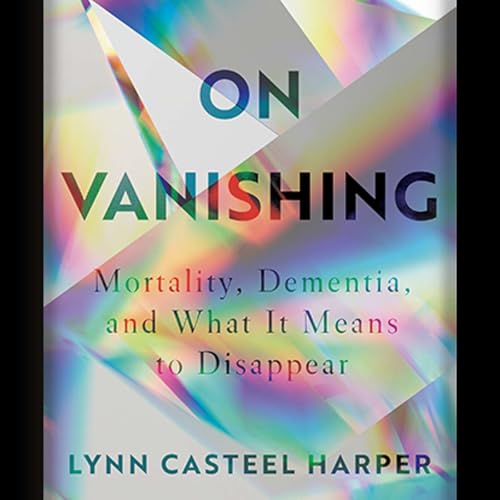
    Lynn Casteel Harper—minister, chaplain, and author of On Vanishing: Mortality, Dementia, and What It Means to Disappear—spent years with people living with dementia. Not trying to fix them or bring them back, but learning to read a different kind of language: silence that isn't empty, presence that doesn't require words, companionship that survives the loss of recognition.

    This conversation is about what she learned in that work—about gentleness as a form of power rather than weakness, about staying present when certainty isn't available, and about what happens when you stop trying to eliminate uncertainty and start learning from it instead.

    We talk about Hannah Arendt's distinction between power and violence, the Biosphere 2 trees that couldn't grow without wind, why she's writing "ungently" about gentleness, and the question that keeps coming up in these conversations: what are you loyal to that you didn't choose?

    If achievement has brought you to questions your current framework can't answer, this might be for you.

    Support the show

    The Principal Uncertainty is a podcast by George Laufenberg. It's not about finding solid ground — it's about staying oriented in open water.

    Más Menos
    1 h y 7 m