The Nick Taylor Horror Show Podcast Por American Nightmare Studios arte de portada

The Nick Taylor Horror Show

The Nick Taylor Horror Show

De: American Nightmare Studios
Escúchala gratis

Exploring the techniques, strategies, and key pieces of advice for aspiring horror directors, straight from the minds of some of the greatest filmmakers and creators in horror. Host Nick Taylor engages in one-on-one conversations with directors, producers, writers, actors and artists to uncover the keys to their creative and professional success in the horror business.2024 by American Nightmare Studios. All rights reserved. Arte
Episodios
  • A NIGHTMARE ON ELM STREET Editors | Rick Shaine & Patrick McMahon
    Apr 10 2026

    Patrick McMahon and Rick Shaine are the editors behind the original Nightmare on Elm Street. In this special live conversation at the Metrograph theatre in New York, Pat and Rick reflect on everything from working with Wes Craven to the intense amount of pressure they were under and their specific techniques for editing to induce fear.

    On today’s episode of The Nick Taylor Horror Show, here, without further ado, are Patrick McMahon and Rick Shaine.

    Más Menos
    29 m
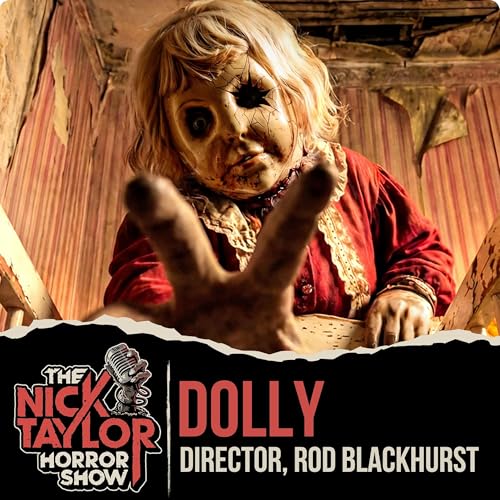
  • DOLLY Director | Rod Blackhurst
    Apr 3 2026

    Rod Blackhurst is a filmmaker, director, and producer whose work spans documentary, narrative, and horror.

    He made his narrative feature debut with Here Alone, winner of the Audience Award at the 2016 Tribeca Film Festival, and later returned to Tribeca with Blood for Dust (2023), starring Scoot McNairy and Kit Harington. He also co-directed and produced the Emmy-nominated Netflix documentary Amanda Knox. He also co-created The White Room, a Blood List script later acquired by Amblin, and co-wrote the story for Blumhouse’s Night Swim, which grew out of the 2014 short film he made with Bryce McGuire. Rod also directed and served as showrunner for Peacock’s John Wayne Gacy: Devil in Disguise and directed on National Geographic’s Welcome to Earth with Will Smith.

    His latest film, Dolly, is a beautifully shot 16mm slasher that evokes the grime and menace of early horror classics while carving out its own identity. In this episode, Rod and I talk about his path into filmmaking, the realities of getting indie films made, and the making of Dolly. Please enjoy this conversation with Rod Blackhurst.

    Key TakeawaysWear your influences openly, but metabolize and integrate them.

    Rod talks about The Texas Chain Saw Massacre as a major influence, and it is really clear when you see the movie, but he is careful not to recreate it in a way that feels like blatant homage. The useful principle is that inspiration works best when it is absorbed into the DNA of the film and filmmaker rather than pasted on top of it as a wink. As a result, the movie feels like it takes place in the same world as these influences instead of attempting to overtly acknowledge or recreate them, which can take viewers out of the movie.

    Investor trust is built with transparency.

    Rod is one of the most financially responsible filmmakers I have spoken to. His financing advice is unusually concrete. He informs investors how the equity works, how they might recoup, what the timeline is, and acknowledges the very real risk that they could lose all their money. He also shows prior accounting and distribution sheets to demonstrate his own personal track record, treating his career like a business, which it is. That mindset treats filmmaking as entrepreneurship, not just art, and it is one of the most practical pieces of advice in the conversation.

    Cast the person who can give the monster a soul.

    Rod found Max the Impaler through wrestling and quickly realized he had found more than a physical presence. Max’s background as a largely nonverbal performance artist made them perfect to play Dolly, the slasher, and their emotional investment transformed the character into something much richer than what was on the page. Think about David Howard Thornton and Doug Jones. A monster is not just a costume and makeup job; it comes down to the soul of the performer.

    Show NotesMovies Mentioned
    • Dolly
    • The Texas Chain Saw Massacre
    • The Evil Dead
    • Blood for Dust
    • Snow White (1937/1938 animated film)
    • The Vanishing
    • High Tension
    • Martyrs
    • Barbarian
    • Night Swim
    • Undertone
    • It (via the Bill Skarsgård / Pennywise discussion)
    • Castle in the Sky
    • The Iron Giant
    • E.T. the Extra-Terrestrial
    • Project Hail Mary
    • Marty Supreme
    • Backrooms
    • Obsession
    • Here Alone

    Follow Rod Blackhurst at:
    • IMBd: https://www.imdb.com/name/nm2060444/
    • Instagram: https://www.instagram.com/rodblackhurst/
    • X (Twitter): https://x.com/rodblackhurst
    • Vimeo: https://vimeo.com/rodblackhurst
    • Website: https://www.rodblackhurst.com/

    Más Menos
    1 h y 2 m
  • MORTUARY ASSISTANT Director | Jeremiah Kipp
    Mar 27 2026
    Jeremiah Kipp is a New York–based horror filmmaker whose work includes The Sadist, Slapface, and The Geechee Witch: A Boo Hag Story. In this episode, Jeremiah breaks down his expansive career journey and finely tuned process for working with actors, maximizing low budgets, and keeping sets running smoothly. Jeremiah also discusses the importance of mentorship in his career, including his longstanding relationships with genre greats, and former guests of the show, Larry Fessenden and Jim Mickle. And of course, we dive deep into his most recent feature, the adaptation of the viral video game The Mortuary Assistant, coming to Shudder on March 27th. Without further ado, here is Mortuary Assistant Director, Jeremiah Kipp.KEY TAKEAWAYSChoose Material That Speaks to You PersonallyJeremiah initially had little interest in adapting a video game. But when he played The Mortuary Assistant, he connected deeply to the protagonist, Rebecca Owens, a woman who hides inside her work to avoid confronting her personal demons.That personal entry point became his entire pitch: preserve the game’s dread and atmosphere while grounding the film in emotional vulnerability. He and game creator Brian Clark bonded over shared anxieties and experiences, and it became the start of an excellent collaboration because Jeremiah was able to relate to the material on a deeply personal level.When directing, it’s critical to put a big part of yourself into your projects, otherwise, why should you be the one to direct it?If you can’t channel personal experience into a movie, or if the producers don’t leave room for that, it might not be the right fit for you, and that’s fine. Find the emotional core that connects to your own life or unique sensibility. Otherwise, the movie becomes just a gig. Producers can tell when your heart isn’t in it. Audiences can too. Make it personal, or don’t do it.Make sure Everyone is Rowing in the Same DirectionThe Mortuary Assistant, a very creatively unified, cohesive production as opposed to an earlier project that Jeremiah passed on where the vision kept shifting. That earlier project had producers that first wanted Blair Witch-style dread, then Herschell Gordon Lewis gore, then something akin to Black Phone. This unfocused behavior is a MASSIVE red flag, and even if you’re just starting out, you should run because you’re probably being setup to fail. Of course, not everyone is going to agree and get your vision, but if producers don’t know what they want, or you’re getting massively conflicting feedback from those you’re meant to report to, no one will win, and you as the director will get all the blame.As Budgets Increase, Money Feels SmallerJim Mickle warned Kipp: “As you move up the budget ladder, it feels like you have less money.” This is a fascinating paradox but really makes sense when you think about it. More money means more department heads, larger builds, higher actor costs, bigger expectations, more moving parts, and less margin for error. More money means better production value but often less time and less freedom. We all want bigger budgets but, heed this warning going in.De-escalation Is a Crucial Leadership SkillMovie-making is grueling and involves long nights, early mornings, physically punishing days, little sleep, and less-than-adequate nutrition from crafty — all within a high-pressure environment. In other words, it’s a recipe for potential volatility among those involved. Things go wrong on sets, tensions run high, and having worked on as many movies as he has, Jeremiah learned that de-escalating situations is a critical skill.A lot of would-be directors expect to take on a domineering presence where they demand full obedience from everyone on set. This attitude will have your cast and crew turning on you by day one, and your movie will suffer for it. Instead, assume a posture of humility. Take your ego out of volatile situations to relieve tension — even when the people you’re dealing with are the ones at fault.You gain nothing by arguing or by being “right,” especially if it comes at the expense of someone else. Your goal should never be to win or assert dominance, but to keep the movie on track by stabilizing those working around you. It’s massively humbling but absolutely critical.This doesn’t mean you tolerate blatant disrespect. But avoiding needless confrontation doesn’t make you weak; it makes you smart because you’re protecting the steadiness of your production. One bad attitude can poison a set quickly, so it’s critical to protect morale at all costs and handle conflict privately and strategically. The real leadership flex is emotional regulation.Show NotesMovies MentionedThe Mortuary AssistantSlapfaceThe Geechee Witch: A Boo Hag StoryThe BabadookHereditaryThe WitchI Sell the DeadFried BarryHalloween (John Carpenter)Dawn of the Dead (George A. Romero)The Last of UsSuper Mario Bros. (film)Blade RunnerDoom (film)The MegThe ...
    Más Menos
    1 h y 37 m
Todavía no hay opiniones