Episodios

  • Pet Dental Health
    Apr 6 2026

    Yes, your pets need to brush too.

    Bad breath might seem like a small thing—but it's often your pet's way of telling you something more is going on.

    In this episode, Michael Dargie sits down with Dr. Beth Barrett to talk about dental health—one of the most overlooked parts of caring for your pet. What starts in the mouth doesn't stay there. Dental disease can quietly impact your pet's heart, kidneys, and overall quality of life.

    Dr. Beth walks through what's really happening beneath the surface, why dental issues are so common, and how small, manageable steps at home can make a big difference over time.

    Because when your pet is feeling their best, you can see it in everything they do—from tail wags to mealtime excitement.

    What You'll Learn

    • What dental disease actually looks like in pets (and why it's more common than you might think)

    • Why "just bad breath" deserves a closer look

    • How oral health connects to the heart, kidneys, and overall wellness

    • What we're really checking for during a dental exam

    • Simple, realistic ways to care for your pet's teeth—no wrestling required

    • Why starting early can help your pet stay healthier, longer

    Key Moments

    • A closer look at why dental health is often missed

    • How problems in the mouth can affect the rest of the body

    • The subtle signs your pet may be showing at home

    • What happens during a dental check at the clinic

    • Why prevention is one of the kindest things you can do for your pet

    Quotes
    • "Bad breath is a red flag. That's a shot across the bow."

    • "Dental health has huge impacts… especially on cardiac and kidney health."

    • "I see animals' lives shortened because we didn't take care of their teeth earlier."

    • "It's one of the best things we can do for animals in practice."

    Why This Matters

    Dental disease is one of the most common — and preventable — health issues in pets.

    This conversation reframes it from a cosmetic concern to a serious health issue. Taking action early doesn't just mean fresher breath — it can mean a longer, healthier life for your pet.

    About Dr. Beth Barrett

    Dr. Beth Barrett is a veterinarian and clinic owner at Barrett Veterinary Practice in Alberta. She's passionate about helping pet owners make informed, practical decisions that improve the quality and longevity of their animals' lives.

    Resources

    Barrett Veterinary Practice: https://barrettvet.ca

    Más Menos
    33 m
  • Fleas, Ticks & Parasites: What You Need to Know in Alberta
    Mar 31 2026
    Featuring: Dr. Beth Barrett, DVM — Barrett Veterinary Practice Host: Michael Dargie Runtime: ~40 minutes Spring has arrived in Alberta — and so has tick season. In this episode, host Michael Dargie gets the full picture from Dr. Beth Barrett, DVM, on the creepy crawly world of fleas, ticks, and parasites that every Alberta pet owner needs to understand. Triggered by a listener letter from a panicked dog owner who found a tick after the season's first warm walk, Michael and Dr. Beth break down exactly what these parasites are, how they find your pets, what diseases they carry, and — most importantly — how to stop them. Dr. Beth brings her signature warmth and candour to a topic she openly admits she "hated in vet school" but takes very seriously. From the surprising fact that ticks are already active above +4°C in Alberta, to the 95/5 rule for flea infestations, to why you should never use a lighter on an attached tick — this episode is packed with practical, science-based guidance you won't want to miss as the weather warms up. Timestamps TimeSegment 0:00 Intro & disclaimer 0:34 Michael welcomes listeners & introduces Dr. Beth Barrett 1:20 The listener letter — a tick on the back of the neck after the first warm walk of spring 2:13 SECTION 1: Ticks — The Basics 2:13 Why ticks are no longer just a summer problem in Alberta 2:53 Tick territory is expanding northward at 35–55 km per year 4:08 How ticks find your pets: the behaviour called "questing" 5:39 Where to check your dog (behind the ears, groin, eyebrows on Goldens) 7:32 SECTION 2: What Ticks Actually Do — Diseases & Dangers 7:32 Why blood loss usually isn't the biggest concern — it's the saliva 8:35 Tick-borne diseases transmitted through anticoagulant saliva 9:59 Horses and moose getting hundreds of ticks — how it causes anemia 13:22 How to properly remove a tick (and what NOT to do — no Vaseline, no lighters!) 15:29 Why ripping a tick off can make disease transmission worse 16:35 Tick paralysis from the Rocky Mountain wood tick — an Alberta-specific danger 17:43 SECTION 3: Fleas in Alberta 17:43 Is Alberta too cold for fleas? Mostly… but not entirely 19:29 Alberta's most common flea species — it's a wildlife flea, not the cat flea 21:47 The 95/5 rule — the flea you see is only 5% of the problem 23:18 Spotting fleas on cats: flea dirt and the wet paper test 24:05 Fleas on horses and goats 26:13 SECTION 4: Prevention & Treatment 26:13 Treating fleas requires a minimum of four months of medication 28:15 Why over-the-counter flea collars and topicals are less effective 29:50 Dr. Beth recommends prescription-only products — safer and more effective 30:04A new injectable tick prevention that provides 12 months of protection 31:13 Do natural remedies work? Essential oils, diatomaceous earth, garlic 32:24 MYTH OR MUZZLE: "If my pet isn't scratching, they don't have fleas" 33:53 ASK DR. BETH: "I found a tick on my dog. Do I need to go to the vet?" 34:45 The eTick.ca program — free tick species identification 36:46 Tick paralysis in more detail — the Rocky Mountain wood tick's neurotoxin 38:38 Outro & Dr. Beth's new injectable recommendation Key Takeaways Ticks Ticks become active at temperatures as low as +4°C — tick season in Alberta now starts in early spring, not just summer.Tick populations in North America are moving northward at approximately 35–55 km per year. Areas in Alberta that never had ticks now do.Ticks don't jump — they "quest": clinging to grass or leaves with their back legs, arms outstretched, waiting for a warm body to brush past.Check your dog behind the ears, around the groin, under the armpits, and on the eyebrows (a surprisingly popular spot on Golden Retrievers).A tick grows up to 100 times its original size as it feeds — from a few millimetres to the size of a grape.The real danger is in the tick's saliva, which can transmit tick-borne diseases including Lyme disease.The Rocky Mountain wood tick, found in Alberta, carries a neurotoxin in its saliva that can cause tick paralysis — starting at the dog's back end and moving forward. Removing the tick within 24–48 hours typically leads to a full recovery. How to Remove a Tick Safely Use a proper tick removal tool — a small fork-like device that slides under the tick and gently encourages it to back out.Do NOT use Vaseline, a lighter, heat, or twist the tick. These methods can cause the tick to regurgitate its stomach contents into your pet, increasing disease transmission risk.Do NOT pop the body off — if the head remains embedded, it can cause infection and inflammation.Once removed, save the tick in a zip-lock bag and photograph it. Upload the photo to eTick.ca for free species identification. Fleas Alberta is too cold for the common cat flea. The most common fleas here are wildlife fleas — primarily from coyotes, foxes, and skunks.The 95/5 rule: 95% of a flea's life cycle is spent off the host — in your carpets...
    Más Menos
    40 m
  • Equine Nutrition Demystified
    Mar 6 2026
    Horse nutrition can feel complicated. Grain, hay, supplements, fiber, protein … it's easy to get overwhelmed trying to do the best for your horse. In this episode, Dr. Beth Barrett breaks down the fundamentals of equine nutrition so horse owners can make confident, practical feeding decisions. From why fiber is the foundation of a horse's diet to common feeding mistakes and supplement myths, this conversation brings clarity to what horses actually need to stay healthy. Whether you're caring for a performance horse, a pasture companion, or your child's pony, this episode will help you better understand what belongs in the feed bucket—and what doesn't. In This Episode Dr. Beth explains: Why fiber is the cornerstone of equine nutrition The important role hay and forage play in digestive health How the equine digestive system works and why it matters when feeding When horses actually need grain or concentrates Common feeding mistakes horse owners make The truth about supplements and whether they're necessary How to evaluate your horse's body condition and diet Practical tips for creating a balanced feeding routine Key Takeaways 1. Horses are designed to eat fibre firstA horse's digestive system is built to process forage throughout the day. High-quality hay or pasture should form the majority of their diet. 2. More grain isn't always betterMany horses get more concentrates than they actually need, which can create digestive issues and metabolic problems. 3. Small, consistent meals matterHorses naturally graze throughout the day. Feeding large meals infrequently can disrupt digestion. 4. Supplements aren't always necessaryMany horses receiving balanced feed and good forage don't need additional supplements. 5. Every horse is differentAge, workload, health conditions, and metabolism all influence the right feeding plan. Why This Matters Feeding decisions impact everything from digestion and energy levels to long-term health. Understanding the basics of equine nutrition can help prevent common problems like colic, obesity, and metabolic disorders. About Dr. Beth Barrett Dr. Beth Barrett is a veterinarian and the owner of Barrett Veterinary Practice, where she focuses on helping animals live healthier, happier lives. Through The Independent Vet podcast, she shares practical veterinary insights to help pet and animal owners make informed care decisions. Feed & Nutrition Brands Mentioned in This Episode During the conversation, Dr. Beth referenced a few products and resources horse owners may want to explore when building a balanced feeding program. Mad Barn – Omneity® Ration BalancerA vitamin and mineral supplement designed to fill nutritional gaps in forage-based diets and help balance a horse's overall nutrition.https://madbarn.ca/product/omneity/ Kentucky Equine Research – EO-3™An omega-3 supplement that provides DHA and EPA from fish oil to help improve the omega-3 to omega-6 ratio in a horse's diet and support overall health.https://ker.com/hoof-coat/eo-3/ United Farmers of Alberta (UFA)A common place for horse owners to purchase farm supplies, including bulk salt often used in horse diets. https://ufa.com Bulk BarnAnother place Dr. Beth mentioned where plain salt can often be purchased inexpensively. https://www.bulkbarn.ca LINKS FROM EPISODE Barrett Veterinary Practice (https://barrettvet.ca)American Animal Hospital Association (AAHA) Vaccine Guidelines (https://www.aaha.org)Canadian Veterinary Medical Association (CVMA) (https://www.canadianveterinarians.net)ASPCA Pet Care Resources (https://www.aspca.org/pet-care)
    Más Menos
    43 m
  • Puppy & Kitten 101: What Every New Pet Parent Needs To Know
    Feb 25 2026

    In this episode, Dr. Beth Barrett lays out the essentials every new puppy or kitten guardian should know. Whether you've just brought home a wiggly eight-week-old pup or a curious little kitten, those first few months matter more than most people realize.

    Dr. Barrett begins with the basics: what's normal, what's not, and why early veterinary visits are about far more than vaccines. She explains how foundational care in the first year sets the stage for a lifetime of health. From parasite prevention and vaccination schedules to nutrition and behavioural development, she breaks down what can feel overwhelming into practical, manageable steps.

    A key theme throughout the conversation is prevention. Many common health issues in adult dogs and cats can be traced back to missed opportunities in early life. Dr. Barrett talks about the importance of proper socialization in puppies, safe exposure to new environments, and how positive early experiences shape temperament. For kittens, she addresses litter training, scratching behaviour, and the need for enrichment—especially for indoor cats.

    Nutrition also plays a central role. Dr. Barrett discusses how to choose an appropriate diet, what to look for on labels, and why growth-stage feeding is different from adult maintenance feeding. She cautions against overfeeding and explains how early weight gain can create long-term health challenges.

    Spaying and neutering are covered with nuance. Dr. Barrett outlines the medical benefits, behavioural considerations, and the timing conversation that every pet parent should have with their veterinarian.

    Perhaps most reassuring is her emphasis on partnership. Veterinary care isn't just about treating illness—it's about building a relationship. She encourages pet owners to ask questions, bring up concerns early, and see their vet as a guide rather than someone you visit only when something goes wrong.

    For anyone navigating life with a new puppy or kitten, this episode offers clarity, calm, and confidence. The early days are full of excitement—and a little chaos—but with the right information, they can also be the beginning of a long, healthy life together.

    PULL QUOTES "The first year of your puppy or kitten's life sets the tone for everything that follows." — Dr. Beth Barrett "Prevention is always easier—and kinder—than treatment." — Dr. Beth Barrett "Socialization isn't just about meeting other dogs. It's about helping your puppy feel safe in the world." — Dr. Beth Barrett "Your veterinarian should be your partner, not just the person you see when something goes wrong." — Dr. Beth Barrett EPISODE HIGHLIGHTS

    [00:00,000] Welcome to Puppies & Kittens 101 | What new pet parents can expect in the first year
    [02:15,000] First Vet Visit | Why early exams are about more than vaccinations
    [05:40,000] Vaccine Schedules Explained | Core vaccines and timing
    [09:10,000] Parasite Prevention | Fleas, ticks, worms and why prevention matters
    [13:25,000] Nutrition Basics | How to choose the right food for growth
    [18:50,000] Avoiding Early Obesity | Portion control and healthy growth
    [22:30,000] Puppy Socialization | Building confidence through safe exposure
    [27:45,000] Kitten Behaviour | Litter training, scratching and enrichment
    [32:10,000] Spay & Neuter Decisions | Timing and long-term health considerations
    [38:00,000] Building a Vet Partnership | Communication and proactive care

    LINKS FROM EPISODE
    • Barrett Veterinary Practice (https://barrettvet.ca)
    • American Animal Hospital Association (AAHA) Vaccine Guidelines (https://www.aaha.org)

    • Canadian Veterinary Medical Association (CVMA) (https://www.canadianveterinarians.net)

    • ASPCA Pet Care Resources (https://www.aspca.org/pet-care)

    Más Menos
    42 m
  • What's The Best Diet For My Pet?
    Feb 11 2026
    Episode Summary If you've ever stood in the pet food aisle feeling completely overwhelmed by the options—grain-free, raw, organic, life-stage formulas, food that costs more than your own groceries—this episode is for you. Dr. Beth Barrett breaks down the fundamentals of pet nutrition across dogs, cats, horses, and even goats, sharing science-based guidance on what "well nourished" actually looks like for each species. From the critical role of macronutrients and micronutrients to why cats absolutely cannot be vegan, Dr. Beth demystifies nutrition with practical, no-nonsense advice. She tackles the big questions pet parents ask every day: Is expensive food actually better? What are "fillers" really? And why is your vet always recommending omega-3 supplements? This episode is a must-listen for any pet parent who wants to cut through the marketing noise and make informed choices about what goes into their pet's bowl. Episode Structure Segment Timestamp Content Intro 00:00–01:16 Michael welcomes listeners, introduces Dr. Beth, and frames the big question: What's the best diet for my pet? Section 1: Nutrition Fundamentals 01:16–09:30 Macronutrients vs. micronutrients, life-stage feeding, large breed considerations, and why "all life stages" labels make vets cringe. Section 2: Species Deep Dive 09:30–27:30 Dogs as omnivores, cats as obligate carnivores (and why they can't be vegan), horses as nomadic trickle feeders, and goats as browsers. Plus: the cost question and the microbiome connection. Myth or Muzzle 27:30–28:55 Myth tested: "Cats can be vegetarian or vegan if you supplement properly." Verdict: MYTH — and a dangerous one. Listener Corner 28:55–33:00 Question: "My dog is always hungry and begging for food. Should I feed them more?" Dr. Beth discusses body condition scoring, the Labrador hunger gene, and hyperthyroidism in cats. Dr. Beth's Passion Points 33:00–38:30 Body condition scoring for every visit, omega-3 supplementation (EPA/DHA), and the truth about coconut oil. Outro 38:30–39:15 Michael wraps up with thanks, teaser for upcoming episodes, and CTA. Key Takeaways Nutrition Basics Nutrition should be simple: ensure your pet gets the right balance of macronutrients (protein, fat, carbohydrates) and micronutrients (vitamins, minerals). Protein is the most expensive nutrient because it's been pre-processed by another animal. Higher protein foods will naturally cost more. In Alberta, horses may be deficient in selenium because our soil lacks it—a ration balancer can help fill the gap. Be cautious about over-supplementing on top of a balanced commercial diet. More isn't always better. Species-Specific Nutrition Dogs are omnivores and can tolerate carbohydrates, but protein should still be the primary calorie source. Cats are obligate carnivores. They cannot produce their own taurine and must get it from meat. Without it, they risk cardiac problems and blindness. Cats cannot be vegan or vegetarian—this is non-negotiable. Aim for cat food with less than 10% carbohydrates to reduce diabetes risk. Many dry cat foods contain 40–50% carbohydrates—far more than cats need. Dr. Beth has seen diabetic cats go into remission after switching to low-carb diets. Horses are nomadic trickle feeders. Their stomachs should never be empty for more than three hours, or they risk gastric ulcers. Goats are browsers with a rumen-based fermentation system. They thrive on roughage, hay, and shrubs. Cost & Marketing Expensive food is "ish" better—higher cost often reflects better ingredients and processing (e.g., freeze-dried), but some premium brands are mostly marketing. Always check macronutrient content rather than relying on price or packaging claims. Feeding guidelines on the bag typically suggest more food than your vet would recommend, because manufacturers can't account for your pet's activity level. If you're interested in raw feeding, work with your vet. DIY raw diets using leftover hamburger won't be balanced and carry bacterial risks. Dr. Beth's Top Recommendations Do a body condition score every time you feed your pet. Adjust portions seasonally—Dr. Beth's dogs get 50%+ more food in summer when they're active. Supplement with omega-3 oils (fish oil or algae oil)—most diets don't have enough. Look for EPA and DHA specifically. Omega-3s support brain health, eye health, cognitive function, and help manage inflammation from allergies and arthritis. Coconut oil has no magical health benefits despite what TikTok says. It's just a saturated fat. For cats, sardines in water (not oil, not spicy!) are a great omega-3 source. Start slow—cats are opinionated. Myth or Muzzle MYTH: "Cats can be vegetarian or vegan if you supplement properly." VERDICT: MYTH — and a dangerous one. Cats are obligate carnivores who cannot produce their own taurine. Simply supplementing a vegan diet with taurine doesn't provide all the benefits of a meat-based diet. As Dr. Beth puts ...
    Más Menos
    41 m
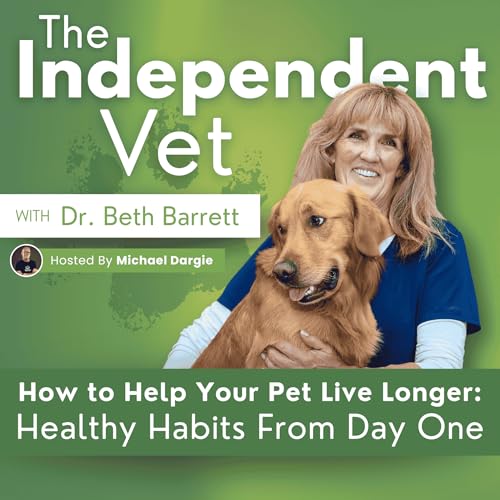
  • How To Help You Pets Live Longer: Healthy Habits From Day One
    Jan 27 2026

    Welcome to the very first episode of The Independent Vet, the podcast that helps you give your fuzzy family the best life possible.

    In this episode, Dr. Beth Barrett—veterinarian and owner of Barrett Veterinary Practice—answers one of the most common questions new pet parents ask:

    "What do I need to know when bringing home a new puppy or kitten?"

    Dr. Beth shares what matters most in those first few weeks, including:

    • When to schedule your first veterinary visit

    • Puppy and kitten vaccination timelines

    • Parasite prevention and deworming

    • Feeding basics and nutrition tips

    • How to start socialization and routines early

    • Common mistakes and how to avoid them

    Whether this is your first pet or your fifth, you'll walk away with practical advice and peace of mind.

    Resources Mentioned:

    • Book your first puppy or kitten appointment: https://barrettvet.ca

    • Follow us on Instagram: https://www.instagram.com/barrettveterinarypractice

    • Learn more about Barrett Veterinary Practice: https://barrettvet.ca

    About Dr. Beth Barrett:

    Dr. Beth is the founder and owner of Barrett Veterinary Practice in Rocky View, Alberta. She brings years of hands-on experience, warmth, and real-world knowledge to help you care for your pets with confidence. She specializes in dogs, cats, horses—and yes, even goats.

    About the Show:

    The Independent Vet is a bi-weekly podcast about pets, people, and veterinary practice. Hosted by Michael Dargie, each episode features the expertise of Dr. Beth Barrett and is designed to help you make informed, compassionate decisions for the animals in your life.

    Más Menos
    35 m