Episodios

  • Reducing Clinician Burnout: Virtual Scribes, EMR Optimization, and Smarter Staffing with Lori Runion Episode 165
    Mar 30 2026

    If your EMR feels like it’s adding to your workload instead of reducing it, this episode will feel very familiar.

    In this conversation, Sarah Smith sits down with healthcare IT and analytics consultant Lori Runion to explore why clinician burnout is often driven by systems, not individuals, and what is actually working to fix it.

    From large-scale virtual scribe programs to EMR workflow optimization and predictive staffing, this episode looks at the operational side of burnout and how healthcare organizations can reduce friction, improve efficiency, and give clinicians their time back.

    What you’ll learn in this episode:

    • Why EMRs often increase after-hours work and frustration
    • How a 200-physician virtual scribe program was implemented
    • The difference between human scribes and emerging AI documentation tools
    • Practical ways to reduce clicks and improve EMR workflows
    • How predictive analytics can support staffing and patient demand
    • Why burnout is a systems problem, not a personal failure

    Episode breakdown:

    01:57 Why EMRs Are Driving Clinician Burnout
    04:08 When Work Follows You Home
    06:24 Inside a Large-Scale Virtual Scribe Program
    10:35 Human Scribes vs Ambient AI
    13:27 Using Data to Predict Patient Demand
    18:53 Predictive Staffing in Practice
    22:50 Fixing EMR Workflow Friction
    28:31 Burnout as a Systems Problem
    29:47 Managing the Patient Inbox
    33:15 Reducing Clicks and Documentation Load


    Key Takeaways:

    1. Burnout is a systems failure, not a clinician failure. The EMR turned documentation into an after-hours expectation. Fix the workflow, not the person.

    2. The data exists and now it's time to use it. Two decades of electronic records are sitting largely untapped. AI finally gives healthcare the tools to act on it predictively, not reactively.

    3. You can optimize your EMR without waiting for IT. Pick lists, smart phrases, and a few hours of upfront setup can return significant time. Start small, collaborate with colleagues, and let it compound.

    Meet Lori Runion:

    Lori Runion is a healthcare technology and transformation leader with more than 20 years of experience improving how care is delivered and documented. At Community Health Network, she led the clinical informatics team through a comprehensive, two-year Epic EHR implementation and spearheaded a virtual scribe program that scaled to over 200 remote scribes, directly reducing provider burnout and helping clinicians reclaim joy in their work. Driven by a passion for supporting healthcare workers, Lori has seen firsthand how the right tools and systems can transform both patient outcomes and clinician well-being. Today, she serves as a Portfolio Leader at Resultant, partnering with healthcare organizations as the day-to-day leader on complex initiatives and helping turn technology investments into meaningful, real-world results.

    Outside of work, Lori enjoys planning her next international adventure and cheering on musical theatre performances and football games with her husband and three step-children.

    Connect with Lori Runion:

    LinkedIn: https://www.linkedin.com/in/lori-runion/

    Instagram: https://www.instagram.com/lstone8

    --------------

    Would you like to view a transcript of this episode? Click Here.

    **** Charting Champions is a premiere, lifetime access Physician only program that is helping Physicians get home with today's work done. All the proven tools, support and community you need to create time for your life outside of medicine.

    Learn more at https://www.chartingcoach.ca

    **** Enjoying this podcast? Please share it with someone who would benefit. Also, don’t forget to hit “follow” so you get all the new episodes as soon as they are released.
    **** Come hang out with me on Facebook or Instagram. Follow me @chartingcoach to get more practical tools to help you create sustainable clinical medicine in your life.

    **** Questions? Comments? Want to share how this podcast has helped you? Shoot me an email at admin@reachcareercoaching.ca. I would love to hear from you.

    Más Menos
    38 m
  • Healing Through Trauma-Informed Practices Supporting Doctors and Clinicians with Dr. Sadie Elisseou Episode 164
    Mar 23 2026

    Welcome to another episode of the Sustainable Clinical Medicine Podcast!

    Dr. Sadie Elisseou, a primary care physician in the US VA system in Boston, Harvard and Boston University educator, and trauma-informed care expert, discusses her path into medicine and how working with veterans led her to trauma-informed practice after noticing patients’ discomfort during routine exams. She explains trauma-informed care as creating physical and psychological safety through mindful nonverbal communication, transparent agendas, permission-seeking, and reducing power dynamics, with examples such as thyroid exams and avoiding phrases like “for me.” She highlights VA onboarding on military experience, notes higher ACE rates among volunteer-era veterans, and describes how staff behaviors and clinic environments shape patient stress. The conversation also covers clinician wellbeing and burnout prevention via self-care, team debriefing, boundaries, therapy access, and time-management strategies like scheduled breaks, batching tasks, finishing notes between visits, and structuring varied work roles.

    Here are 3 key takeaways from this episode:

    1. Trauma-Informed Care Creates Safety Through Small, Intentional Actions: Physical and psychological safety in healthcare settings comes from deliberate practices: positioning yourself at the patient's side (not behind them), asking permission before examinations, explaining what you're doing and why, ensuring clear exits, and avoiding phrases like "for me" that emphasize power dynamics. These don't take extra time but transform the patient experience.
    2. Shifting from "What's Wrong With You?" to "What Happened to You?" This mindset shift moves from blaming difficult patient behaviors to approaching them with curiosity and compassion. When patients are agitated or angry, it's often rooted in pain or fear. Co-regulation techniques—modeling calm through your own presence and validating their experience—can help both you and the patient settle into a more productive interaction.
    3. Preventing Burnout Requires Structural Self-Care and Intentional Boundaries: Sustainable practice isn't about luxury spa days—it's about taking mindful breaths between patients, batching tasks by day (clinic on Mondays, administrative work on Thursdays), finishing notes immediately after appointments, scheduling regular breaks throughout the month, and setting non-negotiable hard stops. Varied work schedules that incorporate teaching, research, or consulting can also prevent monotony and reignite passion for the work.

    Meet Dr. Sadie Elisseou:

    Sadie Elisseou, MD is a practicing physician, faculty at Harvard Medical School, and leading subject matter expert in trauma-informed care who teaches clinical healthcare professionals how to provide top-quality care to trauma survivors and consults for organizations that wish to cultivate wellness and help team members engage through stressful times.

    Connect with Dr. Sadie Elisseou:

    🌐 Website https://www.sadie-elisseou.com/

    LinkedIn https://www.linkedin.com/in/sadie-elisseou/

    --------------

    Would you like to view a transcript of this episode? Click Here

    **** Charting Champions is a premiere, lifetime access Physician only program that is helping Physicians get home with today's work done. All the proven tools, support and community you need to create time for your life outside of medicine.

    Learn more at https://www.chartingcoach.ca

    **** Enjoying this podcast? Please share it with someone who would benefit. Also, don’t forget to hit “follow” so you get all the new episodes as soon as they are released.
    **** Come hang out with me on Facebook or Instagram. Follow me @chartingcoach to get more practical tools to help you create sustainable clinical medicine in your life.

    **** Questions? Comments? Want to share how this podcast has helped you? Shoot me an email at admin@reachcareercoaching.ca. I would love to hear from you.

    Más Menos
    44 m
  • New Attending Survival: Uncertainty, Self-Trust, and the Hidden Curriculum with Dr. Karen Leitner Episode 163
    Mar 16 2026

    Welcome to another episode of the Sustainable Clinical Medicine Podcast!

    The host and physician coach Dr. Karen Leitner discuss why the transition to new attending is often harder than training, marked by impostor feelings, shame about not knowing, and decision paralysis in clinical uncertainty. They compare systems in the US, Canada, and Australia, including practice ownership models, overhead, billing learning curves, and how lack of business training and negotiation skills can affect long-term earnings; they share an example of lost income due to paperwork capacity and not realizing support could be hired. They emphasize that regret is unhelpful, mistakes and bad outcomes can happen despite good intentions, and guilt should be replaced with compassion and connection by talking with trusted colleagues. They address burnout dynamics—skipping food, water, and bathroom breaks—advocating radical responsibility, analyzing the “math” of workload, small workflow fixes, and boundaries, including not relying on external praise. Leitner mentions her eight-week coaching program for women physicians.

    Here are 3 key takeaways from this episode:

    1. Being a new attending is a normal developmental milestone, not a sign of failure: Feeling overwhelmed, looking everything up, and comparing yourself to colleagues 20 years ahead is universal. The struggle isn't because you're unprepared—it's because no one prepares physicians for this transition. It can take 5-6 years to truly feel confident.
    2. Self-compassion beats guilt when outcomes don't go as planned: When bad things happen to patients, guilt is the wrong emotion if you showed up with good intentions and made the best decision with available information. Replace self-punishment with compassion for both the patient and yourself—and reach out to trusted colleagues instead of isolating in shame.
    3. Radical responsibility means protecting your time and energy—no one else will: No one is coming to save you from inbox overload, double-booked schedules, or skipping lunch. Taking care of yourself (eating, hydrating, setting boundaries) isn't selfish—it's essential for sustainable patient care. Learn to respect your own time before burnout forces you to leave medicine entirely.

    Meet Dr. Karen Leitner:

    Dr. Karen Leitner spends the bulk of her time helping women doctors recognize their amazingness and feel better in their lives (in addition to getting paid what they deserve.) She lives outside Boston< MA with her husband, her beloved mini goldendoodle Oscar, and three school-age daughters—and loves to travel, sing karaoke, and fight the patriarchy (preferably in that order).

    Connect with Dr. Karen Leitner:

    🌐 Website https://www.karenleitnermd.com/

    Instagram https://www.instagram.com/karenleitnermd/

    🌐 https://go.karenleitnermd.com/masterclass free class for women physicians
    looking for more time/less stress

    --------------

    Would you like to view a transcript of this episode? Click Here

    **** Charting Champions is a premiere, lifetime access Physician only program that is helping Physicians get home with today's work done. All the proven tools, support and community you need to create time for your life outside of medicine.

    Learn more at https://www.chartingcoach.ca

    **** Enjoying this podcast? Please share it with someone who would benefit. Also, don’t forget to hit “follow” so you get all the new episodes as soon as they are released.
    **** Come hang out with me on Facebook or Instagram. Follow me @chartingcoach to get more practical tools to help you create sustainable clinical medicine in your life.

    **** Questions? Comments? Want to share how this podcast has helped you? Shoot me an email at admin@reachcareercoaching.ca. I would love to hear from you.

    Más Menos
    43 m
  • Bite-Sized Wellbeing for Burned-Out Healthcare Workers with Dr. Bryan Sexton on Burnout Metrics & Micro-Interventions Episode 162
    Mar 9 2026

    Welcome to another episode of the Sustainable Clinical Medicine Podcast!

    Psychologist and psychometrician Dr. Bryan Sexton, Chief Wellness Officer at Duke Health Integrated Practice, discusses how his early quality-improvement work in Johns Hopkins ICUs revealed that high staff burnout undermined readiness for interventions like bloodstream infection reduction. He explains measuring burnout—especially emotional exhaustion—and how adding metrics like work-life integration and emotional recovery enables personalized wellbeing “profiles” and targeted interventions. Sexton describes evidence-based, one- to two-minute “bite-sized” tools (e.g., humor, awe, gratitude) designed for busy clinicians, and how Duke embedded these into continuing education with private feedback to boost engagement; a five-hour, eight-day CE program published in JAMA Network Open (Sept 2024) showed improvements, particularly for those struggling most. He outlines a 7-minute gratitude letter exercise, its research roots (Emmons, Seligman), wellbeing-informed leadership practices, and directs listeners to free tools at caws.dukehealth.org.

    Here are 3 key takeaways from this episode:

    1. Assess Wellbeing Before Adding New Tasks: Healthcare workers experiencing burnout lack the capacity to take on new initiatives. Organizations should measure emotional exhaustion and wellbeing readiness before implementing quality improvement programs or system changes. About one-third of ICUs weren't ready for innovation due to burnout - addressing wellbeing first is essential.
    2. Bite-Sized Interventions Have Lasting Impact: Simple 7-10 minute wellbeing exercises (like writing a gratitude letter) can produce measurable improvements lasting 6-12 months. These micro-interventions are designed for busy healthcare workers who want something that takes minimal time, provides immediate relief, and creates long-term benefits. The effects actually continue improving over time rather than fading.
    3. Wellbeing is Contagious - Both Ways: When 60% of a team engages in wellbeing interventions, even those who haven't participated show improvement through contagion effects. However, this works both ways - negativity and burnout also spread. Getting "enough" people engaged (not everyone) can create positive cultural shifts that lift the entire team.

    Meet Dr. Bryan Sexton:

    Bryan is the Chief Wellness Officer of Duke Health Integrated Practice and Director of the Duke Center for the Advancement of Well-being Science. After 30 years as a psychologist, psychometrician and investigator, he now works with leaders to assess and improve culture and work-force well-being. Bryan has conducted and published large studies and randomized controlled trials showing how to cause enduring improvements in the well-being of our workforce. He has authored over 100 peer reviewed publications, and his research instruments and well-being interventions have been translated and used in over 30 countries.

    A perpetually recovering father of four, he enjoys running, using hand tools on wood, pickleball with friends, and hearing particularly good explanations of extremely complicated topics.

    Don’t miss this enlightening conversation! 🎙️

    Connect with Dr. Bryan Sexton:

    🌐 Website https://caws.dukehealth.org/

    LinkedIn https://www.linkedin.com/in/wellb/

    --------------

    Would you like to view a transcript of this episode? Click Here

    **** Charting Champions is a premiere, lifetime access Physician only program that is helping Physicians get home with today's work done. All the proven tools, support and community you need to create time for your life outside of medicine.

    Learn more at https://www.chartingcoach.ca

    **** Enjoying this podcast? Please share it with someone who would benefit. Also, don’t forget to hit “follow” so you get all the new episodes as soon as they are released.
    **** Come hang out with me on Facebook or Instagram. Follow me @chartingcoach to get more practical tools to help you create sustainable clinical medicine in your life.

    **** Questions? Comments? Want to share how this podcast has helped you? Shoot me an email at admin@reachcareercoaching.ca. I would love to hear from you.

    Más Menos
    46 m
  • The Doctor's Path: Transformations and Triumphs of Medicine, Identity, and Resilience: Insights from Dr. Dhaval Desai Episode 161
    Mar 2 2026

    Welcome to another episode of the Sustainable Clinical Medicine Podcast!

    Dr. Dhaval Desai, an Atlanta-based internal medicine–pediatrics physician and former hospitalist director, shares his path from studying economics and Spanish and teaching high school to training abroad and leading a 30-physician hospitalist group at Emory St. Joseph’s with a split clinical/administrative role. He describes how COVID-era pressures and a new baby contributed to burnout, sleep and mood issues, and seeking therapy and medication, later deepening his advocacy through a memoir and work with the Dr. Lorna Breen Heroes Foundation, noting about 400 U.S. physicians die by suicide annually. After being rejected for a chief wellbeing officer role and facing institutional limits on speaking publicly, he hired an executive coach and resigned, concluding loyalty can hold physicians back. He pivoted to direct primary care by purchasing a retiring physician’s practice, citing autonomy, fewer patients, and reduced bureaucracy as key to preventing burnout.

    Here are 3 key takeaways from this episode:

    1. Physician Loyalty Can Become a Career Trap: Dr. Desai learned that his loyalty to his institution, patients, and colleagues was actually holding him back from making necessary career changes. His executive coach's blunt advice - "Nobody is going to give a shit if you leave tomorrow" - proved true when he resigned. Healthcare systems will move on, regardless of individual contributions, and physicians need to recognize when loyalty is preventing them from pursuing fulfillment.
    2. Institutional Control Compromises Professional Integrity: Large healthcare systems often restrict physicians' ability to speak freely and advocate for what they believe in, even on humanitarian issues. Dr. Desai's experience being called in after writing an op-ed about ICE raids in hospitals showed how "the firm" can force physicians to compromise their values. This institutional pressure, combined with being passed over for the Chief Wellbeing Officer position, revealed that systems may pigeonhole physicians regardless of their capabilities.
    3. Direct Primary Care Offers Control and Prevents Burnout: Transitioning to a Direct Primary Care (DPC) model allowed Dr. Desai to reclaim control over his schedule, patient panel size, and work-life balance. By eliminating insurance billing bureaucracy and middle management, he now spends 30-60 minutes per patient visit instead of documenting for 6 hours daily. This autonomy - combined with ongoing therapy and medication - has eliminated the "dread of going to work" and allows him to pursue advocacy, media, and other passions without institutional gatekeeping.

    Meet Dr. Dhaval Desai:

    Dr. Dhaval Desai is a dual board-certified Internal Medicine and Pediatrics physician who transitioned from hospital leadership into Direct Primary Care to practice medicine with deeper connection and purpose. He is the author of "Burning Out on the COVID Front Lines..." and host of the podcast SEEN IN FULL, where he explores burnout, identity, advocacy, and the human experience in modern work and life.

    Connect with Dr. Dhaval Densai:

    🌐 Website https://dhavaldesaimd.com/

    Instagram https://www.instagram.com/doctordesaimd/

    --------------

    Would you like to view a transcript of this episode? Click Here

    **** Charting Champions is a premiere, lifetime access Physician only program that is helping Physicians get home with today's work done. All the proven tools, support and community you need to create time for your life outside of medicine.

    Learn more at https://www.chartingcoach.ca

    **** Enjoying this podcast? Please share it with someone who would benefit. Also, don’t forget to hit “follow” so you get all the new episodes as soon as they are released.
    **** Come hang out with me on Facebook or Instagram. Follow me @chartingcoach to get more practical tools to help you create sustainable clinical medicine in your life.

    **** Questions? Comments? Want to share how this podcast has helped you? Shoot me an email at admin@reachcareercoaching.ca. I would love to hear from you.

    Más Menos
    Aún no se conoce
  • Empowering Teams, Redesigning Care & Improving Health Outcomes with Amanda Laramie & Adrienne Mann - Episode 160
    Feb 23 2026
    Welcome to another episode of the Sustainable Clinical Medicine Podcast! Our host Dr. Sarah Smith interviews Coleman Associates staff Amanda Laramie and Chief Innovation Officer Adrienne Mann about how Coleman Associates helps healthcare clinics—especially community health centers—redesign care delivery through their Dramatic Performance Improvement (DPI) methodology. Adrienne describes how Coleman’s work in her Chicago community health center targeted goals such as cycle time under 30 minutes (from patient arrival to departure), no-show rate under 5%, and 100% real-time charting completion, leading to improved patient and staff satisfaction and reduced burnout. They explain cycle time as a measure of organized care and patient experience, and discuss how patient visit tracking reveals bottlenecks, handoffs, and physical-layout issues that slow flow. They cover strategies to reduce no-shows, framing them as a sign of a broken relationship and an access problem; examples include mystery shopper calls to identify barriers like long hold times, easier cancellation processes, and proactive visit confirmation and preparation. They discuss role realignment and preparing for visits through team-based workflows, including the “sheep-shepherd model” where MAs or nurses shepherd clinic flow to protect clinician time, reduce interruptions, and support “today’s work done today.” Specific tactics include team “dance steps,” robust intake and concise handoffs, the “midway knock” check-in (physical or virtual), and having staff “bodyguard” clinicians while charting to prevent interruptions and avoid getting behind on notes. They also discuss inbox/worklist overload, aiming for net-zero inbox at day’s end through better routing/oversight, team support for tasks, and a “red carpet exit” to reduce follow-up calls by addressing questions and ensuring orders/referrals are completed before the patient leaves. The conversation addresses individual needs and disabilities (including neurodiversity), emphasizing that frontline staff should design and adapt solutions; examples include noise-canceling headphones for charting and using space creatively (e.g., an exam room as a quiet charting space). They discuss shifting visit prep from clinicians to teams so multiple “brains” are aware of patient needs (e.g., hospital follow-ups, missing labs, forms), including pre-visit calls asking about ED visits, specialists, and concerns. They argue checkbox-heavy requirements (e.g., Medicare-related items) should be handled by nurses or staff through pre-visit “concierge” workflows, and note EHR limitations can be addressed through optimization and interdisciplinary decisions about filing and access. They conclude by encouraging curiosity and questioning existing systems (“why” thinking), noting that everything is changeable except load-bearing walls, and provide ways to find Coleman Associates online. They state they primarily work across the U.S. but are open to working anywhere, including Canada and Australia. Here are 3 key takeaways from this episode: Cycle Time Under 30 Minutes Indicates Organized Care: Cycle time (patient arrival to departure) isn't about rushing—it's about eliminating confusion, handoffs, and mishaps. Shorter cycle times mean better-organized care that respects patients' time, especially those without PTO or childcare access. The goal is efficiency through coordination, not speed through corners cut. No-Shows Signal Broken Relationships, Not Patient Irresponsibility: When no-show rates exceed 10-15%, it reveals systemic issues: long hold times making cancellations difficult, appointments booked months in advance, or lack of relationship-building. The solution involves confirmation calls, easier cancellation processes, and recognizing that patients who no-show often need care the most—they're the ones appearing in emergency departments instead. The Shepherd-Sheep Model Empowers Teams and Protects Clinician Focus: Medical assistants and nurses should "shepherd" the clinician's flow—staying slightly ahead, looping back to check needs, and bodyguarding charting time from interruptions. This allows clinicians to focus on what only they can do while the care team handles preparation, coordination, and protection of workflow. The result: 100% real-time charting completion becomes achievable. Meet Amanda Laramie & Adrienne Mann: Amanda is experienced in process design, training, and leadership development. Before working with Coleman, Amanda worked for a women’s health center in Providence, Rhode Island. She was a Medical Assistant and later, a Health Center Manager. Amanda has been working with Coleman Associates since 2011 and has coached hundreds of health center teams. She is a team leader and current COO of Coleman Associates. Adrienne Mann is a dynamic coach, trainer, healthcare leader, speaker, and podcast host passionate about driving positive change. She ...
    Más Menos
    50 m
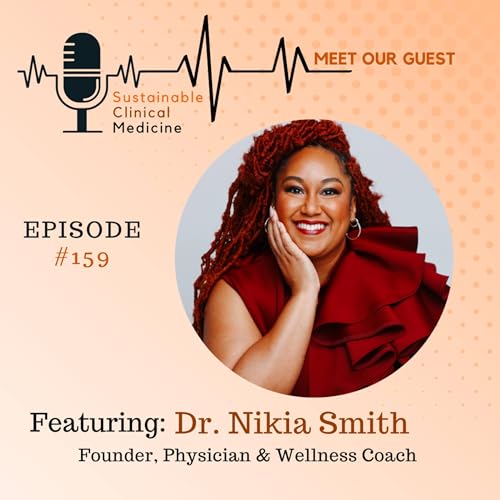
  • Burnout in healthcare isn't just about being tired. It's feeling numb, checked out, and ready to walk away from the career you worked years to build. Dr. Nikia Smith Ep 159
    Feb 16 2026
    Welcome to another episode of the Sustainable Clinical Medicine Podcast! In this interview, Dr. Nikia Smith, a board-certified anesthesiologist, wellness coach, and retreat curator, shares how she experienced burnout twice during her attending career and nearly left medicine. She describes early warning signs (persistent fatigue despite rest, increasing irritability, and eventual emotional numbness and autopilot), and links her initial burnout to chronic understaffing after colleagues left and a lack of administrative support, including being told the team was “handling it so well” that additional hires were unnecessary. After a near-20-hour call shift, she set boundaries by refusing further call, began educating herself on burnout, compassion fatigue, and self-compassion (including reading Kristin Neff), and rebuilt recovery through small, joy-based habits, movement (starting with Pilates), and reconnecting with community. She ultimately left a job that would not put agreed terms into a contract, moved to a no-call role to regain nights and weekends, and later negotiated for a part-time contract; she now works in Las Vegas under a contract requiring eight days per month, aligned with her goal of working 10 days or less. Dr. Smith explains how her personal retreat became an annual four-day wellness retreat for physicians (expanding to other clinicians) that includes CME and group learning on moral injury, perfectionism, invisible labor/“third shift,” and practical strategies such as boundary-setting, negotiating schedules, and mutual support (including helping participants craft emails). She advises clinicians to talk to others to learn what’s possible, keep asking for what they need (e.g., administrative time for committee work), and recognize that burnout recovery is not a quick fix but a process of re-engaging with self and community. Here are 3 key takeaways from this episode: Burnout Recovery Takes Time and Intentional Action: Burnout develops gradually over years, and recovery requires more than just rest. Dr. Smith emphasizes reconnecting with activities that bring joy and energy (like movement, hobbies, and community), even when exhausted. Small, consistent steps—like 5-minute walks or puzzles—can help rebuild your capacity to recharge. Advocate for Your Non-Negotiables: Healthcare systems often claim certain accommodations are "impossible" until you're ready to leave. Dr. Smith successfully negotiated no-call schedules and eventually part-time work (8-10 days/month) by persistently asking and being willing to walk away. She encourages clinicians to keep asking for what they need and get terms in writing. Systemic Issues Require Personal Boundaries: While healthcare systems prioritize profits over provider wellbeing, waiting for institutional change isn't sustainable. Dr. Smith learned to set firm boundaries—like refusing additional committee work without administrative time, and leaving jobs that wouldn't honor her needs. The solution involves both advocating for systemic change and taking personal responsibility for protecting your wellbeing. Meet Dr. Nikia Smith: Dr. Nikia Smith is a practicing board-certified anesthesiologist, wellness coach, and retreat facilitator. She’s also the founder of She Is Fire Forged, a transformative wellness brand that helps high-achieving women of color reclaim their peace, power, and purpose. With over a decade (and counting!) of experience in the high-stress world of medicine, Nikia brings a deeply informed lens to conversations around burnout, boundaries, and emotional restoration. Nikia specializes in guiding women—especially Black women in leadership and healthcare—through the exhaustion that comes from constantly being everything for everyone. She equips her clients with the tools to say no without guilt, build lives rooted in their own definitions of success, and live in softness over survival mode. Through retreats, coaching, and community care, Nikia curates spaces where women are invited to pause, reset, and reimagine what thriving truly looks like. Her work blends evidence-based wellness tools with embodied spiritual practice, creating a holistic path forward rooted in softness, sustainability, and self-trust. She’s also been featured as a guest on the Docs Get Money and Free to Be Mindful podcasts. Outside of her work, Nikia prioritizes rest, joy, and connection. You’ll find her reading, recharging with loved ones, and spending time with her niece, modeling what’s truly possible for a strong and powerful woman in this world. Connect with Dr. Nikia Smith: 🌐 Website https://sheisfireforged.com/ Instagram https://www.instagram.com/nikiasmithmd/ -------------- Would you like to view a transcript of this episode? Click Here **** Charting Champions is a premiere, lifetime access Physician only program that is helping Physicians get home with today's work done. All the proven tools, support and community you need to ...
    Más Menos
    33 m
  • Achieving Work-Life Balance: A Doctor's Journey Through Locum Tenens with Dr. Andrew Wilner - Episode 158
    Feb 9 2026

    Welcome to another episode of the Sustainable Clinical Medicine Podcast!

    In this episode, our host welcomes Dr. Andrew Wilner to discuss his extensive career in medicine, detailing his certifications in internal medicine, neurology, and epilepsy. Dr. Wilner shares his multifaceted journey, from starting as an ER doctor without formal training to becoming a professor of neurology. He delves into the evolution of the internship model and offers advice for medical students in career decision-making.

    Dr. Wilner also elaborates on the locum tenens lifestyle, discussing the challenges and benefits, including the necessary preparation and mindset for success. Additionally, he highlights his experiences in academic roles, private practice, and as a medical journalist. The conversation concludes with insights into Dr. Wilner's book, 'The Locum Life: A Physician's Guide to Locum Tenens,' and his podcast, 'The Art of Medicine,' featuring stories of physicians pursuing unique medical careers.

    Here are 3 key takeaways from this episode:

    1. Flexibility is Essential for Locums Success: Locums work requires adaptability in every aspect - assignments can be canceled last minute, you'll work in unfamiliar systems, and conditions are often less than ideal. The ability to be flexible and resourceful is more important than clinical skills alone.
    2. Prepare Thoroughly Before Each Assignment: Arrive 2 days early to handle logistics: learn the EMR system (demand paid training), scout parking and accommodations, get credentialing done, and eliminate uncertainties. This preparation reduces stress and lets you focus on patient care when the assignment starts.
    3. Locums Prevents Burnout and Maintains Career Options: Working locums (even part-time) keeps you clinically active, resets credentialing clocks, and provides control over your schedule. Many burned-out physicians rediscover their love of medicine through locums by working on their own terms (7-9 months/year) rather than leaving clinical practice entirely.

    Meet Dr. Andrew Wilner:

    Dr. Wilner has worked locum tenens on and off since 1982 and is the author of "The Locum Life: A Physician's Guide to Locum Tenens." Dr. Wilner is Professor of Neurology at the University of Tennessee Health Science Center in Memphis, Tennessee, and host and producer of the Art of Medicine with Dr. Andrew Wilner podcast since 2020. Dr. Wilner is a PADI Divemaster and passionate underwater photographer.

    Connect with Dr. Andrew Wilner:

    🌐 Website http://www.andrewwilner.com

    Twitter/X http://www.twitter.com/drwilner

    Instagram http://www.instagram.com/seaphoto2025

    YouTube http://www.youtube.com/c/andrewwilnermdauthor

    YouTube Underwater http://www.youtube.com/c/andrewwilner

    --------------

    Would you like to view a transcript of this episode? Click Here

    **** Charting Champions is a premiere, lifetime access Physician only program that is helping Physicians get home with today's work done. All the proven tools, support and community you need to create time for your life outside of medicine.

    Learn more at https://www.chartingcoach.ca

    **** Enjoying this podcast? Please share it with someone who would benefit. Also, don’t forget to hit “follow” so you get all the new episodes as soon as they are released.

    **** Come hang out with me on Facebook or Instagram. Follow me @chartingcoach to get more practical tools to help you create sustainable clinical medicine in your life.

    **** Questions? Comments? Want to share how this podcast has helped you? Shoot me an email at admin@reachcareercoaching.ca. I would love to hear from you.

    Más Menos
    51 m