Episodios

  • Not YOUR Bee
    Sep 29 2020
    Giraffe Hero Dimi du MortierThe Giraffe we want to introduce you to today is Dimi. Dimi is a filmmaker who has produced several documentaries on shoestring budgets. About his most recent one, which is still in the making Not your bee, he will give some fascinating insights in this talk. He’s asking the right questions, like who do insects belong to and what might be the consequence of this possessive idea men tend to have about bees – about the environment in general. Other than that he’s revealing very moving stories about his other activities, be it as a filmmaker doing guerrilla actions to demonstrate the consequence of the refugee politics, or be it as a social worker trying to reunify families and help depressed young people. He’s explaining us how the open heart circles he organizes help make people talk, how rituals and candle light can help – to talk with each other and open up hearts instead of shielding off the most beloved ones around you.**Keywords:**https://freethebees.ch/en/Climate changeBees. beekeeping, bee colonies Varroa mite: Varroa destructor is an external parasitic mite that attacks and feeds on the honey bees Apis cerana and Apis mellifera. The disease caused by the mites is called varroosis. The Varroa mite can reproduce only in a honey bee colony. It attaches to the body of the bee and weakens the bee by sucking fat bodies.https://www.sciencemag.org/news/2019/07/breeders-toughen-bees-resist-deadly-mitesYour opinion on bee dying André?-several factors from the outside, as pesticide, but also beekeeper is responsible. Bee production – prevention from swarming. Treatment, organic acids. Bees can’t adapt to their nature under this condition.Comparison between bees and cows or any other husbandry AnimalAren’t cows and so on not in the same way affected?Yes, we’re doing the same, but with honey bees it’s even a lot more, having also lost biodiversity (resources in the nature) at the same time. And also, cows are not as important for the ecosystem as bees. Exploiting bees has quadrupled, cows only doubledIsn’t the bee only a semi- husbandry Animal?On one way yes -, but it’s kept as a husbandry though they are wild animalsIs this the key argument from the organization free the bees?Yes, because they are linked to natural selection. And even though natural selection can be a horrible thing it’s very important for them because they have to adapt, otherwise they won’t survive the climate change etc.So are they able to survive the Varroa mite? Link to COVID-19?Yes, there is indeed. There are processes and behaviors, that the bees are able to protect themselves/immune system. We know, that they can coexist, we know it in a scientific and practical manner. But we also know if we try treating them then they won’t learn to adapt to live with them. The Varroa mite is only one problem today so we have to find another way to deal with it.That is a really fascinating. Our subject is climate adaptation, or climate change. So if I remember correctly, bees have a history of some 45, or scientifically at least 30 million years. This proves they are very adaptive and have survived many extinctions. So it’s interesting, that they are now threatened by human species and civilization.https://en.wikipedia.org/wiki/BeeYes, that’s true, bees can cope with many things and in the last 100 years we have cut the natural evolution through beekeeping who feed and treat and prevent from swarming, so under this condition they don’t adapt to new conditions. So these are the solutions we’re looking for at free the beesYou as a participant of our crowdfunding, you and your organization are offering some very interesting rewards. There seem to be even bee dogs or things, that are able to deal with these problems or explain please what a Klotzbeute is?https://wemakeit.com/projects/climate-adaptationhttps://en.wikipedia.org/wiki/Beehive#Bee_gumshttps://www.bienenjournal.de/imkerpraxis/fachberichte/imkern-in-klotzbeute-und-zeidelbaeumen/By the way you can call it log hive in English – just a hollow peace of a tree. So their most important thing is their habitat – and since bees always lived in trees, and we know their natural habitat have some very interesting parameters and factors of humidity etc., so we try to reproduce these with hollow trees and went down to learn how in the middle age the beekeepers kept the bees in a more natural manner. https://en.wikipedia.org/wiki/Middle_age#:~:text=According%20to%20the%20Oxford%20English,age%20from%2055%20to%2065.Now we went a step further to understand the tree cavity and helped us to produce a lot of them to give the bees back their habitat and all the rest is done by natureThat’s fascinating, that means I can go to free the bees and they can show me how to do it and I can take it back to the garden?That is right yes, we give courses how to produce honey in a more natural way, so if you really want to know we can show you in two ...
    Más Menos
    36 m
  • Imaginal Cells
    Sep 22 2020
    Giraffe Hero Chris MalinsChris is an educator and researcher in sustainability issues with a special interest in how today’s separation of people from nature is affecting their ability to cope with conflict, this especially with a view to younger generations. And he has developed methods to remedy this situation by reengaging us with nature. With the help of our ongoing crowd-financing campaign Giraffes fighting for Climate Adaptation, Chris would like to prepare a series of online lectures so as to share his knowledge and experience with a wider audience thus attracting them to actually engage practically for positive change. Furthermore, Chris has profound knowledge about growing and protecting trees, something which will help greatly with the creation of our Bee and Wild Bee Reserve, which is planned to be created high up at the National Park Sierra Nevada. **Keywords:**Climate change, Trees Caterpillar , Holistic Education, Imaginal CellsEducation, Kids, students, natureBees. beekeeping, bee colonies “Giraffes fighting for Climate Adaptation”Giraffes for Ecology and Climate AdaptationBees & Trees Initiative2020 – Resilience against Viruses and Similar HazardsThe Giraffe Heroes Project is soon to become 40 years old. Its mission is to commend and support personalities sticking their necks out and fighting for the social issues that matter: justice, freedom and our environment.For two years the Giraffe Heroes Foundation (GHF), devoted to European and Swiss Giraffes who stick their necks out for the common good, has been active from Basel. Together with the crowd funding platform wemakeit and the Impact Fund 2020/Climate, we are presenting our newest InitiativeGiraffes Fighting for Climate AdaptationBees and Tres Initiative. Giraffe Heroes FoundationBasel 2020Featuring and supporting the Work of Five HeroesEnvironment. Bees, TreesSpain, Belgium, SwitzerlandEducation, ActivismPeople, NetworkA concrete way to make a differenceUsing Film to Inspire and Secure support for Climate actionReforestingBringing the power of nature to reduce Global warmingJoin us, be part of it - Working, learning and contributing wherever you areWho are these Heroes?Louis de Cordier (COSCO), La Alpujarra, SpainCosco has rediscovered the believed lost Labyrinth of Egypt and realized the unbelievable project Biblioteca del Sol, high in the Sierra Nevada Mountains where knowledge is to be stored for a future full of uncertainties. Now he is working to transform that area into a refugium for bees and humans alike. Giraffe Heroes Europe wants to help him with his work for the establishment of the first European Bee Conservatory which will create a refuge for endangered bees as well as for humans working with them. André Wermelinger, Fribourg, SwitzerlandThe conventional way of keeping bees deprives the bees completely of their ability to adapt to environmental changes. As a result, very few natural populations exist anymore. André Wermelinger saw this problem, recognized its global implications, and set up a plan to solve the bee mortality crisis at its roots. Conventional bee-keepers wanted to have nothing of this and tried to ostracize André and his work. That has not stopped him. With his expertise, Cosco will be able to realise his vision for the European Bee Conservatory which will set new standards for healthy bee keeping and demonstrate its efficiency.Hendrik Haers, Bassevelde, BelgiumIn a team with Cosco and André, Hendrik will give strategy workshops to reach out to the population at large. He has given up his career as a veterinarian doctor to study bees and trees. Subsequently, he started on an activist planting spree to help create healthy environments for bees and humans alike. While transforming the village where he lives he gained substantial professional experience and is now engaging in community education. We are looking forward to have him talking to you, with the goal to empower people across Europe to follow his example.Chris Malins, La Alpujarra, Spain.Chris has developed educational perspectives on current conventional global practices that affect bees and address the wider questions of Human Sustainability. His goal is to establish an online platform for his ‘Green Transitions Programm’ to bring his experience and knowledge to all of us. He has chosen to devote his life to work and fight for Human Sustainability through the development and practices of ‘Nature-Based Holistic Education’. Chris participated in the founding and improvement of local schools. Also he has proven, as an academic researcher, that kids who have lost touch with nature will naturally encounter increasing psychological stress.Dimi Dumortier, Rotselaar, BelgiumArtist, Social Worker, Activist…Dimi is a genius in his own right amongst our Giraffe Heroes and for sure one of the most lovable persons you might come to know. He uses his talents, guts and courage for people as well as for bees and the climate crisis. Last ...
    Más Menos
    32 m
  • Don´t stop till you drop
    Sep 15 2020
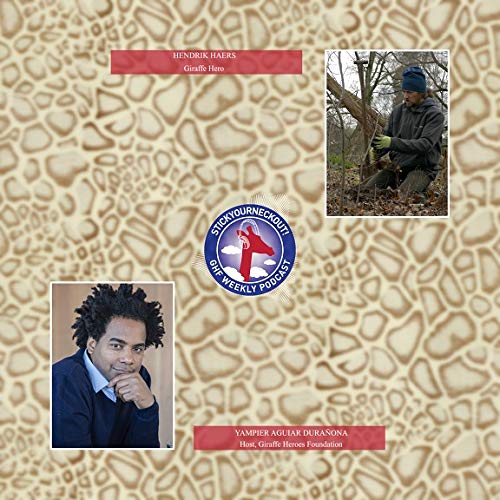
    Giraffe Hero Hendrik HaersTodays podcast is taken our look to a green desert– meaning an area without diversified culture – meaning no food for insects to survive. Hendrik Haers, my guest today, is living in the centre of a village built in such a green desert – where there’s hardly any ground left that the village autorities don’t sell for building. Therefore Henrik decided to gather all his power to plant as much trees as possible and create an awareness. He’s also sharing his story of how he learned to become a classic beekeeper and how he change from traditional to natural beekeeping. After that, the number of beehives increased surprisingly “without doing anything”. **Keywords:**Climate changeBees. beekeeping, bee colonies Varroa mite: Varroa destructor is an external parasitic mite that attacks and feeds on the honey bees Apis cerana and Apis mellifera. The disease caused by the mites is called varroosis. The Varroa mite can reproduce only in a honey bee colony. It attaches to the body of the bee and weakens the bee by sucking fat bodies.https://www.sciencemag.org/news/2019/07/breeders-toughen-bees-resist-deadly-miteshttps://en.wikipedia.org/wiki/Beehttps://wemakeit.com/projects/climate-adaptationhttps://en.wikipedia.org/wiki/Beehive#Bee_gumshttps://www.bienenjournal.de/imkerpraxis/fachberichte/imkern-in-klotzbeute-und-zeidelbaeumen/https://en.wikipedia.org/wiki/Middle_age#:~:text=According%20to%20the%20Oxford%20English,age%20from%2055%20to%2065.https://dogtime.com/dog-health/general/19713-meet-bazz-the-canine-beekeeperhttps://www.youtube.com/watch?v=v2Aa56jut7YThe ways we can solve that are techniques of agroforestry and include nature in the farming process. Something you as an individual are not able to change. But together with a working group they’re trying to convince people to change this, to plant more trees, to plant more flowers.“Yes we can” was an organization called the “moss group”, a group planting forests. Through this group I got active as a guerrilla gardener.Our big garden in the center of Bassevelde is a kind of oasis within the green desert – so our goal is to increase our garden to the surroundings and increase the amount of food.The problem is bees fly up to three km so you have to create an awareness with the people of the village – that they help to provide more food. We try also to create awareness. Then also to convince people to plant trees in their gardens. So people can help if they only plant one tree in their garden.There’s an educational component to it also. We try to teach children, go to schools and create a conscience, how important nature is and that a bee is not something dangerous that stings you but something important for everyone. Usually children from inside don’t have this fear – it’s because we tell them so.Big beehive on the tree – we invite the bees – difference to classic beekeepingEspecially in a green desert like this the idea is to leave the honey to them – to create a home for them, because there’s not enough for them. Bees like to live in hollow trees -but there are none anymore…So idea of the hängekorb is to invite the bee swarms. The only thing we do is to see if there’s honey to know if we have to feed them – otherwise they would die. But we don’t treat them again deseases nothing – and they manage to survive these – as long as we feed them, because there’s not enough plants.How comes the fascination with bees?First learned about the beekeeping and all the treatment and started to have beehives. Then got a bit disappointed but then learned about natural beehives and realized there is a way not to have so much loss and that it works without treating so then I liked it.Now I have too many hives for this green desert. So I have to think about if I should stop feeding them so by natural selection the ones who are more resilient to an area with less food will survive.What is your hope, what do you want to achieve if this campaign goes through?Overall awareness. By putting the hives, showing the people how it works. That’s what we want to use the money for – to increase the awareness inside the village counselors and also to fight against vandalism. Then the politics argue well, look, they don’t want trees, they take them away. We have to ask the people.The one thing I would change immediately if I could is reorganize the green department who’s there to supposingly organize the green areas etc. – and also invest in this green areas – not only do spots for building, but really create green spots and so on. As a village council buy all the green spots and plant things there.Message to the crowd: plant plant plantGuerrilla gardeners tend to work wherever a natural presence is needed. Sometimes they work outside of the legal system. Guerrilla gardening is a global ecological movement that focusses on caring for neglected public space. Welcome to Stick your Neck Out! The Podcast ...
    Más Menos
    34 m
  • Free the bees!
    Sep 8 2020
    André Wermelinger. A Giraffe Hero, a beekeeperDid you know you can train a dog as a beekeeper? Did you know that the bees need your help? What is the connection between the Bees and COVID-19? In today’s Episode Tom Amatt is talking with André Wermelinger, founder and leader of the NGO Free the Bees, Fribourg, Switzerland. He’s also a Giraffe Hero and will be talking among other things, about what could be a solution regarding todays bee keepings problems and how he fights to save the bees. Also, how can the bees be treated in a way that they’re still able to adapt to the climate change, as they have adapted to the evolution in the last 45 million years. This Episode it’s all about humans. About working for the bees and the trees and a society getting healthy again. **Keywords:**https://freethebees.ch/en/Climate changeBees. beekeeping, bee colonies Varroa mite: Varroa destructor is an external parasitic mite that attacks and feeds on the honey bees Apis cerana and Apis mellifera. The disease caused by the mites is called varroosis. The Varroa mite can reproduce only in a honey bee colony. It attaches to the body of the bee and weakens the bee by sucking fat bodies.https://www.sciencemag.org/news/2019/07/breeders-toughen-bees-resist-deadly-mitesYour opinion on bee dying André?-several factors from the outside, as pesticide, but also beekeeper is responsible. Bee production – prevention from swarming. Treatment, organic acids. Bees can’t adapt to their nature under this condition.Comparison between bees and cows or any other husbandry AnimalAren’t cows and so on not in the same way affected?Yes, we’re doing the same, but with honey bees it’s even a lot more, having also lost biodiversity (resources in the nature) at the same time. And also, cows are not as important for the ecosystem as bees. Exploiting bees has quadrupled, cows only doubledIsn’t the bee only a semi- husbandry Animal?On one way yes -, but it’s kept as a husbandry though they are wild animalsIs this the key argument from the organization free the bees?Yes, because they are linked to natural selection. And even though natural selection can be a horrible thing it’s very important for them because they have to adapt, otherwise they won’t survive the climate change etc.So are they able to survive the Varroa mite? Link to COVID-19?Yes, there is indeed. There are processes and behaviors, that the bees are able to protect themselves/immune system. We know, that they can coexist, we know it in a scientific and practical manner. But we also know if we try treating them then they won’t learn to adapt to live with them. The Varroa mite is only one problem today so we have to find another way to deal with it.That is a really fascinating. Our subject is climate adaptation, or climate change. So if I remember correctly, bees have a history of some 45, or scientifically at least 30 million years. This proves they are very adaptive and have survived many extinctions. So it’s interesting, that they are now threatened by human species and civilization.https://en.wikipedia.org/wiki/BeeYes, that’s true, bees can cope with many things and in the last 100 years we have cut the natural evolution through beekeeping who feed and treat and prevent from swarming, so under this condition they don’t adapt to new conditions. So these are the solutions we’re looking for at free the beesYou as a participant of our crowdfunding, you and your organization are offering some very interesting rewards. There seem to be even bee dogs or things, that are able to deal with these problems or explain please what a Klotzbeute is?https://wemakeit.com/projects/climate-adaptationhttps://en.wikipedia.org/wiki/Beehive#Bee_gumshttps://www.bienenjournal.de/imkerpraxis/fachberichte/imkern-in-klotzbeute-und-zeidelbaeumen/By the way you can call it log hive in English – just a hollow peace of a tree. So their most important thing is their habitat – and since bees always lived in trees, and we know their natural habitat have some very interesting parameters and factors of humidity etc., so we try to reproduce these with hollow trees and went down to learn how in the middle age the beekeepers kept the bees in a more natural manner. https://en.wikipedia.org/wiki/Middle_age#:~:text=According%20to%20the%20Oxford%20English,age%20from%2055%20to%2065.Now we went a step further to understand the tree cavity and helped us to produce a lot of them to give the bees back their habitat and all the rest is done by natureThat’s fascinating, that means I can go to free the bees and they can show me how to do it and I can take it back to the garden?That is right yes, we give courses how to produce honey in a more natural way, so if you really want to know we can show you in two days, needs some muscles and sweating. So if you would like to give a habitat but don’t have time to build it, you just order it and we send it. You hang it and hope they will comeSounds ...
    Más Menos
    29 m
  • Stick your neck out!
    Sep 2 2020
    A direct encounter with NGO founder Tom AmattThe Giraffe Heroes – who are they?This podcast reveals the story about the origin of the Giraffe Heroes Foundation. What’s the organisations goal – who are those Heroes, the so called “Giraffes”? Listen to the pilot of our new podcast series “Stick your neck out!” The weekly podcast of the Giraffe Heroes Foundation. In this Episode you get insights from the founder Tom Amatt and get to know the particular vision this NGO has. We walk you through the process how to find and nominate people that stick their neck out and create a network among all of those, fighting for the common good, to make a difference. **Keywords:**Climate change, Environment, Civil courage, Common good, Bees and trees, Humanity, Society, Network, Impact, Commitment, NGO, Education, Bruno Manser,Social change/transformation, Giraffe Heroes Project**Timeline:**00:00 - Teaser00:31 - Jingle00:48 - Moderation: Whenever you hear the word 'hero' you probably automatically put the word 'super' in front of it and picture the Avengers beating up some alien things coming out of the sky over New York. These kinds of heroes are always good looking, they're built like a tank and they always have some distinctive outfit or cape which sets them apart from the rest of the group. Now, forget about that. The People on this Podcast are a true inspiration and it's their determination to do what is right, that makes them a superhero in their own unique way. Welcome to Stick your Neck Out! The Podcast of the Giraffe Heroes Foundation. My name is Yampier Aguiar Durañona and I´m gonna be your Host in this Journey. The Podcast to restore your faith in Humanity. Every Tuesday you´re going to get the chance to get to know one of the Giraffe Heroes, who they are and what they fight for. We are going to present you Inspiring Stories of People Saving Our World, making it better. Us, that is today’s guest Tom Amat, the Founder of the Giraffe Heroes Foundation and me. Hi Tom, thanks for being here today with us 02:02 - Tom, you are a Sinologist, you have started and run a number of companies doing business in China. 2017, you accidentally came across a book and this event has led you to found the GHF in the Fall of 2017. Tell us about your experience—what motivated you to create this organization?03:20 - The foundation is called Giraffe Heroes Foundation tho you don’t call your “Heroes”, Hero, you like to call them Giraffes. Why is that?04:50 - Non-governmental organisations (NGOs) are generally placed on a pedestal for doing the work not being done by other sectors, while often also working to compensate for the damage done by those same sectors. What kind of work does the GHF and what is the vision behind this initiative?06:30 - Who has benefited from your program and how have you made a difference?07:24 - I wonder if this foundational work with a lot of clever and well intentioned actions all over the year, so to speak won’t manage to have a deeper impact on society. What do you think about it Tom?10:18 - Some people say foundations have often worked like this: setting up a project, financing it for a few years, getting into the newspaper - and then inventing the next nice project. What is your next nice Project?12:16 - The Giraffe Heroes Foundation is an NGO. What is the hardest part of running an NGO, like what are the daily obstacles that you need to combat to keep your NGO afloat?14:39 - The foundation describes its mission as “cariying the effort further by identifying new individuals engaged in the cause. Also, by organizing them into an interactive community which will have their own voice and, gradually, achieve the powers necessary to create a new trend”. What does that mean in today’s context?17:23 - These Giraffes, are in the front lines of social change, taking risks for their causes, hanging in there year after year, and not waiting for "them"(be it the society, political leades or whoever) to solve the problems, including fighting for sane climate policies, social justice, public health, safety and human rights. Can you tell us a little bit more about these People? Who they are, how they get selected?19:42 - To many of our listeners GHF is a whole new idea they know about just now. If they want to join hands, what’s the easiest way they can reach out?20:21 - Outro: Thank you, Tom Amat, for your visit. Next week you´re going to be talking to Andre Wermelinger, a Giraffe hero and co- Manager of GECA, the newest Initiative of the Giraffe Heroes Foundation. Among other things you´re going to be talking with him about his nomination as a Hero, his organisation “Free the bees”, the Crowdfounding campaign we’re initiating and the rewards that free the bees are offering for the ones who support this Initiative. This was the first Episode of Stick your neck Out! The Podcast to restore your faith in Humanity. I´m Yampier Aguiar Durañona. We are proud to share every ...
    Más Menos
    22 m
  • STICK YOUR NECK OUT! - Jingle
    Aug 31 2020

    Hosted on Acast. See acast.com/privacy for more information.

    Más Menos
    Menos de 1 minuto
adbl_web_global_use_to_activate_DT_webcro_1694_expandible_banner_T1