Episodios

  • 101: Part 2, Kate Kelleher Behind the Wigs: Life at the Criminal Bar
    Dec 19 2025

    Send us a text

    The courtroom looks orderly from the gallery, but behind the wigs and gowns is a profession running on grit, late nights, and vending machines. We sit down with criminal defense barrister Kate Kelleher and the Criminal Bar Association’s James Rosseter to reveal how the Criminal Bar keeps fairness alive while the system strains at every seam.

    Kate maps the quiet collapse of camaraderie since the pandemic: fewer juniors, downsized chambers, and loose networks that used to provide feedback, mentorship, and the small kindness of a post‑trial debrief. James connects these human shifts to structural problems, understaffed teams, equipment failures, and disclosure errors that still derail trials decades after notorious miscarriages of justice. The stories range from judges’ dinners that changed careers to real cases halted when phone data surfaced late, and to the absurdity of hunting a treasury tag while a jury waits. Small details, no café, no time, no space to talk, compound into big risks for fair trials.

    We explore the emotional toll the public rarely sees: flashbacks that intrude at bedtime, the discipline to avoid alcohol during trial, and the recurring fear of not being able to protect one’s own child in a police station. Kate draws a vital line between legal guilt and religious or moral guilt, reminding us that beyond a reasonable doubt is more than a phrase, it is the standard that protects us all. With local court reporting fading, the everyday work of justice disappears from view, leaving only sensational headlines and thin narratives. What gets lost is the humanity of people who still show up, hungry and exhausted, to make sure no stone is left unturned.

    If you care about justice reform, open courts, the Criminal Bar, and the real mechanics of fair trials, this conversation is your front-row seat. Subscribe, share, and leave a review to help more listeners find stories that show how justice actually works, and how it can work better.


    Credits

    Produced by Henry Chukwunyerenwa


    Support the show

    For more unmissable content from The View sign up here

    Más Menos
    38 m
  • 100. Mental Health in the UK Justice System: In Conversation with Barrister Kate Kelleher and James Rossiter from the Criminal Bar Association (Part 1)
    Dec 3 2025

    Send us a text

    Justice feels distant until it isn’t. We open the doors to a courtroom few ever truly see, where trauma arrives with every case and formality—the wig, the gown, the ritual—exists to contain it. With barrister Kate Kelleher and Criminal Bar Association communications lead James Rossiter, we explore how lawyers hold the line between empathy and evidence while facing impossible timelines and rising complexity.

    Across candid stories and sharp analysis, we examine why language matters—why “victim” becomes “complainant” until a verdict—and what that means for fairness. We look at fitness-to-plead, the spillover from a strained mental health system, and the human toll of trials drifting into 2027 and even 2029.
    We also tackle prevention. School exclusions that push children to the streets, social media that rewards impulse, and the loss of everyday boundaries mean too many meet their first real limit in court. Amid that, barristers carry years of detail, reheated at each review, with little time to build trust with clients. Victim personal statements can validate pain but seldom change sentences, revealing the emotional and legal limits woven through modern justice. This conversation is clear-eyed, humane, and grounded in lived practice.

    Donate to The View here

    Credits

    Guest: Kate Kalleher & James Rossiter

    Producer: Charlotte Janes & Nico Rivosecchi

    Soundtrack: Particles (Revo Main Version) by [Coma-Media]

    Support the show

    For more unmissable content from The View sign up here

    Más Menos
    47 m
  • 99. Modern Slavery in the UK: What You Need to Know with Lauren Saunders from Unseen UK
    Nov 26 2025

    Send us a text

    Modern slavery isn’t far away or long ago. It’s here, woven into daily life, and too often dismissed as something else. We sit down with Lauren Saunders, Deputy Director of Frontline Services at Unseen, to uncover how exploitation hides in UK homes, care settings, nail bars, construction sites and supply chains—and what it takes to bring people to safety and hold perpetrators to account.

    Lauren explains what modern slavery looks like today, from forced labour and domestic servitude to sexual and criminal exploitation, and clarifies the difference between trafficking and smuggling. We dig into red flags the public can spot, why victims may not recognise their exploitation, and how a culture of belief shapes better policing and prosecutions. We also connect the dots between consumer choices and forced labour, exploring how complex supply chains in agriculture, hospitality and construction can mask abuse. If you’ve ever wondered what to do when something feels wrong, this conversation gives you clear steps, useful resources and the conviction to act.


    Donate to The View here

    Buy The View issue 15 here

    Credits

    Guest: Lauren Saunders

    Producer: Charlotte Janes

    Soundtrack: Particles (Revo Main Version) by [Coma-Media]

    Support the show

    For more unmissable content from The View sign up here

    Más Menos
    40 m
  • 98. Why Defending Juries Matters When Protest Is Criminalised with Sir Jonathon Porritt & Dr Juliette Brown
    Nov 19 2025

    Send us a text

    We sit down with Dr Juliette Brown, an NHS consultant psychiatrist and climate activist facing a retrial after a hung jury, and Sir Jonathan Porritt, a leading environmental thinker who has returned to civil disobedience, to explore how conscience, health, and the law collide in today’s UK.

    Together, we unpack Defend Our Juries, the grassroots campaign centred on a simple principle: jurors have the right to acquit according to conscience. We look at how tightened protest laws, expansive uses of counterterror powers, and stricter bail and remand conditions have chilled speech and civic action—while solidarity networks have flourished to support defendants, coordinate court solidarity, and keep the public informed. When juries hear the whole story, they often reflect community standards better than any statute book; when they are denied that context, justice risks becoming mechanical and brittle.

    If you care about the right to protest, jury equity, climate justice, and the health of our democracy, this conversation offers clarity.

    Credits

    Guests: Sir Jonathon Porritt & Dr Juliette Brown

    Producer: Charlotte Janes

    Soundtrack: Particles (Revo Main Version) by [Coma-Media]

    Support the show

    For more unmissable content from The View sign up here

    Más Menos
    36 m
  • 97. Inside Medomsley Detention Centre: Abuse, Predators, Government Ignorance & Operation Deerness with PPO Adrian Usher
    Nov 12 2025

    Send us a text

    A detention centre meant to correct young men became a blueprint for how institutions can enable predators. We dig into Medomsley’s regime of fear, the violence that greeted boys at the gate, and the sexual abuse that flourished where power went unchecked. Guided by survivors’ testimonies and an in-depth conversation with the Prisons and Probation Ombudsman behind Operation Dearness, we explore how culture, leadership, and weak oversight combined to normalise harm and silence complaints.

    Across the episode, we follow the path from scalding baths and forced humiliation to predation in the kitchens, where Neville Husband exploited access and impunity. We examine preventable deaths and missed interventions by staff, police, and social workers

    The investigation’s findings lay out the full scale: thousands of victims, decades of abuse, and a system that prized order over care. More importantly, we map the reforms that can stop this cycle—proactive safeguarding that looks for abuse, child-friendly complaint systems, independent listeners, and tightly defined routes for families to raise serious concerns.

    Credits

    Guest: Adrian Usher

    Producer: Charlotte Janes

    Actors: John E Saxon, Benn Cordrey, Simon Green & David Wilson

    Soundtrack: Particles (Revo Main Version) by [Coma-Media]

    Support the show

    For more unmissable content from The View sign up here

    Más Menos
    37 m
  • 96. Exclusive Preview Inside The View Magazine Issue 15
    Nov 5 2025

    Send us a text

    Our latest Rebel Justice Podcast offers a powerful preview of The View Magazine Issue 15, weaving first‑hand testimony, hard data and practical solutions across prisons, youth custody, social care and community action.

    If these stories move you, pre‑order Issue 15 at https://theviewmag.org.uk/product/the-view-magazine-issue-15/, subscribe to support this work, and share the episode with someone who cares about women’s justice. Follow and leave a review to help more people find these voices.


    Credits

    Guest: Elena Righi, Maile Monds & Amelie Baker

    Producer: Charlotte Janes

    Soundtrack: Particles (Revo Main Version) by [Coma-Media]

    Support the show


    Support the show

    For more unmissable content from The View sign up here

    Más Menos
    10 m
  • 95. The Hidden Sentence for Mothers – with Not Beyond Redemption’s Founder Camilla Baldwin & Solicitor Eben Vaughan-Philipps
    Oct 29 2025

    Send us a text

    Imagine serving three months for a non‑violent offence and imagine being released with no priority for housing, and a wall between you and your child. That’s the hidden sentence thousands of mothers face, and it’s where Not Beyond Redemption steps in with free legal advice and representation to keep families together.

    We sit with founder and solicitor Camilla Baldwin and solicitor Eben Vaughan-Philipps to unpack how the charity grew from a single clinic to a nationwide network in all 12 women’s prisons. They explain why contact often collapses after short sentences, how special guardianship orders and court delays can lock mothers out, and what it takes to rebuild family life: trauma‑informed support, consistent legal teams, and step‑by‑step contact plans that start with calls and can lead to overnights. A powerful case study shows what perseverance looks like when the stakes are a child’s sense of home.

    We also challenge the economics and ethics of custody. With most women imprisoned for non‑violent offences at around £65,000 a year, electronic tagging and community sentences offer a smarter path, protecting children’s routines while cutting reoffending. Camilla and Evan share front‑line realities from pin‑phone barriers to prejudiced assumptions, while making the health case for connection: sustained contact improves mental wellbeing and even life expectancy for mothers and children. Along the way, you’ll hear how pro bono law firms and barristers, trauma awareness, and judicial engagement are reshaping a system that has too often treated imprisoned mothers as beyond hope.

    https://notbeyondredemption.co.uk/

    https://www.justgiving.com/charity/notbeyond-redemption

    info@notbeyondredemption.co.uk


    Credits

    Guest: Camilla Baldwin & Eben Vaughan-Philipps

    Producers: Charlotte Janes & Nico Rivosecchi

    Soundtrack: Particles (Revo Main Version) by [Coma-Media]

    Support the show

    For more unmissable content from The View sign up here

    Más Menos
    47 m
  • 94. Dr. Sarah Benn and the Climate Health Emergency
    Oct 22 2025

    Send us a text

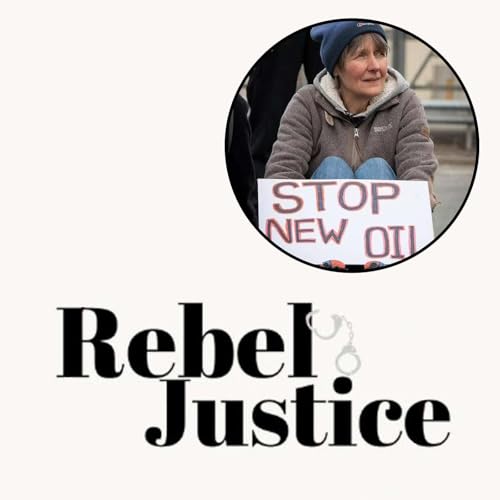
    In this week's episode, we talk to Dr Sarah Benn, a GP who moved from decades of practice to non‑violent climate action. How did Dr Sarah go from sitting outside an oil terminal with a small placard, to ending up behind bars?

    Dr Sarah explains why civil resistance, done non‑violently, can be a legitimate public health intervention when petitions and policy promises fail. We talk candidly about prison: the loss of agency, the small humiliations that reveal how power works, and how a month inside sharpened her sense of justice. Then we unpack the GMC tribunal that suspended her for breaching an injunction, the logic that “doctors must uphold the law,” and why she believes public trust is better served by doctors who act to prevent mass harm than by regulators who punish conscience.

    Throughout, we connect climate change to everyday health: heatwaves and floods, air pollution driving heart and lung disease, vector‑borne infections moving north, fragile food systems, and the mental health toll of grief and anxiety. Sarah lays out what healthcare can do now—prepare for heat and air quality events, plan for migration and disruption, and speak plainly about risk. For listeners, she offers a practical ladder of action: diet shifts, travel choices, ethical banking, political pressure, local water and air campaigns, and routes into activism that don’t require breaking the law.

    Credits

    Guest: Dr Sarah Benn

    Producer: Charlotte Janes

    Soundtrack: Particles (Revo Main Version) by [Coma-Media]

    Support the show

    For more unmissable content from The View sign up here

    Support the show

    For more unmissable content from The View sign up here

    Más Menos
    38 m