Episodios

  • The Lazy Sales Tactic That's Hurting Your Business | Ben King from Aviato Consulting
    Apr 16 2026

    Ben King is the founder and CEO of Aviato Consulting, a software and AI consultancy that ranked sixth in the AFR Fast 100 this year. Before starting Aviato, Ben ran the app modernisation team for Google Cloud across Asia Pacific, and when he left, he built essentially the same thing, but leaner and on his own terms. The company now has 95 people across Australia, India and Singapore, with around half of all work being AI-related.

    In this episode, Ben joins Alan to talk about what it actually looks like to build and scale a technical consulting business in Australia, from the talent shortage that forces most serious engineering firms offshore, to the practical realities of using AI in production versus just prototyping. Ben is refreshingly direct about what works and what doesn't, including why he thinks signing a three-year deal with any AI provider right now is a mistake, why AI cold email campaigns do more damage than good, and why a physical piece of mail will outperform ten thousand automated messages every time.

    Alan challenges Ben on the right tech stack for founders heading into 2026, how to get the most out of free cloud credits before you raise, and what product managers still do better than any AI tool on the market.

    If you're a founder making decisions about how to build, who to hire, or which AI tools to trust with your business, this episode is worth your time.

    🎙 Ask Alan a Question – https://speakpipe.com/pickmybrain

    🎧 More from Alan Jones – https://www.startupfoundercoach.com

    Sponsors:Pick My Brain is supported by our wonderful sponsors:

    Galah Cyber offers the Foundations of Application Security course: a practical, hands-on AppSec course built for engineers who actually ship code. Two days of real-world lessons you can apply immediately. Learn more at galahcyber.com.au/learn.

    The Day One NetworkPick My Brain is part of Day One, the podcast network dedicated to founders, operators & investors.

    To learn more, join our newsletter to be notified of new and upcoming shows. The only content we create is content that will help Australian founders.

    Más Menos
    37 m
  • How to Turn Happy Customers Into Your Best Sales Channel
    Mar 17 2026

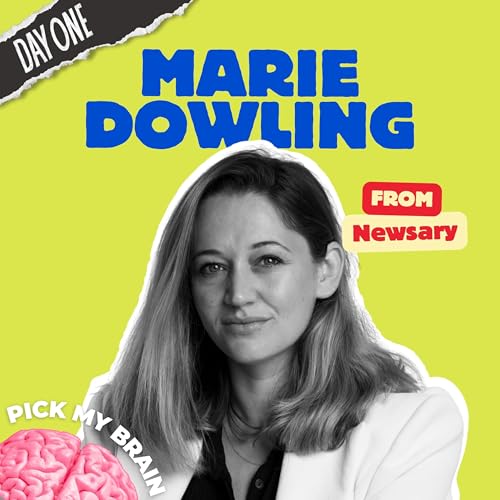
    Most founders who've tried PR will tell you the same thing: it was a waste of money and they never got in the media. But when Marie Dowling digs deeper, the real answer is usually that they weren't involved enough to make it work.

    In this episode, Alan is joined by Marie Dowling, founder and CEO of Newsary, a hybrid AI and human PR platform built for startups and small businesses. Marie walks through how Newsary works, why PR is becoming the new SEO, and how she landed enterprise client Flixbus, generating over 300 pieces of Australian media coverage.

    Alan challenges Marie to think beyond founder-led sales, pushing her to consider referral incentives, agency partnerships, and her LinkedIn audience as scalable distribution channels. If you're a founder who's written off PR, this episode might just change your mind.

    Time Stamps

    02:13 – Meet Marie Dowling and her path from PR agency to founder

    04:37 – Why bigger clients mean less interesting press releases

    06:09 – What Newsary does and who it's for

    07:02 – The pivot: from "how to write" to "what is a good story"

    08:01 – Why PR is the new SEO

    09:09 – How Newsary works: interview-style, not AI-generated

    11:05 – Pricing: what Newsary costs vs. a traditional agency

    12:32 – How Marie finds customers (and what they all say about PR)

    13:39 – The real reason most PR fails: founder involvement

    15:14 – Alan's challenge: scaling beyond founder-led sales

    18:03 – The Flixbus campaign: 300+ pieces of coverage

    19:14 – Who's behind Newsary: the team and advisors

    20:16 – Co-hosting industry events: lessons learned

    23:18 – Platform rebuild and January launch plans

    25:10 – Marie's one ask of listeners

    Resources Mentioned

    💸 Newsary: https://www.newsary.co/

    🎙 Ask Alan a Question – https://speakpipe.com/pickmybrain

    🎧 More from Alan Jones – https://www.startupfoundercoach.com

    Sponsors:Pick My Brain is supported by our wonderful sponsors:

    Galah Cyber offers the Foundations of Application Security course: a practical, hands-on AppSec course built for engineers who actually ship code. Two days of real-world lessons you can apply immediately. Learn more at galahcyber.com.au/learn.

    The Day One NetworkPick My Brain is part of Day One, the podcast network dedicated to founders, operators & investors.

    To learn more, join our newsletter to be notified of new and upcoming shows. The only content we create is content that will help Australian founders.

    Más Menos
    29 m
  • How to Make Your Fintech Pitch Unforgettable | James Horan from Phinly
    Feb 24 2026

    Episode Summary

    Consumers lose billions to scams and miss out on trillions in potential savings every year. So what if everyone had their own AI-powered financial assistant working 24-7?

    In this episode of Pick My Brain, Alan Jones is joined by James Horan, founder of Phinly, an AI-driven personal finance platform designed to help consumers automate savings, prevent fees, and optimise their financial lives. James walks through his live pitch for Phinly, outlining the problem with doom-scrolling money advice, the rise of AI agents in personal finance, and a bold vision for owning the AI money assistant category.

    Phinly connects to over 20,000 institutions, identifies cost savings opportunities, and enables one-tap actions from cancelling subscriptions to switching providers. With early partnerships secured, backing from a global AI accelerator, and a savings-based revenue model, the startup is raising $800,000 on a pre-seed SAFE to scale toward $4.5M ARR in 18 months.

    But Alan’s feedback goes deeper than traction and TAM. He challenges James to avoid blending in with every other AI fintech startup in the room. Instead of leaning purely on logic and numbers, Alan pushes for something more memorable: behavioural insights that surprise the audience about their own financial habits. The goal is simple. Make investors go home and say, “Did you know that…?” and have that sentence start with something you taught them.

    If you’re building in fintech, AI, or any crowded category, this episode is a masterclass in standing out when everyone else looks the same.

    Time Stamps

    02:08 – Meet James Horan and his founder journey

    03:14 – Lessons from a failed two-sided marketplace

    04:28 – The Phinly pitch begins

    05:40 – Money advice, TikTok, and the cost-of-living crisis

    06:50 – How Phinly works: AI-powered money automation

    07:45 – Traction: 20,000 institutions connected and major partnerships

    08:30 – Revenue model: percentage of savings and future subscriptions

    09:10 – Alan’s first reaction: good foundation, but blends in

    11:45 – The power of surprise in a crowded fintech room

    12:30 – Using behavioural economics to stand out

    14:00 – Stop reading your slides

    15:30 – Supporting your story instead of replacing it

    17:00 – Bringing emotion into a rational fintech pitch

    18:00 – How to create a pitch people repeat to others

    Resources

    💸 Phinly – https://phinly.com

    🎙 Ask Alan a Question – https://speakpipe.com/pickmybrain

    🎧 More from Alan Jones – https://www.startupfoundercoach.com

    Sponsors:Pick My Brain is supported by our wonderful sponsors:

    Galah Cyber offers the Foundations of Application Security course: a practical, hands-on AppSec course built for engineers who actually ship code. Two days of real-world lessons you can apply immediately. Learn more at galahcyber.com.au/learn.

    The Day One NetworkPick My Brain is part of Day One, the podcast network dedicated to founders, operators & investors.

    To learn more, join our newsletter to be notified of new and upcoming shows. The only content we create is content that will help Australian founders.

    Más Menos
    21 m
  • How to Pitch Growth to Investors and Revenue to Publishers
    Feb 10 2026

    Episode Summary

    If you have to pitch the same product to two totally different audiences, should you use one deck or two?

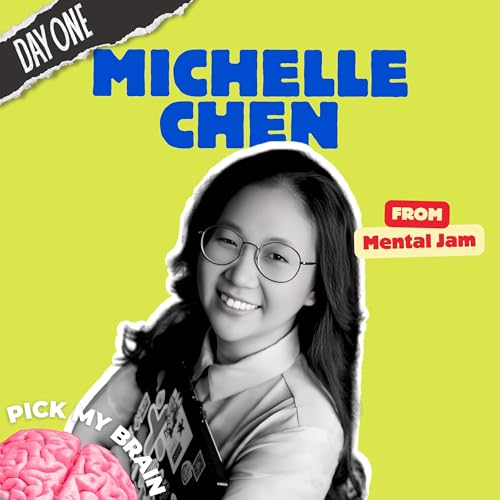
    In this episode of Pick My Brain, Alan Jones is joined by Michelle Chen, founder of Mental Jam, a startup turning real lived experiences of depression and anxiety into cozy, story-driven mobile games. Michelle is preparing to pitch in two worlds at once: to investors who care about venture-scale growth, and to game publishers who care about commercial upside and licensing rights.

    Alan breaks down why one pitch is rarely enough, and introduces a simple framework: three decks for each audience. A teaser deck to spark curiosity, a pitch deck to support your live story, and a leave-behind deck packed with detail for later review. They also get tactical about what makes a pitch land: fewer words on slides, stronger emotional delivery in the first 10 to 15 seconds, and building trust by keeping the audience focused on the founder, not the deck.

    Michelle also shares the real nerves behind pitching, including stage anxiety and how it impacts performance. Alan offers a mindset shift that helps founders separate their personal fear from the “role” they’re playing on stage, plus practical tips for pitching on video calls. They finish with concrete improvements: shorten the character section, add a clear team slide, and capture customer reactions on video to show emotional impact, not just quotes.

    If you’re pitching a product with multiple buyers, fundraising while still building, or struggling with confidence on stage, this episode is a masterclass in making your pitch clearer, shorter, and more human

    Time Stamps

    02:10 – Michelle’s origin story: from PhD research to startup

    04:10 – Why Catalyzer mattered for a migrant founder

    05:20 – Two audiences: investors vs game publishers

    06:05 – Should you build two pitches? Alan’s answer: yes, tailor

    08:05 – The 6 deck framework: teaser, pitch, leave-behind for each audience

    13:05 – Ideal slide counts: teaser 3 to 5, pitch 10 to 15, leave-behind as needed

    14:00 – Why founders accidentally read slides and lose the room

    15:00 – Video call tip: pin the person, not your slides

    16:15 – Michelle’s pitch: Mental Jam and Boba Rista

    23:15 – Alan’s feedback: scripting, emotion, and the first 10 seconds

    26:00 – Handling stage anxiety while pitching

    29:20 – Cut words per slide: aim for fewer than 10 words

    31:10 – Too many characters: use one or two for investors

    31:40 – Add a team slide and show real customer feedback

    33:00 – Use video testimonials for emotional proof

    Resources Mentioned

    🎮 Mental Jam – https://hellomentaljam.com

    🎙 Ask Alan a Question – https://speakpipe.com/pickmybrain

    🎧 More from Alan Jones – https://www.startupfoundercoach.com

    Sponsors:Pick My Brain is supported by our wonderful sponsors:

    Galah Cyber offers the Foundations of Application Security course: a practical, hands-on AppSec course built for engineers who actually ship code. Two days of real-world lessons you can apply immediately. Learn more at galahcyber.com.au/learn.

    The Day One NetworkPick My Brain is part of Day One, the podcast network dedicated to founders, operators & investors.

    To learn more, join our newsletter to be notified of new and upcoming shows. The only content we create is content that will help Australian founders.

    Más Menos
    36 m
  • NiceGit: Making Git usable for everyone, not just engineers
    Jan 28 2026

    What if your designers, PMs, and writers could safely ship changes to a codebase without waiting weeks for engineering backlog?

    In this episode of Pick My Brain, Alan Jones is joined by Dan Borthwick, founder of NiceGit, a startup rethinking source control for the reality of modern product teams. Dan pitches NiceGit as a single button way to use Git, keeping the power of version control while stripping away the terminal commands, scary UI, and workflow friction that locks non engineers out of making changes.

    Alan and Dan unpack why Git has become a productivity bottleneck as more of the world builds software, especially now that over half of GitHub’s users are not programmers. They explore the hidden cost of routing every small change through developers, from UX tweaks to copy updates, and why “good enough” often wins simply because teams cannot afford the delays.

    They also go deep on go to market strategy for technical products, including why engineers resist traditional marketing, how Atlassian used meetups and peer conversations to grow early, and how to think about whether you are selling a headache pill or a vitamin pill. Dan shares why game studios may be the ideal beachhead, how inbound interest is already forming through LinkedIn, and why team leads are often the real buyer even when end users feel the pain.

    Along the way, Alan offers practical guidance on positioning, taglines, multivariate testing messaging, and how to equip champions inside an organisation with the right “cheat sheet” to win internal buy in. They finish with sharp, Australia specific advice on fundraising timing, investor targeting, and why warm coffee conversations beat sending a deck too early.

    If you are building B2B SaaS, developer tools, or selling into teams with multiple stakeholders, this episode is packed with practical insight you can use immediately.

    Sponsors:Pick My Brain is supported by our wonderful sponsors:

    Galah Cyber offers the Foundations of Application Security course: a practical, hands-on AppSec course built for engineers who actually ship code. Two days of real-world lessons you can apply immediately. Learn more at galahcyber.com.au/learn.

    The Day One NetworkPick My Brain is part of Day One, the podcast network dedicated to founders, operators & investors.

    To learn more, join our newsletter to be notified of new and upcoming shows. The only content we create is content that will help Australian founders.

    Más Menos
    42 m
  • How to Prove Impact in Mental Health Without Medical Data | Clement Baissat from Hope Stage
    Jan 20 2026

    What do you do when your life story suddenly stops making sense?

    In this episode of Pick My Brain, Alan Jones speaks with Clement Baissat, founder of mental wellbeing startup Hope Stage, about a journey that doesn’t follow the usual startup narrative. It begins with ambition and company building, then runs into depression, bankruptcy, and a bipolar diagnosis that arrives with clarity, but no instructions.

    Clement shares growing up in France, knowing early that he wanted to build things on his own terms, and then spending years moving through startups, jobs, and burnout without understanding the patterns behind his highs and lows. A walk through a Paris park, a phone call to his mother, and two psychiatrists later, everything finally had a name. What remained unanswered was how to live with it.

    That question became the foundation of Hope Stage. Not as a breakthrough moment, but as a practical attempt to understand bipolar disorder, build stability, and keep functioning. The conversation covers community, acceptance, routine, and the everyday systems that make progress possible, from sleep and structure to professional support. It also touches on why conditions like bipolar disorder and ADHD appear so often among founders.

    As always, the discussion stays grounded and conversational. Alan brings curiosity and humour as they talk through business models, pricing, NGOs versus startups, and what it means to build something meaningful with limited resources.

    This episode is about working with reality rather than fighting it, about replacing guesswork with systems, and about turning personal experience into something that may help others.

    Sponsors:Pick My Brain is supported by our wonderful sponsors:

    Galah Cyber offers the Foundations of Application Security course: a practical, hands-on AppSec course built for engineers who actually ship code. Two days of real-world lessons you can apply immediately. Learn more at galahcyber.com.au/learn.

    The Day One NetworkPick My Brain is part of Day One, the podcast network dedicated to founders, operators & investors.

    To learn more, join our newsletter to be notified of new and upcoming shows. The only content we create is content that will help Australian founders.

    Más Menos
    20 m
  • How to Pitch Deep Tech to Investors With Competing Priorities | Paul Bevan from Magic Valley
    Jan 13 2026

    Could real meat grown without animals be cheaper than traditional farming? And could Australia become one of the best places in the world to launch it?

    In this episode of Pick My Brain, Alan Jones is joined by Paul Bevan, founder of cultivated meat startup Magic Valley, to explore how second-generation food tech is reshaping the economics and investability of cultivated meat. Paul pitches Magic Valley’s approach to growing real meat from animal cells, without livestock, and explains why minced products like lamb and pork are the logical first step to reaching commercial scale.

    Alan and Paul unpack why earlier cultivated meat companies struggled, how advances in equipment and cell culture media have dramatically lowered costs, and what that means for investors assessing deep tech risk today. They also dig into Australia’s surprisingly strong regulatory framework for novel foods, Magic Valley’s decision to launch locally first, and how to raise deep tech capital without burning hundreds of millions of dollars.

    Along the way, Alan shares practical advice on investor communication, momentum, and signalling progress, while Paul reflects on the challenge of telling one coherent story to impact investors, deep tech funds, and commercial partners at the same time.

    If you are building in food tech, climate tech, deep tech, or navigating complex investor messaging, this episode is packed with hard-earned insight.

    Sponsors:Pick My Brain is supported by our wonderful sponsors:

    Galah Cyber offers the Foundations of Application Security course: a practical, hands-on AppSec course built for engineers who actually ship code. Two days of real-world lessons you can apply immediately. Learn more at galahcyber.com.au/learn.

    The Day One NetworkPick My Brain is part of Day One, the podcast network dedicated to founders, operators & investors.

    To learn more, join our newsletter to be notified of new and upcoming shows. The only content we create is content that will help Australian founders.

    Más Menos
    22 m
  • Setback, Comeback, and New Year: Pick My Brain Update
    Dec 9 2025

    How are you, fans of the show? You might have noticed there’ve been no new episodes for a while. Honestly, I didn’t really want to say anything earlier, but I’m starting to feel like I owe you an explanation.

    Earlier this year, I got a cancer diagnosis. That sucked. But I had surgery at the end of September, and it looks like it was successful. So maybe now I update my LinkedIn profile to say “cancer survivor” — I don’t know.

    With all that going on, I dropped a few things, and new episodes of Pick My Brain was one of them. And here we are in December. I feel much, much better than I did a few months ago, but that break in recording means we won’t have any new episodes for you until early January.

    The good news is we’re recording again now. We’ve made some big improvements to the show, and I hope you’re going to love what we have in store for you starting January 2026.

    If you need more listening in the meantime, I highly recommend First Check, Perspective X, In The Blink of AI, and our newest show Oversubscribed with angel investor Brendan Hill, which goes deep into the stories behind Australia’s best performing startups.

    Anyway, I hope you have a safe, happy, and fun summer break. I hope it’s full of friendship, love, and good times. And I hope your startups are doing well too.

    See you in January.

    Más Menos
    1 m