Pick My Brain with Alan 'the nice one' Jones Podcast Por DayOne.FM arte de portada

Pick My Brain with Alan 'the nice one' Jones

Pick My Brain with Alan 'the nice one' Jones

De: DayOne.FM
Escúchala gratis

Hosted by Alan ‘the nice one’ Jones, Pick My Brain is a Day One® show. Day One is the podcast network dedicated to founders, operators, and investors. Follow Pick My Brain through Day One on LinkedIn Sign up to get your startup pitches and for opportunities to be featured on the show.Day One® is a registered trademark of W2D1 Media Pty Ltd. Desarrollo Personal Economía Gestión y Liderazgo Liderazgo Política y Gobierno Éxito Personal
Episodios
  • How to Turn Happy Customers Into Your Best Sales Channel
    Mar 17 2026

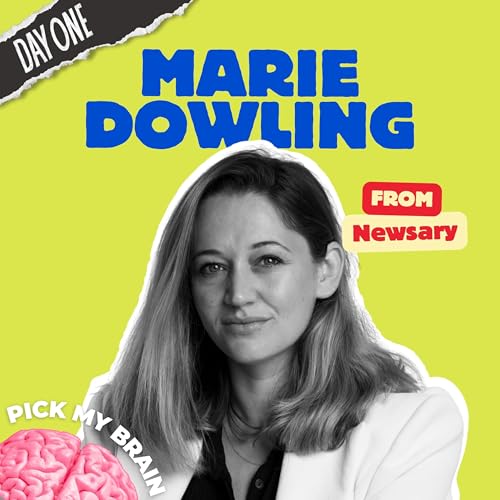
    Most founders who've tried PR will tell you the same thing: it was a waste of money and they never got in the media. But when Marie Dowling digs deeper, the real answer is usually that they weren't involved enough to make it work.

    In this episode, Alan is joined by Marie Dowling, founder and CEO of Newsary, a hybrid AI and human PR platform built for startups and small businesses. Marie walks through how Newsary works, why PR is becoming the new SEO, and how she landed enterprise client Flixbus, generating over 300 pieces of Australian media coverage.

    Alan challenges Marie to think beyond founder-led sales, pushing her to consider referral incentives, agency partnerships, and her LinkedIn audience as scalable distribution channels. If you're a founder who's written off PR, this episode might just change your mind.

    Time Stamps

    02:13 – Meet Marie Dowling and her path from PR agency to founder

    04:37 – Why bigger clients mean less interesting press releases

    06:09 – What Newsary does and who it's for

    07:02 – The pivot: from "how to write" to "what is a good story"

    08:01 – Why PR is the new SEO

    09:09 – How Newsary works: interview-style, not AI-generated

    11:05 – Pricing: what Newsary costs vs. a traditional agency

    12:32 – How Marie finds customers (and what they all say about PR)

    13:39 – The real reason most PR fails: founder involvement

    15:14 – Alan's challenge: scaling beyond founder-led sales

    18:03 – The Flixbus campaign: 300+ pieces of coverage

    19:14 – Who's behind Newsary: the team and advisors

    20:16 – Co-hosting industry events: lessons learned

    23:18 – Platform rebuild and January launch plans

    25:10 – Marie's one ask of listeners

    Resources Mentioned

    💸 Newsary: https://www.newsary.co/

    🎙 Ask Alan a Question – https://speakpipe.com/pickmybrain

    🎧 More from Alan Jones – https://www.startupfoundercoach.com

    Sponsors:Pick My Brain is supported by our wonderful sponsors:

    Galah Cyber offers the Foundations of Application Security course: a practical, hands-on AppSec course built for engineers who actually ship code. Two days of real-world lessons you can apply immediately. Learn more at galahcyber.com.au/learn.

    The Day One NetworkPick My Brain is part of Day One, the podcast network dedicated to founders, operators & investors.

    To learn more, join our newsletter to be notified of new and upcoming shows. The only content we create is content that will help Australian founders.

    Más Menos
    29 m
  • How to Make Your Fintech Pitch Unforgettable | James Horan from Phinly
    Feb 24 2026

    Episode Summary

    Consumers lose billions to scams and miss out on trillions in potential savings every year. So what if everyone had their own AI-powered financial assistant working 24-7?

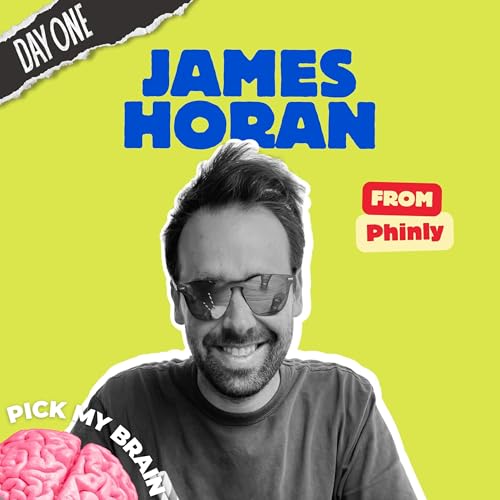
    In this episode of Pick My Brain, Alan Jones is joined by James Horan, founder of Phinly, an AI-driven personal finance platform designed to help consumers automate savings, prevent fees, and optimise their financial lives. James walks through his live pitch for Phinly, outlining the problem with doom-scrolling money advice, the rise of AI agents in personal finance, and a bold vision for owning the AI money assistant category.

    Phinly connects to over 20,000 institutions, identifies cost savings opportunities, and enables one-tap actions from cancelling subscriptions to switching providers. With early partnerships secured, backing from a global AI accelerator, and a savings-based revenue model, the startup is raising $800,000 on a pre-seed SAFE to scale toward $4.5M ARR in 18 months.

    But Alan’s feedback goes deeper than traction and TAM. He challenges James to avoid blending in with every other AI fintech startup in the room. Instead of leaning purely on logic and numbers, Alan pushes for something more memorable: behavioural insights that surprise the audience about their own financial habits. The goal is simple. Make investors go home and say, “Did you know that…?” and have that sentence start with something you taught them.

    If you’re building in fintech, AI, or any crowded category, this episode is a masterclass in standing out when everyone else looks the same.

    Time Stamps

    02:08 – Meet James Horan and his founder journey

    03:14 – Lessons from a failed two-sided marketplace

    04:28 – The Phinly pitch begins

    05:40 – Money advice, TikTok, and the cost-of-living crisis

    06:50 – How Phinly works: AI-powered money automation

    07:45 – Traction: 20,000 institutions connected and major partnerships

    08:30 – Revenue model: percentage of savings and future subscriptions

    09:10 – Alan’s first reaction: good foundation, but blends in

    11:45 – The power of surprise in a crowded fintech room

    12:30 – Using behavioural economics to stand out

    14:00 – Stop reading your slides

    15:30 – Supporting your story instead of replacing it

    17:00 – Bringing emotion into a rational fintech pitch

    18:00 – How to create a pitch people repeat to others

    Resources

    💸 Phinly – https://phinly.com

    🎙 Ask Alan a Question – https://speakpipe.com/pickmybrain

    🎧 More from Alan Jones – https://www.startupfoundercoach.com

    Sponsors:Pick My Brain is supported by our wonderful sponsors:

    Galah Cyber offers the Foundations of Application Security course: a practical, hands-on AppSec course built for engineers who actually ship code. Two days of real-world lessons you can apply immediately. Learn more at galahcyber.com.au/learn.

    The Day One NetworkPick My Brain is part of Day One, the podcast network dedicated to founders, operators & investors.

    To learn more, join our newsletter to be notified of new and upcoming shows. The only content we create is content that will help Australian founders.

    Más Menos
    21 m
  • How to Pitch Growth to Investors and Revenue to Publishers
    Feb 10 2026

    Episode Summary

    If you have to pitch the same product to two totally different audiences, should you use one deck or two?

    In this episode of Pick My Brain, Alan Jones is joined by Michelle Chen, founder of Mental Jam, a startup turning real lived experiences of depression and anxiety into cozy, story-driven mobile games. Michelle is preparing to pitch in two worlds at once: to investors who care about venture-scale growth, and to game publishers who care about commercial upside and licensing rights.

    Alan breaks down why one pitch is rarely enough, and introduces a simple framework: three decks for each audience. A teaser deck to spark curiosity, a pitch deck to support your live story, and a leave-behind deck packed with detail for later review. They also get tactical about what makes a pitch land: fewer words on slides, stronger emotional delivery in the first 10 to 15 seconds, and building trust by keeping the audience focused on the founder, not the deck.

    Michelle also shares the real nerves behind pitching, including stage anxiety and how it impacts performance. Alan offers a mindset shift that helps founders separate their personal fear from the “role” they’re playing on stage, plus practical tips for pitching on video calls. They finish with concrete improvements: shorten the character section, add a clear team slide, and capture customer reactions on video to show emotional impact, not just quotes.

    If you’re pitching a product with multiple buyers, fundraising while still building, or struggling with confidence on stage, this episode is a masterclass in making your pitch clearer, shorter, and more human

    Time Stamps

    02:10 – Michelle’s origin story: from PhD research to startup

    04:10 – Why Catalyzer mattered for a migrant founder

    05:20 – Two audiences: investors vs game publishers

    06:05 – Should you build two pitches? Alan’s answer: yes, tailor

    08:05 – The 6 deck framework: teaser, pitch, leave-behind for each audience

    13:05 – Ideal slide counts: teaser 3 to 5, pitch 10 to 15, leave-behind as needed

    14:00 – Why founders accidentally read slides and lose the room

    15:00 – Video call tip: pin the person, not your slides

    16:15 – Michelle’s pitch: Mental Jam and Boba Rista

    23:15 – Alan’s feedback: scripting, emotion, and the first 10 seconds

    26:00 – Handling stage anxiety while pitching

    29:20 – Cut words per slide: aim for fewer than 10 words

    31:10 – Too many characters: use one or two for investors

    31:40 – Add a team slide and show real customer feedback

    33:00 – Use video testimonials for emotional proof

    Resources Mentioned

    🎮 Mental Jam – https://hellomentaljam.com

    🎙 Ask Alan a Question – https://speakpipe.com/pickmybrain

    🎧 More from Alan Jones – https://www.startupfoundercoach.com

    Sponsors:Pick My Brain is supported by our wonderful sponsors:

    Galah Cyber offers the Foundations of Application Security course: a practical, hands-on AppSec course built for engineers who actually ship code. Two days of real-world lessons you can apply immediately. Learn more at galahcyber.com.au/learn.

    The Day One NetworkPick My Brain is part of Day One, the podcast network dedicated to founders, operators & investors.

    To learn more, join our newsletter to be notified of new and upcoming shows. The only content we create is content that will help Australian founders.

    Más Menos
    36 m
Todavía no hay opiniones