Episodios

  • Emmanuel Ofuasia, "Ìwà: the Process-Relational Dimension to African Metaphysics" (Springer, 2024)
    Mar 29 2026
    Correction: In the interview, the host mistakenly mentioned that Prof. Ofuasia is teaching the University of Pretoria. In reality, Prof Ofuasia is currently a decoloniality research associate at the University of Pretoria, South Africa. Previously, he has taught at the National Open University of Nigeria, FCT Abuja. Ìwà: the Process-Relational Dimension to African Metaphysics (Springer, 2024) approaches the subject of African metaphysics historically as it connects Ancient Egypt to Yorùbá. It provides a history of African metaphysics from ancient Egypt or Kemet down to John Boakye Danquah and Placide Tempels in the 20th century and then Innocent Asouzu, Ada Agada, and Aribiah David Attoe, in the 21st century. As it surpasses the deductions of these previous works, it moves further to showcase African originality and approaches to studying reality, whilst resisting the temptation to deduce conclusions from Western philosophy. It is the first book in the history of African philosophy to use a process-relational approach to interrogate African metaphysics. It also serves to harmonize and engage prominent African scholars who have written on the subject of African metaphysics. The general scope of this book centers on engaging the history of distortion and misunderstanding of African metaphysics by providing a relevant and reliable process-relational background as well as an alternative trivalent logic system. Unless African metaphysical theories are understood from this perspective, they will remain powerless to overcome these misrepresentations. It appeals to students and researchers internationally actively working in the fields of African philosophy, Intercultural African studies as well as process studies. Online May 11-13, 2026 conference on Processual Philosophy, more information here. Two other books by Prof. Ofuasia on related topics 1. Panentheism and Concepts of God in African Traditional Religions: A Third-Wave Proposal, Springer 2026 2. An Exploration of the Parallels Between African and Process Metaphysics: Introducing the Metaphysics of Force and Becoming, Springer 2026. Learn more about your ad choices. Visit megaphone.fm/adchoices Support our show by becoming a premium member! https://newbooksnetwork.supportingcast.fm/critical-theory
    Más Menos
    1 h y 32 m
  • Thomas Hegghammer and Diego Gambetta eds., "Fight, Flight, Mimic: Identity Mimicry in Conflict" (Oxford UP, 2024)
    Mar 28 2026
    Time spent and words spent—what does each signal? Deceptive mimicry—the manipulation of individual or group identity—includes passing off as a different individual, as a member of a group to which one does not belong, or, for a group, to ‘sign’ its action as another group. Mimicry exploits the reputation of the model it mimics to avoid capture (flight), to strike undetected at the enemy (fight), or to hide behind or besmirch the reputation of the model group (‘false-flag’ operations). Fight, Flight, Mimic: Identity Mimicry in Conflict (Oxford UP, 2024) offers a theory and game-theoretic model of mimicry, an overview of its use through history, and a deep empirical exploration of its modern manifestations through several case studies by leading social scientists. The chapters cover mimicry in the context of the Northern Ireland conflict, terrorism campaigns in 1970s Italy, the height of the Iraq insurgency, the Rwandan genocide, the Naxalite rebellion in India, and jihadi discussion forums on the Internet. Thomas Hegghammer is Senior Research Fellow at All Souls College, Oxford. Lucas Tse is Examination Fellow at All Souls College, Oxford. Learn more about your ad choices. Visit megaphone.fm/adchoices Support our show by becoming a premium member! https://newbooksnetwork.supportingcast.fm/critical-theory
    Más Menos
    1 h y 5 m
  • The Criminal Record Complex: Risk, Race, and the Struggle for Work in America
    Mar 26 2026
    Most employers in the United States routinely conduct criminal background checks on job applicants, weeding out those with criminal convictions—and thus denying opportunities to those who need them most. In The Criminal Record Complex: Risk, Race, and the Struggle for Work in America (Princeton UP, 2025), Melissa Burch sheds light on one of the most significant forces of social and economic marginalization of our time—discrimination on the basis of criminal records. Chronicling the daily interactions of hiring managers, workforce development professionals, and job-seekers with felony convictions in Southern California, Dr. Burch shows that this discrimination is not simply a matter of employer bias. Hiring is shaped by a set of institutions, organizations, and industries that promote the erroneous idea that people with criminal records are dangerous to employ. This “criminal record complex,” as Dr. Burch names it, encourages exclusion and undermines employers’ common-sense ways of assessing candidates. In vivid and intimate detail, Dr. Burch reveals both the futility and devastating human consequences of discriminatory policies.Dr. Burch places today’s routine practice of background screening within racialized notions of risk originating in early capitalist development, tracing how, over decades, criminal background checks became a convenient catch-all, leveraged by entities with a direct interest in growing the practice. Despite this reach, however, Dr. Burch discovers that small business owners tend to put less value on background checks, trusting their own judgment. Approaching the issue from both personal and policy perspectives, The Criminal Record Complex upends what we thought we knew about the causes of criminal record discrimination. It suggests that our best hope for creating safe workplaces lies not in the false promise of background screening, but in building the kinds of economies and communities that support true safety. Our guest is: Dr. Melissa Burch, who is Assistant Professor of Anthropology at the University of Michigan and Director of the Afterlives of Conviction Project. Our host is: Dr. Christina Gessler, who is a writing coach and editor for academics. She is the producer and show host of the Academic Life podcast. Playlist for listeners: Ghost in the Criminal Justice Machine Carceral Apartheid Freemans Challenge Hands Up Don't Shoot The Names of all the Flowers The Journal of Higher Education in Prison Black Boy Out of Time Secrets of the Killing State Welcome to Academic Life, the podcast for your academic journey—and beyond! Please join us again to learn from more experts inside and outside the academy, and around the world. Missed any of the 300+ Academic Life episodes? Find them here. And thank you for listening! Learn more about your ad choices. Visit megaphone.fm/adchoices Support our show by becoming a premium member! https://newbooksnetwork.supportingcast.fm/critical-theory
    Más Menos
    54 m
  • Hsuan L Hsu, "Olfactory Worldmaking" (U Minnesota Press, 2026)
    Mar 24 2026
    Smell is a vital, if underappreciated, medium through which we inhabit and imagine the world. In Olfactory Worldmaking (University of Minnesota Press, 2026), Dr. Hsuan L. Hsu traces how olfactory experience communicates across visceral, material, and affective registers to offer new ways of relating, which challenge the extractive logics of racial and colonial capitalism. Blending environmental humanities, sensory studies, and critical ethnic studies, the book highlights how scent animates suppressed histories and marginalized memories. Dr. Hsu theorizes olfaction as a speculative, reparative practice. Examining projects from historical novels, memoirs, and speculative fiction to conceptual art and experimental perfumes, he reveals how these works mobilize scent to imagine alternative ways of sensing, relating, and creating more equitably livable worlds. This interview was conducted by Dr. Miranda Melcher whose book focuses on post-conflict military integration, understanding treaty negotiation and implementation in civil war contexts, with qualitative analysis of the Angolan and Mozambican civil wars. You can find Miranda’s interviews on New Books with Miranda Melcher, wherever you get your podcasts. Learn more about your ad choices. Visit megaphone.fm/adchoices Support our show by becoming a premium member! https://newbooksnetwork.supportingcast.fm/critical-theory
    Más Menos
    26 m
  • Prolepsis
    Mar 23 2026
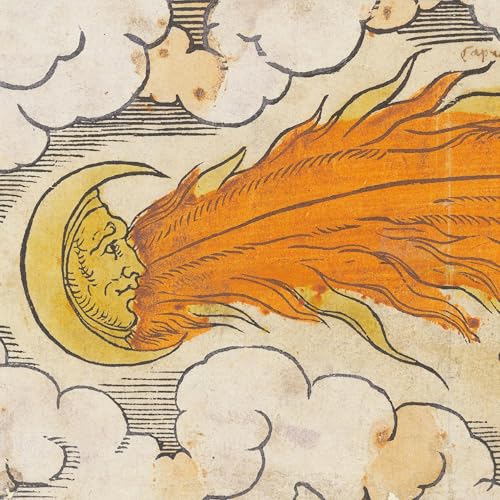
    In this episode of High Theory, Gloria Fisk talks to Kim about Prolepsis. Defined by Gerard Genette in the 1970s, prolepsis is a flash forward, the opposite of analepsis, a flash back. Initially the province of high modernism, this rhetorical device has become a well-worn trope with a surprising aptitude for representing violence in our current moment. Fisk shows us how prolepsis dramatizes the workings of structural violence in narrative form. In the episode, Gloria references Stokely Carmichael and Charles Hamilton’s Black Power: The Politics of Liberation (Random House 1967) and Michael Dango's Crisis Style: The Aesthetics of Repair (Stanford UP 2021). The transcript lives here as a WordDoc and here as a PDF. Gloria Fisk writes about contemporary literature in a global context, with a particular interest in the novel. She works as an associate professor of English at Queens College, CUNY. Her areas of interest include the critical debates surrounding world literature in the U.S. as well as novel theory, postcolonial studies, translation theory, and critical writing. In her first book, Orhan Pamuk and the Good of World Literature (Columbia UP 2018), Gloria reads the Turkish novelist Orhan Pamuk as a case study in the unevenness of Western canons’ expansion across the eastern border of Europe. She theorizes the ways the Turkish novelist arrives among his readers in the U.S. and Europe, where he meets a standard for literary value that that emerges in tandem with him. In this episode, we discuss her current book project, in which Gloria theorizes the ethics and politics of prolepsis in contemporary world literature. Her project asks why so many novels that reach Anglophone readers today begin with a scene of terrible violence — a chemical spill, maybe, or untimely death at sea; incarceration, or a terrorist attack — to narrate in retrospect the paths that converge to create it? This use of prolepsis is historically specific to the contemporary period, so Gloria sets out to explain why. She shows that proleptic representations of violence were rare in Western literary traditions until the turn of the twenty-first century, but they have become ubiquitous now, because they work well to express new anxieties and hopes about the limits of our political communities, within and beyond the nation. The working title of her book is We Know How This Will End: Prolepsis, Tragedy, and the Representation of Structural Violence on a Global Scale. Look forward to seeing it in print! The image for this episode is an anonymous illustration from a 1554 broadsheet depicting celestial phenomenon over Salon-de-Provence. It was found for High Theory by Lily Epstein on the Public Domain Image Archive. Learn more about your ad choices. Visit megaphone.fm/adchoices Support our show by becoming a premium member! https://newbooksnetwork.supportingcast.fm/critical-theory
    Más Menos
    17 m
  • David Bather Woods, "Arthur Schopenhauer: The Life and Thought of Philosophy's Greatest Pessimist" (U Chicago Press, 2025)
    Mar 23 2026
    Arthur Schopenhauer: The Life and Thought of Philosophy’s Greatest Pessimist by David Bather Woods An engaging biography of one of the most influential Western philosophers and a thought-provoking exploration of how to live with Arthur Schopenhauer’s pessimism.Arthur Schopenhauer (1788–1860) almost wasn’t one of the greatest philosophers of the nineteenth century. Born in the Free City of Danzig to a family of shipping merchants, he was destined for a life of imports and exports until his father died in a suspected suicide. After much deliberation, the young Schopenhauer invested his inheritance in himself and his philosophical vocation. But the long road to recognition was a difficult one, with Schopenhauer spending all but the last decade of his life in total obscurity. Yet his ideas and style went on to influence great thinkers, including Friedrich Nietzsche, Ludwig Wittgenstein, and Sigmund Freud, as well as artists such as the composer Richard Wagner and writers Marcel Proust, Thomas Mann, Samuel Beckett, and many more.A singular and remarkably influential thinker, Schopenhauer is usually described as an extreme pessimist. He questioned the purpose of existence in a world where pain and suffering are inescapable and happiness is all too brief. In this engaging philosophical biography, David Bather Woods reevaluates Schopenhauer’s pessimism in the context of his life experiences, revealing the philosopher’s relentless fascination with the world and making a case for his contemporary relevance. Bather Woods weaves together Schopenhauer’s ideas with the story of how he came to be, including such topics as love, loneliness, morality, politics, gender, sexuality, death, suicide, fame, and madness. In doing so, this book answers some of life’s most challenging questions about how to deal with pain and loss, and how to live with ourselves and each other.Despite his pessimistic outlook on human existence, Schopenhauer didn’t give up on life. Rather, he recognized that the question of how to live becomes even more pressing, and he worked to provide an answer. Bather Woods shows how Schopenhauer’s life informed his ideas and how they still resonate today. David Bather Woods is associate professor of philosophy at the University of Warwick. He is coeditor with Timothy Stoll of The Schopenhauerian Mind. He has contributed chapters to The Proustian Mind, Schopenhauer’s Moral Philosophy, and The Palgrave Schopenhauer Handbook. Morteza Hajizadeh is a Ph.D. graduate in English from the University of Auckland in New Zealand. His research interests are Cultural Studies; Critical Theory; Environmental History; Medieval (Intellectual) History; Gothic Studies; 18th and 19th Century British Literature. YouTube Channel: https://www.youtube.com/user/a48266/videos Learn more about your ad choices. Visit megaphone.fm/adchoices Support our show by becoming a premium member! https://newbooksnetwork.supportingcast.fm/critical-theory
    Más Menos
    1 h y 17 m
  • Becca Voelcker, "Land Cinema in an Age of Extraction" (U California Press, 2025)
    Mar 21 2026
    Land Cinema in an Age of Extraction considers nonfiction filmmakers and film collectives whose work advances an understanding of land as a locus of social and environmental responsibility. Diving into little-known archives to explore films that resonate across geographies, Becca Voelcker unearths key examples of eco-political counterculture, from farmer-filmmakers in Japan and Mali to a gardener-filmmaker in Massachusetts, and from filmed landscape-portraits of women in Los Angeles, Orkney, and the Navajo Nation to Indigenous documentaries about land dispossession in Colombia. Proposing "land cinema" as an urgent genre for our time, this book reveals how images and ideas produced half a century ago sowed the seeds for climate justice movements today. Becca Voelcker is Lecturer in the Department of Art at Goldsmiths, University of London. She was named a BBC New Generation Thinker in 2024. Morteza Hajizadeh is a Ph.D. graduate in English from the University of Auckland in New Zealand. His research interests are Cultural Studies; Critical Theory; Environmental History; Medieval (Intellectual) History; Gothic Studies; 18th and 19th Century British Literature. YouTube Channel: here Learn more about your ad choices. Visit megaphone.fm/adchoices Support our show by becoming a premium member! https://newbooksnetwork.supportingcast.fm/critical-theory
    Más Menos
    1 h y 10 m
  • Philip C. Almond, "Noah and the Flood in Western Thought" (Cambridge UP, 2025)
    Mar 21 2026
    In a world beset by climatic emergencies, the continuing resonance of the flood story is perhaps easy to understand. Whether in the tortured alpha male intensity of Russell Crowe’s Noah, in Darren Aronofsky’s eponymous 2014 film, or other recent derivations, the biblical narrative has become a lightning rod for gathering environmental anxieties. However, Philip C. Almond’s masterful exploration of Western cultural history uncovers a far more complex Noah than is commonly recognised: not just the father of humanity but also the first shipbuilder, navigator, zookeeper, farmer, grape grower, and wine maker. Noah’s pivotal significance is revealed as much in his forgotten secular as in his religious receptions, and their major impact on such disciplines as geology, geography, biology, and zoology. While Noah’s many interpretations over two millennia might seem to offer a common message of hope, the author’s sober conclusion to Noah and the Flood in Western Thought (Cambridge UP, 2025) is that deliverance now lies not in divine but rather in human hands. Philip C. Almond is Emeritus Professor in the History of Religious Thought at The University of Queensland. A noted authority in the history of religion and of ideas, he has written many books on subjects as diverse as God, the Devil, the afterlife, witchcraft and witches, Adam and Eve, heaven and hell in Enlightenment England, and early modern demonic possession. His recent works include The Buddha: Life and Afterlife Between East and West (2024), Mary Magdalene: A Cultural History (2023), and The Antichrist: A New Biography (2020), all published by Cambridge University Press. Morteza Hajizadeh is a Ph.D. graduate in English from the University of Auckland in New Zealand. His research interests are Cultural Studies; Critical Theory; Environmental History; Medieval (Intellectual) History; Gothic Studies; 18th and 19th Century British Literature. YouTube Channel: here Twitter: here Learn more about your ad choices. Visit megaphone.fm/adchoices Support our show by becoming a premium member! https://newbooksnetwork.supportingcast.fm/critical-theory
    Más Menos
    50 m