Mark and Pete Podcast Por Mark and Pete arte de portada

Mark and Pete

Mark and Pete

De: Mark and Pete
Escúchala gratis

The Mark and Pete Show – where faith, culture, and economics collide in a lively and thought-provoking podcast. Hosted by Mark and Pete this show delivers insightful commentary on social, economic, and religious issues, unpacking how these forces shape our world.
With Mark’s hard-hitting business acumen and Pete’s Christian perspective, every episode provides a dynamic mix of debate, analysis, and humor, offering fresh viewpoints on current affairs. Whether tackling economic trends, cultural shifts, or matters of faith, Mark and Pete bring their unique expertise and engaging banter to the table.
A distinctive feature of each episode is a themed poem, adding a creative and reflective touch to the discussion. Whether you’re interested in Christian thought, global economics, or cultural insights, The Mark and Pete Show delivers sharp, entertaining, and meaningful content.
Join the conversation and explore how faith, finance, and society intertwine in ways you never expected. Subscribe today on your favorite podcast platform for a show that’s bold, intelligent, and refreshingly different!

Become a supporter of this podcast: https://www.spreaker.com/podcast/mark-and-pete--1245374/support.Mark and Pete
Política y Gobierno
Episodios
  • Apple Computers is 50 Years Old. Hurrah!
    Apr 6 2026

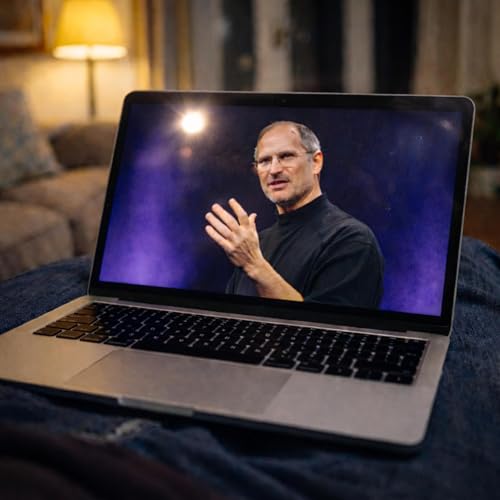
    In this episode of Mark and Pete, we look at the astonishing story behind Apple’s 50th anniversary—and the man who walked away from one of the greatest opportunities in modern history.

    When Steve Jobs, Steve Wozniak, and Ronald Wayne founded Apple in 1976, it looked like a modest garage project. Within days, Wayne—older, cautious, and understandably wary of financial risk—sold his 10% stake for around $800. Today, that decision would be worth roughly $300–370 billion, making it perhaps the most expensive “better safe than sorry” moment in business history.

    We explore the founding of Apple, the early dynamics between Jobs and Wozniak, and the deeper reasons behind Apple’s extraordinary success: design simplicity, product integration, cultural vision, and timing. Apple didn’t just build computers—it reshaped how ordinary people relate to technology.

    But beneath the business story lies a sharper question. Was Wayne foolish or simply prudent? And where is the line between wisdom and fear?

    Drawing on Ecclesiastes 11:4, we reflect on the danger of waiting for perfect conditions before acting. There is a kind of caution that protects—and another that quietly closes the door on what might have been.

    This episode considers risk, opportunity, and the cost of hesitation in a world where outcomes are rarely obvious at the start.

    Sometimes the difference between history-makers and spectators is not intelligence, but action.

    And sometimes, the greatest losses are not the ones we suffer but the ones we carefully avoid.

    Más Menos
    11 m
  • Amazon Echo - Smarter or More Irritating?
    Apr 4 2026

    As AI upgrades roll out, these devices are beginning to hold longer conversations, remember context, and respond in ways that feel less robotic and more personal. It’s convenient, impressive, and slightly unsettling. When your smart speaker starts to sound like it understands you, it raises an obvious question: what exactly are we inviting into our homes?

    We unpack the practical concerns, including privacy, data collection, and the subtle shift from passive listening to active engagement. If a device is always on, always listening, and now increasingly capable of understanding nuance, where does that leave personal boundaries? And how much trust are we placing in systems we don’t fully see or control?

    There’s also a cultural angle. As technology becomes more conversational, it begins to blur the line between tool and companion. For children, the elderly, or anyone living alone, these devices may start to fill a relational space that was once occupied by real human interaction.

    With their usual mix of dry humour and thoughtful reflection, Mark and Pete consider whether this is simply progress or whether we are quietly reshaping everyday life in ways we don’t yet fully grasp. A sharp, engaging look at AI, voice technology, and the changing nature of conversation in the modern home.

    Más Menos
    7 m
  • Trump Autographs US Currency
    Apr 2 2026

    Should a president’s name be stamped onto the very money people spend every day? In this episode of Mark and Pete, we dive into the debate surrounding Donald Trump and the idea of making his signature more prominent on US banknotes. It’s a story that might sound like a minor design tweak, but it opens up a much bigger conversation about power, symbolism, and how authority presents itself in public life.

    Money has never been just about economics. From ancient empires to modern states, currency has always carried meaning beyond its monetary value. Faces, symbols, and signatures on coins and notes are not accidental—they communicate legitimacy, identity, and control. So what happens when a political figure leans into that symbolism more deliberately?

    We explore whether this is a clever political move, a branding exercise, or something more historically rooted. Is it simply playing the game better than others, or does it signal a shift toward a more personalised form of political identity? And why does it matter to people at all?

    There’s also the psychological angle. When a name or image appears on money, it subtly reinforces authority every time it’s used. Every transaction becomes, in a sense, a quiet interaction with that symbol. It’s a small thing—but repeated millions of times, it adds up.

    With their usual mix of wit and thoughtful analysis, Mark and Pete unpack the historical parallels, the political instincts behind the move, and the broader cultural implications. From Roman coins to modern currency design, this episode asks a simple but surprisingly deep question: who—or what—do we really trust when we trust money?

    A sharp, engaging conversation about politics, perception, and the quiet power of symbols in everyday life.

    Más Menos
    7 m
Todavía no hay opiniones