Episodios

  • Scott Levy, Building Peak Performance with Neuroscience and AI 'Lego' Bricks - Innova.buzz 691
    Nov 13 2025
    This is a free preview of a paid episode. To hear more, visit innovabiz.substack.com

    Our guest in this episode is Scott Levy, the founder and CEO of ResultMaps. Scott is on a mission to help the world be its “inspired best” by architecting systems that clear away the “friction” of modern work. He combines a deep understanding of neuroscience with a pragmatic approach to technology, helping teams stop “fighting the currents” of their own biology and start surfing them.

    We had a fascinating chat about why most of us feel so burnt out (a hint: our work models are stuck in the 1920s) and how to use new tools, especially AI, as a “Lego set” to build better, more human-centric workflows.

    Key points discussed include:

    * Working with your brain, not against it, by understanding your natural peak performance cycles.

    * Using AI as a “Lego set” to build small, focused solutions that solve real friction points.

    * How AI forces us to be clearer, accidentally training us to be better human communicators.

    Listen to the podcast to find out more.

    Innovabiz Substack is a reader-supported publication. To receive new posts and support my work, consider becoming a free or paid subscriber.

    Show Notes from this episode with Scott Levy, ResultMaps

    It was an absolute pleasure to welcome Scott Levy of ResultMaps to the Innovabuzz podcast. Scott’s mission is a big one: to help the world be its “inspired best.” Now, that’s a goal I can truly get behind. But as we dug into our conversation, it became clear that the biggest thing holding most teams back isn’t a lack of drive or even a lack of tools. It’s the invisible, day-to-day friction in how we work.

    Scott has this fantastic way of looking at the modern work environment, and he kicked things off by explaining that most of us are, quite frankly, just “swimming upstream” against our own biology. We’re fighting a battle we can’t win, and it’s leading to massive burnout. It’s a feeling I think we all know well, that sense of being completely overwhelmed and overworked, which, as Scott so perfectly put it, “just plain sucks.”

    Now, as for the antidote to things that ‘plain suck’...

    That feeling of being overwhelmed... it’s also the exact starting point for the rest of our fascinating conversation, and for the deeper work I’m exploring.

    This podcast is the beginning of the conversation, but the personal reflections—the “why” behind what was said—are where the real journey begins.

    If you’d like to read the rest of this post, where Scott shares his brilliant “surfer” and “Lego” analogies for navigating our brains and our technology, I’d love to invite you to become a paid subscriber.

    A subscription unlocks these full, detailed show notes, but more importantly, it welcomes you into a quieter space. It’s where I share my private, 3x-a-week reflections on these conversations about AI, the “behind-the-lens” stories from my photography, and the personal meditations that connect them all.

    It’s a place for the curious, and I’d be honoured to share it with you.

    Más Menos
    57 m
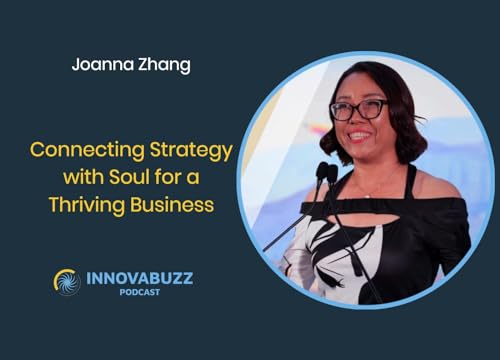
  • Joanna Zhang, Connecting Strategy with Soul for a Thriving Business - Innova.buzz 690
    Oct 22 2025
    Our guest in this episode is Joanna Zhang, who helps leaders connect strategy with soul to build businesses on a solid foundation. Joanna’s own journey, marked by three profound personal transformations, led her from being a transactional professional living a “gray color” life to becoming a balanced, spiritual leader. In our wonderful chat, Joanna unpacks her evolution, sharing the powerful lessons learned from her “soul awakening” and how they reshaped her approach to business, teamwork, and even AI. Key points discussed include:* True leadership evolves from controlling titles to a spiritual balance of compassion and boundaries.* Changing your core intention from getting to giving unleashes unexpected, magical results in business.* Embracing all your emotions is the foundation of self-love and authentic, resilient leadership.Listen to the podcast to find out more.Innovabiz Substack is a reader-supported publication. To receive new posts and support my work, consider becoming a free or paid subscriber.Show Notes from this episode with Joanna Zhang, The Operations GeniusIt was an absolute pleasure to welcome Joanna Zhang to the Innovabuzz podcast for a conversation that beautifully embodied her mission: to help leaders build businesses by connecting strategy with soul. I knew we would be talking about thoughtful systems, but I was not expecting such a profound masterclass in personal transformation. Joanna’s journey is a powerful testament to the idea that the most effective business strategies are often the ones that begin from within.Joanna shared that her journey started when she was a financial planner, feeling stuck in a career that, while she was competent at it, didn’t light her up. A psychic once told her that her life was a “gray color,” a description that resonated deeply. The first major shift came from a simple but powerful coaching exercise that sorted tasks into zones of incompetence, competence, and genius. This led her to a pivotal realization: she needed to start delegating the things that drained her and, more importantly, to question if her current path was her true destiny.From Transaction to TransformationThat initial step opened the door to a much deeper awakening. As Joanna began building a business to help others with their operational frameworks, she admits that, to be honest, she started as a “dollar person,” seeing every interaction as a potential deal. This transactional mindset created a massive blockage. The real breakthrough came after her “soul awakening,” when she shifted her entire approach. She started looking at every potential client as a soul, genuinely caring about their challenges and wholeheartedly offering solutions with no expectation of return.And that’s when, as she puts it, “magic happened.” By changing her core intention from getting to giving, from desire and fear to love and care, opportunities began to unfold naturally. It’s a beautiful paradox so many of us forget: the less we chase, the more the right things flow to us. This shift wasn’t just a new sales tactic; it was a complete transformation of her relationship with her work and the people she served.The Three Faces of LeadershipThis inner evolution dramatically reshaped her leadership style. Joanna candidly described her former self as a “controlling freak” and a “title leader” who ruled with expectations and a lot of masculine energy. Over time, she grew into a “serving leader,” focused on supporting her team. However, this created a new problem, as she sometimes allowed her boundaries to be crossed in her desire to help.Her third and current stage is that of a “spiritual leader.” This, she explains, is the crucial “balancing act” between compassion and firm boundaries. Grounded in a practice of self-love, she learned to be strong in her core, setting clear guidelines not to control, but to help her team members grow. This balanced approach fostered a healthier, more dynamic, and more effective team environment, proving that true leadership is about empowering others to be their best.A Lesson in Letting GoA significant part of this journey involved deep emotional work. Joanna shared a powerful story from a recent trip to Egypt, where she finally confronted and released layers of resentment she had been carrying, some even from past lives. She realized that holding onto resentment benefits no one and that true forgiveness is about respecting another’s free will while learning the lesson to protect yourself.This act of letting go was liberating and had a ripple effect across her life. It reinforced the importance of setting healthy boundaries and no longer being a “people pleaser.” It’s a profound reminder that the emotional baggage we carry silently impacts our decisions, our energy, and our ability to lead with clarity and presence.A Soulful Approach to AIGiven her focus on human connection, I was fascinated to hear Joanna’s take ...
    Más Menos
    55 m
  • Emma Möller, Shaping a Brighter AI Future by Leading with Human-Centered Curiosity - Innova.Buzz 689
    Oct 9 2025
    Our guest in this episode is Emma Möller, an AI strategist and former diplomat with a fascinating journey from a small village in Sweden to the forefront of global technology strategy. Emma helps leaders navigate the complex systems of AI, drawing on her deep understanding of how the frameworks we build shape our human reality. In our chat, we explore how to embrace AI’s potential with a principled and human-centered approach. Key points discussed include:* Design AI systems with intention, recognizing they actively shape our reality and lived experience.* Avoid “intellectual laziness” by using AI as a partner for inquiry, not a replacement for curiosity.* Cultivate your human curiosity through diverse learning to expand your awareness and unlock AI’s creative potential.Listen to the podcast to find out more.Innovabiz Substack is a reader-supported publication. To receive new posts and support my work, consider becoming a free or paid subscriber.Show Notes from this episode with Emma G Möller, LumieraIt was a true privilege to welcome Emma Möller, an AI strategist and former diplomat, to the InnovaBuzz podcast. Her journey is as fascinating as her insights, taking her from a small village of 60 people in northern Sweden, deeply connected to nature, to the complex, human-made systems of international policy and now, artificial intelligence. Our conversation was a masterclass in how to approach the incredible power of AI not with blind optimism or fear, but with a principled, human-centered curiosity that feels both vital and reassuring in this rapidly changing world.Emma’s perspective is shaped by a profound understanding that the systems we design, be they legal, economic, or technological, fundamentally create the reality we inhabit. She spoke of feeling a disconnect between the rich, sensory experience of her childhood and the generalized, often biased frameworks of the modern world. This lens is what makes her approach to AI so powerful; she sees it not just as code, but as a new and incredibly influential system we are building, and she urges us to be deeply intentional about what kind of reality we want it to create.The Seductive Trap of Becoming ‘Intellectually Lazy’One of the most memorable moments in our chat was when Emma warned against the subtle danger of becoming “intellectually lazy.” It’s a brilliant phrase that perfectly captures the seductive ease of letting generative AI do our thinking for us. We’ve all felt it: the temptation to accept the first answer from ChatGPT without question, or to let it generate prose without infusing it with our own unique perspective and critical thought. Emma reminded us that these tools are often designed to agree with us, which can create an echo chamber if we’re not careful.The antidote, she suggests, is to consciously maintain our curiosity and use AI as a partner for deeper inquiry, not as a replacement for it. This really resonated with me. I shared the story of how I used an AI, which I named Yuki, to help plan my recent trip to Japan. Yuki handled the logistical heavy lifting: train schedules, travel times, which freed me up to dive deeper into the history and culture. The AI built the foundation, but the curiosity, the questions, and the actual human experience remained firmly in my hands. It was a perfect example of using the technology to enhance, not diminish, our engagement with the world.The Unscheduled Joy of Getting LostThis led to another beautiful point: the importance of allowing for the unexpected. Emma spoke about how some of the best adventures and innovations come from mistakes, or from getting a little bit lost. An AI can create a perfectly optimized itinerary, but it can’t schedule the serendipitous joy of stumbling upon a hidden alleyway or the creative spark that comes from a plan gone awry. If we delegate too much of our decision-making to algorithms, we risk engineering these essential human moments out of our lives.Ultimately, Emma argues that our most powerful tool for navigating the age of AI is our own awareness, which we must actively cultivate. Her advice was wonderfully simple: read books. Talk to people with different perspectives. Spend time in nature. In short, we must continually expand our own “information landscape” so that we can bring richer, more creative questions to the AI. It is, as she puts it, a “mirror of our own awareness,” and will only ever be as insightful as we are.AI as a Leadership Challenge, Not Just a Tech SolutionBringing this into the business world, Emma stressed that successful AI adoption is not a technology problem; it’s a leadership and culture challenge. The leaders who are getting it right are not looking for a magic AI solution to plug in. Instead, they are focusing on the real, day-to-day problems their teams face and empowering them to find ways that AI can genuinely help. It’s about creating a system for change that supports people, listens to...
    Más Menos
    50 m
  • Patrick van der Burght, Unlocking the Power of 'Yes' with the Proven Science of Ethical Influence - Innova.Buzz 688
    Oct 1 2025
    Our guest in this episode is Patrick van der Burght, one of the world's leading experts in the science of ethical persuasion. After a challenging start as a sales rep for a product with a terrible reputation, Patrick discovered the powerful work of Dr. Robert Cialdini, using its principles to turn that product into a market leader. He now dedicates his work to teaching business owners a proven framework for building stronger connections and achieving their most important outcomes with complete integrity.In our fascinating chat, we explored the science of human decision-making and the critical difference between honest influence and dishonest manipulation. Key points discussed include:* Ethical persuasion builds long-term success; manipulation is a short-term win that ultimately leads to disaster.* True influence comes from highlighting genuine facts, not inventing falsehoods to create artificial pressure.* Understanding the seven universal principles of persuasion helps you build genuine trust and guide decisions ethically.Listen to the podcast to find out more.Innovabiz Substack is a reader-supported publication. To receive new posts and support my work, consider becoming a free or paid subscriber.Show Notes from this episode with Patrick van der BurghtIt was an absolute honour to welcome Patrick van der Burght, one of the world's leading experts in the science of ethical persuasion, to the InnovaBuzz podcast. As business owners, we pour so much of ourselves into our work, yet often feel like we're guessing when it comes to getting the cooperation and compliance we need to succeed. Patrick pulled back the curtain on this exact challenge, revealing that influence isn't an art form reserved for a select few; it's a science that any of us can learn to apply, ethically and effectively.Our conversation illuminated a powerful truth: you can significantly increase the number of "yeses" you receive without twisting arms or compromising your integrity. It’s about understanding the psychology of human decision-making and learning how to formulate your requests in a way that makes it easier for people to agree. Patrick’s passion for this topic is infectious, born from a deep-seated compassion for hardworking entrepreneurs who are leaving success on the table simply because they don’t yet know this proven framework.The Dry Suit Epiphany: From Being Laughed At to Market LeaderI was fascinated by Patrick's own origin story in persuasion science. As a young sales rep in the scuba diving industry, he took on a brand of dry suits that had a disastrous reputation; the year before, they had all leaked. When he presented the new, improved product to his retailers, they literally laughed at him. He had a great product, but a total lack of trust in the market. It was a classic business nightmare.Facing this challenge, he dove into the work of Dr. Robert Cialdini and began applying the universal principles of persuasion. By strategically and ethically bringing the right facts to the surface, he was able to rebuild trust and reframe the conversation. The result? In just 18 months, that once-mocked dry suit became the market leader. That experience converted Patrick for life, proving that this science had the power to turn even the most difficult situations around.Walking the Ethical Tightrope: Persuasion vs. ManipulationPatrick was crystal clear on a point that I know concerns many of us: the fine line between ethical persuasion and outright manipulation. He offered a brilliant litmus test. Unethical persuasion, like the shoe salesperson lying about having the "last pair," involves importing falsehoods into a situation to pressure a decision. It might create a short-term win, but it inevitably leads to long-term disaster once the deceit is discovered.Ethical persuasion, on the other hand, is about bringing naturally occurring truths to the surface. If the TV you want truly is the last one in stock, you as the customer want to be told that information to make an informed choice. The key is honesty. Ethical influence is not about creating false scarcity or pressure; it's about highlighting genuine facts that help someone make a better, easier decision that serves their own interests.The Three 'Cancers' of Unethical InfluenceGoing a step further, Patrick shared the devastating long-term costs of fostering a dishonest culture, which he powerfully described as "three cancers." The first is the stress it places on employees, most of whom dislike being asked to lie, leading to more sick days. The second is a much higher staff turnover, as good people will seek employment elsewhere, creating a huge cost in hiring and training.The third cancer is perhaps the most insidious: the only people who don't mind being unethical are, well, unethical people. These are not the employees you want, as their dishonesty won't be limited to your customers; it will extend to side deals and stealing office supplies. Patrick’s point is stark ...
    Más Menos
    55 m
  • Ali Hafizji, Escaping the Build Trap: From Passionate Builder to Business Owner - Innova.buzz 687
    Sep 24 2025
    Our guest in this episode is Ali Hafizji, the CEO of Wednesday Solutions, who joins us from Pune, India. He's on a critical mission to steer startup founders away from the chaos and waste that often plagues their journey, offering them a clear, systematic path to success. In our chat, Ali Hafizji breaks down the fundamental mindset shift that separates a struggling project from a thriving business: the transition from being a "builder" to becoming a true "business owner." Ali provides a clear framework for founders to escape the dreaded "build trap" and focus on the activities that genuinely move the needle. Key points discussed include:* Make the critical shift from passionately building a product to strategically owning the entire business.* Your new job isn't coding; it's marketing, sales, fundraising, and gathering crucial market insights.* Leverage AI for incredible speed, but always guide it with uniquely human judgment and strategic focus.Listen to the podcast to find out more.Innovabiz Substack is a reader-supported publication. To receive new posts and support my work, consider becoming a free or paid subscriber.Show Notes from this episode with Ali HafizjiIt was a real privilege to welcome Ali Hafizji, the CEO of Wednesday Solutions, to the Innovabuzz podcast, all the way from Pune, India. Ali has a critical and incredibly timely mission: to help founders avoid the pain, waste, and chaos that so often derails promising startups. He provides a wonderfully systematic and clear path for entrepreneurs to move from a compelling Minimum Viable Product (MVP) to that all-important Product-Market Fit, and he does it with a logic that cuts right through the emotional turmoil of the founder's journey.Our conversation was a deep dive into the fundamental mindset shift required to build not just a product, but a sustainable business. Ali’s insights felt like a much-needed dose of clarity in a startup world that is often filled with noise and distractions. He's on a mission to help founders cross the chasm from being passionate builders to becoming strategic business owners, a distinction that is truly at the heart of success.The Critical Divide: Are You a Builder or a Business Owner?The most powerful idea Ali Hafizji shared was the distinction between acting like a "builder" and thinking like a "business owner". So many founders start because they have personally experienced a problem and have the vision to build a digital solution for it. This is a fantastic starting point, but it's also a trap. They get their MVP built, show it to a few people, and then get stuck in a perpetual cycle of building.As Ali explained, their day-to-day becomes about micromanaging features and tweaking the product, not growing the business. They are acting like builders, not owners. This crucial difference in mindset is often what separates a promising project that fizzles out from a company that achieves real traction and makes a lasting impact.Escaping the "Build Trap": When Your Day-to-Day Doesn't Move the NeedleThis builder mindset leads directly to what Ali calls the "build trap". You get feedback, you add a feature. You talk to a user, you tweak the interface. You're constantly busy, your team is shipping code, but the core business metrics aren't changing. You feel like you're working incredibly hard, but as Ali puts it, you’re just not "moving the needle".The litmus test he offered was profound in its simplicity: if you realize that no matter what you do, things aren't fundamentally changing, you probably need to change first. It’s a sign that you must stop focusing all your energy on the product itself and transform your own role within the company.The Founder’s New Job: A Four-Point Mission for GrowthSo, what does that new role look like? Ali laid out a new job description for the post-MVP founder, one centered on four key activities: marketing, sales, fundraising, and gathering insights. The founder's primary job is to be the external voice and vision for the company, interacting with the market, customers, and investors.This means handing over the day-to-day building to a team you trust, whether it’s an in-house team or a partner. That team's job is to convert the rich insights you're gathering into a digital offering. This shift is a massive change, moving from the comfort of building to the challenging, but essential, work of business development.AI as the Enabler, Not the Answer: Building with True VelocityIn today's world, it's easier than ever to build something, thanks in large part to AI. Ali is a huge proponent of using AI, but in a very specific, strategic way. He sees it as a powerful enabler to get your MVP off the ground and to supercharge your engineering team, allowing a small "pod" to achieve twice the outcome.However, he was quick to point out that true velocity isn't just about speed; it's a combination of speed and direction. AI can provide the speed, but the direction must come from the...
    Más Menos
    47 m
  • Kevin Perlmutter, Build Lifelong Brand Loyalty by Honouring Your Customer's Emotional Motivation - Innova.buzz 686
    Sep 17 2025
    Our guest in this episode is Kevin Perlmutter, author of Brand Desire and a brand strategist who has codified the complex world of human emotion into an actionable framework. Kevin provides a system for businesses to move beyond mere transactions and build genuine, lasting connections with the people they serve. In our fascinating chat, we dive into his powerful system for creating genuine brand desire, exploring why honouring how you want people to feel is the cornerstone of a thriving business, especially in the age of AI.Key points discussed include:* Great brands make lives better by honouring their customers' deepest emotional motivations.* True differentiation comes from what loyal customers already feel, not just from a gap in the market.* In the age of AI, a leader's crucial role is guarding the line that protects human connection.Listen to the podcast to find out more.Innovabiz Substack is a reader-supported publication. To receive new posts and support my work, consider becoming a free or paid subscriber.Show Notes from this episode with Kevin PerlmutterIt was an absolute thrill to welcome Kevin Perlmutter, author of the brilliant book Brand Desire, back to the InnovaBuzz podcast. Our conversation was a powerful reminder of a fundamental truth that so many businesses seem to forget: brands should exist to make people's lives better. Kevin has masterfully codified the complex world of human emotion into a clear and actionable framework that guides businesses away from the shortcuts that degrade human connection and toward creating something people genuinely desire.So often, we get tangled up in our own processes, our features, and our messaging, without stopping to ask how we’re actually making people feel. As Kevin points out, this disconnect is where brands stumble. They have the best intentions but end up creating frustrating, soul-crushing experiences that do the opposite of building loyalty. Our chat was a masterclass in putting the human heart back at the center of brand strategy.The Sprinkler System Epiphany: From Dread to DevotionI loved Kevin’s story about a frustrating experience with a broken lawn sprinkler system that turned into a moment of brand magic. He, like all of us, was bracing for the typical customer service nightmare: a long wait on hold, a difficult conversation, and likely a dead end because the product was out of warranty. That feeling of dread is something we’ve all been conditioned to expect.Instead, the company called him back within five minutes, a real person quickly identified the problem, and without hesitation, they sent him a brand new, upgraded model for free. In 15 minutes, they transformed a moment of frustration into one of delight. As Kevin rightly said, they didn’t just save a customer; they created a passionate ambassador who will now tell that story for years to come. That is the power of prioritizing a person's feelings over a rigid policy.Codifying the Connection: The Focus, Connect, Evolve FrameworkWhat’s so powerful about Kevin’s work is that he’s taken this intuitive idea of human connection and built a reliable system around it. He calls it the Focus, Connect, Evolve framework, and it’s a clear roadmap for any brand that wants to build a more meaningful relationship with its audience. It’s a process for turning those fleeting moments of connection into a core, repeatable strategy.The framework begins with Focus, where you do the deep work of gaining customer insight. Then you move to Connect, where you craft the emotional benefit and an invitation into your brand. Finally, you Evolve by bringing that promise to life in every single experience a customer has with you, ensuring the feeling you want to create is consistently delivered.Uncovering Your Beacon: The 'Shared Emotional Motivation'Diving deeper into that "Focus" phase, Kevin shared a concept that really resonated with me: the "shared emotional motivation." This isn't about finding some patch of "white space" in a competitive analysis. It's about doing the work to understand the emotional truth of why your most loyal customers love you. It’s about finding the intersection where what your brand authentically provides meets what your customers are truly craving.When you find that intersection, it becomes your brand's guiding "beacon." It’s a clear, unwavering light that informs every decision you make, from your marketing copy to your product development to your customer service policies. It ensures that you are always oriented around the emotional core of your promise to your customers.How 'Invincible' Feels: A B2B Masterclass in EmotionTo show this in action, Kevin told the story of a B2B software company that helps supply chain managers. Their customers went from using gut instinct and spreadsheets, constantly afraid of "getting yelled at," to being the "hero" in their organization because they always had the right numbers. The shared emotional motivation wasn't ...
    Más Menos
    1 h y 5 m
  • Matt Stanley, The Secret Sauce of Marketing: Empathy, Onboarding, and the Human Touch - Innova.Buzz 685
    Sep 10 2025
    Our guest in this episode is Matt Stanley, the founder of Get Reviews and Leads and a passionate marketing architect with 30 years of experience. What started as a fascination with the early internet evolved into a mission-driven career for Matt, focused on using technology to serve people and build thriving, human-centered businesses. In our chat, Matt shares his powerful frameworks for moving beyond simple deliverables to create marketing that forges deep, emotional connections and lifelong customer loyalty.Key points discussed include:* Connect with your dream customer’s "reptile brain" by understanding their deep-seated pains and fears.* Closing the sale is the starting line; create a legendary onboarding experience to build loyalty.* Use AI as a strategic toolbox to free up your time for genuine, human-to-human connection.Listen to the podcast to find out more.Innovabiz Substack is a reader-supported publication. To receive new posts and support my work, consider becoming a free or paid subscriber.Show Notes from this episode with Matt StanleyIt was an absolute thrill to welcome Matt Stanley of Get Reviews and Leads to the InnovaBuzz podcast. For 30 years, Matt has been in the trenches, architecting sales and marketing systems, and our conversation was a masterclass in stripping away the noise to focus on what truly matters: genuine, human-centered connection. Matt’s passion is infectious; he’s a self-described "nerd" and "geek" who fell in love with the craft of marketing not as a way to make a quick buck, but as a profound way to serve people.His journey as an "accidental entrepreneur" is one many of us can relate to. What began as a fascination with the early internet, a technology he knew would change the world, became a career-defining mission. The 2008 recession, which cost him his stable job, became the catalyst that pushed him all-in. It was a decision, as he puts it, that was made for him, leading him to discover that his true calling was helping businesses navigate the intimidating world of technology to build something truly meaningful.The "Forest for the Trees" Marketing MistakeOne of the biggest takeaways for me was Matt’s frustration with how many businesses "can't see the forest for the trees." They get so fixated on the deliverable—the shiny new website, the social media campaign—that they completely lose sight of the bigger picture. A website, he rightly argues, is just a tool. If it’s disconnected from the fundamental "DNA of the brand" and fails to make an emotional connection, it’s not going to deliver a return on investment.This is where so many marketing efforts fall flat. Companies start with the what—"we need a website"—instead of the who and the why. They fail to ask the critical questions about how this tool will connect to their dream customer and serve the core mission of the company. It’s a powerful reminder to always start with the end in mind: a deeper relationship with the people you aim to serve.Decoding the "Reptile Brain": The Real Secret to Connecting with Your Dream CustomerSo, how do we build that connection? According to Matt, it starts by getting under the hood and understanding the "reptile brain." All purchase decisions, he explained, are made from this primal place that is driven by pain, pleasure, and survival. We then use our logical brain to justify the decision we’ve already made emotionally. This is why a simple demographic profile of your customer just doesn't cut it.The real secret sauce is digging into the psychographics through tools like an empathy map. What are your dream customer’s hidden fears? What frustrations keep them awake at night? When you can poke that pain, rub salt in the wound, and then offer a genuine solution, you're not just selling; you’re connecting on a level that builds profound trust and loyalty.AI: The Planet's Most Powerful Toolbox (Handle with Care)Our conversation naturally turned to AI, a technology Matt sees as being just as transformative as the early internet. He views it as the most powerful toolbox on the planet, an incredible asset for saving time and creating efficiency. However, he offered a crucial warning: a tool is only as good as the person wielding it. He sees too many people using AI as a crutch for laziness, forgetting the timeless fundamentals of human psychology.As Matt bluntly puts it, "garbage in, garbage out." If your prompts are lazy and you don't understand the core principles of your brand and your customer, the AI will produce junk. The real skill is learning how to communicate with the technology to make you a more effective, articulate, and strategic thinker, freeing you up to do the high-value, human-centric work you love.Your Greatest Differentiator: The "Whites of Their Eyeballs" Onboarding ExperienceIn an age of automation, Matt argues that the path to differentiation lies in doing the things that don't scale. How do you create an experience your customers can't...
    Más Menos
    1 h y 21 m
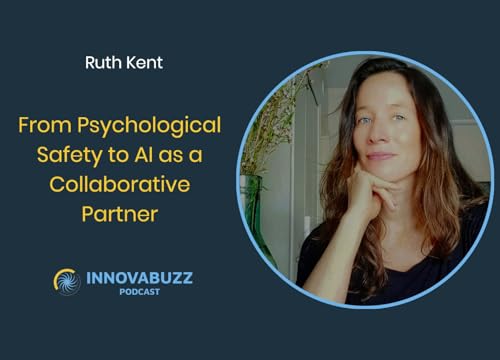
  • Ruth Kent, From Psychological Safety to AI as a Collaborative Partner - Innova.buzz 684
    Sep 3 2025
    Our guest in this episode is Ruth Kent, a passionate advisor who began her career as a teacher with a love for public health. Driven by a deep sense of purpose, she now blends these two worlds to help organizations create more human-centered and effective ways to learn and thrive. In our wonderful chat, Ruth shares her pragmatic approach to navigating today's biggest workplace challenges, from fostering genuine psychological safety to harnessing AI as a tool for deeper connection.Key points discussed include:* True psychological safety is built on a leader's vulnerability and courage to "circle back" after a mistake.* Frame AI not as a threat, but as a collaborative thinking partner to enhance our human capabilities and creativity.* In an age of intelligent machines, our greatest asset is our ability to lean into our shared humanity.Listen to the podcast to find out more.Innovabiz Substack is a reader-supported publication. To receive new posts and support my work, consider becoming a free or paid subscriber.Show Notes from this episode with Ruth KentIt was an absolute privilege to welcome the brilliant Ruth Kent to the InnovaBuzz podcast. Drawing from her fascinating background in both public health and education, Ruth helps organizations build a more human and effective way to learn and thrive. Our conversation was a deep dive into what it truly means to support people in the modern workplace, moving beyond simple programs to create genuine frameworks for connection and wellbeing.Ruth’s insights are particularly timely. She shared how the entire landscape of workplace wellbeing has evolved, especially in the last five years. We've moved past the era of one-size-fits-all fitness challenges and into a much more nuanced space. The conversation now includes hybrid work, the right to disconnect, and a growing understanding of neurodiversity, all demanding a more thoughtful approach.The New Workplace Landscape: Beyond the Wellness ProgramOne of the most powerful ideas Ruth introduced was the concept of applying a "public health lens" to an organization. Instead of just reacting with isolated wellness initiatives, this approach encourages leaders to step back and look at the entire system. It’s about getting curious about the specific demographics, needs, and cultural nuances of the team you actually have, rather than just importing a program that worked for another company.This means asking deeper questions and truly listening to what people need to feel supported. It's a strategic shift from simply offering perks to proactively designing a healthier, more connected work environment from the ground up. This method allows for the creation of supports that are not only more effective but also feel far more authentic to the people they are meant to serve.The Foundation of Growth: Cultivating Real Psychological SafetyOf course, none of this is possible without a foundation of psychological safety. We explored the immense challenge leaders face in getting truly honest feedback, and Ruth shared a wonderfully human insight to guide them. She drew a powerful analogy between effective leadership and modern parenting, highlighting the importance of vulnerability and the courage to "circle back" after making a mistake.Imagine a leader who, after a tense moment or a poorly-worded email, has the self-awareness to return to their team member and say, "That wasn't my best self, and I apologize." That simple, authentic act doesn't just fix a single interaction; it builds a bridge of trust. It signals that it's okay to be human, to be imperfect, and to be committed to working through challenges together.The Leader's Inner Compass: The Power of Self-AwarenessDiving deeper, Ruth explained that this ability to "circle back" stems from a profound self-awareness, or what she calls "interoception." This is the ability to notice our own internal state—that clenching in the stomach or the quickening heart rate—and understand how it's driving our thoughts and actions. A leader who is attuned to their inner world can make more conscious choices about their behaviour.This is critical because, as Ruth pointed out, a leader’s internal experience is transmitted to the team whether they intend it or not. We are all "beacons," and our non-verbal cues often speak louder than our words. By cultivating this inner awareness, leaders can move from being reactive to being intentional, creating a calmer and more stable environment for everyone.Reframing Our Future: AI as a Collaborative Thinking PartnerOur conversation then turned to the great disruptor of our time: Artificial Intelligence. Ruth offered a refreshingly balanced and optimistic perspective, framing AI not as a threat, but as a potential "collaborative thinking partner." She sees it as a tool that, if we proceed with awareness and caution, can help us solve some of humanity’s biggest challenges.This doesn't mean ignoring the very real anxieties many people feel about job...
    Más Menos
    1 h y 10 m