Episodios

  • Twelve Research Fails of Christmas
    Dec 19 2025
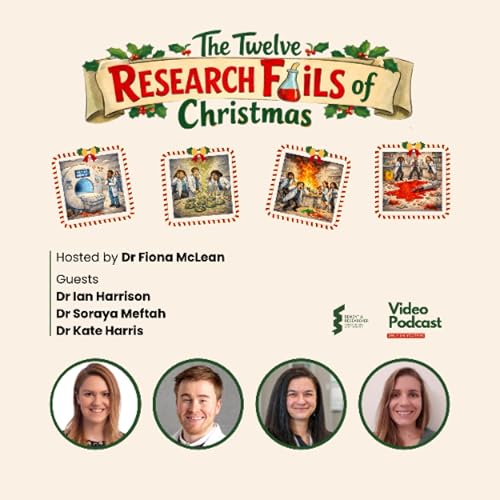
    This festive special flips the script on polished papers and perfect protocols. Dr Fiona McLean is joined by Dr Ian Harrison, Dr Soraya Meftah, and Dr Kate Harrison to share the research moments that did not go to plan but taught them far more than success ever could. From ELISAs gone rogue and antibodies that refuse to behave, to admin systems that quietly derail months of planning, this episode is a reminder that real research is messy, unpredictable, and occasionally hilarious. The conversation moves easily between lab disasters, student supervision realities, near misses with fire, and the emotional rollercoaster of academic life. It is light hearted, reassuring, and (hopefully) relatable. A permission slip to laugh, reflect, and remember that being wrong is often part of doing good science. Merry Christmas from all of us! -- Top takeaways - Most experiments do not fail, they redirect - Unexpected results often open better research questions - Rushing protocols almost always backfires - Admin failures can be as stressful as lab failures - Talking openly about what went wrong saves time and money - Students learn more from troubleshooting than from perfect results - Publishing negative findings can help an entire field - Being wrong is built into the scientific method - Giving yourself time and mental space matters - If no one was hurt, it is probably recoverable A transcript of this show, links and show notes and profile on all our guests are available on our website at https://www.dementiaresearcher.nihr.ac.uk -- Follow us on social media: https://www.instagram.com/dementia_researcher/ https://www.facebook.com/Dementia.Researcher/ https://www.twitter.com/demrescommunity https://www.linkedin.com/company/dementia-researcher https://www.bsky.app/profile/dementiare…archer.bsky.social -- Download and Register with our Community App: https://www.onelink.to/dementiaresearcher -- Chapters 00:00 Introduction to Research Fails 02:07 Learning from Mistakes in Research 04:53 Unexpected Outcomes and Their Value 05:53 The Importance of Data in Research 08:38 Navigating Challenges in Experiments 11:33 The Role of Collaboration in Research 14:40 Discovering New Avenues from Failures 15:40 The Importance of Literature in Research 16:41 Experiences of Discovery and Optimization in Research 17:51 Near-Death Experiences in the Lab 19:34 Lessons from Lab Mishaps 20:57 Administrative Chaos in Research 26:52 The Culture of Silence Around Research Failures 33:16 Navigating Criticism and Feedback in Academia 36:51 Navigating Experimental Challenges 38:43 The Temptation of Over-Experimenting 40:03 Learning from ELISA Mishaps
    Más Menos
    1 h y 1 m
  • 🎅 Should Santa be Running a Research Lab? Festive Charity Debate
    Dec 17 2025
    This festive charity debate asks a question nobody saw coming but everyone had an opinion on. Would Santa Claus make a good principal investigator? Recorded live in the Dementia Researcher Community, this Christmas special brings humour, sharp thinking, and real reflections on leadership, research culture, ethics, and academia. -- The debate is hosted by Adam Smith and Dr Anna Volkmer. Speaking for the motion is Rebecca Williams, PhD researcher exploring FTD and apathy. Speaking against the motion is Dr Connor Richardson, Research Fellow working in data science, epidemiology, and machine learning in dementia research. Through opening statements, rebuttals, and audience questions, the discussion ranges from logistics and mentorship to ethics, transparency, wellbeing, and what good leadership really looks like in research. While lighthearted on the surface, the debate reveals some very familiar academic tensions beneath the tinsel. Vote now: 🎅 https://8k3qel8nuxc.typeform.com/to/tXVIkWRe -- This episode was recorded as a charity event in support of Dementia UK and their Admiral Nurses, who provide vital support to people living with dementia and their families, especially during the Christmas period. If you enjoyed the debate and would like to support their work, you can donate here: 👉 https://buy.stripe.com/28EfZj1G37zIcrF2wA77O00 Thank you for listening, watching, and supporting dementia research and care. -- Follow us on social media: https://www.instagram.com/dementia_researcher/ https://www.facebook.com/Dementia.Researcher/ https://www.twitter.com/demrescommunity https://www.linkedin.com/company/dementia-researcher https://www.bsky.app/profile/dementiare…archer.bsky.social -- Download and Register with our Community App: https://www.onelink.to/dementiaresearcher -- The views and opinions expressed by guests in this podcast represent those of the guests and do not necessarily reflect those of Santa Clause, The North Pole or Dementia Research.
    Más Menos
    1 h y 3 m
  • Beyond the Pill: Methodology in Dementia Clinical Trials
    Dec 6 2025
    In this episode of the Dementia Researcher podcast we look at how dementia clinical trials reach far beyond medicines. Host Dr Annalise Rahman Filipiak speaks with Dr Elizabeth Rhodus, Dr Inga Antonsdottir, and Dr Elisa França Resende about entering the field, working with behavioural and community based interventions, and learning the skills needed to deliver rigorous, reproducible studies that still respect the individual needs of participants. The guests discuss their routes into trials, what surprised them, what they wish they had known earlier, and how mentorship and collaboration shaped their progress. They touch on trial design, regulatory processes, cultural considerations, and the value of early career networks that support researchers across different countries. -- Topics covered 🔹What early career researchers find challenging about trial methods 🔹Working in homes and communities 🔹Designing sensory and environmental interventions 🔹Literacy based trials in Brazil and issues of inclusion 🔹Mentorship, networks and training programmes 🔹Trial rigour, manuals, assessments and reproducibility 🔹Regulatory hurdles and timeframes 🔹Practical advice for researchers wanting to deliver a trial as part of their research -- Find more information on our guests, and a full transcript of this podcast on our website at: https://www.dementiaresearcher.nihr.ac.uk/podcast -- Follow us on social media: https://www.instagram.com/dementia_researcher/ https://www.facebook.com/Dementia.Researcher/ https://www.twitter.com/demrescommunity https://www.linkedin.com/company/dementia-researcher https://www.bsky.app/profile/dementiare…archer.bsky.social -- Download and Register with our Community App: https://www.onelink.to/dementiaresearcher -- Chapters 00:00 Introduction to Dementia Research and Clinical Trials 05:01 Early Career Researchers in Clinical Trials 11:31 The Role of Mentorship in Research 18:46 Innovative Interventions Beyond Pharmacology 25:41 Community Engagement and Methodological Considerations 33:32 Overcoming Barriers in Clinical Trials 38:22 Advice for Aspiring Clinical Trialists 41:00 Whimsical Research Questions and Closing Thoughts #dementiaresearch #methodology #dementia #ClinicalTrials @alzassociation #ISTAART
    Más Menos
    47 m
  • XXplored - The Midlife Transition: Menopause and the Brain
    Nov 21 2025
    In this episode of the Dementia Researcher - Xxplored Women’s Brain Health podcast, host Dr Laura Stankeviciute speaks with Professor Claudia Barth from Charite University and Dr Gillian Coughlan from Harvard Medical School to examine the midlife transition, menopause and its significance for women’s brain health. Together they outline what the menopause truly involves across the early, late, and post stages, and explain how hormonal change affects brain structure, energy use, mood, and cognition. They also explore why this period may coincide with greater vulnerability to later Alzheimer’s disease and discuss the role of early or surgical menopause, symptom severity, and gaps in existing research cohorts. The episode highlights the need for richer reproductive data, real time biomarker studies, and closer collaboration with digital health tools to better capture women’s lived experiences. It reflects a growing wave of research and public interest aimed at improving understanding, support, and evidence based care during this important life stage. -- Takeaways ● Menopause is a long transition shaped by fluctuating hormones. ● Cognitive and mood symptoms reflect changes in brain networks. ● Earlier menopause is linked with increased later Alzheimer’s risk. ● Major research cohorts lack detailed reproductive data. ● New real time studies are beginning to track symptoms and biomarkers. ● Digital tools will be key for future research. ● Better global representation is needed across studies. ● Momentum is building to close long standing gaps in women’s health. -- Find bios on all our speakers, a full transcript of the show and more on our website at https://www.dementiaresearcher.nihr.ac.uk - Follow us on social media: https://www.instagram.com/dementia_researcher/ https://www.facebook.com/Dementia.Researcher/ https://www.twitter.com/demrescommunity https://www.linkedin.com/company/dementia-researcher https://www.bsky.app/profile/dementiare…archer.bsky.social -- Download and Register with our Community App: https://www.onelink.to/dementiaresearcher -- Chapters 00:00 Introduction to Menopause and Research Focus 07:25 Understanding Menopause: Definitions and Stages 16:27 Menopause and Alzheimer's Disease: A Critical Connection 22:43 Understanding Menopause and Brain Health 25:21 Historical Blind Spots in Alzheimer's Research 26:38 The Importance of Reproductive Variables 31:46 Biomarkers and Methodologies in Women's Health Research 35:28 Industry Collaboration in Research 39:00 Personal Reflections on Women's Brain Health
    Más Menos
    43 m
  • Exploring Psychotherapy for People with Dementia
    Nov 8 2025
    In this episode, host Dr Anna Volkmer is joined by Dr Alys Griffiths, Sophie Jeffery, and Esther Whittlesea Reed to explore a two-year Alzheimer’s Society project testing #psychotherapy for people with dementia. Together, they discuss the importance of therapy in #dementia care, the barriers to access, the development of new therapist competencies, and the lived experience of psychotherapy from both clinical and personal perspectives. -- Takeaways 🔹Psychotherapy can provide meaningful outcomes for people with dementia. 🔹Barriers to accessing therapy include stigma and lack of understanding. 🔹Core competencies for therapists are essential for effective care. 🔹Family therapy is crucial for supporting families affected by dementia. 🔹Training for therapists should include specific skills for working with dementia patients. 🔹Research findings highlight the need for better communication about therapy options. 🔹The importance of lived experience in shaping research and therapy. 🔹Future research should focus on improving access to therapy for families. 🔹There is a need for a cultural shift in how dementia is perceived in therapy. -- Find more information on our guests, and a full transcript of this podcast on our website at: https://www.dementiaresearcher.nihr.ac.uk/podcast -- Follow us on social media: https://www.instagram.com/dementia_researcher/ https://www.facebook.com/Dementia.Researcher/ https://www.twitter.com/demrescommunity https://www.linkedin.com/company/dementia-researcher https://www.bsky.app/profile/dementiare…archer.bsky.social -- Download and Register with our Community App: https://www.onelink.to/dementiaresearcher -- Chapters 00:00 Introduction and Project Overview 04:40 Background and Rationale for Psychotherapy in Dementia 09:20 Personal Experiences and Expectations of Therapy 13:52 Study Design and Methodology 18:33 Roles and Contributions of the Research Team 23:16 Collaborative Insights from Lived Experience 24:42 Key Findings on Psychotherapy for Dementia 27:58 Core Competencies for Therapists 31:45 Understanding Dementia as a Traumatic Life Event 34:46 Future Directions in Dementia Research 40:21 Advocating for Comprehensive Support in Dementia Care
    Más Menos
    44 m
  • Supporting Young Carers in Dementia
    Oct 25 2025
    In this episode of the Dementia Researcher Podcast, host Dr Anna Volkmer, Associate Professor at UCL and Speech and Language Therapist explores the experiences of young carers in families affected by dementia, the challenges they face, the support they receive, and what more could and should be done. Anna is joined by Dr Patricia Masterson Algar a Lecturer at Bangor University, leading new research funded by Health and Care Research Wales to develop a peer support programme for young carers. Hannah Gardner a Consultant Admiral Nurse for Children and Young People at Dementia UK, advocating nationally for better awareness and support and Gareth and Euan Heslop, father and son who share their lived experience of caring for a wife and mother with young-onset dementia. Together they discuss the often overlooked impact of dementia on children and teenagers, the stigma and isolation young carers face, and how families, schools, and professionals can work together to provide better understanding and support. -- In this episode: • The hidden realities of growing up as a young carer. • Stigma, awareness, and the importance of talking openly about dementia. • How schools and communities can recognise and support young carers. • Why services must consider the whole family, not just the person diagnosed. • The role of peer support and what new research hopes to achieve. • Voices from lived experience — what young carers really need. 🎧 Listen to hear how families, researchers, and practitioners are working together to ensure young carers are seen, heard, and supported. -- The study discussed in the podcast is now open to recruitment. If you live in England or Wales and are aged 11-16 and involved in the care of someone living with dementia get in touch p.m.algar@bangor.ac.uk -- Find more information on our guests, and a full transcript of this podcast on our website at: https://www.dementiaresearcher.nihr.ac.uk/podcast -- Follow us on social media: https://www.instagram.com/dementia_researcher/ https://www.facebook.com/Dementia.Researcher/ https://www.twitter.com/demrescommunity https://www.linkedin.com/company/dementia-researcher https://www.bsky.app/profile/dementiare…archer.bsky.social -- Download and Register with our Community App: https://www.onelink.to/dementiaresearcher
    Más Menos
    42 m
  • XXplored - Why Sex Matters & What we've Ignored in Brain Ageing
    Oct 10 2025
    In our first episode of the XXplored Women's Brain Health podcast, our resident expert and host Dr Laura Stankeviciute from University of Gothenburg engages with leading neuroscientists Professor Liisa Galea from University of Toronto and Dr Maria Teresa Ferretti from Karolinska Institutet to explore the critical intersection of sex, gender, and brain health. Together our guests discuss their personal journeys into neuroscience, the biological differences in brain health, the impact of hormonal changes, and the vulnerability of women to Alzheimer's disease. The conversation also addresses the barriers to inclusion in clinical research, the implications of neurosexism, and the importance of precision medicine. The episode emphasises the need for early diagnosis and the societal stigma surrounding women's health issues, while advocating for a more inclusive and evidence-based approach to brain health research and treatment. This first show sets the scene for what will be an ongoing series of shows, delivered within the Dementia Researcher podcast. Takeaways ● Sex differences shape the brain at every level – structure, hormones, immunity, and function. ● Menopause is a key vulnerability window for women’s brain ageing and Alzheimer’s risk. ● Women face higher Alzheimer’s prevalence, not just because they live longer. ● Women were excluded from trials for decades, leaving dangerous gaps in knowledge. ● Fear of neurosexism and misunderstandings of feminism slowed progress. ● Precision medicine must include sex and gender or risk missing early diagnoses. ● Research funding and clinical guidelines lag far behind need. ● Momentum is building: younger researchers and public interest are pushing change. ● Core message: Different ≠ inferior. Diversity drives discovery. -- Find more information on our guests, and a full transcript of this podcast on our website at: https://www.dementiaresearcher.nihr.ac.uk/podcast -- The views and opinions expressed by guests in this podcast represent those of the guests and do not necessarily reflect those of University College London, Dementia Researcher or its funders. -- Follow us on social media: https://www.instagram.com/dementia_researcher/ https://www.facebook.com/Dementia.Researcher/ https://www.twitter.com/demrescommunity https://www.linkedin.com/company/dementia-researcher https://www.bsky.app/profile/dementiare…archer.bsky.social -- Download and Register with our Community App: https://www.onelink.to/dementiaresearcher
    Más Menos
    45 m
  • Conference Lightning Talks: Preparation to Performance
    Sep 27 2025
    In this episode of the Dementia Researcher Podcast, host Adam Smith (Programme Director at UCL) is joined by Dr Sam Moxon, Dr Lindsey Sinclair, and Dr Ece Bayram to explore the art of delivering lightning talks. Together they share practical advice on structuring short presentations, handling nerves, designing impactful slides, and engaging diverse audiences. With personal anecdotes and strategies from their own conference experiences, this discussion offers valuable guidance for early career researchers preparing to present their work with clarity and confidence. -- Takeaways • Lightning talks are concise presentations, usually under five minutes. • Strong preparation is essential for success. • An engaging delivery leaves a lasting impression. • Slides should support the message, not overwhelm it. • Rehearse to the clock to stay on time. • Personal touches help connect with the audience. • Focus on one key message instead of overloading with detail. • Use clear, accessible language throughout. • Treat the format as a teaser that sparks curiosity. • Lightning talks are excellent opportunities for early career researchers. -- If you would like to deliver a lightning talk at the ARUK Conference or AAIC Neuroscience Next Conference in February 2026 – get your abstracts submitted by October 22nd 2025. https://www.alzheimersresearchuk.org/research/for-researchers/research-conference/abstracts-2026 https://www.dementiaresearcher.nihr.ac.uk/aaic-neuroscience-next-2026-manchester-uk/ -- Find more information on our guests, and a full transcript of this podcast on our website at: https://www.dementiaresearcher.nihr.ac.uk/podcast -- The views and opinions expressed by guests in this podcast represent those of the guests and do not necessarily reflect those of NIHR Dementia Researchers, PIA membership, ISTAART or the Alzheimer's Association. -- Follow us on social media: https://www.instagram.com/dementia_researcher/ https://www.facebook.com/Dementia.Researcher/ https://www.twitter.com/demrescommunity https://www.linkedin.com/company/dementia-researcher https://www.bsky.app/profile/dementiare…archer.bsky.social -- Download and Register with our Community App: https://www.onelink.to/dementiaresearcher
    Más Menos
    51 m