Episodios

  • Kim Bowes on the Economic Lives of Rome's Ninety Percent
    Apr 15 2026

    Kim Bowes is an archaeologist at the University of Pennsylvania whose book, Surviving Rome: The Economic Lives of the Ninety Percent, Tyler calls perhaps his favorite economics book of 2025. By sifting through the material remains of Roman life — shoes, bricks, ceramics, and the like — she uncovers a picture of ordinary Romans who could evidently afford to buy multiple sets of colorful clothes, use gold coins for daily transactions, and eat peppercorns sourced from thousands of miles away. This vast web of commerce, she argues, both bound the empire together and provided the tax base that kept it running — and when it unraveled, Rome unraveled with it.

    Tyler and Kim discuss what would surprise a modern visitor to a Roman elite home, what early Roman Christianity actually looked like on the ground, why Romans never developed formal economic reasoning, what decentralized money-lending reveals about the Roman state, whether there were anything like forward markets, why Romans continued to use coins even as the empire debased them, the economics of Roman slavery, whether Roman recipes taste any good, the Romans as hyper-scalers rather than inventors, what Rome made of China and Egypt, why Kim's not a fan of the Vesuvius challenge, the practicalities of landscape archaeology, how a vast belt of factories along the Tiber Valley went undiscovered until twenty years ago, where to go on a three-week tour of the Roman Empire, what she thinks is ultimately behind Rome's unraveling, and much more.

    Read a full transcript enhanced with helpful links, or watch the full video on the new dedicated Conversations with Tyler channel.

    Recorded February 2nd, 2026.

    Other ways to connect

    • Follow us on X and Instagram
    • Follow Tyler on X
    • Sign up for our newsletter
    • Join our Discord
    • Email us: cowenconvos@mercatus.gmu.edu
    • Learn more about Conversations with Tyler and other Mercatus Center podcasts here.

    Timestamps:

    00:00:00 - Intro
    00:01:06 - Roman Housing
    00:08:28 - What Early Roman Christians Actually Believed
    00:16:29 - Roman Economic Thought
    00:18:39 - Roman Banking and Money Practices
    00:28:48 - The Economics of Roman Slavery
    00:31:56 - What Held The Roman Empire Together
    00:36:46 - Roman Cookery
    00:39:17 - The Romans as Masters of Scale
    00:42:05 - Rome's Contact with Asia
    0043:59 - The Vesuvius Challenge
    00:45:13 - Ancient Carthage and the Fall of Rome
    0049:43 - The Realities of Doing Archaeology
    00:57:15 - Touring the Roman Empire
    01:00:42 - Outro

    Más Menos
    1 h y 1 m
  • Arthur Brooks on Reinvention, Religion, and the Science of Happiness
    Apr 1 2026

    Click here to find Tyler's new generative book, The Marginal Revolution: Rise and Decline, and the Pending AI Revolution!

    Arthur Brooks reckons he's on the fourth leg of a spiral-shaped career: French horn player, economist, president of the American Enterprise Institute, and now Harvard professor and evangelist for the science of happiness. His new book, The Meaning of Your Life: Finding Purpose in an Age of Emptiness, argues that happiness isn't a feeling but a combination of enjoyment, satisfaction, and meaning — the macronutrients of happiness, he calls them — and that most of us are gorging on the wrong ones. Tyler, naturally, wants to know: what's the marginal value of a book on happiness, and what does spiral number five look like?

    Along the way, Tyler and Arthur cover how scarcity makes savoring possible and why knowing you'll die young sharpens the mind, what twin studies tell us about the genetics of well-being and why that's not actually depressing, the four habits of the genuinely happy, the placebo theory of happiness books, curiosity as an evolved positive emotion, the optimal degree of self-deception, why Arthur chose Catholicism rather than Orthodoxy, what the research says about accepting death, how he became an economist via correspondence school, AI's effect on think tanks, the future of classical music, whether Trumpism or Reaganism is the equilibrium state of American conservatism, whether his views on immigration have changed, what he and Oprah actually agree on, which president from his lifetime he most admires, Barcelona versus Madrid, what 60-year-olds are especially good at, why he's reading Josef Pieper, how he'll face death, and much more.

    Read a full transcript enhanced with helpful links, or watch the full video on the new dedicated Conversations with Tyler channel.

    Recorded March 19th, 2026.

    This episode was made possible through the support of the John Templeton Foundation.

    Other ways to connect

    • Follow us on X and Instagram
    • Follow Tyler on X
    • Follow Arthur on X
    • Sign up for our newsletter
    • Join our Discord
    • Email us: cowenconvos@mercatus.gmu.edu
    • Learn more about Conversations with Tyler and other Mercatus Center podcasts here.

    Timestamps:

    00:00:00 - Intro
    00:02:10 - The Macronutrients of Happiness
    00:07:54 - What Happiness Books are Worth
    00:12:28 - The Habits of the Happiest People
    00:14:27 - Why the Young Reject Happiness Advice
    00:17:35 - Curiosity's Role in Happiness
    00:20:22 - Self-Deception
    00:22:04 - Facing Death
    00:25:44 - Choosing a Religion
    00:28:41 - Immigration
    00:30:27 - The American Right Wing
    00:33:55 - AI's Role in Happiness
    00:37:12 - What Drives Generosity
    00:38:37 - Oprah's Political Views
    00:40:16 - Which Political Leaders Arthur Admires
    00:41:59 - The Best French Horn Players
    00:43:40 - Arthur's Spiral of Careers
    00:48:20 - The Future of Think Tanks
    00:49:50 - The Future of Classical Music
    00:51:27 - Living in Spain
    00:55:34 - Age and Peak Performance
    00:56:12 - What Arthur Will Do Next
    00:59:14 - Outro

    Image Credit: Jenny Sherman

    Más Menos
    1 h
  • Paul Gillingham on Why Mexico Stays Together
    Mar 25 2026

    Buy tickets for the live Conversations with Tyler recording with Craig Newmark at 92NY!

    Tyler calls Paul Gillingham's new book, Mexico: A 500-Year History, the single best introduction to the country's past—and one of the best nonfiction books of 2026. Paul brings both an outsider's eye and ground-level knowledge to Mexican history, having grown up in Cork — a place he'd argue gave him an instinctive feel for fierce local autonomy and land hunger —earning his doctorate on the Mexican Revolution under Alan Knight at Oxford, and doing his fieldwork in the pueblos of Guerrero.

    He and Tyler range across five centuries of Mexican history, from why Mexico held together after independence when every other post-colonial superstate collapsed, to why Yucatán is now one of the safest places on earth, what two leaders from Oaxaca tell us about Mexican politics, how Mexico avoided the military coups that plagued the rest of Latin America, what Cárdenas's land reform actually achieved versus what it promised, whether the ejido system held Mexico back, why Mexico worried too much about land and not enough about human capital, how Mexico's fertility rate fell below America's, why Guerrero has been violent for two centuries, why the new judicial reforms are a disaster, where to find the best food in Mexico and Manhattan, what a cache of illicit Mexican silver sitting on a ship in the English Channel has to do with his next book, and more.

    Read a full transcript enhanced with helpful links, or watch the full video on the new dedicated Conversations with Tyler channel.

    Recorded February 27th, 2026.

    Other ways to connect

    • Follow us on X and Instagram
    • Follow Tyler on X
    • Sign up for our newsletter
    • Join our Discord
    • Email us: cowenconvos@mercatus.gmu.edu
    • Learn more about Conversations with Tyler and other Mercatus Center podcasts here.

    Timestamps:

    00:00:00 - Intro

    00:01:30 - Post-Independence Mexico

    00:05:18 - Peace in Yucatán

    00:6:54 - Quintana Roo

    00:08:24 - Mexican Infrastructure

    00:10:26 - Oaxaca

    00:13:54 - Great Food Outside Cities

    00:16:39 - Leaders from Coahuila

    00:17:50 - Military Rule and Civil War in Mexico

    00:21:47 - The Cárdenas Regime

    00:24:03 - The Ejido System

    00:25:49 - Human Capital

    00:40:59 - Doing Mexican History as a Brit

    00:42:43 - Guerrero

    00:48:37 - Michoacán Violence

    00:50:44 - Monterrey

    00:52:40 - Judicial Reforms

    00:54:44 - The Best Mexican Film, Music, and Novel

    00:59:42 - The Best Trip Around Mexico

    01:04:05 - Outro

    Más Menos
    1 h y 5 m
  • Harvey Mansfield on Machiavelli, Straussianism, and the Character of Liberal Democracy
    Mar 18 2026

    Buy tickets for the live Conversations with Tyler recording with Craig Newmark at 92NY!

    Few living scholars can claim to have shaped how we read Machiavelli as decisively as Harvey Mansfield. His new book, The Rise and Fall of Rational Control, argues that Machiavelli didn't just write about politics—he invented the intellectual machinery of the modern world, starting with the concept of "effectual truth," which Mansfield credits as the seed of modern empiricism. At 93, after 61 years of teaching at Harvard, Mansfield remains cheerfully unimpressed by most of contemporary philosophy, convinced that the great books are self-sustaining, and that irony is what separates serious philosophy from the rest.

    Tyler and Harvey discuss how Machiavelli's concept of fact was brand new, why his longest chapter is a how-to guide for conspiracy, whether America's 20th-century wars refute the conspiratorial worldview, Trump as a Shakespearean vulgarian who is in some ways more democratic than the rest of us, why Bronze Age Pervert should not be taken as a model for Straussianism, the time he tried to introduce Nietzsche to Quine, why Rawls needed more Locke, what it was like to hear Churchill speak at Margate in 1953, whether great books are still being written, how his students have and haven't changed over 61 years of teaching, the eclipse rather than decline of manliness, and what Aristotle got right about old age and much more.

    Read a full transcript enhanced with helpful links, or watch the full video on the new dedicated Conversations with Tyler channel.

    Recorded January 22nd, 2026.

    This episode was made possible through the support of the John Templeton Foundation.

    Other ways to connect

    • Follow us on X and Instagram
    • Follow Tyler on X
    • Sign up for our newsletter
    • Join our Discord
    • Email us: cowenconvos@mercatus.gmu.edu
    • Learn more about Conversations with Tyler and other Mercatus Center podcasts here.

    Timestamps:

    00:00:00 - Bumper

    00:00:36 - Intro

    00:01:20 - Machiavelli's "Effectual Truth"

    00:05:56 - Conspiracy Theories

    00:12:39 - The Vulgarity of Democracy

    00:16:35 - The Future of Straussianism

    00:34:30 - Why the Supply of Great Books has Dried Up

    00:37:56 - Rational Control vs. Spontaneous Order

    00:40:25 - Winston Churchill

    00:43:30 - Students at Harvard

    00:46:05 - Manliness

    00:47:34 - Death and Politics

    00:48:56 - Outro

    Image Credit: Erin Clark via Getty Images

    Más Menos
    49 m
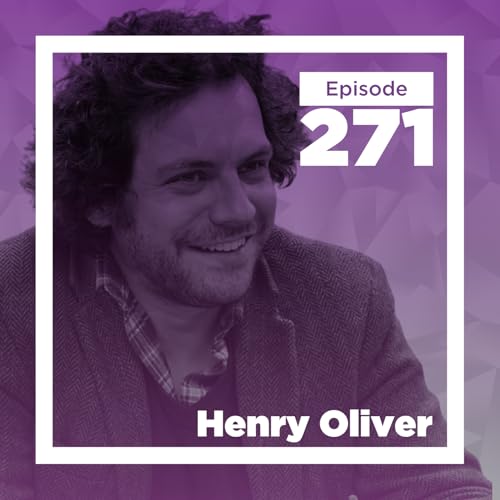
  • Henry Oliver on Measure for Measure, Late Bloomers, and the Smartest Writers in English
    Mar 4 2026

    Sign up for the Chicago CWT Listener Meetup.

    Henry Oliver is the preeminent literary critic for non-literary nerds. His Substack, The Common Reader, has thousands of subscribers drawn in by Henry's conviction that great literature is where ideas "walk and talk amongst the mess of the real world" in a way no other discipline can match. Tyler, who has called Henry's book Second Act "one of the very best books written on talent," sat down with him to compare readings of Measure for Measure and range across English literature more broadly.

    Tyler and Henry trade rival readings of the play, debate whether Isabella secretly seduces Angelo, argue over whether the Duke's proposal is closer to liberation or enslavement, trace the play's connections to The Merchant of Venice and The Rape of Lucrece, assess the parallels to James I, weigh whether it's a Girardian play (Oliver: emphatically not), and parse exactly what Isabella means when she says "I did yield to him," before turning to the best way to consume Shakespeare, what Jane Austen took from Adam Smith, why Swift may be the most practically intelligent writer in English, how advertising really works and why most of it doesn't, which works in English literature are under- and overrated, what makes someone a late bloomer, whether fiction will deal seriously with religion again, whether Ayn Rand's villains are more relevant now than ever, and much more.

    Read a full transcript enhanced with helpful links, or watch the full video on the new dedicated Conversations with Tyler channel.

    Recorded January 12th, 2026.

    This episode was made possible through the support of the John Templeton Foundation.

    Other ways to connect

    • Follow us on X and Instagram
    • Follow Tyler on X
    • Follow Henry on X
    • Sign up for our newsletter
    • Join our Discord
    • Email us: cowenconvos@mercatus.gmu.edu
    • Learn more about Conversations with Tyler and other Mercatus Center podcasts here.

    Timestamps:

    00:00:00 - Intro

    00:01:40 - What Shakespeare is really saying in Measure for Measure

    00:29:17 - The best way to consume Shakespeare

    00:32:26 - Jane Austen, Adam Smith, and Jonathan Swift

    00:39:29 - Advertising that works

    00:44:37 - Things that are under- and overrated in literature

    00:51:24 - Late bloomers

    00:58:36 - Outro

    Image Credit: Sam Alburger

    Más Menos
    59 m
  • Joe Studwell on Africa, Asia, and What Development Actually Requires
    Feb 18 2026

    When Tyler called Joe Studwell's How Asia Works "perhaps my favorite economics book of the year" back in 2013, he wasn't alone: it became one of the most influential treatments of industrial policy ever written. Now Studwell has turned his attention to Africa with How Africa Works. Tyler calls it excellent, extremely well-researched, and essential reading, but does Studwell's optimism about the continent hold up under scrutiny?

    Tyler and Joe explore whether population density actually solves development, which African countries are likely to achieve stable growth, whether Africa has a manufacturing future, why state infrastructure projects decay while farmer-led irrigation thrives, what progress looks like in education and public health, whether charter cities or special economic zones can work, and how permanent Africa's colonial borders really are. After testing Joe's optimism about Africa, Tyler shifts back to Asia: what Japan and South Korea will do about depopulation, why industrial policy worked in East Asia but failed in India and Brazil, what went wrong in Thailand, and what Joe will tackle next.

    Read a full transcript enhanced with helpful links, or watch the full video on the new dedicated Conversations with Tyler channel.

    Recorded January 23rd, 2026.

    Other ways to connect

    • Follow us on X and Instagram
    • Follow Tyler on X
    • Sign up for our newsletter
    • Join our Discord
    • Email us: cowenconvos@mercatus.gmu.edu
    • Learn more about Conversations with Tyler and other Mercatus Center podcasts here.

    Image Credit: Nick J.B. Moore

    Más Menos
    53 m
  • Andrew Ross Sorkin on Market Bubbles, Banking Rules, and the Real Lessons of 1929
    Feb 4 2026

    Andrew Ross Sorkin sees the crash of 1929 as a tale of excessive leverage and irrational speculation, but Tyler wonders: maybe those sky-high 1929 prices were actually justified given America's remarkable century ahead. Maybe the real problem was the "Negative Nellies" who panicked afterward rather than the speculators everyone blamed. For that matter, isn't 2008 looking less and less like a bubble with each passing year?

    Tyler and Andrew debate whether those 1929 stock prices were justified, what Fed and policy choices might have prevented the Depression, whether Glass-Steagall was built on a flawed premises, what surprised Andrew most about the 1920s beyond the crash itself, how business leaders then would compare to today's CEOs, whether US banks should consolidate, how Andrew would reform US banking regulation, what to make of narrow banking proposals and stablecoins, whether retail investors should get access to private equity and venture capital, why sports gambling and new financial regulations won't make us much safer, how Andrew broke into the New York Times at age 18, how he manages his information diet, what he learned co-creating Billions, what he plans on learning about next, and more.

    Read a full transcript enhanced with helpful links, or watch the full video on the new dedicated Conversations with Tyler channel.

    Recorded October 30th, 2025.

    Other ways to connect

    • Follow us on X and Instagram
    • Follow Tyler on X
    • Follow Andrew on X
    • Sign up for our newsletter
    • Join our Discord
    • Email us: cowenconvos@mercatus.gmu.edu
    • Learn more about Conversations with Tyler and other Mercatus Center podcasts here.

    Image Credit: Mike Cohen

    Más Menos
    56 m
  • Diarmaid MacCulloch on Christianity, Sex, and Unsettling Settled Facts
    Jan 21 2026

    Tyler considers Diarmaid MacCulloch one of those rare historians whose entire body of work rewards reading. This work includes his award-winning Cranmer biography, his sweeping histories of Christianity and the Reformation, and his latest on sex and the church, which demonstrates what MacCulloch calls the historian's true vocation: unsettling settled facts to keep humanity sane.

    Tyler and Diarmaid explore whether monotheism correlates with monogamy, Christianity's early instinct towards egalitarianism, what the Eucharistic revolution reveals about the cathedral building boom, the role of Mary in Christianity and Islam, where Michel Foucault went wrong on sexuality, the significance of the clerical family replacing the celibate monk, why Elizabeth I—not Henry VIII—mattered most for the English Reformation, why English Renaissance music began so brilliantly but then needed to start importing Germans, whether Christianity needs hell to survive, what MacCulloch plans to do next, and more.

    Read a full transcript enhanced with helpful links, or watch the full video on the new dedicated Conversations with Tyler channel.

    Recorded October 29th, 2025.

    This episode was made possible through the support of the John Templeton Foundation.

    Other ways to connect

    • Follow us on X and Instagram
    • Follow Tyler on X
    • Sign up for our newsletter
    • Join our Discord
    • Email us: cowenconvos@mercatus.gmu.edu
    • Learn more about Conversations with Tyler and other Mercatus Center podcasts here.

    Image Credit: Barry Jones

    Más Menos
    1 h