Episodios

  • 149 | Leading Teams in the Age of Constant Change | Scott McInnes & Glenda Kirby
    Mar 26 2026
    In this episode of the Building Better Cultures Podcast, host Scott McInnes speaks with Glenda Kirby, Chief Customer Officer at Poppulo, about the evolving role of leadership communication in a fast-changing workplace. They explore how trust, transparency, and empathy form the foundation of strong organizational cultures, particularly in a world shaped by hybrid work, constant change, and emerging technologies like AI. Glenda shares practical insights from her experience helping global organizations communicate with millions of employees, as well as lessons from her leadership roles at LinkedIn and Indeed. You will walk away with actionable ideas on communicating through change, building trust within teams, and developing leadership skills such as clarity under pressure, empathy, and authenticity. Keywords: Leadership communication, internal communications, organisational culture, trust in leadership, empathy in leadership, clarity under pressure, employee engagement, hybrid work, change management, communication strategy, workplace culture, leadership development, Poppulo, employee experience. Key Takeaways: Trust is built through consistent and transparent communication. Communication is no longer occasional - it's continuous. Middle managers are a critical communication channel. Clarity matters more than ever. Empathy is a leadership skill that must be developed. Act on feedback. Timing and accuracy are essential during change. Authenticity strengthens culture. Belonging is becoming increasingly important. Chapters: 00:00 – Introduction to the episode and guest 01:00 – Glenda Kirby's background and Poppulo's global reach 03:00 – Why trust is central to strong workplace cultures 05:20 – Communication overload and cutting through the noise 08:50 – The growing complexity of leadership roles 12:20 – Why organizations still underinvest in communication skills 15:00 – Simple communication techniques leaders can use immediately 18:50 – The importance of empathy and authenticity in leadership 21:00 – Acting on employee feedback and building trust 24:40 – Understanding how different people receive communication 29:00 – Leading teams through constant organizational change 33:00 – The risk of over-communication during uncertain times 35:40 – Final reflections and leadership quick-fire questions 37:30 – The leadership skills that matter most today Connect with us: LinkedIn YouTube Instagram Connect with Glenda Kirby: LinkedIn
    Más Menos
    37 m
  • 148 | Harnessing Organisational Success Through People | Scott McInnes & Iain Kirkwood
    Mar 19 2026
    In this episode of the Building Better Cultures podcast, host Scott McInnes is joined by Iain Kirkwood, Chief HRO of EX3, to explore the critical role of people in organisational success. They discuss the importance of clarity in purpose, the necessity of difficult conversations in performance management, and the empowerment of people leaders. The conversation delves into the significance of continuous feedback, the measurement of organisational culture, and the connection between culture and business performance. They also touch on the role of values and behaviors in shaping culture and the importance of a dynamic Employee Value Proposition (EVP). Keywords: Organisational culture, employee engagement, leadership, performance management, HR transformation, continuous feedback, employee value proposition, purpose-driven organizations, difficult conversations, accountability Key Takeaways: Clarity around company goals is essential for success. Hiring for attitude is more important than hiring for skills. Strong leadership is key to aligning people with company objectives. Difficult conversations are necessary for managing performance. Empowering people leaders is crucial for organisational success. Continuous feedback helps in course correction throughout the year. Culture can impact business performance significantly. Values should translate into observable behaviors. An effective EVP should resonate with employees' experiences. Regularly revisiting the EVP keeps it relevant and engaging. Chapters: 00:00 Introduction to Building Better Cultures Podcast 01:53 Setting Companies Up for Success Through People 05:16 The Importance of Purpose in Organisations 08:10 Navigating Difficult Conversations with Employees 10:56 Empowering People Leaders for Effective Management 14:03 The Shift Towards Continuous Feedback 19:22 Understanding and Valuing Organisational Culture 20:21 Valuing Organisational Culture 22:00 Impact of Culture on Performance 23:45 Performance Management and Accountability 26:03 The Role of Values in Culture 30:01 Employee Value Proposition (EVP) 34:39 Creating a Positive Work Environment Connect with us: LinkedIn YouTube Instagram Connect with Iain Kirkwood: LinkedIn
    Más Menos
    35 m
  • 147 | Unlocking Purpose in Organisations | Scott McInnes & Professor Peter Hawkins
    Mar 12 2026
    In this episode of the Building Better Cultures podcast, Scott McInnes has an insightful conversation with Professor Peter Hawkins, a leading authority in systemic coaching and leadership development. They explore the essential elements organisations need to thrive in the 21st century, emphasising the importance of being purpose-led, stakeholder-centric, and fostering collective leadership. Hawkins discusses the critical role of organisational culture and learning, the dynamics of trust within teams, and the concept of WeQ—collaborative intelligence. The conversation also delves into the nature of connection in leadership and the need for organisations to discover their purpose rather than merely creating it. Hawkins shares practical examples and insights on how organisations can align their efforts to meet the needs of the future, ultimately highlighting the unique contributions that teams can make to drive meaningful change. Takeaways: Organisations must be purpose-led, not profit-led. Stakeholder-centricity is crucial for modern organisations. Partnership with stakeholders enhances organizational effectiveness. Teams should be more than the sum of their parts. Organisational learning must outpace external changes. Trust is essential, but addressing mistrust is equally important. WeQ, or collaborative intelligence, is vital for leadership. Connection in leadership should focus on shared purpose. Purpose should be discovered, not created. Organisational culture is shaped by collective patterns. Keywords: leadership, organisational culture, purpose, collaboration, team dynamics, coaching, stakeholder engagement, collective intelligence, trust, systemic coaching Chapters: 00:00 Introduction to the Podcast and Guest 02:13 Essential Elements for Organisations in the 21st Century 05:42 The Importance of Purpose in Organisations 08:25 The Role of Organisational Culture and Learning 12:54 Collective Leadership and Team Dynamics 17:16 Trust and Mistrust in Teams 18:42 The Nature of Team Relationships 22:10 The Concept of WeQ and Collaborative Intelligence 23:13 Connection in the Age of Technology 27:40 Understanding and Defining Purpose 31:30 Leading Towards an Evolving Purpose 37:12 The Unique Contribution of Teams and Organisations 39:47 Organisational Culture and Its Habituated Patterns 41:06 Conclusion and Final Thoughts Connect with us: LinkedIn YouTube Instagram Connect with Prof. Peter Hawkins: LinkedIn Website
    Más Menos
    39 m
  • 146 | The Power of Curiosity at Work | Scott McInnes & Joe Lalley
    Mar 5 2026
    In this week's episode of the Building Better Cultures Podcast, host Scott McInnes sits down with Joe Lalley, author of 'How Curiosity Can Transform Your Career, Your Team, and Your Organisation.' Together, they explore the power of curiosity in transforming careers, teams, and organisations. Tune in to discover practical insights on fostering curiosity, psychological safety, and innovative cultures. Keywords: Curiosity, innovation, psychological safety, organizational culture, design thinking, leadership, experimentation, learning from failure, AI, creative thinking Key Topics: The definition of curiosity as the desire to go from not knowing to knowing The role of psychological safety in encouraging curiosity Patterns of questions that drive innovation and learning The importance of being close to customers for effective curiosity The impact of organisational culture on curiosity and experimentation The risks and rewards of curiosity in the workplace Practical strategies for leaders to foster curiosity The influence of childhood and education on curiosity development The relationship between curiosity and AI in learning and work How to balance curiosity with decision-making and focus Takeaways Curiosity is simply the act of wanting to go from not knowing to knowing. Psychological safety is essential for fostering curiosity in teams. Ask open-ended questions that challenge assumptions and explore possibilities. Being close to the customer enhances the effectiveness of curiosity. Organisational culture should be built around experimentation and learning. Shortening feedback cycles accelerates learning and innovation. Celebrate failures as first attempts in learning to encourage risk-taking. Leadership modeling of curiosity and experimentation sets the tone. Use examples and data to demonstrate the value of iterative work. Encourage questioning and exploration as core organisational behaviours. Chapters 00:00 Introduction to Curiosity in Organisations 02:53 Defining Curiosity and Its Importance 05:34 Psychological Safety and Curiosity 08:47 Curiosity in Meetings and Organisational Culture 11:29 Learning from Customers and Iterative Processes 14:48 Creating Space for Curiosity in Organisations 17:36 Embedding Curiosity into Organisational Culture 20:29 The Balance of Curiosity and Action 23:27 Practical Steps for Leaders to Foster Curiosity 26:32 The Impact of Technology on Curiosity 29:08 The Future of Curiosity in the Age of AI Link to Joe's book: Joelalley.com/book Connect with us: LinkedIn YouTube Instagram
    Más Menos
    32 m
  • 145 | Building Trust in Turbulent Times | Scott McInnes & Kim Bohr
    Feb 26 2026
    In this week's episode of the Building Better Cultures podcast, Scott McInnes speaks with Kim Bohr, President and COO of Spark Effect, about the critical role of trust in organisations. They discuss the findings from the report 'Trust in Turbulence' which breaks down trust into measurable domains and emphasises its importance as a competitive advantage. The conversation explores how disruptions, such as the return to office policies, impact trust, and how organizations can build and rebuild trust through effective communication and leadership practices. Takeaways: Trust is a measurable and critical component of organisational success. Disruptions can erode trust in everyday interactions. Return to office policies must be communicated effectively to maintain trust. High trust organizations see better performance and retention rates. Low trust environments lead to increased turnover and disengagement. Younger generations prioritize alignment of values with their employers. Technology rollouts can significantly impact trust dynamics. Managers play a crucial role in translating corporate messages to their teams. Celebrating achievements fosters a culture of trust and connection. Rebuilding trust requires transparency and accountability from leadership. Keywords: Organisational trust, trust in leadership, building better cultures, trust metrics, employee engagement, return to office, trust and performance, psychological safety, technology and trust, trust rebuilding strategies Chapters 00:00Introduction to Trust in Organizations 02:04Understanding Trust as a Competitive Advantage 04:24The Impact of Disruption on Trust 08:25Return to Office: Trust and Communication 11:51Linking Trust to Organizational Performance 13:57Low Trust and Its Effects on Culture 16:15Attracting Talent in a Low Trust Environment 18:11Technology's Role in Trust Dynamics 20:50Practical Steps to Build Trust 25:56Celebrating Achievements and Building Connections 29:57Rebuilding Trust After a Breach Link to the report mentioned in the episode: Report Connect with us: LinkedIn YouTube Instagram
    Más Menos
    34 m
  • 144 | Leading Culture in a Hybrid World | Scott McInnes & Phil Codd
    Feb 19 2026

    Welcome back to a brand-new series of the Building Better Cultures Podcast!

    In the first episode of the season, host Scott McInnes is joined by Phil Codd, Managing Director of Expleo in Ireland. They discuss the multifaceted nature of organisational culture, emphasising the importance of aligning leadership and employee cultures. Phil shares insights on employee happiness, effective communication, and the significance of feedback loops in fostering a positive work environment. The conversation also touches on the challenges of hybrid work, the future of organisational culture, and the need for organisations to adapt to a more flexible and inclusive work environments.

    Here are some of the key insights from the episode:

    · Culture isn't just one thing; organisations have multiple cultures.

    · Happy employees lead to happy customers and growth.

    · Effective communication is a critical leadership skill.

    · Feedback loops are essential for employee engagement.

    · Celebrating employee longevity can enhance morale.

    · Technology can facilitate continuous feedback in organisations.

    · Hybrid work requires new ways of connecting teams.

    · Organisational culture is not confined to physical spaces.

    · Aligning leadership culture with employee culture is vital.

    · Policies should focus on the human aspects of work.

    Chapters:

    00:00 Introduction to Building Better Cultures Podcast

    03:12 Understanding Organisational Culture

    09:54 The Importance of Communication in Culture

    12:30 Feedback Loops and Employee Engagement

    17:29 Flexibility and Hybrid Working Models

    23:51 Challenges of Geographic and Hybrid Work

    28:58 Future of Work and Cultural Alignment

    Keywords: Organisational culture, leadership, employee engagement, communication, feedback loops, hybrid work, employee happiness, culture alignment, workplace dynamics, future of work

    Link to the Irish Times article referenced in the podcast

    Connect with us:

    LinkedIn
    YouTube
    Instagram

    Más Menos
    33 m
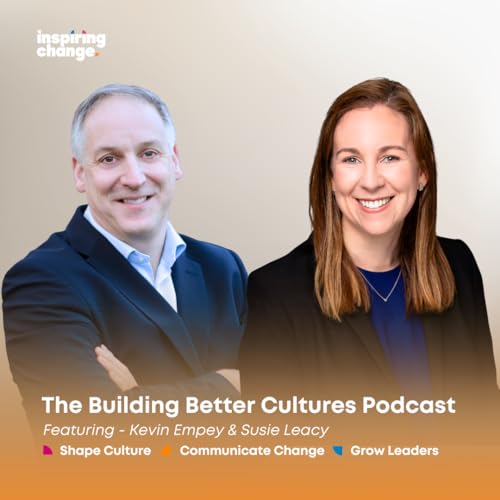
  • 143 | The Power of Connection in Modern Workplaces | Kevin Empey & Susie Leacy
    Nov 13 2025
    Summary In this episode of the Building Better Cultures podcast, Scott McInnes discusses the challenge of disconnection in the workplace with guests Susie Leacy and Kevin Empey. They explore the impact of remote work on employee connection, the role of leadership in fostering a cohesive culture, and the importance of intentional strategies to build relationships among employees. The conversation also touches on the multi-generational workforce and the need for organizations to adapt their communication and engagement strategies to meet diverse needs. Ultimately, the episode emphasizes that connection is a shared responsibility between leaders and employees, and that fostering a culture of connection is essential for organizational success. Takeaways Disconnection is a significant challenge in modern workplaces. Connection is essential for productivity and resilience. Leadership plays a crucial role in fostering connection. Organizations must adapt to maintain engagement in remote work settings. Intentional strategies are needed to create opportunities for connection. The multi-generational workforce presents unique challenges and opportunities. Onboarding processes should focus on building community and connection. Employees have a role in co-creating workplace culture. Flexibility in work arrangements comes with shared responsibility. Connection should be prioritized over merely addressing disconnection. Chapters 00:00 Introduction to Disconnection in the Workplace 04:47 Understanding the Challenge of Disconnection 09:01 The Importance of Connection in Modern Work 12:03 Bridging the Gap: Building Cohesion and Engagement 16:15 Navigating a Multi-Generational Workforce 21:55 Intergenerational Connections in Care Settings 24:35 Bridging Generational Gaps in the Workplace 29:42 Intentional Onboarding and Cultural Integration 33:06 Creating Community in a Hybrid Work Environment 39:13 Co-Creating Culture: The Role of Employees and Leaders
    Más Menos
    44 m
  • 142 | Navigating Accountability for Values | Karen Jones & Karen Hackett
    Nov 6 2025
    Summary In this episode of the Building Better Cultures podcast, Scott McInnes discusses the challenge of accountability for values with guests Karen Jones and Karen Hackett. They explore the importance of articulating and embedding organizational values, the role of managers in fostering a culture of accountability, and the potential pitfalls of weaponizing values in the workplace. The conversation also touches on the significance of onboarding processes and the need for open communication and feedback within organizations. Takeaways Accountability for values is a significant challenge for many organizations. Values must be articulated and understood to be effectively lived. Creating a culture of feedback is essential for accountability. Managers play a pivotal role in releasing the energy of their teams. Onboarding processes should embed values from the start. Psychological safety is crucial for open conversations about values. Values can be weaponized, leading to defensiveness in feedback. Organizations need to be bold about their current culture and desired future state. Storytelling can help connect employees to organizational values. Time is a critical factor in enabling managers to engage with their teams. Chapters 00:00 Introduction to Accountability for Values 01:24 Understanding Organizational Culture 04:18 Insights from the Mind the Gap Report 06:19 Bringing Values to Life 11:03 Accountability in Practice 17:17 Weaponization of Values in the Workplace 22:16 Building a High-Performance Culture 24:53 The Role of Managers in Organizational Success 30:01 Empowering Middle Managers 37:22 The Importance of Storytelling in Leadership 37:49 Effective Onboarding Practices
    Más Menos
    45 m